Tools
Tools
Last Updated on December 9, 2025
Augmented reality (AR) is revolutionizing AR E-Commerce by blending physical and digital shopping experiences. The rapid advancement of technology and the COVID-19 pandemic have propelled AR’s growth. It’s now a crucial element in improving online shopping experiences. PwC estimates AR could add up to $1.5 trillion to the global GDP, highlighting its transformative potential in retail.
As more companies embrace augmented reality shopping, customers will enjoy better interactions with products online. This will lead to higher engagement and satisfaction levels.
AR is set to become a cornerstone in the future of online shopping, a must-have for retailers. By 2022, over 83 million people in the U.S. will use AR monthly, showcasing its expanding influence. As you explore the realm of AR E-Commerce, you’ll uncover the exciting opportunities it offers for both businesses and consumers.
Key Takeaways
- AR is rapidly changing the shopping experience by enhancing product interaction.
- The global revenue from AR advertising is projected to soar, reaching $8 billion by 2024.
- AR users are more confident in their purchases, boosting conversion rates by up to 94%.
- Consumers are willing to invest more in products that utilize AR for transparency.
- Over half of customers prefer using AR to assess products before making a purchase.
The Rise of Augmented Reality in E-Commerce
The online shopping world is rapidly evolving, thanks to augmented reality. This technology overlays digital info onto the real world, enabling customers to see products in their surroundings. For retailers, grasping the augmented reality definition is key to tapping into this new frontier.
Defining Augmented Reality
Augmented reality blends digital elements with our physical world, fostering immersive interactions. Unlike virtual reality, which transports you to a different realm, AR enhances your current reality. It adds context and product details, crucial for businesses aiming to grow in AR E-Commerce.
How AR Transforms Online Shopping
Augmented reality is revolutionizing e-commerce. It lets customers interact with products in their own spaces before buying. This technology offers detailed product views, helping users decide better. Studies show AR experiences can boost engagement by up to 200%, leading to more sales.
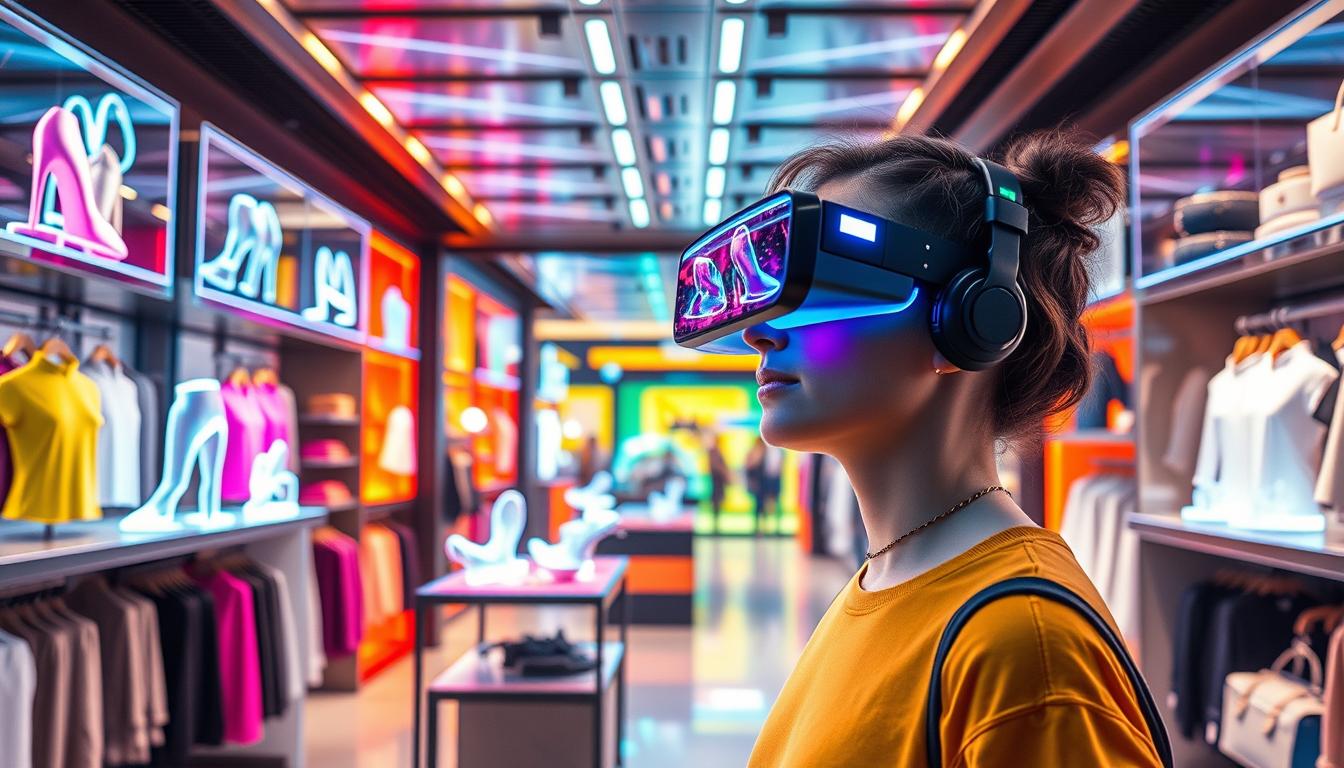
As AR technology advances, the shift in online shopping becomes more apparent. The market is set to boom, with 1.3 billion AR device users by 2023. Moreover, 57% of users are more likely to buy from brands that offer AR experiences. These statistics highlight AR’s role in reshaping consumer interactions with online shopping.
Understanding AR E-Commerce and Its Benefits
Augmented Reality (AR) is revolutionizing e-commerce, offering immersive experiences that boost customer engagement. It lets shoppers see products in their own space, aiding in informed decisions. This approach not only enriches the online shopping journey but also fosters trust and confidence.
Enhanced Customer Engagement
AR introduces features like virtual try-ons and interactive demos, making shopping more engaging. This interaction strengthens the bond between customers and brands. Research shows that AR can increase conversion rates by up to 94%. Such benefits are vital for businesses aiming to differentiate themselves in a competitive market.
Reduced Product Returns
High return rates are a significant e-commerce challenge. AR helps mitigate this by enabling customers to explore items before buying. By seeing products in their own environment, shoppers make more accurate choices, reducing returns. This not only boosts customer happiness but also streamlines business operations.
For deeper insights into e-commerce’s evolution, explore this resource.
Key AR Features for Online Stores
Augmented reality features are revolutionizing online shopping, offering interactive experiences before you buy. These features, like virtual try-on technology and interactive product previews, create a more engaging atmosphere. They help you visualize and choose products more easily.
Virtual Try-On Technology
Virtual try-on technology lets you try on clothes, glasses, or accessories digitally before buying. This innovation boosts your confidence and makes shopping more fun. Apps like Wannaby’s Wanna Kicks and Warby Parker’s app show how AR lets you see products on you without a store visit.
Seeing products virtually can greatly increase engagement and sales. It enhances your online shopping experience.
Interactive Product Previews
Interactive product previews immerse you in a shopping world where you can see items in your life. For instance, IKEA’s AR app has a 98% accuracy rate, letting you see furniture in your home before buying. Dulux’s Visualizer App also lets you test over 1,200 paint colors on your walls.
These AR features significantly lower return rates. They also make you more willing to pay more for products well showcased through augmented reality.
The Impact of AR on Customer Behavior
The integration of augmented reality (AR) into e-commerce profoundly affects customer behavior. Innovations in this sector enhance user experiences, leading to *significant shifts in shopping conversion rates* and a purchase confidence boost among consumers. Retailers are discovering that incorporating AR into their platforms can transform the online shopping landscape.
Increasing Conversion Rates
The *customer behavior AR impact* highlights a notable trend: as more brands adopt AR technology, conversion rates soar. Evidence suggests that consumers engage more deeply when they can visualize products in their environment. A survey indicates that nearly 75% of shoppers expect to experience AR services while shopping online. This expectation reflects the increasing integration of AR in modern retail, driving higher shopping conversion rates.
Improving Purchase Confidence
AR not only enhances visual representation but also significantly boosts consumer purchase confidence. Shoppers who use AR features often report feeling more assured when making decisions. For example, a considerable percentage of consumers indicate that they are willing to pay more for products that allow AR interaction. This factor plays a crucial role in diminishing the fear associated with online purchasing, particularly in categories such as fashion and home decor.
AR Integration in E-Commerce Platforms
AR integration is becoming more popular in e-commerce, with businesses looking at successful AR case studies for guidance. Companies like Burrow and IKEA have used augmented reality to create immersive experiences. These experiences let customers see how products fit in their spaces.
Case Studies of Successful AR Integration
AR technology offers more than just novelty. It boosts customer engagement and satisfaction, leading to better sales. For example, AR experiences can increase conversion rates by up to 94%. This shows AR’s significant impact on e-commerce’s future.
Also, 92% of Generation Z prefers shopping through AR. This shows AR’s appeal to younger people. It’s becoming a key tool in daily life, attracting customers who want interactive experiences.
AR case studies show it’s not just a marketing tool. It gives retailers a competitive edge. As more businesses adopt AR, keeping up with these advancements is key to success in e-commerce.
Augmented Reality’s Role in Online Shopping Experience
Augmented Reality (AR) greatly improves your online shopping experience, closing the gap between in-store and online interactions. It creates a rich, immersive environment, allowing you to engage with products as if you were in a physical store. This technology turns online shopping into a dynamic journey, offering tactile and visual feedback.
Bridging the Gap Between In-Store and Online Shopping
AR has shown remarkable results for businesses. For example, IKEA Place has seen a 20% reduction in return rates with their AR app. This shows AR’s power in accurately representing products in your space. Sephora’s Virtual Artist app lets you try makeup virtually, making online shopping more precise and enjoyable.
- AR can boost conversion rates by up to 200%.
- Companies like Ray-Ban and L’Oréal have successfully used AR filters on social media to engage customers.
- AR technology lets you see products from different angles and how they fit in your life.
As AR in e-commerce becomes more popular, businesses that use it see higher engagement and interaction. Starting with a few products for AR can make the transition smooth. This approach not only improves your shopping experience but also reduces returns, changing how you shop online.
Top AR Retail Solutions for Businesses
Consumer expectations are constantly changing, pushing businesses to adopt AR retail solutions. Investing in AR technology boosts customer engagement and improves user experiences. It’s crucial for retailers to keep up with technological advancements.
Investing in AR Technology
Mobile AR users are expected to hit 1.73 billion by 2024. This highlights the importance of investing in AR technology. Brands that use AR in their e-commerce platforms offer unique product experiences. This appeals to millennials, who are key online shoppers.
This investment not only improves customer interactions but also increases average spending by 10%. This is due to the omnichannel shopping experience AR provides.
Partnering with AR Developers
Forming AR developer partnerships is vital for introducing innovative AR features. Companies like Banuba offer over 1,000 filters through its Face AR SDK. This shows the value of working with experienced developers.
Firms like Atheer and Magic Leap demonstrate how partnerships can lead to tailored AR solutions. These collaborations speed up AR deployment and enhance the shopping experience for customers. For more on adapting to technology trends, check out this guide on emerging trends.
Social Media and AR’s Influence on E-Commerce
Social media platforms have become key drivers in merging AR technology with e-commerce. Features like Snapchat AR and Instagram shopping allow brands to create immersive experiences. These experiences engage consumers in new and innovative ways. This fusion of social media and augmented reality is transforming the shopping experience, enabling you to interact with products before buying.
AR Features on Platforms like Snapchat and Instagram
In 2023, the AR industry hit a significant milestone, reaching a market size of $56.3 billion. This rapid growth shows the industry’s potential. Platforms like Snapchat and Instagram use social media AR to boost customer engagement and offer personalized services. With 71% of customers expecting customized experiences, brands must use these technologies to meet their needs.
AR features on these platforms let users try products virtually. This helps them understand how items fit into their lives. The number of active AR users is expected to hit 1.73 billion by 2024, a significant jump from 0.44 billion in 2019. This growth underscores AR’s potential in shaping consumer behavior.
AR technologies on social media provide deep insights into consumer preferences. This helps e-commerce businesses refine their strategies. Moreover, AR integration can boost conversion rates and improve customer feedback, showing its value in enhancing shopping experiences.
As user engagement evolves, virtual shopping assistants combining AR with AI and machine learning will change customer journeys. They will offer personalized recommendations. This blend of technology not only improves the shopping experience but also fosters community building around brands in virtual spaces.
Investing in AR capabilities now can give brands a competitive edge. It allows for unique connections with consumers and showcases products in captivating ways.
Future Trends in AR-Driven E-Commerce
The e-commerce landscape is on the cusp of significant advancements, driven by augmented reality (AR) and artificial intelligence (AI). These technologies are pivotal in the evolution of e-commerce, offering innovative ways to engage customers and simplify shopping experiences. As consumer expectations rise, businesses must stay ahead of AR trends to succeed.
Predictions for the Next Decade
In the years to come, businesses will increasingly adopt AR solutions to enhance personalization and interactivity. Expect to see features such as:
- Personalized recommendations powered by AI that transform inventory management.
- AI-powered chatbots available 24/7, ensuring instant customer service and increased satisfaction.
- Virtual Reality (VR) experiences, enabling close inspections and virtual try-ons of products.
- Interactive product visualization tools that offer detailed 3D views and AR try-on options.
- Innovative approaches, such as Zalando’s sizing solutions leveraging VR and AR technologies.
Companies embracing these AR predictions will likely see enhanced customer engagement and reduced return rates. For instance, AR-powered try-ons boost consumer confidence, reduce misunderstandings, and ensure accurate sizing. Our journey into the future suggests a shift toward immersive experiences on platforms like:
- IKEA Place for lifelike furniture visualization.
- Sephora allowing for virtual makeup trials.
- Wayfair Spaces for creating immersive room settings.
- Adidas offering virtual shoe try-ons.
- Warby Parker facilitating virtual eyeglass fittings.
As businesses prepare for the future, they must consider several practical considerations for integrating AR and VR technologies. Attention to scalability, user experience, data security, and budget allocation will be crucial in successfully navigating the e-commerce evolution.
Conclusion
Looking ahead, augmented reality (AR) will revolutionize online shopping. It blends digital and physical experiences, enhancing customer engagement and decision-making. Imagine trying on outfits virtually in your favorite stores, creating a seamless journey.
Recent studies highlight AR’s impact on shopping. Brands like Warby Parker and Ulta are already using AR, but only 1% of retailers have adopted it. This gap offers a huge chance to transform e-commerce, making it more engaging for digital shoppers.
As AR technology advances, the e-commerce future looks bright. With clear indicators and innovative applications, AR will soon make shopping smarter and more enjoyable. The reality of AR in commerce is just around the corner.