Gratitude journaling means writing down, on a regular basis, a few specific things you are thankful for. It takes five minutes, needs nothing more than a notebook, and has been studied in randomized trials for more than twenty years. The question this article answers is a practical one: does the habit actually help you focus and get more done, or is it just a pleasant ritual?
The short answer is that the evidence supports a modest, real benefit. Gratitude journaling reliably lifts mood, and it improves sleep for many people. Both of those feed directly into how well you concentrate the next day. What it does not do is transform your output overnight, and several popular claims about it do not hold up. Below you will find what the research supports, how to run the practice so it keeps working, how to use gratitude with your team, and where its limits are.
Key Takeaways
- Gratitude journaling produces small but consistent gains in mood and well-being, confirmed across dozens of controlled studies.
- The clearest link to focus runs through sleep and reduced rumination, not through any direct effect on attention.
- Writing a few specific items regularly works better than long lists or one-off exercises.
- Effects on anxiety and depression symptoms are small; the practice is a supplement, not a treatment.
- Consistency matters more than format. A three-line entry you actually write beats a full page you skip.
- At work, the clearest measured effect comes from thanking colleagues specifically and sincerely, not from private journaling alone.
What Gratitude Journaling Is
Gratitude journaling is a written practice with one rule: you record things that went well or that you appreciate, and you do it regularly. Some people write every evening, others once a week. The entries are usually short. “My colleague covered my shift so I could make the dentist appointment” is a complete entry.
The practice has roots in positive psychology, the branch of psychology that studies what helps people function well rather than what goes wrong. Researchers in that field began testing gratitude exercises in controlled experiments in the early 2000s. Those experiments are why gratitude journaling gets recommended so often, and they are also where its limits become visible.
Keeping a productivity journal and keeping a gratitude journal are different habits, though many people combine them. One tracks tasks and plans. The other tracks appreciation. This article is about the second kind.
Understanding Gratitude
Gratitude is the feeling of recognising that something good in your life came, at least partly, from outside yourself: another person, luck, circumstances. Psychologists treat it both as a passing emotion and as a stable trait. Some people are simply more inclined to notice what they have been given.
That distinction matters for journaling. The practice cannot change your temperament, but it can change what you attend to. Deliberately looking for things to appreciate trains a habit of noticing, and that habit is what the studies measure.

Gratitude also has a social side. When people feel appreciated, they tend to help more and stay committed longer. That is why it comes up in team studies, covered later in this article, and not only as a personal wellness habit.
If you already lean toward positive thinking, the practice will feel natural. If you are sceptical, it helps to know that it was tested against active comparison tasks, not just against doing nothing.
What the Research Actually Shows
Most articles on this topic cite research loosely. Here are the studies that carry the weight, with what they found and what they did not.
The foundational experiments
The study everyone cites is by Robert Emmons and Michael McCullough, published in the Journal of Personality and Social Psychology in 2003. In their first experiment, 192 students spent ten weeks writing weekly lists. One group listed five things they were grateful for. A second group listed hassles. A third listed neutral events.
The gratitude group came out ahead on several measures. They rated their lives more positively and felt more optimistic about the coming week. They also reported fewer physical symptoms and exercised more: about 4.4 hours a week, against 3.0 hours in the hassles group. A second experiment with daily entries over two weeks found higher positive mood and more helping behaviour, though not the exercise or health effects. A third experiment involved adults living with neuromuscular disease. After three weeks of daily gratitude entries, they slept roughly half an hour longer per night and woke feeling more refreshed.
Two years later, Martin Seligman and colleagues published an online trial that tested five positive psychology exercises. One of them, the “three good things” exercise, asked people to write down three things that went well each day for one week and why they went well. That simple task increased happiness and reduced depressive symptoms, with effects still measurable six months later. A more intensive “gratitude visit” (writing and delivering a letter of thanks) produced a larger immediate lift that faded within a few months.
What the meta-analyses add
Single studies can mislead, so it helps to look at reviews that pool many trials. A meta-analysis is a study of studies: it combines the results of every trial on a question to estimate the true effect.
A 2021 meta-analysis by David Cregg and Jennifer Cheavens in the Journal of Happiness Studies pooled 27 studies with 3,675 participants. It found that gratitude interventions reduced symptoms of depression and anxiety by a small amount. The effect size was around 0.29 at the end of the intervention and 0.23 at follow-up. The effect was larger when the comparison group was simply left on a waiting list, which suggests part of the benefit is expectation. The authors’ conclusion was blunt: gratitude exercises are not a substitute for treatments with stronger evidence.
A 2025 meta-analysis published in PNAS went wider. It pooled 163 samples with 24,804 participants from 28 countries and found a small but robust improvement in well-being (an effect size of about 0.19). The gain was largest for positive emotion, and it varied noticeably between countries. The authors were careful to make no clinical claim.
Put together, the picture is consistent. Gratitude journaling works, the effect is small to modest, and it is most reliable for mood. Any article promising a 25 or 40 percent boost in something is quoting a number that does not exist in the literature.
How journaling supports productivity
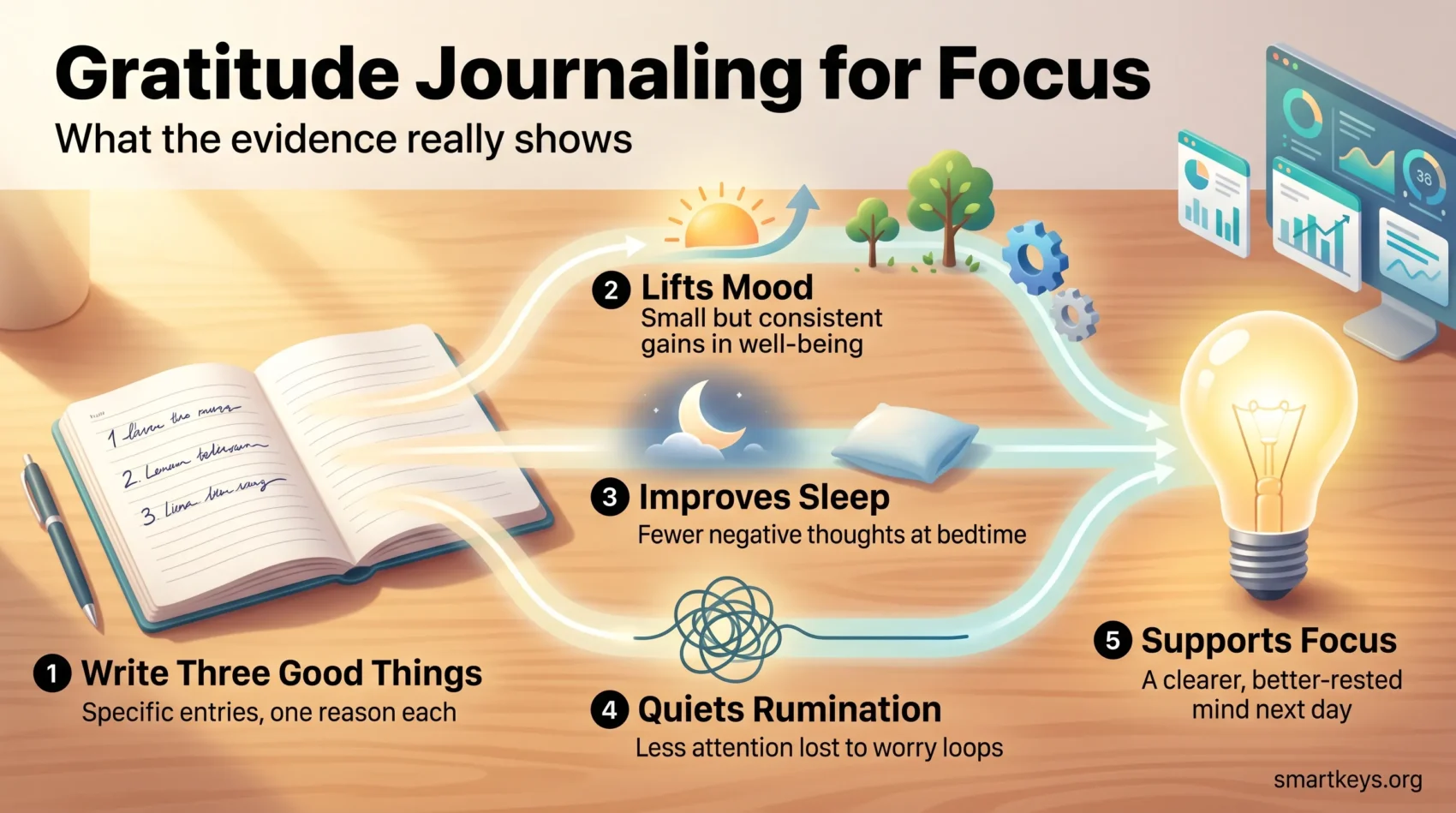
None of these trials measured output at work directly. The productivity case is indirect and rests on three mechanisms. Better mood makes hard tasks feel more approachable. Better sleep improves next-day concentration. Less time spent ruminating leaves more attention for the work in front of you. The following sections cover each link.

The Psychological Benefits of Gratitude Journaling
The most reliable benefit is emotional. Across the studies above, people who kept gratitude entries reported more positive emotion and a more optimistic outlook. That is not the same as being happy all the time. It means the average tone of the day shifts slightly upward.
Mood and outlook
Writing about something good forces you to re-live it briefly, and to name the person or circumstance behind it. That re-living is the point. It is why the three good things exercise asks for the reason behind each item: a bare list (“coffee, sunshine, finished report”) gives you little to re-live.
For people who struggle to stay upbeat during long projects, this small shift compounds. Our guide on staying motivated through the workday covers related tactics.
Stress and anxiety
Here the honest answer is “a little”. The Cregg and Cheavens review found small reductions in anxiety and depressive symptoms, and part of that appears to be placebo. If you are dealing with persistent anxiety, gratitude journaling can sit alongside proper support, but it should not replace it. Our article on burnout prevention discusses when self-help stops being enough.
How Gratitude Journaling Improves Focus
Focus is the ability to keep attention on one task despite competing pulls. Nothing in the gratitude literature shows the practice sharpening attention directly. What the research does show is that it removes two common drains on attention.
The first drain is rumination: replaying worries and irritations on a loop. A gratitude entry is a deliberate act of pointing the mind elsewhere. Done at the end of the day, it closes the day on a different note than the unfinished to-do list would. A brain dump serves a similar purpose for tasks; gratitude journaling does it for mood.
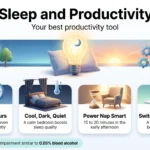
The second drain is poor sleep. A 2009 study by Alex Wood and colleagues in the Journal of Psychosomatic Research surveyed 401 adults. More grateful people slept better, fell asleep faster and functioned better during the day. The link ran through what people thought about while falling asleep: grateful people had fewer negative pre-sleep thoughts. That fits the half-hour sleep gain in the third Emmons and McCullough experiment.

Better sleep is one of the strongest predictors of next-day concentration. That makes it the most defensible route from a gratitude journal to a productive morning. Combine the entry with a fixed morning routine or a block of deep work. That stacks a small mood benefit on top of practices with much larger effects on output.
A word of caution on brain claims. A handful of small imaging studies have found changes in parts of the prefrontal cortex after gratitude exercises. Each involved a few dozen participants. They do not justify claims that gratitude “rewires” the brain.
Gratitude Journaling Techniques
The format matters less than most guides suggest, but a few choices are backed by evidence.
Three good things, with reasons
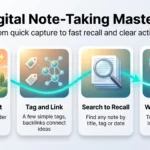
This is the Seligman format and the one with the longest follow-up data. Each evening, write three things that went well and one line on why each happened. Keep the items specific. “Sara sent the numbers before I asked, because she knew the deadline” is a better entry than “good teamwork”.
Weekly instead of daily
The Emmons and McCullough weekly format worked well over ten weeks. A separate six-week study by Sonja Lyubomirsky and colleagues, published in 2005, compared counting blessings once a week with three times a week. The weekly group became happier; the three-times-a-week group gained nothing, apparently because the exercise turned into a chore. If your entries start repeating themselves, switch to once or twice a week. Pairing the journal with a daily intention in the morning gives the day a start and an end point.
Gratitude letters
Writing a letter to someone who helped you, and ideally reading it to them, produced the biggest short-term lift in the Seligman trial. The effect fades, so treat it as an occasional exercise rather than a routine.
Categories and prompts
If a blank page stalls you, rotate through categories: a person, an opportunity, something about your environment, something you did well. Varied entries are the ones that keep working. Positive affirmations are a separate practice with weaker evidence. Add them if you like them, but they are not what the trials tested.
Gratitude at Work
The workplace evidence looks less at journaling and more at expressing thanks to others. The best-known study is by Adam Grant and Francesca Gino, published in 2010. A director visited university fundraisers and delivered a short, sincere thank-you for their work. Over the following week, the thanked group made about 50 percent more calls than a group that received no visit. The mechanism was not happiness; it was feeling valued.
For managers, the lesson is that a specific, personal thank-you is cheap and measurable. Our article on positive reinforcement at work covers where recognition programmes succeed and where they backfire.
For individuals, a “who helped me today” line in the journal tends to surface people worth thanking in person. That is where the workplace benefit actually comes from.
How to thank people so it lands
The wording of a thank-you matters. In a 2016 study published in Social Psychological and Personality Science, Sara Algoe and colleagues filmed couples thanking each other. Thanks that praised the other person (“you went out of your way to sort this out”) made the recipient feel more understood and valued. Thanks that focused only on how the favour helped the speaker had a weaker effect. At work, that means naming what your colleague did and what it says about them, not just how it made your week easier.
Handwritten notes are a simple way to do this. Doug Conant, CEO of Campbell Soup from 2001 to 2011, wrote around 30,000 thank-you notes to employees during his tenure, each one about a specific contribution. You do not need a CEO title to copy the idea. A two-line note that names a concrete piece of work takes a minute to write.
Building gratitude into a team
Team gratitude works best as a light, regular habit rather than a formal programme. A few formats are easy to start:
- End the weekly team meeting with a short, optional round of thanks, where anyone can name a colleague and what they did.
- Add one question to one-on-one check-ins: “Who made your work easier this week?” It surfaces help that managers rarely see.
- Give remote and hybrid teams a dedicated channel or shared board for thank-yous. Written thanks reaches people in every time zone, which matters when nobody overhears praise in a hallway. Our guide to building a remote company culture covers related rituals.
- Keep it specific. “Thanks for rebuilding the report template overnight” carries more weight than a weekly “great job, everyone”.
One caution: recognition that feels mandatory or scripted loses its effect quickly. In the Grant and Gino study, feeling valued was the active ingredient, and people notice when a thank-you is only a box to tick. Keep the rituals optional and let the thanks come from people who mean it.
Journaling for Personal Growth
A gratitude journal doubles as a record. Reading back over a month of entries shows what actually went well, which is easy to forget in a hard week. That record is useful in two ways.
First, it supports a growth mindset, the belief that abilities develop with effort. Entries that note what you learned from a difficult situation reinforce that view. Our guide to developing a growth mindset explains why that belief matters for how people handle setbacks.
Second, it makes progress visible. Pair the journal with a simple goal-setting routine and you can look back at both what you aimed for and what you were grateful for along the way. People who tend to put off difficult tasks often find that seeing past wins lowers the resistance to starting the next one.
To get the most from that record, reread your entries once a month and look for patterns. Which people, tasks or habits keep appearing? Recurring items often point to the conditions in which you do your best work. They are worth protecting when you plan the next month.
Building a Consistent Practice
The main threat to gratitude journaling is not doubt about whether it works. It is forgetting to do it. A few habits keep it alive.
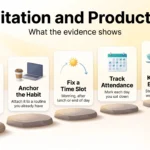
- Attach it to something fixed. Write after brushing your teeth, or as the last item before closing your laptop. Tying a new habit to an existing one is the core idea behind micro-habits.
- Keep it short. Three lines is enough. Longer entries feel like homework within a fortnight.
- Pick a time that fits your goal. Evening entries suit the sleep benefit described above. A morning entry suits people who want to start the day on a positive note.
- Choose paper or an app deliberately. A notebook keeps you away from notifications; an app adds reminders and prompts. Either works if you open it daily.
- Track it loosely. A habit tracker with a single checkbox is plenty; the point is to notice gaps early, not to build a perfect streak.
- Vary the format. Switch between daily and weekly, or between lists and a short paragraph, when entries start to repeat.
- Tell someone. An accountability partner who asks once a week whether you are still writing raises the odds you are.
Expect the habit to take weeks, not days, to feel automatic. In a 2010 study from University College London, volunteers building a new daily behaviour took a median of 66 days to reach the point where it felt automatic, with individual times ranging from 18 to 254 days. Missing an occasional day did not derail the process. So if you miss a week, restart without ceremony. The research shows benefits from even a single week of entries, so there is no streak to protect. For a broader look at building routines that survive busy periods, see our guide to self-discipline.
Where Gratitude Journaling Falls Short
Being clear about limits makes the practice more useful, not less.
It is not a treatment. The effects on anxiety and depression symptoms are small and partly placebo. Persistent symptoms call for evidence-based support, not a notebook.
It wears off if you force it. Rote entries lose their effect, which is why the weekly format and rotating prompts exist.
It does not replace rest. The journal can improve sleep quality, but it cannot substitute for enough sleep or for real structured downtime. Nor does it fix a workload problem. A grateful person with forty hours of tasks in a thirty-hour week still has forty hours of tasks.
It can feel false in hard times. During a bad stretch, keep entries small and honest. “The heating works” is a legitimate entry. Forcing a positive spin on something painful is not what the studies tested, and a mindfulness practice may fit those periods better.
Conclusion
Gratitude journaling is a low-cost habit with a modest, well-documented payoff. It lifts mood a little, helps many people sleep better, and gives you a record of what went right. Those effects reach your focus indirectly: a clearer head at night and a better-rested one in the morning.
Treat the practice for what it is. It will not double your output or replace professional help. It will, over a few weeks, make the average day feel a bit better and the hard days a bit easier to start. Three lines this evening, with a reason for each, is enough to begin.
Found this useful?
Make SmartKeys a preferred source on Google, and our articles will surface more often in your Top Stories, AI Overviews, and AI Mode.
Add as Preferred Source