Building a strong remote company culture means giving people who rarely share a room the same sense of purpose, belonging and shared standards that an office used to supply almost by accident. Culture is simply the pattern of behaviour a team repeats: what gets rewarded, what gets tolerated, how decisions are made and how colleagues treat each other when nobody is watching.
The good news is that distance is not the villain it is often made out to be. Gallup’s organizational culture indicator found in May 2026 that 20% of exclusively remote US employees strongly agree they feel connected to their organization’s culture. For hybrid employees the figure is also 20%, and for fully on-site employees it is 18%. Where people sit barely moves the number. What moves it is how the company is run.
The gap between fear and evidence matters, because the people highest up worry the most: 31% of leaders expect remote work to damage culture, against 15% of individual contributors. Acting on the fear rather than the numbers leads to office mandates that fix nothing.
Key Takeaways
- Working remotely barely changes whether people feel connected to a culture. Management practice does.
- Only about one in five US employees strongly agrees they feel connected to their employer’s culture (Gallup, May 2026).
- People who do feel connected are 4.3 times as likely to be engaged and 62% less likely to report frequent burnout.
- Written communication rules matter more remotely, because nothing gets picked up in passing.
- Onboarding is your highest leverage moment, and only 12% of employees say their employer handles it well.
- Recognition and regular one to one contact are the cheapest defences against isolation.
- Boundaries have to be designed, because remote work removed the commute that ended the day.
What Company Culture Actually Means
Culture is a vague word, so it helps to get concrete. In an office, much of it is absorbed by osmosis: you overhear how a manager handles bad news, you see which work gets praised. Remotely, none of that happens by itself.
The Four Building Blocks
- Core values: the few principles that settle trade-offs. A value only counts if honouring it has cost the company something.
- Expectations: what good work looks like, when people should be reachable, and how performance is judged.
- Connection: the relationships that make it easy to ask a question you feel slightly stupid asking.
- Rituals: the repeating events that carry the values, such as a weekly demo or a monthly retrospective.
A practical test: if a new hire read your handbook, then watched one ordinary week of your team’s work, would the two match? Wherever they do not, the observed behaviour is your real culture.
What a Strong Culture Is Worth
Gallup’s Q12 meta-analysis (11th edition, 2024) compared 183,806 work units across 347 organizations. Units in the top quartile for engagement differed from those in the bottom quartile by 78% in absenteeism, 14% in productivity measured through production records, and 23% in profitability.
The same pattern holds for individuals. Gallup reports that employees who strongly agree they feel connected to their organization’s culture are 4.3 times as likely to be engaged, 62% less likely to say they feel burned out very often, and 55% less likely to be job hunting. Getting it wrong is just as measurable: SHRM estimated that one in five American workers had left a job in the previous five years because of bad company culture, at a turnover cost of roughly $223 billion.
Why Remote Work Is Not the Problem
Remote and hybrid work is no longer an experiment to be survived. Among remote-capable US employees, Gallup put 51% on hybrid schedules, 28% fully remote and 21% fully on site in mid 2025, and Stanford’s Survey of Working Arrangements and Attitudes recorded 25% of all US paid full days worked from home in May 2026. This is the settled shape of the work-from-anywhere economy.
Distance Is Not What Breaks Culture
The Gallup split is worth sitting with: 20% remote, 20% hybrid, 18% on site. If proximity built culture, office staff would be far ahead. They are not.
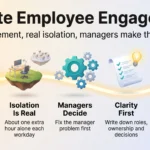
What the same data does show is a management problem. Only 19% of employees say their manager explains how company values shape their work, and only 20% say their coworkers are committed to those values. Culture fails where it is never translated into daily behaviour, and an office does not translate it for you. The same pattern runs through the wider picture of what is really changing in work culture.
The Retention Case
The strongest evidence comes from a randomized trial at Trip.com published in Nature in 2024. Roughly 1,600 graduate employees were assigned either to five days in the office or to a hybrid schedule with two days at home. Resignations among non-managers fell by 33%, while performance ratings and promotion rates were unaffected. Women and staff with long commutes benefited most.
Flexibility bought retention without costing output. The open question is not whether to allow it, but what remote leadership must do differently to keep a distributed team coherent.
Translating Your Culture Into Remote Practice
Most culture work fails because it starts with a poster instead of a diagnosis.
Start by Measuring How It Feels Now
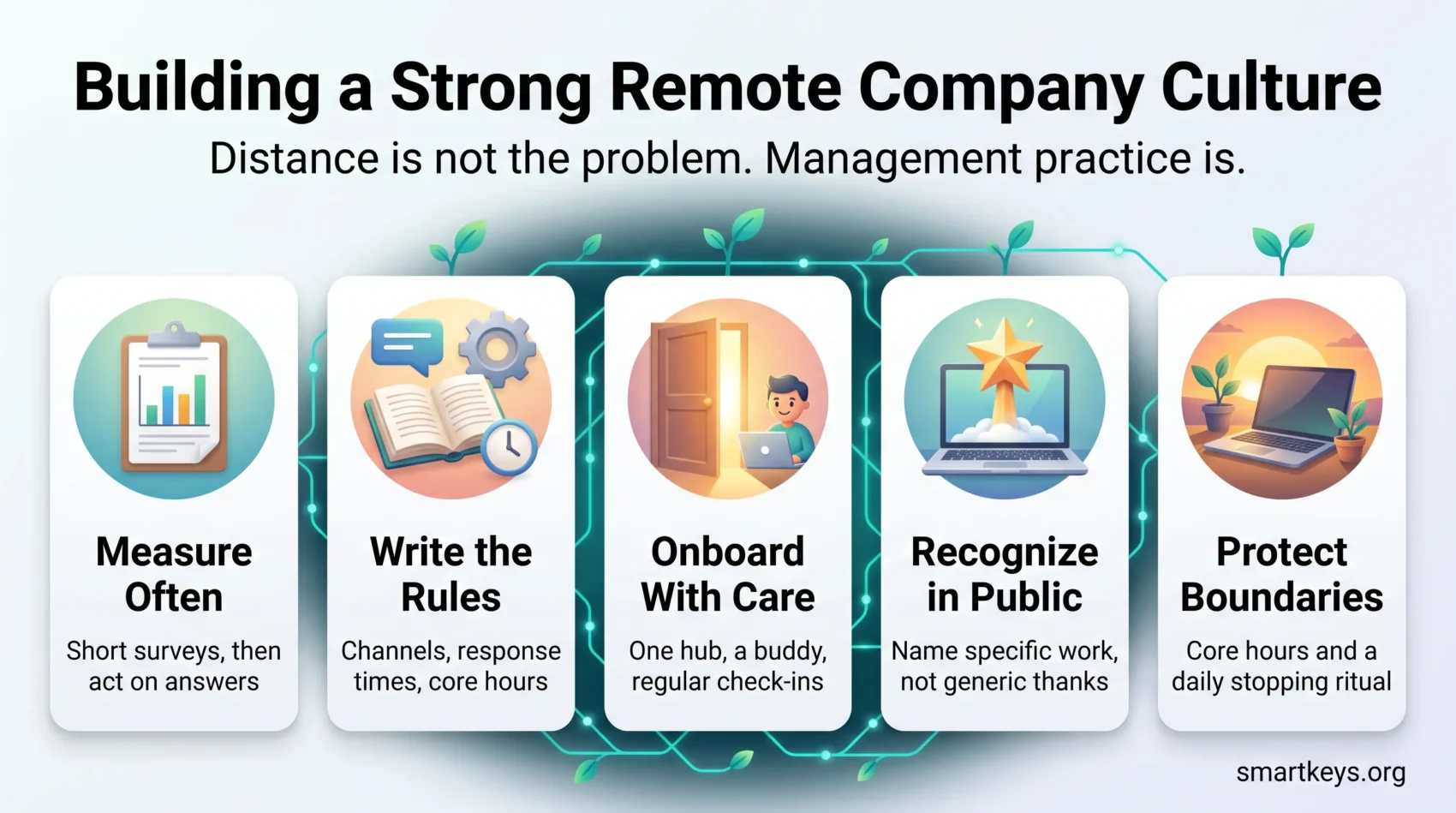
Ask directly and often. A short quarterly survey plus a standing question in one to one meetings beats an annual engagement report. Keep the questions specific: do you know what to prioritise this week, do you feel able to disagree with your manager, do you know who to ask when stuck.
Then close the loop out loud. If people answer honestly once and nothing changes, they stop. Publish what you heard, what you will act on, and what you will not. Approaches that work for remote employee engagement start with this discipline.
Write the Rules Down
Remote-friendly policies are the unwritten office rules made explicit. Cover the questions people actually hit: core hours across time zones, response times per channel, how decisions get recorded, and what a reasonable meeting load looks like.
For teams spread across countries, add the practical layer: public holidays, contract differences, and which time zone a deadline refers to. Anyone managing cross-border remote teams learns that ambiguity is expensive. A written policy also gives quieter team members a rule to point at when the load becomes unreasonable.
Hiring and Onboarding Set the Tone
Culture is transmitted fastest in a new hire’s first eight weeks. That is when people decide what kind of place this is.
Build an Employer Brand That Is Actually True
Candidates compare what you claim with what they can verify. Be specific in job ads: name your working hours policy, your meeting norms, your promotion criteria. Vague enthusiasm reads as evasion. Showing how people really work day to day does more than a values page.
Employee stories help, but only unedited ones. A short written account of a difficult project, including what went wrong, is more persuasive than a testimonial video.
Give New Hires a Single Place to Start
Only 12% of employees strongly agree that their organization does a great job of onboarding new people, according to Gallup. That is a low bar, and clearing it pays: SHRM estimates that replacing an employee costs six to nine months of salary.
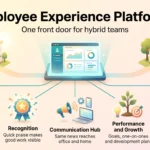
Build one internal hub that answers the first-week questions before anyone asks: who does what, which tools to install, how to get access, what to do in the first thirty days, and who your buddy is. Add a country-specific checklist where employment rules differ. Then schedule real contact on top: manager check-ins at day one, week one and month one. Structured remote onboarding beats a welcome email and a laptop in the post.
Communication Habits That Hold a Remote Team Together
In an office, weak communication norms are papered over by proximity. Remotely, they show up as delays, duplicated work and quiet resentment.
Agree on Channels and Response Times
Decide once, then write it down:
- Which channel carries which traffic: email for formal matters, chat for quick questions, the project tool for anything needing a record.
- What response time each channel implies. If chat means “within four hours” rather than “immediately”, say so.
- What deserves a call. Anything sensitive or ambiguous is better on video than in text.
- Where decisions live. A decision made in chat and never written up did not happen.
Whether your team runs on Slack, Teams or something else matters less than the norms around it. Our comparison of Slack and Microsoft Teams covers the practical differences if you are still choosing.
Make Asynchronous the Default
Asynchronous work means a colleague can move a task forward without you being online. It is the difference between a team that spans time zones and one that merely tolerates them.
The habits are unglamorous. Write updates into the project tool instead of saying them in a call. Record a three-minute walkthrough instead of booking a demo. Put an agenda and the relevant document into every invite. A primer on asynchronous communication tools is worth reading before buying anything new, and some teams go further with silent meetings.
Async also improves inclusion. People who think before they speak, who work in a second language, or who are in the wrong time zone get a say in writing that they never get in a live call.
Keeping Virtual Teams Engaged
Engagement is not a mood. It is the product of clear expectations, visible progress and being noticed.
Team Activities Worth the Calendar Slot
Optional beats compulsory, short beats long, and shared interest beats forced fun. A fifteen-minute coffee call or a rotating show-and-tell outperforms a two-hour quiz nobody chose, and these virtual team building activities for remote teams are a reasonable starting point. One caution: if people are unclear on priorities, no amount of trivia will fix morale.
Recognize Work in Public
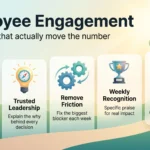
Recognition is the cheapest lever you have and the most underused. Remotely, good work is invisible unless someone names it, so build naming into your rituals: a standing agenda item, a dedicated channel, a note from the manager saying exactly what was good.
Specific beats generic. “Thanks everyone for the hard work” lands nowhere. “Maria rewrote the onboarding checklist and cut setup time from two days to two hours” tells the team what this company values, which is what culture is.
Collaboration Without the Meeting Overload
Choose Tools, Then Agree How to Use Them
Tool sprawl is its own cultural problem: every extra place where work might live is another place people must check. Pick one home for chat, one for documents, one for project tracking, and be strict about it.
Where AI features now sit inside those tools, decide explicitly what they may be used for, from meeting summaries to drafting. Our overview of AI collaboration tools covers what they do and what they cost.
Better Remote Meetings
- No agenda, no meeting. The agenda should name the decision to be made.
- Invite only the people needed to decide. Everyone else gets the notes.
- Default to cameras on for discussion, and to no meeting at all for status updates.
- Ask the quietest person directly. Silence in a video call is not agreement.
- End with written actions, owners and dates, posted where everyone can see them.
The habits behind productive meetings apply just as much remotely, but the cost of getting them wrong is higher, because a bad meeting is often the only contact a remote colleague had that day.
Keeping People Aligned on Purpose
Shared values only work when people can connect their own tasks to them, and this is where remote teams genuinely do struggle. Gallup found that the share of fully remote employees who felt connected to their organization’s mission fell to 28% in 2023, down from 36% in 2021 and a record low at the time.
The fix is repetition and specificity. In every planning cycle, explain why a project exists, who it helps and what happens if it fails. Tie individual objectives to that reasoning in writing, so people can see the line from their week to the company’s aim. Broader shifts in HR practice point the same way: purpose has to be operational, not decorative. Immersive formats such as virtual reality at work are sometimes used for shared training moments, though they remain a niche option.
Isolation, Burnout and Boundaries
Loneliness Is Measurably Higher Remotely
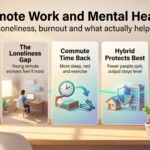
This is the real cost of distance. In Gallup’s 2024 global data, 20% of employees said they had felt lonely a lot the previous day. Broken down by work arrangement, that was 25% of fully remote workers, 21% of hybrid workers and 16% of those fully on site.
What helps:
- Pair every new joiner with a buddy outside their reporting line for three months.
- Keep one to one meetings weekly and protect them. A cancelled one sends a message.
- Create low-stakes contact that is not a meeting, such as an open drop-in call or a virtual watercooler space for casual chat.
- Offer virtual coworking sessions where people work side by side to anyone who misses the quiet company of an office.
- Watch for people who have stopped speaking up. Withdrawal is the first visible signal.
The evidence on remote work and mental health and on hybrid workspaces and wellbeing points in the same direction: flexibility helps most people, but it removes structure that some people relied on.
Designing Boundaries
Remote work deleted the commute, which used to end the workday whether you liked it or not. Something has to replace it.
- Publish core hours, then respect them yourself. Managers set the real policy by example.
- Schedule messages instead of sending them at midnight, so nobody infers an expectation.
- Encourage regular short breaks and treat mental health days as ordinary leave.
- Encourage a defined workspace and a stopping ritual, even a short walk.
- Track workload honestly. Sustained overtime is a staffing problem, not a resilience one.
Programmes for virtual employee wellness help, but only when the workload underneath is realistic. Where it is not, the result is employee burnout, and no perk offsets it.
Conclusion
The evidence is clearer than the debate suggests. Remote employees are no less connected to their company’s culture than on-site employees, and hybrid schedules can cut resignations without hurting performance. What separates strong remote cultures from weak ones is ordinary management: values that show up in decisions, written communication rules, onboarding that answers real questions, recognition that names specific work, and boundaries that leaders keep.
None of it needs new technology. It needs deciding what your team stands for, writing it down, and behaving that way often enough that people believe it. Do that and the office becomes an option, not the thing holding your culture together.
Found this useful?
Make SmartKeys a preferred source on Google, and our articles will surface more often in your Top Stories, AI Overviews, and AI Mode.
Add as Preferred Source