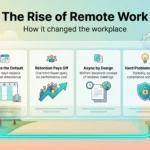
The work-from-anywhere economy is no longer an emergency measure. It has settled. Stanford’s Survey of Working Arrangements and Attitudes (SWAA) put about 25% of US paid full days as work-from-home days in May 2026, roughly four times the pre-pandemic share and close to flat for three years. Gallup’s data points the same way from the other direction: among remote-capable US employees, 52% work hybrid, 28% work exclusively remote and 21% are fully on site.
That stability is the interesting part. Most companies are no longer deciding whether people will work away from the office. They are deciding how to run an organisation in which location has stopped being the default coordination mechanism. This guide is written for employers. It covers what the hybrid evidence supports, what a work from anywhere policy needs to include, and the legal, tax and security compliance that comes with letting staff choose where they log in.
Key Takeaways
- Remote work has plateaued rather than collapsed: about a quarter of US paid days are worked from home, and employer policies have barely moved since mid-2022.
- The largest randomised hybrid trial to date found a 33% drop in quit rates with no measurable damage to performance or promotions.
- Flexible work arrangements are now a retention tool first and a cost lever second.
- Multi-state and cross-border staffing creates real tax, payroll and data privacy obligations that need written remote work policies.
- Independent and gig economy talent gives you specialised skills without permanent headcount, but only with clear scoping and compliance.
What the Work-from-Anywhere Economy Looks Like in 2026
The work-from-anywhere economy describes work that is organised around output and schedules rather than a building. In practice it covers three overlapping groups: hybrid staff who split the week, fully remote employees hired without a commute radius, and location-independent workers who move between countries.

The numbers behind it are steadier than the headlines suggest. SWAA reports that employer-mandated work-from-home sits at roughly 1.3 to 1.5 days per week and has hovered there since mid-2022. The gap between the days employees want at home and the days they get fluctuates around half a day per week. Neither side has won; both have adjusted.
The digital nomad segment grew out of the same shift. MBO Partners counted 18.5 million American digital nomads in its 2025 report, an increase of 153% since 2019 and around 12% of the US workforce. Growth has slowed to low single digits, which suggests the group is maturing rather than exploding.
- Not every role qualifies. Work that requires physical presence, regulated equipment or supervised handling of materials stays where it is.
- Higher-paid, higher-credential roles remain far more likely to be remote-capable, which is why remote policy is also an equity question.
- Management quality decides outcomes more than the policy itself. Teams with unclear priorities do not improve when you move them home.
For a broader view of where the settled pattern leaves offices and employers, see our analysis of how remote work changed the workplace.
What Changed, and What Did Not
Adoption Settled Instead of Reversing
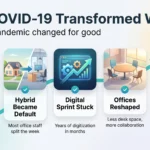
The 2020 spike was a forced experiment. What followed was a negotiation, and it produced a stable equilibrium rather than a return to 2019. Return-to-office mandates made headlines, but the aggregate share of home-based days moved very little. Most large employers converged on two or three anchor days on site.
The practical consequence is that you can now plan around remote work instead of reacting to it. Leases, tooling budgets, hiring radiuses and performance systems can be set for a hybrid default with reasonable confidence. Our review of what the pandemic permanently changed about work covers how that equilibrium formed.
Business Travel Came Back in a Different Shape
Predictions of a permanent collapse in corporate travel did not hold. The Global Business Travel Association forecasts record global business travel spending of $1.71 trillion in 2026, up 7.2% on 2025, across about 1.84 billion trips, up only 1.3%. Spend is rising much faster than trip volume, which mostly reflects higher transport and accommodation costs and more selective, higher-value trips.
For distributed teams that usually means fewer routine visits and more deliberate gatherings: onboarding weeks, quarterly planning, customer-facing work. The travel budget did not disappear; it got concentrated.
Hybrid Models That Hold Up
What the Evidence Actually Supports
The strongest evidence comes from a randomised controlled trial published in Nature in 2024. Researchers assigned 1,612 employees at a large technology company to either five days in the office or a hybrid schedule with two days at home. Over two years:
- Quit rates fell from 7.2% to 4.8%, a reduction of about 33%. Among non-managers the drop was 40%, and among women 54%.
- Performance review grades and promotion rates showed no measurable difference between the two groups.
- Self-reported job satisfaction rose from 7.84 to 8.19 on a ten-point scale.
- Managers had expected hybrid work to cut productivity by 2.6%. After running it, they estimated a small positive effect of about 1.0%.
Two caveats matter. This was one company in one country, and the hybrid schedule was two days at home, not five. The result supports moderate hybrid arrangements as a retention lever with no performance penalty. It does not prove that any remote arrangement raises output, and claims of a fixed productivity uplift from working at home are not supported by careful studies. For a wider look at how the cost side nets out, see our piece on remote versus office ROI.
Choosing Communication Tools That Fit
Tooling is where hybrid plans quietly fail. Most teams already have too many channels rather than too few. The useful question is not which platform is best but which decisions live where.
- Pick one place for synchronous conversation and one for durable documentation, then enforce the split.
- Default to asynchronous work for anything that does not need a live decision, so time zones stop being a bottleneck.
- Record decisions where new joiners can find them without asking. This is the single biggest saving in a distributed team.
Comparisons such as Slack versus Microsoft Teams and our overview of AI collaboration tools for global teams can help narrow the shortlist.

Building a Flexible Work Environment
Designing the Office for the Days People Come In
If people commute two days a week, those days should be worth the commute. Rows of identical desks are the least useful thing an office can offer someone who already has a desk at home.
- Meeting and collaboration space in place of surplus individual desks.
- Enclosed quiet rooms, because open-plan noise is the most common complaint about shared offices.
- Bookable, well-equipped video rooms so hybrid meetings do not disadvantage whoever dialled in.
Our guides to office design and coworking space costs cover the options in more detail, including when a smaller footprint plus coworking passes beats a long lease.
Building Trust Across Distance
Trust in a distributed team is mostly a design problem, not a personality one. It comes from clear expectations, visible work and consistent follow-through.
- Give people control over their own schedules within agreed availability windows.
- Make progress visible in shared systems instead of status meetings.
- Watch for proximity bias, where staff who are physically present get more attention and more opportunities.
Surveillance software is the wrong answer to a trust problem and tends to make it worse. Monitoring tools are also increasingly regulated, so check what applies in each employee’s jurisdiction before deploying anything.

Protecting Well-Being in a Distributed Team
Wellness Programmes People Actually Use
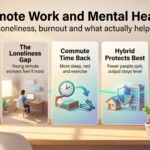
Remote and hybrid staff report high engagement and high isolation at the same time. Support has to address the second without pretending the first is a problem.
- Predictable flexibility: published core hours beat vague promises of autonomy.
- Mental health access: counselling that does not require an internal referral or a manager conversation.
- Movement and breaks: a home desk removes the commute, the walk to a meeting room and most incidental movement.
- Deliberate social contact: scheduled, optional and short works better than mandatory fun.
Isolation, Burnout and Switching Off
Isolation is a recognised failure mode of remote work, and it is not solved by more meetings. Regular one-to-ones with a genuine agenda, small stable working groups and occasional in-person time do more than company-wide calls.
Burnout in distributed teams is usually a boundary problem. When the office is a laptop on the kitchen table, the working day expands to fill the evening. Several jurisdictions have codified a right to disconnect, and even where no law applies, an explicit norm about out-of-hours messages costs nothing. Our guide to remote work and mental health covers what the current data supports.
Technology and Security
Where AI and Automation Genuinely Help
Automation is worth doing where a task is repetitive, rule-based and already documented. It is worth being sceptical of anything else. Adoption of AI tools is close to universal in large companies, while the share able to demonstrate a clear return remains small, so start with narrow, measurable jobs:
- Scheduling, routing and status updates that currently consume coordination time.
- First-line support deflection for questions with documented answers.
- Meeting notes and summaries, which reduce the documentation gap that hurts distributed teams most.
Our overview of productivity apps is a reasonable starting point.
Securing a Distributed Workforce
Home networks, personal devices and public Wi-Fi widen the attack surface considerably. Gartner put worldwide end-user spending on information security at $213 billion in 2025, and the growth is not driven by fashion. The basics still carry most of the weight:
- Phishing-resistant multi-factor authentication on every account that matters.
- Managed devices with disk encryption and enforced updates, or a clear policy for personal hardware.
- Least-privilege access and identity-based controls rather than a trusted network perimeter, the core idea behind zero trust security.
- Recurring, short training on phishing and social engineering, since credential theft remains the most common way in.
Our guide to cybersecurity for remote work sets out what employers and IT teams owe distributed staff.

Company Culture Without a Shared Office
Team Building That Is Not a Chore
Culture in a distributed company is what happens in writing and in habits, not in quarterly events. Social activity still helps, provided it is voluntary, short and scheduled inside working hours rather than added to someone’s evening.
- Small-group formats beat all-hands social calls.
- Shared-interest channels sustain themselves better than organised games.
- One well-run in-person gathering a year usually beats twelve virtual ones.
The test is simple: would people join if it were not organised by their manager?
Communicating Values More Than Feels Necessary
Without corridors, nothing gets absorbed by osmosis. Priorities, decisions and reasoning have to be written down and repeated more often than leaders expect.
- A short, regular written update from leadership with decisions and their reasons.
- Recognition that names specific work rather than generic praise.
- Onboarding that assumes no informal learning, covered in our guide to remote onboarding and training.
Repetition feels excessive to the person writing it and about right to everyone reading it.
Legal, Tax and Payroll Considerations
Employment Law and Data Privacy
Once staff work from wherever they like, you inherit the rules of wherever that is. Wage and hour law, leave entitlements, termination protection, workplace safety duties and privacy obligations follow the employee, not the head office.
Employee data is now among the most regulated assets a company holds, and monitoring, biometric access and AI-assisted people decisions attract particular scrutiny. Our guide to data privacy at work covers the current obligations.
State Taxes and the Convenience Rule
In the United States, remote staff can create income tax nexus and payroll registration duties in states where you have no premises. The sharpest edge is the convenience of the employer rule, which taxes a nonresident employee’s income in the employer’s state when the employee works from home for their own convenience rather than because the employer requires it.
Some form of the rule currently applies in Alabama, Delaware, Nebraska, New York and Pennsylvania. Connecticut and New Jersey apply it reciprocally to residents of states that have their own version, and Oregon applies a narrow variant to certain nonresident executives. New York enforces it most aggressively. The practical implication is simple: confirm where each remote employee physically works, keep records, and get advice before assuming a home office is tax-neutral.
Writing a Work-from-Anywhere Policy
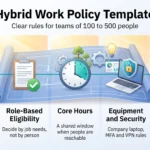
A written policy is cheaper than the dispute it prevents. At minimum it should cover:
- Approved work locations and the process for changing them, including time abroad.
- Availability expectations, core hours and response norms.
- Equipment, expenses and who pays for what.
- Security requirements and acceptable use of personal devices.
- How performance is assessed when presence is not a signal.
For staff outside your home country, our guide to managing cross-border teams sets out the employer-of-record route and the clauses most often missed.
Gig Workers and Global Talent
Bringing Independent Workers In
Independent contractors, freelancers and fractional specialists let you buy a skill for the period you need it. The advantages are real: access to expertise you cannot justify hiring, faster starts, and capacity that flexes with demand.
The risks are equally real. Misclassification is the main one, and the test is how the work is actually controlled, not what the contract says. Set a defined scope and deliverables, avoid managing contractors like employees, and check the classification rules in their jurisdiction before the engagement starts.
Using Freelance Platforms Well
Platforms such as Upwork and Fiverr solve discovery and payment, not selection. The work is in the brief.
- Write the outcome, the constraints and the acceptance criteria before you post.
- Pay for a small paid trial task rather than relying on portfolios and ratings alone.
- Agree communication cadence, revision limits and IP ownership in writing up front.
- Keep contractor access to systems narrow and time-limited.
Our comparison of freelance talent platforms goes further on where each marketplace is strongest.
Future-Proofing Your Business
Planning for Disruption
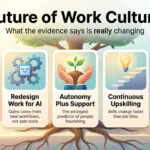
The lesson of the last six years is not that another pandemic is coming. It is that organisations able to change how and where they work absorbed a shock that flattened others. That capability is worth maintaining deliberately.
- Document which roles can operate remotely at short notice and what they would need.
- Keep at least one credible alternative for critical suppliers and tools.
- Test the assumptions occasionally rather than writing a plan nobody has read.
Investing in Digital Infrastructure
Distributed work runs on identity management, reliable connectivity, cloud services and documentation. None of it is glamorous and all of it decides whether the model works.
- Single sign-on and centralised identity, which pay for themselves in security and onboarding time.
- A documentation habit that outlives whoever set it up.
- Connectivity and equipment stipends, which are far cheaper than the productivity they protect.
Conclusion
The work-from-anywhere economy has stopped being a story about disruption and become a set of ordinary operational decisions. About a quarter of US paid days are now worked from home, hybrid is the majority arrangement for remote-capable staff, and the best available trial evidence says a moderate hybrid schedule cuts attrition sharply without costing performance.
What separates companies that handle this well is unglamorous: written expectations, a documentation habit, security basics that are actually enforced, and honest attention to the tax and employment obligations that follow people to wherever they log in. Teams that work well remotely tend to be teams that were well managed already.
Treat location as a variable you can now choose deliberately, and the rest becomes a design question rather than a crisis.
Found this useful?
Make SmartKeys a preferred source on Google, and our articles will surface more often in your Top Stories, AI Overviews, and AI Mode.
Add as Preferred Source