Tools
Tools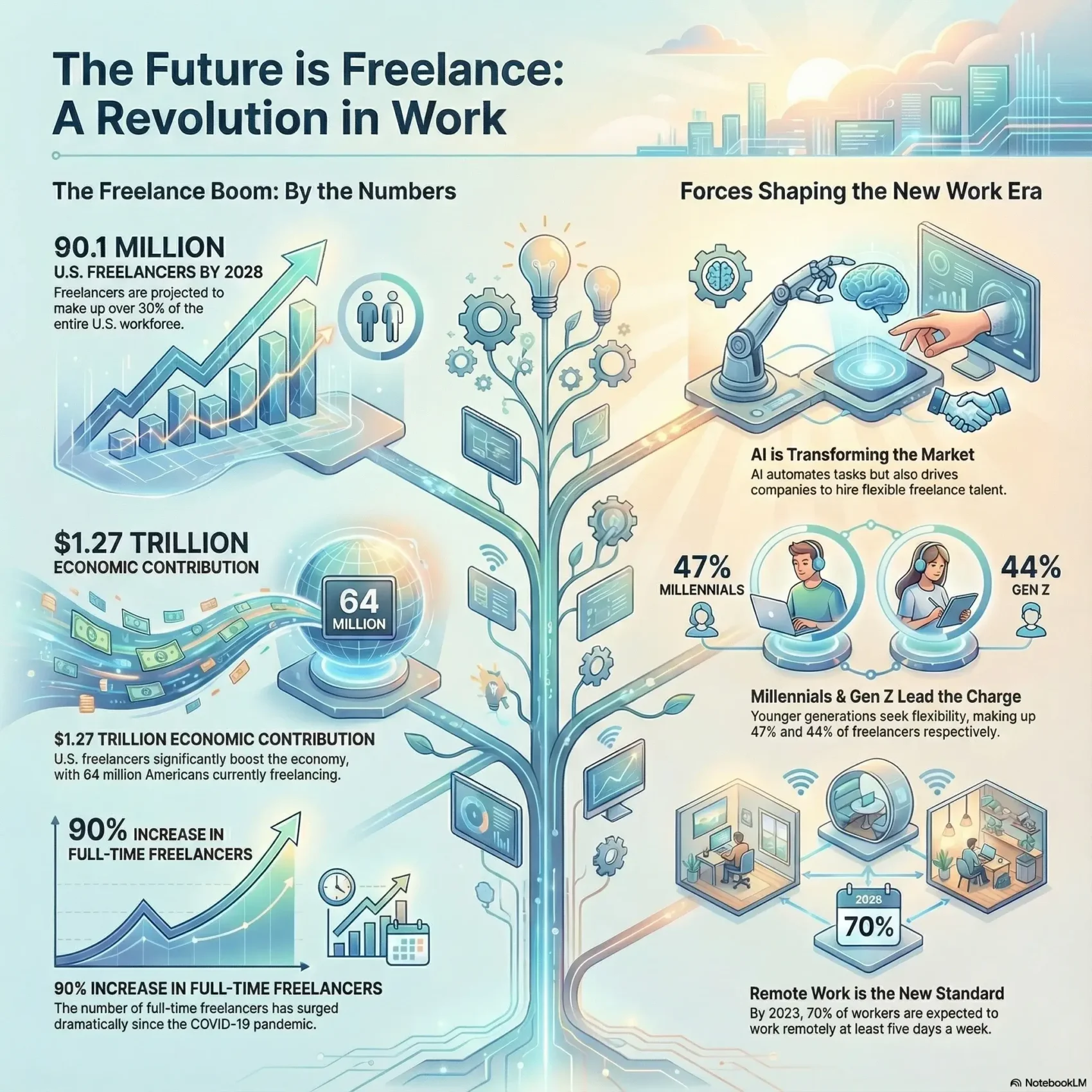
Last Updated on January 3, 2026
The landscape of freelancing is undergoing rapid evolution, propelled by technological progress, economic shifts, and demographic changes. For those considering freelancing, it’s crucial to note that freelancers could soon make up over 50% of the U.S. workforce by 2028. This surge indicates the significant impact of freelancing on the job market, offering unparalleled flexibility and independence.
As more individuals opt for freelancing for its flexibility and autonomy, the freelancing trends of 2024 will redefine how we interact with freelance work and its platforms. Currently, 38% of the U.S. workforce, or 64 million Americans, have embraced freelance opportunities, cementing the gig economy’s influence on the future of employment. Let’s explore these trends further to understand their implications for your freelance career.
Key Takeaways
- Freelancers in the U.S. are projected to surpass 90.1 million by 2028.
- Reports predict freelancers could make up over 50% of the U.S. workforce.
- The gig economy is set to generate approximately $455 billion by the end of 2023.
- Majority of Millennial and Gen Z workers are involved in freelance work.
- In-demand skills in freelancing include web design, digital marketing, and SEO.
- 77% of freelancers report feeling more fulfilled post-transition to freelancing.
- The global freelance platform market may reach $9.171 billion by 2028.
Introduction to the Freelancing Revolution
The freelancing revolution is reshaping the global work landscape. Currently, 72.1 million Americans have turned to freelancing, marking a significant shift towards flexible and independent work. This transformation is driven by technological progress and changing workplace cultures.
Post-Covid, there has been a remarkable increase in freelance work. Full-time freelancers have seen a 90% rise, while part-time gigs have surged by 130%. This surge underscores the gig economy’s critical role in the American workforce.
Freelance networks have blossomed into a multi-billion dollar industry, with project management services on the rise. Companies are increasingly using freelance teams from various platforms to meet their needs. These trends reflect the growing dependence on freelancers across both large and small businesses.
Start-up founders’ ages add an interesting dimension to the freelance movement. Most founders are around 45 when they launch their ventures. Interestingly, 10% are under 30, while 5% are over 60. This diversity shows the freelancing revolution’s broad appeal, enriching the gig economy.
Artificial intelligence is pivotal in this transformation. It empowers independent consultants to rival large firms in delivering value to clients. As platforms adapt, 83% of freelance leaders remain optimistic about the future.
The freelance ecosystem is not just altering traditional employment models. It’s also creating new avenues for professionals to connect and collaborate. With 80% of large corporations planning to increase their freelance workforce, the freelancing revolution is becoming a key economic driver.
Economic Landscape and Its Impact on Freelancing
The economic landscape significantly influences the freelance market. Post-pandemic, freelancers lead in this evolving economic scene. Recent studies indicate that 38% of the U.S. workforce chose freelance work in 2023. This trend aligns with the rise of the gig economy, showing a shift towards flexible work arrangements for many Americans.
Freelancers add about $1.27 trillion to the U.S. economy, underscoring their economic importance. As the economy recovers, job opportunities and wages are expected to increase. This will boost the freelance market’s viability. The number of freelancers has grown from 57 million in 2019 to an estimated 64 million by 2023. Experts predict that freelancers could make up over 50% of the U.S. workforce by 2027.
Competition in the gig economy can pose challenges, like finding contracts or payment issues. About 29% of freelancers face difficulties in finding work due to this competition. Yet, the economic outlook remains positive, boosting optimism among freelancers and entrepreneurs. Understanding these economic trends is crucial for navigating this dynamic field.
Freelancing Trends Shaping 2024
The freelancing landscape is undergoing rapid changes, with key trends poised to influence your freelance career in 2024. As businesses evolve, grasping these shifts is crucial for capitalizing on your freelance opportunities. This knowledge will help you navigate the freelance job market effectively.
Increased Freelance Job Growth
Freelance job growth is anticipated to skyrocket, with a predicted 50% of the workforce becoming freelance by 2027. Presently, about 64 million Americans are part of the gig economy, either through side hustles or full-time freelancing. Companies are increasingly opting for freelancers to manage their workforces hit by layoffs, with 70% of such businesses now employing freelance talent for specific projects.
The Influence of Economic Growth on Freelancers
As the economy stabilizes, there’s a heightened demand for digital services like AI/ML consulting, digital marketing, and software development. Freelancing trends for 2024 highlight a growing need for experts in these areas. With the freelance job market likely to become more saturated, competition on platforms like Fiverr and Upwork will escalate. Those who excel in soft skills, such as communication and problem-solving, will have a competitive edge in this crowded field.
The Role of Artificial Intelligence in Freelancing
The freelancing world is undergoing a significant transformation, largely thanks to AI. This technology enables freelancers to streamline their work and improve their services. By automating tasks like data analysis and market research, AI allows you to concentrate on creative and strategic tasks. This not only increases productivity but also opens up new business opportunities.
For those active on freelancing platforms, AI’s impact is complex. There has been a 21% drop in freelance job postings due to automation’s efficiency gains. Yet, many companies downsizing due to AI have turned to freelancers for their flexibility; a 69% of such firms have hired freelancers post-downsizing. Moreover, 21% of these companies plan to hire freelancers within half a year.
In this dynamic landscape, continuous learning and skill development are crucial. By embracing AI, you can forge deeper connections with clients and cultivate a lasting career. AI chatbots are particularly valuable, offering 24/7 support and ensuring quick responses to client queries.
The Freelancers Union champions for clear AI regulations in hiring, aiming to prevent bias. Laws like the NO FAKES Act showcase efforts to safeguard individuals’ identities from AI misuse. As AI’s role grows, freelancers will continually discover ways to enhance their performance and foster sustainable growth.
Rising Popularity of Freelancing Platforms
The freelance landscape is undergoing a significant transformation, propelled by the surge in popularity of freelancing platforms. An estimated 1.57 billion people worldwide engage in freelancing, propelling the market to a value of about $3.39 billion. This shift underscores the evolving workforce dynamics, where individuals opt for independence and flexibility through leading freelance platforms.
Top Freelancing Platforms in 2024
As 2024 draws near, platforms like Upwork, Fiverr, and Freelancer remain at the forefront of the market. These platforms not only connect freelancers with clients but also evolve to meet the changing needs of their users. The incorporation of AI tools has significantly improved user experiences, simplifying project navigation for both freelancers and clients.
The Evolution of Marketplace Dynamics
Freelancing platforms have seen a marked diversification in their marketplace dynamics. Platforms like G2i are tailored for developers, while Catalant specializes in consulting services. This specialization addresses specific industry needs, showcasing how freelancing platforms adapt to various professional fields. As the demand for specialized skills intensifies, freelancers offering niche services often command premium rates, highlighting robust marketplace dynamics.
Gig Economy Trends Driving Freelance Work
The gig economy is revolutionizing work, especially with the surge in remote opportunities. These jobs attract a diverse workforce, offering flexibility and the chance to blend work with personal life. Statistics show a growing interest in freelancing, signaling a bright future for this sector.
Impact of Remote Work on Freelancing
Remote work has become essential in the gig economy, giving individuals more control over their careers. Platforms for freelance work make it simpler to link talent with employers needing specific skills for projects. Many freelancers value the flexibility, aiming for roles that fit their skills and lifestyle without traditional employment constraints.
Statistics on Remote Freelance Growth
Recent studies reveal that 36% of U.S. workers are now part of the gig economy, showing a significant rise in freelance work. By 2025, it’s predicted that 70% of workers will work remotely at least five days a week. In 2018, the gig economy was valued at $204 billion, expected to jump to $455 billion by 2023. These numbers underscore the growing demand for freelance services and the preference for gig work due to its financial benefits and better work-life balance.
Demographic Shifts in the Freelance Workforce
The freelance world is undergoing significant changes due to demographic shifts. Millennials and Gen Z are increasingly prominent in this field. They seek flexibility, work-life balance, and job satisfaction, reshaping traditional employment concepts. As more freelancers contribute to the U.S. economy, understanding this shift is crucial for predicting the future of work.
Millennials vs. Gen Z in Freelancing
Millennials make up a large part of the freelance community, with 47% of all freelancers. Gen Z is close behind, with 44% also engaging in freelance work. This shows the strong involvement of younger generations in freelancing, driven by a preference for non-traditional careers. Their quest for autonomy and flexibility is altering job market expectations.
Freelancer Age and Experience Levels
The age range of freelancers is more diverse than before. There are about 8.3 million freelancers aged 59 and above, making up 13% of independent workers in the U.S. This fact underscores that freelancing is not just for the young. As demographic changes continue, a broader spectrum of backgrounds and skills is entering the freelance workforce.
Understanding Independent Contractor Trends
Independent contractors now play a crucial role in the workforce, making up a substantial part of the gig economy. Recent freelance market analysis shows they account for almost 3% of the U.S. staffing revenues. This highlights their importance to businesses looking for flexibility and specialized skills.
- Professionalism: There’s a growing emphasis on professionalism among independent contractors. This improves their credibility and draws in clients.
- Communication: Effective communication with clients is now key. It ensures freelancers consistently meet or surpass client expectations.
- Growth of the Gig Economy: The gig economy is expected to significantly boost global GDP. This underscores the crucial role independent contractors play in economic growth.
- Financial Considerations: Independent contractors often face issues like delayed payments, affecting their financial stability and trust with clients.
With gig work set to exceed 50% of the U.S. workforce by 2027, freelancers must adapt and evolve. Grasping independent contractor trends aids in overcoming challenges and seizing opportunities in this ever-changing market.
Freelancing Trends: New Types of Freelance Roles
The freelancing landscape is transforming, introducing new roles that cater to the changing needs of businesses. Companies now seek flexibility and specialized skills, leading to the rise of fractional and interim positions. These roles enable businesses to access crucial expertise without the burden of long-term employment.
Growth of Fractional and Interim Roles
The demand for fractional roles has surged, with a 59% increase in full-time freelancers in the U.S. last year. Moreover, 79% of U.S. companies intend to rely more on freelance experts. This trend showcases businesses’ adaptability, crucial in sectors like IT, finance, and medicine where flexibility and expertise are critical. Freelancers offer significant cost savings—30 to 40%—and access to skills not available in permanent staff.
Professionalism in the Freelance Market
With the advent of new freelance roles, professionalism is more crucial than ever. Both companies and freelancers understand that setting clear standards of excellence boosts trust and collaboration. A recent survey of 2,000 employers revealed a shift towards valuing soft skills over hard skills, such as communication and teamwork. Freelancers must now focus on developing and showcasing these skills. A majority of freelancers, 73%, highlighted communication, 62% problem-solving, and 55% self-motivation as essential in their profiles.
Challenges Facing the Freelance Market in 2026
The freelance market is booming, yet it faces significant hurdles. Economic instability, including recession threats, poses a major challenge. This could lead companies to prefer traditional staffing over freelancers, intensifying competition. A detailed analysis suggests that maintaining growth in freelancing is crucial to stand against agency dominance.
Freelancers must develop strategic plans to overcome these hurdles. The unpredictability of income demands careful financial planning. They often face varying earnings, which requires proactive budgeting. Moreover, the lack of employee benefits like health insurance and retirement plans is a concern for long-term financial security.
Isolation is another challenge for freelancers, especially those working remotely. It’s vital to connect with professional networks or coworking spaces to combat loneliness. Self-discipline is also key; establishing routines helps maintain a balance between work and personal life, preventing burnout.
- Understanding contract negotiation enhances opportunities for fair compensation.
- Building a strong personal brand becomes vital in a competitive market.
- Mastering freelance taxes aids freelancers in navigating tax complexities.
- Leveraging technology can greatly enhance productivity, making tools crucial for success.
In summary, while freelancing holds great promise, 2026 will bring various challenges. These require innovative solutions and strategic planning for a stable and successful freelance career.
Conclusion
Looking ahead to 2026, the future of freelancing is marked by significant shifts. With 21.6 million individuals now freelancing full-time, and 38% of the U.S. workforce participating in freelance work, the market is more dynamic than before. Companies are increasingly turning to freelancers, valuing their flexibility and innovation. This shift is particularly appealing to Gen Z, who are flocking to this flexible work arrangement.
Technological advancements, such as artificial intelligence, are reshaping the freelancing landscape. Platforms for independent business owners are also gaining traction, changing how we view freelance careers. Skills like web programming, design, and social media marketing are in high demand, reflecting the diverse opportunities available. Staying abreast of these trends is crucial for freelancers seeking to remain competitive.
The outlook for freelancing is promising, with numerous opportunities for those ready to adapt. By embracing the flexibility of freelancing and continually upgrading your skills, you can thrive in this evolving market. For deeper insights into these work trends, explore more details here. This ensures your approach remains innovative and forward-thinking.