Tools
Tools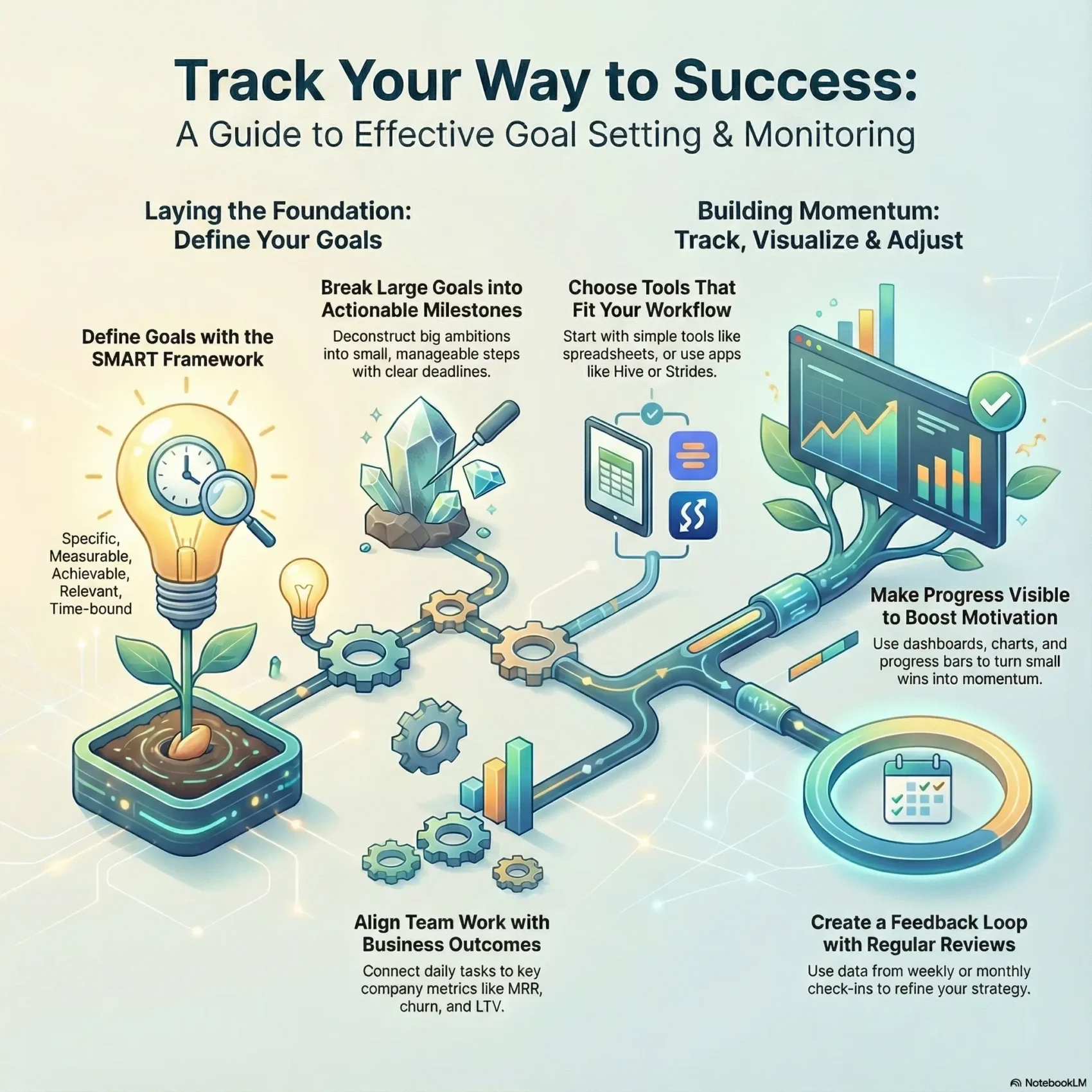
Last Updated on December 18, 2025
You can turn big ambitions into clear steps that fit your daily work. A simple template gives you direction, breaks projects into checkpoints, and makes progress visible over time. This helps you keep motivation high without burning out.
Focus on one main target at a time and link it to your business outcomes. That keeps your attention sharp and makes it easy to measure real success. Use a small set of metrics so you don’t drown in data.
Set a lightweight system of reminders and short reviews that match your schedule. Document owners, due dates, and next steps so everyone knows what to do and when. Consistent, small actions add up faster than occasional bursts.
Key Takeaways
- Break big aims into clear, actionable checkpoints.
- Pick one main objective to reduce overwhelm and track progress.
- Connect personal work to business results for meaningful success.
- Use a simple system of reminders and brief reviews for accountability.
- Focus on a few key metrics that show real movement over time.
What goal tracking really solves and why it matters now
When you measure progress frequently, small course corrections replace costly surprises. Clear measures turn assumptions into useful information so your team can react quickly.
From missed targets to smarter strategy: the Disney+ example
Disney+ set an ambition to reach 215–245 million subscribers by October 2024 but landed at 153.8 million. That gap shows why concrete goals and regular tracking matter for a business.
By measuring subscriber growth routinely, teams can spot where performance diverged from plans. That information fuels feedback loops: change content, improve onboarding, or refocus marketing.
- See quickly whether strategies are working instead of guessing months later.
- Turn missed targets into clues about pricing, positioning, or product features to test.
- Map user behavior to outcomes so specific owners can act and protect growth.
- Build a cadence of weekly or monthly reviews to translate insights into new strategies fast.
The benefits of a robust goal-tracking system
When everyone sees the same priorities, teams move faster and waste less effort.
This kind of system brings clarity and a common direction. You get fewer distractions and clearer next steps.
Clarity, focus, and direction for your goals
Clear targets help your team choose where to spend time. That reduces overlap and speeds decision-making.

Motivation and accountability through visible progress
Seeing progress matters. Dashboards and scorecards turn small wins into momentum. Owners and short check-ins keep commitments visible.
Performance measurement to find areas for growth
Measure a few meaningful metrics and you can spot friction fast. Product-Led Growth teams use goal tracking to find where users stall—onboarding, feature discovery, or upgrades—and remove blockers.
“Consistent, visible measures turn work into learnings and action.”
- You clarify goals and set a single direction for the whole team.
- You tap into motivation by watching progress build on dashboards.
- You build accountability with owners, check-ins, and visible scorecards.
- You measure performance with a few metrics to spot growth chances.
- You align teams with one system so updates and decisions happen faster.
Result: a culture of continuous improvement where small wins scale into lasting success.
How to define your goals before you track them
Define success in numbers and dates up front so every action points in the same direction. Clear goal setting turns vague intent into a plan you can run with. Pick the exact metric and a deadline before you start work.
Use SMART statements to make progress measurable
Write SMART statements so each goal is specific, measurable, achievable, relevant, and time-bound. Examples: increase onboarding completion by 20% next quarter, add 1,000 MAUs in six months, or reduce churn by 15% through better support.
Align personal goals with business goals for momentum
Connect your personal goals to clear business goals so daily tasks boost company results. That alignment keeps energy high and makes it obvious how your work creates impact.
Break large goals into steps, tasks, and milestones
Break large goals into small steps and set milestones with realistic deadlines. Identify dependencies, document risks, and name the tasks that produce measurable movement.
- Define success up front with exact numbers and thresholds.
- Set review cadence and record dependencies to avoid stalls.
- Make the plan visible so stakeholders can help remove blockers.
Choosing the right goal-tracking tools for your workflow
Start with what your team will actually use. Pick a simple setup first and add bells only when adoption is steady.
If you want to move fast, use Sheets or Docs as a lightweight template. For collaborative work, Hive’s free tier supports up to 10 users, unlimited tasks and notes, and 200MB storage. Paid tiers add calendars and time features when you need them.
For habit-focused work, try HabitBull (charts, reminders, cloud sync; premium $4.99) or Strides on iOS (targets, habits, milestones; plus tier $4.99). Coach.me adds community and optional coaching. Habit Factor Lite tracks one objective and up to three habits (iOS; Pro $5.99).
- Analog wins: bullet journals and whiteboards are fast for brainstorming and daily notes.
- Time insight: SaveMyTime on Android shows where your minutes go so you prioritize high-impact tasks.
- Centralize information: keep one place for goals, tasks, and notes to reduce confusion.
Review features like reminders, dashboards, storage, and integrations before you commit. Compare free tiers first and document why a given tool fits your business and team.
Essential features of a goal-tracking system
A strong goal management system captures the events that matter and turns them into reliable signals. That foundation helps you see which actions move results and where to focus work next.
Event tracking to capture user actions and milestones
Event tracking records user interactions and ties them to milestones. Use platforms like UserGuiding to create events from attribute changes and include historical data with backward tracking when available.
Map events to funnel stages—sign-up, activation, adoption—so each user step tells a clear story.
Customizable dashboards that surface key metrics
Design dashboards to show a few meaningful KPIs and reduce noise. Limit widgets so teams see what matters and make decisions faster.
Automated reporting to keep stakeholders informed
Automated reports send current information on a schedule. That saves time and keeps stakeholders aligned without manual work.
Integration capabilities for a unified data view
Choose a system that links to your CRM, analytics, and marketing tools. Clean integrations ensure data flows smoothly and performance signals stay trustworthy.
- Prioritize event capture so every key user action rolls up to your milestones.
- Set alerts and thresholds on dashboards to flag anomalies early.
- Validate naming conventions so everyone reads the same metrics in the tool.
Benefits of using a visual goal tracker
A visual tracker turns raw numbers into instant insight so you spot trends without digging through spreadsheets. Dynamic charts and simple checklists make patterns obvious, helping you act faster and with more confidence.
See trends at a glance with charts and checklists
Charts, checklists, and dashboards convert complex data into clear visuals. You’ll identify gaps in seconds and compare side-by-side views to weigh trade-offs.
Increase engagement and simplify progress monitoring
Visible wins raise motivation. Showing progress with color coding, progress bars, and onboarding checklists keeps users focused on the next action.
- You’ll convert raw data into charts and dashboards so trends and gaps are obvious quickly.
- You’ll boost motivation by making wins visible and enjoyable to track.
- You’ll streamline tracking progress with simple checklists that reduce confusion.
- You’ll pair leading indicators with outcomes to predict results and adjust early.
- You’ll tailor features like color coding so the tracker becomes a daily home base.
How to implement your system and track progress effectively
Start by defining the outcomes you expect and who owns each result. This first step sets clarity and prevents wasted effort later.
Set up: clarify outcomes, pick a tool, configure metrics
Define outcomes, KPIs, and owners so your system launches with purpose. Then pick a tool that supports customization and integrations with your stack.
Configure events and metrics, validate data, and create a short naming doc to onboard contributors fast.
Best practices: clear KPIs, regular updates, visualizations
Use concise visuals and weekly reviews to save time. Automate reminders and reporting so manual follow-ups don’t slow you down.
Engage your team for accountability and feedback
Assign tasks and due dates in your management platform and schedule recurring check-ins. Capture decisions after each review so the process improves over time.
- List the steps to select a tool and validate data.
- Audit metrics quarterly and remove vanity measures.
- Define an escalation path for when targets slip.
Use data to adjust your goals and stay on track
Use evidence from your dashboards to reshape plans before small problems become big ones. A steady flow of metrics helps you decide which strategies to keep and which to change.
Create a feedback loop to refine steps and timelines
Build a simple process that pulls data, reviews results, and assigns actions. Make reviews short and scheduled so adjustments happen in time.
“Compare trends against targets and act before issues compound.”
- You’ll establish a feedback cycle that compares trends and refines strategies quickly.
- You’ll analyze performance by segment to find areas where small changes unlock big progress.
- You’ll revisit milestones and test alternative tactics in short windows, keeping what works.
- You’ll document learning as part of the process and use a “stop, start, continue” ritual tied to owners.
- You’ll use tracking to confirm each adjustment moves you toward achievement and schedule the next review immediately.
Tip: Communicate changes clearly so everyone understands why timelines shifted and what to expect next.
A goal tracking example for a SaaS product
Map your top metrics to product outcomes so every sprint moves the business forward.
Define core metrics: anchor priorities to MRR, ARR, churn rate, and LTV so the business can measure impact. Use these numbers to size work, plan resourcing, and set milestones.
Use OKRs to align work and transparency
Translate strategy into clear objectives and key results. Write OKRs that let teams see how feature work rolls up to company outcomes. Make key results numeric and public.
Integrate product management and analytics
Connect your goal tracking stack to the product board and analytics platform so priority, delivery, and outcome live in one workflow.
Segment users by lifecycle stage to spot which features drive activation, retention, and expansion growth. Then align marketing with product signals to measure performance across the funnel.
- Owner accountability: assign metrics to a single owner so each team knows the lever they manage.
- Dashboards: track leading indicators like onboarding completion and feature adoption against targets.
- Experiments: run hypothesis-driven tests and measure effects on MRR, churn, and LTV—not vanity numbers.
“Share monthly business reviews that tie narrative to data and surface clear next steps.”
Playbook: keep a short document with metric definitions, alert thresholds, and reporting cadence so new hires ramp fast and the business keeps moving forward.
How to boost your goals for achievement in daily life and work
Simple routines and quick reviews help you turn busy days into purposeful progress. Regular reflection keeps momentum and makes achievement feel real.
Review and reflect regularly; celebrate milestones
Schedule brief weekly reviews to reflect on wins and plan small steps. This keeps motivation steady for both work and personal goals.
Build routines, limit distractions, and declutter your space
Start your day with a short plan and end with a summary. Protect your time by silencing phone alerts and reducing multitasking.
Declutter your workspace so focus arrives faster. Use music only if it helps concentration.
Leverage knowledge bases and onboarding to support teams
Create or use a shared knowledge base so teammates find answers fast and get the support they need. Onboarding checklists set expectations and accountability early.
- You’ll break work into smaller tasks so achievement happens often.
- You’ll pair rewards with finished tasks to reinforce success and habit.
- You’ll keep a short wins log and use micro reviews to improve time use—see micro goals.
Conclusion
End each planning cycle with one clear next step. That small habit moves intentions into measurable action and keeps your work aligned with larger business aims.
Use simple goal setting and lightweight tools so you can track progress without wasting time. Keep objectives visible, assign owners, and plan short reviews that respect your schedule.
Celebrate wins and learn from misses. Each cycle should refine your approach, build habits that compound, and deliver steady growth. Start with one focused action now, then use data to guide what comes next.