Tools
Tools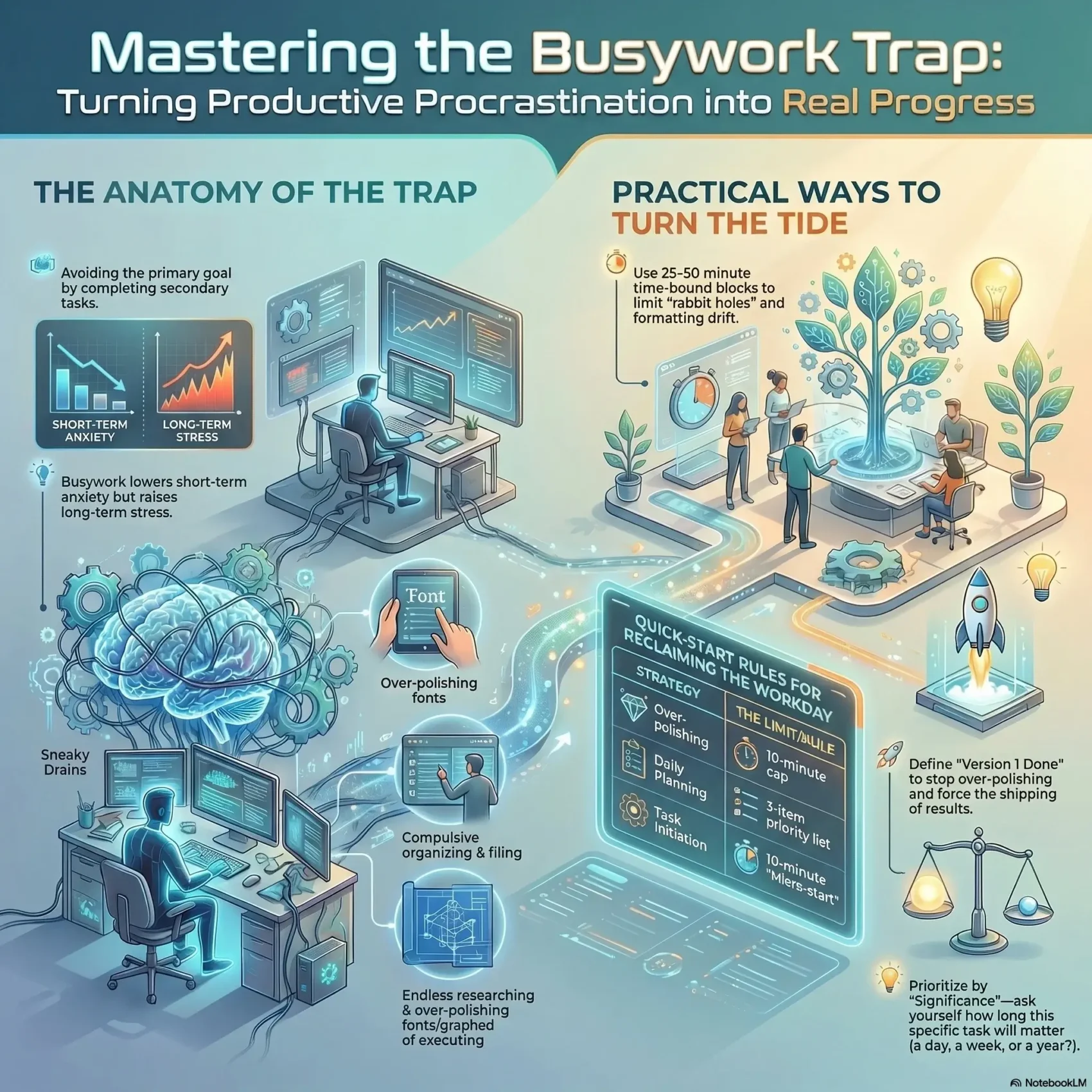
You might be busy and still not move your main project forward. This pattern—known as productive procrastination—shows up when you do smaller chores to avoid the hard, meaningful task. You check off things and feel relief, yet the important work sits untouched.
On a typical day you might answer emails, tidy a desk, or sort files instead of writing a report. The brain prefers quick wins when a project feels vague or risky. That choice reduces short-term anxiety but can raise long-term stress and shrink your available time for deadlines.
This is not about being a bad procrastinator. It’s about how your mind seeks certainty. A last-minute rush can feel effective because adrenaline and dopamine spike. Still, that rescuer effect is unreliable and often costly.
Read on to spot this habit, pick one shift to try today, and carve out real time for the task that matters most.
Key Takeaways
- You often trade big progress for many small wins.
- Doing busywork lowers short-term anxiety but raises long-term stress.
- A deadline rush feels effective but is unreliable.
- Spotting the pattern helps you choose one intentional change.
- Small steps, time blocks, and clear priorities can reclaim your day.
What Productive Procrastination Looks Like in Your Day Right Now
It’s easy to spend hours on legitimate chores and still not move the core project forward. You stay busy, but the most important work never gets traction.
Some signs are obvious: you tidy the desk, sort notes, or refresh your to-do list before you start. Other signs are sneakier — choosing fonts for a resume or hunting the perfect slide image for an hour.
You might jump to low-effort tasks like laundry or inbox clearing when a hard task appears. That shift looks like diligence, but it steals the time and focus the main task needs.
- Top three ways you avoid starting: polishing, prepping without end, and admin drift.
- Set a short endpoint for setups so preparation doesn’t expand to all of your day.
- Try a 10-minute cap on over-polishing so you begin real execution sooner.
Note: being a cautious procrastinator is common. The practical move is to spot one habitual detour and choose a simple rule to stop it.
Why You Procrastinate: Your Brain, Anxiety, and the Urgency Trap
When a big task looms, your mind often steers you toward safer, quicker chores that feel manageable. This is not just willpower failing; it’s how your brain seeks certainty and fast reward when a job feels risky or vague.
ADHD and executive function
If you have ADHD, starting and sustaining effort can be harder. Initiation, motivation, and goal-directed persistence are real executive function challenges.
Practical note: treat this as a systems issue, not a character flaw. Small, clear first steps beat blaming yourself.
Anxiety, adrenaline, and dopamine
Anxiety often rises as you delay. Avoidance lowers discomfort briefly, then the clock creates pressure. That pressure produces an adrenaline surge and a dopamine hit that make a last-minute sprint feel powerful.
“The urgency boost teaches your brain to wait for panic to start.”
The emotion underneath avoidance
Perfectionism, fear of failure, or the “not in the mood” belief all feed delay. Replace mood rules with tiny, time-boxed starts—ten minutes of writing or one quick outline.
- You’ll spot one early warning (like endless research).
- You’ll plan a simple counter-move (write for 10 minutes).
- You’ll use tools such as focus sprints to protect brief, actionable time.
Productive Procrastination Defined (and Why It’s So Convincing)
You can fill an afternoon with real to-dos and still dodge the one task that changes the outcome.
Definition: Productive procrastination is when you complete secondary tasks to avoid the primary one that truly matters. You get a hit of progress, but the main goal stays the same.
Piers Steel and the other names for this form
Academic attention rose after Piers Steel used the term in The Procrastination Equation.
This pattern also appears as procrastivity, positive procrastination, and structural procrastination. Knowing the aliases helps you spot the same form under different labels.
Why it feels good now and costs you later
Doing other work gives immediate relief. You cross things off, reduce short-term anxiety, and feel like you accomplished a lot.
But that reward trades away future time and raises long-term stress. Busy tasks rarely change the result you care about.
“If you only had 30 minutes today, would you pick this task over the main deliverable?”
- Ask whether a task moves the needle—or just fills time.
- Watch parts of your process that drift: research, formatting, and prep often turn into busy work.
- Use the simple test above as an approach to prioritize urgent feeling versus true importance.
Spot the Patterns: From “Organizing First” to Overengineering the Project
You may find yourself polishing small details so you never actually start the main project. That pattern looks like useful prep but can hide a delay strategy. Learn to spot both obvious and sneaky moves so you can protect real work time.
Obvious signs
You tidy your desk, gather materials, or shop for tools before you begin. These actions feel sensible yet they become a stall when they extend past a planned window.
Sneaky drains
A minute checking fonts or a search for the perfect image can stretch into an hour. These small choices masquerade as quality control but often end up wasting time.
Overengineering and defining “done”
Turning a single deliverable into a full website or portfolio can stop you from applying for jobs or finishing a task.
Fix: write a clear definition of done for version 1. List must-haves, leave nice-to-haves in a later parking lot, and start applying or shipping.
- Limit prep with short timers so organizing doesn’t eat your minutes.
- Break one large project into visible mini-tasks and milestones.
- Use templates and tight time boxes for formatting and aesthetics.
- Keep a short list of low-hanging fruit to handle after main work blocks.
Turn the Tide: Practical Ways to Work With Your Brain and Reduce Delay
Small wins can quietly replace the deep work that actually moves your career forward. Use short, clear methods to shift focus back to the project that matters.
Break tasks and set time-bound blocks
Break any big project into bite-sized tasks with one clear action and outcome. This lowers activation energy and makes progress visible.
Set a fixed work block (25–50 minutes) and take short breaks. Timers keep you from wasting time on low-return details.
Prioritize by time and value
Do a brain dump to empty your head, sort items by urgent vs. important, then write a three-item list for the day.
That small list guarantees forward motion even when minutes are scarce.
Cap rabbit holes and protect focus
- Time block formatting, research, and design with strict minute budgets.
- Reserve your best hours for thinking and creation, not finishing touches.
- Define a clear “first, next, last” sequence for each project.
Mood tools and supportive self-talk
Use music, a warm tea, or a quick walk to boost readiness. Start anyway if motivation is low.
“Ten minutes is enough to begin; version 1 gets feedback.”
Rehearse kinder self-talk to counter anxiety and perfectionism. Track micro-wins at the end of each block to train your brain to expect progress.
- Outcome: you make steady progress on big projects without losing hours to trivial tasks.
- Fast habit: a short list and one timed block each morning changes how you spend your time.
Beyond Urgency: Use Significance to Decide What Truly Matters
Small wins can steal the hours you need for the project that changes everything. Use significance as a third lens so your choices multiply future time instead of just clearing today’s list.
Think importance, urgency, and significance: how long will it matter?
Stephen Covey framed urgency vs. importance. Rory Vaden added significance—how long will this decision matter?
Ask three simple questions for each task: how soon does this matter, how much does it matter, and how long will it matter?
Focus on results, not volume: eliminate, automate, or delegate trivial tasks
Stop doing things that only give a quick sense of accomplishment. Free up your best time for high-significance work blocks.
- Shift to choices that compound value over time.
- Automate or delegate low-value tasks so you keep focus on the work that moves a project forward.
- Apply this to a website or portfolio: ship the smallest version that meets the goal, then upgrade.
- Give yourself permission to say no and protect your most valuable hours.
“Choose the work that pays you back tomorrow, not just today.”
Outcome: you trade busy volume for meaningful progress and gain a better chance to build the skills and results that last.
Conclusion
A string of legitimate tasks can quietly replace time for the project that will move you forward. Use a simple approach: spot when busywork shows up, then redirect the next block to one clear step on your highest priority.
Set a definition of done for that high-impact task, break it into three mini steps, and try one 25-minute block today. If you drift, reset in the next minute—small course corrections keep momentum.
Keep a short three-item list for tomorrow and cap formatting or research with strict minute limits. Use the significance question to choose fewer, better things so your work compounds over weeks.
Even as a procrastinator sometimes, you have the chance to run one experiment this week and change how your day builds progress.