Tools
Tools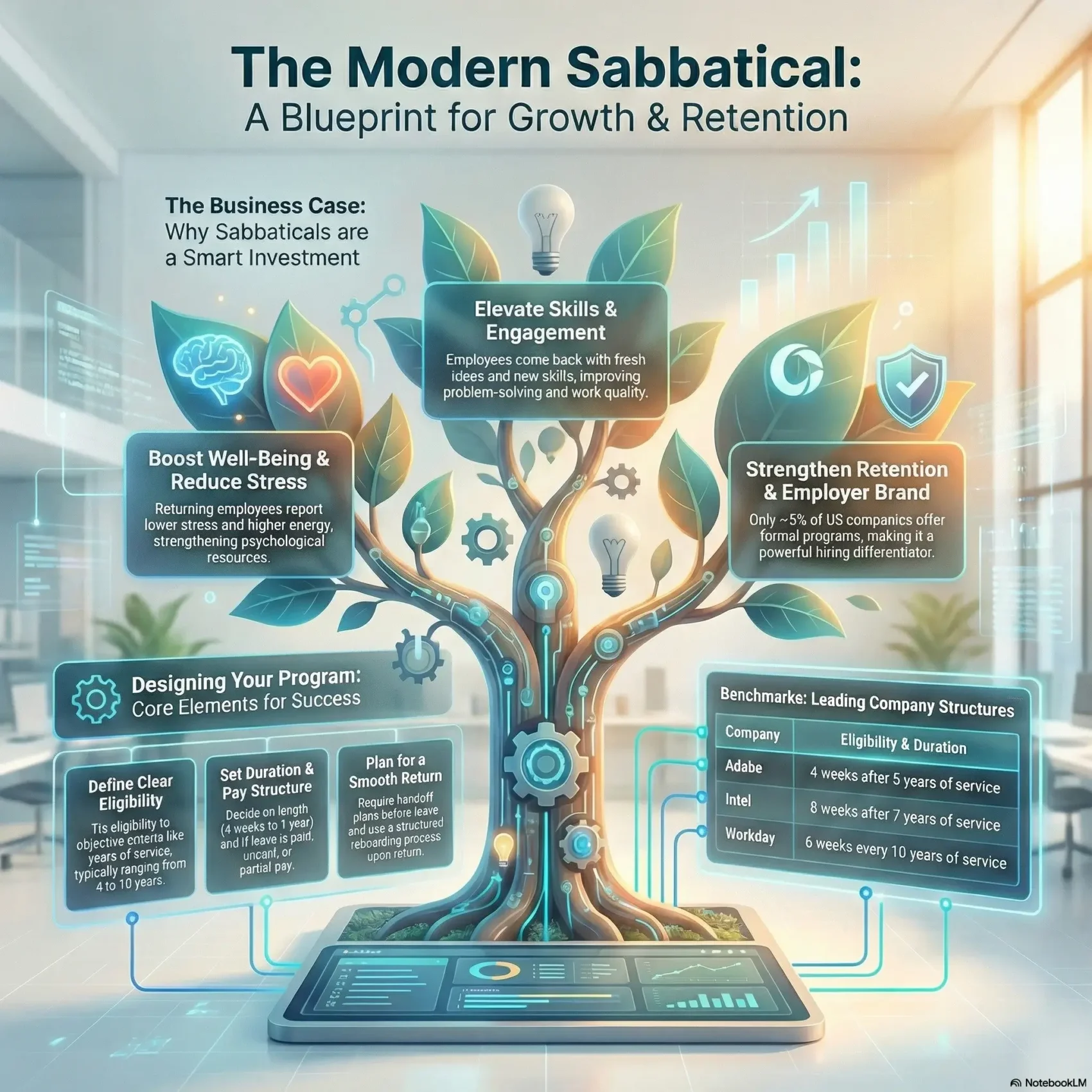
Last Updated on February 3, 2026
You want a clear approach that helps your team recharge and come back stronger. A well-designed sabbatical program explains what a sabbatical leave is, who qualifies, and how it supports long-term performance across your company.
These extended, employer-approved breaks go beyond regular leave and let employees rest, learn, or pursue projects. Some programs are paid, others unpaid or partially paid, and typical durations range from weeks to months based on years of service.
When you frame this as a strategic benefit, you show talent that your business values growth and retention. Leading employers such as Adobe, Intel, Workday, Monzo, and Bank of America have set examples by offering paid time for veterans of service.
In the sections ahead, you’ll see clear rules on eligibility, duration, compensation, notice, and return-to-work steps. This guide will help you craft a fair approach that protects operations while boosting morale and job satisfaction.
Key Takeaways
- Define what extended leave means and who can use it.
- Balance paid and unpaid options to fit your budget and goals.
- Set clear eligibility tied to years of service and job level.
- Plan approvals, notice, and return-to-work steps to reduce disruption.
- Use real company examples to benchmark your benefit design.
What a Sabbatical Is and Why It Matters Right Now
An employer-approved break gives your team a defined period away from work with a clear agreement to return. In practice, a sabbatical leave is typically longer than four weeks and can extend up to a year.
People use these periods for travel, volunteering, study, research, caregiving, or recovery. Some employees thrive with 4–8 weeks, while others need a long sabbatical to pursue deeper development.
Unlike a career break, this arrangement preserves the job relationship. That clarity helps managers plan and helps employees prepare for a smooth return.
- Defined length: clear duration and return expectations.
- Eligible timing: anchors like years of service balance access and continuity.
- Planned use: learning, wellness, and focused projects that boost future performance.
With burnout rising, formalizing leave matters. A transparent approach protects your people and makes this benefit a recruiting differentiator for your company.
The Business Case for Sabbaticals: Benefits for You and Your Organization
A formal program for long breaks turns time away into an investment in performance and resilience.
Reduce stress and boost well-being. Research shows the trend is rising: about 53% of managers report their organizations offer sabbatical leave. Employees who return often report lower stress, higher energy, and stronger psychological resources. One study found depression rates drop 29% for every ten days off.
Lift skills, engagement, and output. When people take a planned period away, they often come back with fresh ideas and new skills. That renewed focus improves teamwork, problem-solving, and day-to-day work quality.
Protect retention and your employer brand. Paid leave options can cut burnout and reduce regrettable departures. ADP data suggests many employees would value a break as much as a pay raise, which helps your company stand out in hiring.
- Use leave to stress-test succession and expose process gaps.
- Link breaks to professional development goals for measurable growth.
- Track simple ROI: retention, engagement scores, internal mobility, and time-to-productivity after return.
Paid sabbaticals reduce burnout and improve morale, while planned absences build cross-training and operational resilience.
Make it strategic: a clear sabbatical policy tied to years of service and development goals turns a benefit into a business lever, not a perk for its own sake.
Core Elements of a Sabbatical Leave Policy You Can Stand Behind
A clear set of rules turns generous time away into a predictable, fair benefit your team can use. Below are the core elements to include so employees and managers know what to expect.
Eligibility and years of service thresholds
Set straightforward eligibility tied to years service. Common thresholds run from 4 to 10+ years, with the first opportunity clearly stated.
Make criteria objective—job level, continuous service, and any performance requirements—so every employee sees when they qualify.
Duration, frequency, and cadence
Define minimum and maximum length: many companies use 4–6 weeks as a minimum and up to 12 months as a maximum.
Specify how often someone may take leave, for example every 4–7 years of service. That cadence avoids operational gaps.
Pay structure and use cases
Decide when leave is paid, unpaid, or partial-pay. You can link pay to purpose—fully paid for accredited study, partial-pay for volunteer work, unpaid for personal travel.
Notice, benefits, and conduct during leave
Require a notice period (often 2–3 months) and a handoff plan. Name approvers and timelines for decisions.
Clarify benefits handling: health coverage, retirement contributions, company equipment, and contract obligations like IP and confidentiality remain in force.
- Approval workflow: transparent reviewers, timelines, and criteria.
- Return commitments: expected post-leave service or role protections.
- Documentation: templates for applications, coverage plans, and checklists to simplify requests.
Design your leave policy to balance fairness, operational continuity, and clear expectations for both the employee and the organization.
Paid vs. Unpaid Sabbatical Leave: Choosing the Model That Fits
Your choice of compensation model shapes who can afford to step away and how your company manages staffing. A paid model removes financial barriers, while unpaid or partial-pay options help smaller businesses balance budgets.
When paid leave delivers outsized returns for morale and performance
Paid leave reduces financial stress and encourages broader uptake. Data show time off cuts depression rates and that many people value paid time as a top benefit.
Examples matter: Toggl gives four weeks paid after three years; Nike offers five weeks after ten years. These choices boost retention and the employer brand.
How unpaid or partial-pay options balance budgets with flexibility
Unpaid leave is cheaper and common for smaller employers. Partial pay is a practical middle path: a stipend or percentage of salary supports employees without stretching the budget.
- Weigh trade-offs between paid, unpaid, and partial-pay models for fairness and cost.
- Consider paid time for development or volunteering, unpaid for personal travel.
- Set caps on weeks and define job protections so employees know what to expect.
Even modest paid support can increase uptake; partial-pay lets you offer access while protecting operations.
Implementing a Sabbatical Program Without Disrupting Operations
A successful program launches with simple rules, clear deadlines, and visible tracking for requests. Start by publishing your sabbatical leave policy so everyone knows the eligibility and criteria. Make the application process short, digital, and traceable.
Rollout, approvals, and transparent criteria
Publish clear criteria—years of service, role limits, and expected duration—so managers apply rules consistently. Require a lead-in notice and a standard approval timeline to avoid last-minute gaps.
Coverage, knowledge transfer, and timing
Align duration and weeks of leave with business cycles; open more slots in slower seasons. Use a standardized coverage-plan template that lists tasks, owners, training needs, and an escalation path.
Communicate and train to drive fair uptake
Train managers to balance approvals and workload. Share FAQs, manager kits, and Q&A sessions so every employee understands how to prepare handoffs and documentation.
- Require cross-training and a lead-in period for handoffs.
- Monitor capacity with simple dashboards: weeks covered, open risks, and time-sensitive tasks.
- Gather feedback after each return and celebrate successful departures and smooth coverage.
“Simple rules, fair review, and solid handoffs let employees recharge while your company stays productive.”
Return to Work That Works: Making the Comeback Count
Your best returns start with agreed timelines and a short, practical reboarding plan. Before the leave begins, confirm role guarantees and the exact return date so you and the employee know which job they resume and when.
Role guarantees, timelines, and expectations
Document whether the employee will get their previous role or a comparable position. Set clear expectations for the first 30–90 days and note any post-leave service commitment tied to benefits.
Reboarding, training, and applying new skills
Build a reboarding plan that covers org changes, priorities, and team updates. Provide focused training to refresh core workflows and turn new skills into on-the-job results.
- Confirm role and return date before the break.
- Plan training and 1:1 check-ins during the first weeks.
- Invite knowledge sharing so the employee applies fresh perspectives to development and projects.
- Document outcomes—ideas implemented, projects accelerated, and measurable value after the period away.
“Structured reintegration protects operations and makes the return work meaningful for both the employee and the team.”
Sabbatical Policy Benchmarks and Real-World Examples
Practical examples from recognized companies reveal common eligibility windows and timeframes. Use these benchmarks to shape a sabbatical leave policy that fits your size and goals.
Typical US ranges: eligibility and length
Most employers set eligibility between 3 and 10+ years of service. Durations run from 4–6 weeks up to 12 months depending on role criticality.
What leaders do
- Adobe: tiered weeks (4 after 5 years, 5 after 10, 6 after 15).
- Bank of America: 4–6 weeks paid after long tenures; limited repeats.
- Intel: 4 weeks after 4 years or 8 after 7 years; Workday: 6 weeks every 10 years.
- Toggl and Nike offer earlier or mid-tenure paid options to attract talent.
Lessons you can adapt
Design tiers, require clear notice, and link training to return plans so employees capture new skills and teams stay covered.
“Only ~5% of US companies have formal programs—making yours a real differentiator.”
For implementation tips that help operations and productivity, see smart SOPs and productivity.
Alternatives When a Long Sabbatical Isn’t Feasible
Not every team can support long time away, but you can still offer meaningful options that help people rest and grow without a full career break.
Flexible schedules, short-term leave, and funded learning
Design flexible alternatives—compressed weeks, extra remote days, or adjusted hours—that let employees recharge while keeping workflows intact.
Short-term leave of 1–3 weeks can cover exams, caregiving, or recovery when longer leave is not possible. Temporary part-time or phased schedules also buy breathing room during stress peaks.
- Offer funded professional development: course fees, certifications, or learning stipends to support growth without long absences.
- Align options with business cycles and require a simple coverage plan to protect continuity.
- Document eligibility, approval steps, and duration limits so alternatives apply fairly and consistently.
Keep communication open between the employee, manager, and HR to tailor the right path. Track outcomes—well-being, performance, and retention—to expand what works.
For scheduling ideas that help you implement flexible options, see flexible work schedules.
Conclusion
A clear, well-run leave program turns time away into measurable gains for your team and business.
Define eligibility, duration, pay, notice, and return-to-work in plain terms so every employee sees what to expect. Use benchmarks from Adobe, Intel, Workday, and others as templates for a practical sabbatical program.
Pair planned time with transparent approvals, simple handoffs, and a short reboarding plan so return work captures new ideas. Match paid, unpaid, or partial-pay choices to your stage and budget.
Offer alternatives—flex schedules, short-term leave, and funded learning—so talent without long breaks still gets support. Track retention, engagement, and performance, and let HR and managers iterate the policy as you learn.
When you give people time to reset and grow, they come back ready to do their best work.