Tools
Tools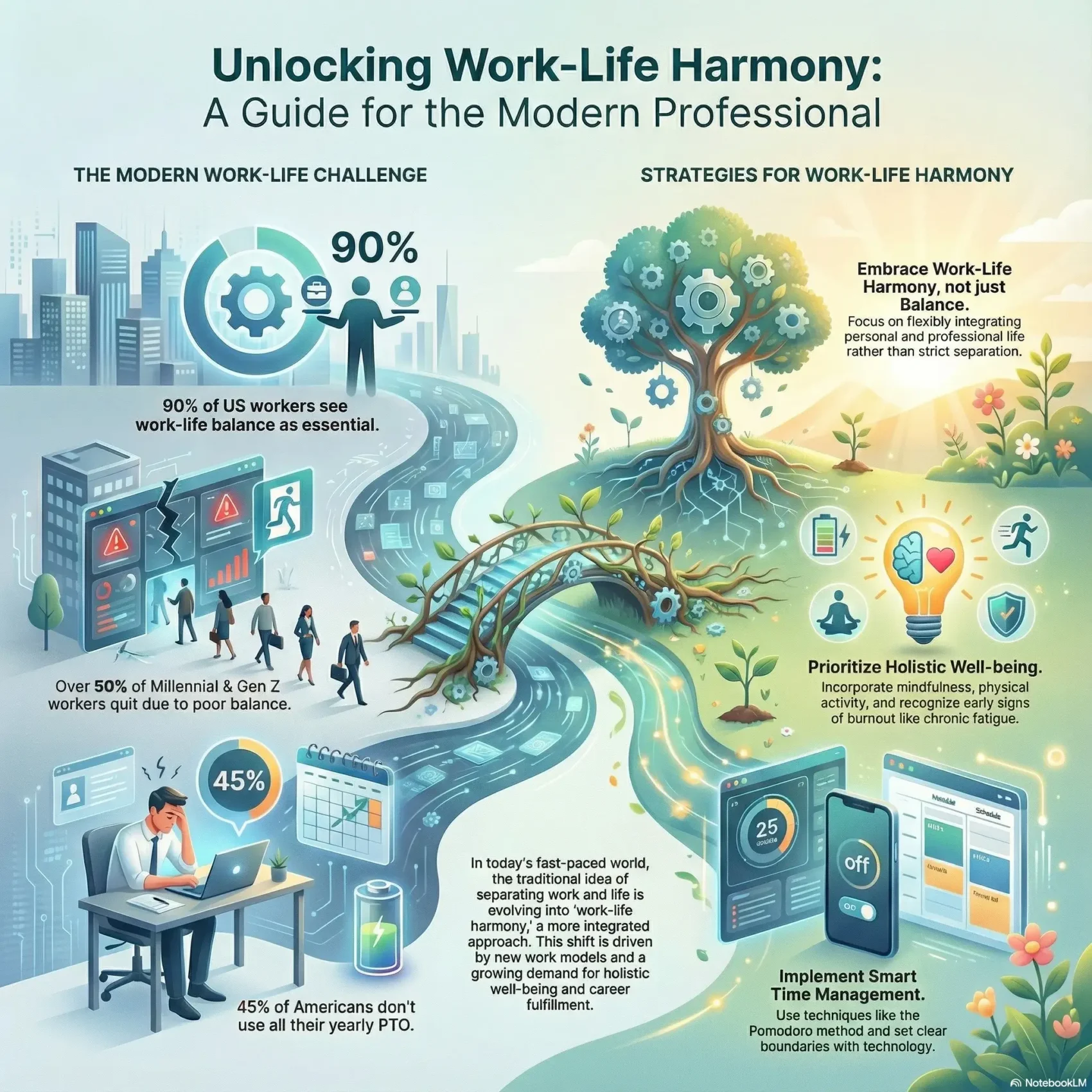
Last Updated on January 3, 2026
In today’s fast-paced world, achieving a work-life balance is crucial. Employees often find their work encroaching on their personal lives, leading to stress and imbalance. Did you know that one in three Americans feels guilty for taking time off, and nearly 45% don’t use all their yearly PTO? As we move forward, a strategic approach is essential for holistic well-being and career satisfaction.
By prioritizing your mental, physical, and emotional health, you can excel at work. Setting clear boundaries between work and personal life is key to maintaining balance and enhancing well-being. Taking full advantage of your vacation time can serve as a much-needed reset, allowing you to return refreshed and more productive.
This article will explore the various aspects of work-life balance and provide practical strategies for a more harmonious future. You’ll learn that achieving balance is not just a wish but a skill that can be developed and refined.
Key Takeaways
- One out of three Americans feel guilty for taking time off.
- 45% of Americans don’t use all their yearly PTO.
- Building boundaries between work and personal life fosters holistic well-being.
- Unplugging and utilizing vacation time improves mental health.
- Prioritizing your mental and physical health enhances career fulfillment.
The Importance of Work-Life Balance in Today’s World
In today’s fast-paced workforce, the need for work-life balance is more crucial than ever. Employees often face the challenge of managing multiple responsibilities, leading to heightened stress and burnout. It’s vital for companies to acknowledge the significance of employee well-being in achieving overall success.
Companies like Autogrill and ENEL show a deep commitment to work-life balance through their corporate welfare policies. These policies create environments that nurture creativity and innovation, allowing employees to excel both personally and professionally. Studies show that a balanced work-life scenario is linked to higher job satisfaction and better mental health.
Statistics show that a remarkable 90% of US workers see work-life balance as essential in their roles. Moreover, over half of Millennials and Gen Z workers who have left their jobs pointed to poor work-life balance as the main reason. These facts underscore the need for companies to offer policies that support flexibility, making employees feel valued and supported.
Companies that prioritize work-life balance not only boost employee retention but also uplift the workplace morale. A balanced life leads to healthier, happier employees who can perform at their peak, ultimately driving the success of the organization.
Understanding the Concept of Work-Life Harmony
Work-life harmony offers a modern view that blends professional and personal life, not separating them. It shows that work and personal duties can live together in harmony. This approach is vital for a fulfilling and productive life.
Defining Work-Life Harmony
Work-life harmony means having a flexible mindset that balances your efforts across different life areas. It differs from the old idea of work-life balance, which often demands strict separation between work and personal time. Harmony promotes a dynamic interaction between these spheres. It’s about making thoughtful choices to ensure your work supports your personal goals.
How Work-Life Harmony Impacts Personal Development
Integrating work and personal life through a holistic approach boosts personal growth. By focusing on daily tasks, taking breaks, and setting priorities, you develop key skills like time management and self-awareness. These skills not only improve your current productivity but also prepare you for future challenges at work.
Moreover, building a supportive network fosters empathy and understanding at work. This creates a culture that values well-being and satisfaction. Pursuing work-life harmony can give you a deeper sense of purpose in both your career and personal life.
Work-Life Balance Future: Trends and Challenges
The future of work-life balance is evolving with new trends that impact both personal and professional lives. Recent work-life balance trends highlight the rise of remote work and flexible schedules, especially after the COVID-19 pandemic. These changes give you more control over your time, affecting your ability to balance work and personal life.
However, these benefits come with challenges in the workplace. The rise of technology means constant connectivity, blurring the lines between work and personal time. You might find yourself checking emails or attending virtual meetings outside regular work hours.
Companies are adapting to these changes. They’re focusing on employee well-being by offering mental health support, wellness programs, and work-life balance trends that focus on outcomes, not just hours worked. This approach promotes efficiency and values the quality of work. For example, today’s job seekers often prefer flexibility and wellness support over higher pay.
As new generations join the workforce, the landscape will keep changing. Younger workers, from Generations Y and Z, value job satisfaction and meaningful work over traditional rewards like higher pay. This shift challenges traditional work norms, hinting that the future of work might focus more on freedom and energy than just time worked.
Understanding the challenges in the workplace is key as we move forward. Developing a strong strategy for maintaining well-being in a demanding work environment is vital. By promoting a supportive culture and valuing mental health, companies can build workplaces where employees feel valued, engaged, and motivated.
Strategies to Enhance Holistic Well-Being
Improving holistic well-being requires intentional strategies that combine mindfulness with physical health. These practices significantly reduce stress and boost productivity in both personal and professional areas.
Practical Tips for Mindfulness and Stress Reduction
Mindfulness techniques, like meditation and breath awareness, are effective in lowering daily stress and improving focus. Here are some practical tips to incorporate mindfulness into your life:
- Start each day with a few minutes of meditation to set a positive tone.
- Incorporate short, mindful breaks into your work routine to reset and recharge.
- Practice breath awareness during stressful moments to regain control of your thoughts.
- Join a mindfulness group or online community for guided sessions and support.
Incorporating Physical Activity into Your Routine
Understanding the benefits of physical activity is crucial for a balanced lifestyle. A consistent routine enhances mood and cognitive function. Here are ways to integrate physical activity into your day:
- Opt for walking meetings or stand-up meetings to promote movement.
- Use breaks to engage in quick physical activities, such as stretching or a brisk walk.
- Set aside specific times each week for structured workouts, whether at home or a gym.
- Explore group fitness activities that foster community and motivation.
Career Fulfillment: Finding Purpose in Your Work
Embedding meaning into daily tasks is key to career fulfillment. Many chase the elusive concept of *purpose-driven work*, only to find it doesn’t match their job’s reality. This often leads to dissatisfaction, despite believing the job was their calling.
Research shows focusing on making work meaningful leads to a more rewarding career than solely seeking a defined purpose. Enjoying and excelling in tasks significantly boosts *job satisfaction*. Enhancing skills you already have not only energizes you but also builds recognition and a sense of usefulness. Scholars note that continuous skill development links to increased happiness and deeper meaning in one’s profession.
As students enter the workforce, they often seek *purpose-driven work* alongside growth opportunities. With the average job tenure in the private sector at about 3.7 years, there’s a trend towards a fluid career path. People may change jobs 10–15 times across various industries in their lifetime.
Organizations should foster environments that support *career fulfillment*. This can be done through wellness stipends for fitness memberships or financial support for professional development. Employees do better when their companies support a healthy work-life balance, which enhances team morale and productivity.
To achieve balance, personal practices that boost well-being are crucial. This includes taking breaks, enjoying hobbies, or daily walks with pets. By promoting *job satisfaction* and recognizing individual contributions, companies can guide their workforce towards a more fulfilling career journey.
Time Management Techniques for Better Balance
Striking a balance between work and personal life often seems daunting. Effective time management techniques can help you take back control of your daily schedule. This leads to a more fulfilling and productive life. Consider using the Pomodoro Technique and setting technology boundaries to boost your efficiency.
Utilizing the Pomodoro Technique
The Pomodoro Technique is a method that boosts productivity by dividing work into 25-minute intervals, followed by a 5-minute break. This technique enhances focus and prevents mental fatigue from prolonged work. By focusing on shorter, intense work periods, tasks become less overwhelming.
It’s beneficial to prioritize tasks during these intervals. This allows you to address the most critical items first. This approach can significantly improve your productivity.
Setting Boundaries with Technology
In today’s fast-paced world, setting clear technology boundaries is crucial. Designating “no work” times helps create space for personal activities and family time. Disconnect from emails and avoid work notifications during these hours.
This not only improves your well-being but also boosts your productivity during work hours. Knowing when to turn off technology is key to maintaining a healthy balance between work and personal life.
Work-Life Integration: A Modern Approach
Work-life integration is a forward-thinking strategy that merges professional duties with personal interests seamlessly. It ensures both your professional and personal life thrive together. By blending these spheres, you craft an environment that boosts satisfaction in all areas of your life.
Blending Work and Personal Life Sensibly
It’s essential to grasp the difference between work-life balance and work-life integration. Instead of sticking to strict work hours, adapt your day to fit both your personal and professional life. Overlapping work and personal time can lead to dissatisfaction. By structuring your schedule thoughtfully, you enhance your overall experience.
Creating a Productive Home Office Environment
Setting up a productive home office is key to staying focused while working from home. Ensure your workspace has essential elements like ergonomic furniture and proper lighting. Personalizing your area reduces distractions, creating an ideal setting for work and relaxation. Employers should value this environment and support sustainable work-life integration.
Offering employee benefits, such as childcare support and flexible tools, boosts work-life balance. Managing your personal and professional life together can significantly increase productivity. Studies indicate that 43% of people work more efficiently with flexible hours. Embracing work-life integration benefits not just your work but also your overall well-being.
Discovering new ways to combine work and personal life can lead to a more productive home office. For more tips, check out time management strategies tailored to your lifestyle and commitments.
Mental Health: The Foundation of Work-Life Balance
Strong mental health is crucial for a lasting work-life balance. Recognizing burnout signs early allows you to act before things worsen. Spotting symptoms like chronic fatigue, irritability, and disengagement can greatly improve your well-being.
Recognizing Signs of Burnout
It’s vital to understand burnout signs for personal and professional growth. Symptoms include:
- Chronic fatigue leading to reduced energy levels
- Increased irritability affecting relationships
- Disengagement from work and personal interests
- Difficulty concentrating on tasks
- Feeling overwhelmed by daily responsibilities
Addressing these issues quickly can boost your mental health. Remember, stress from work can significantly impact your life quality.
Seeking Professional Guidance When Needed
If you’re dealing with ongoing burnout, seeking professional help is key. Mental health experts offer support in managing stress, creating coping strategies, and understanding your challenges. This support helps you achieve a better work-life balance, enabling you to handle demands with ease and resilience.
Conclusion
The path to a balanced work-life future demands careful planning and tailored strategies. Recent findings show that 41% of people now prioritize work-life balance over salary, a significant change post-pandemic. This shift underscores the growing value placed on holistic well-being. By creating an environment where employees flourish both personally and professionally, companies can cut down on turnover costs, which average around £30,000 per replacement. Moreover, they see a nearly 52% increase in operating income from highly engaged employees.
Effective time management and mental health support can greatly reduce the risk of chronic stress-related illnesses. For instance, those working long hours face a 60% higher risk of heart issues. Focusing on holistic practices helps prevent health problems and ensures you meet both career and personal obligations. Remember, integrating holistic well-being into your daily life is crucial to overcoming these hurdles.
Ultimately, achieving a work-life balance is not solely about managing time. It’s about enhancing your life’s quality. By investing in your well-being and identifying stress signs, you set the stage for a rewarding career and fulfilling personal life. As work continues to evolve, adopting a holistic approach will help you navigate its complexities better, leading to enhanced productivity and emotional strength.