Tools
Tools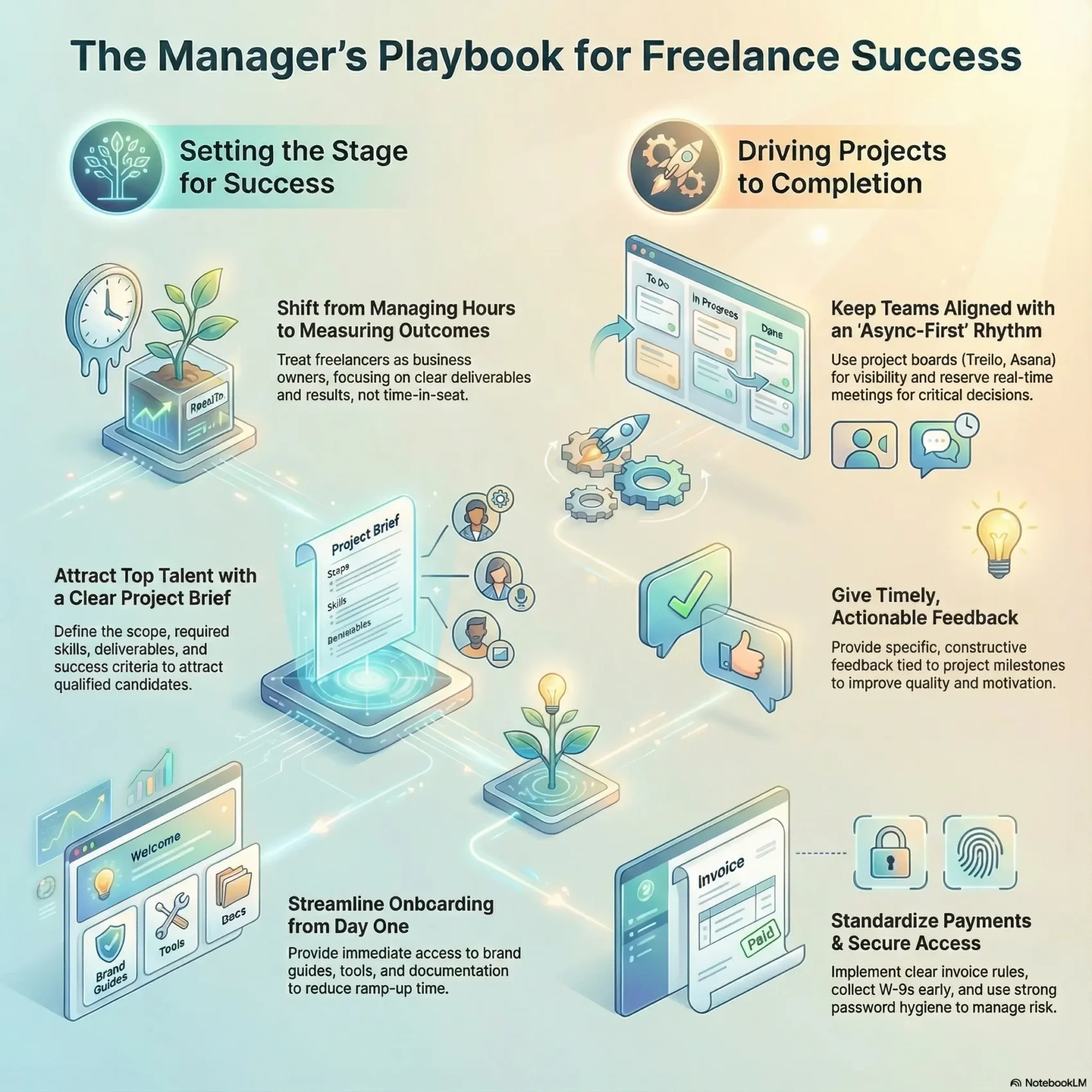
Last Updated on December 13, 2025
You need a clear, practical plan to get reliable results from contract talent. The U.S. has tens of millions working as independent pros today, and your company can tap that pool without adding headcount.
This introduction gives concise information on what freelancers are and the common challenges you will face, from time zones to invoicing and security. You’ll learn lightweight routines that align remote contributors with your team and company systems.
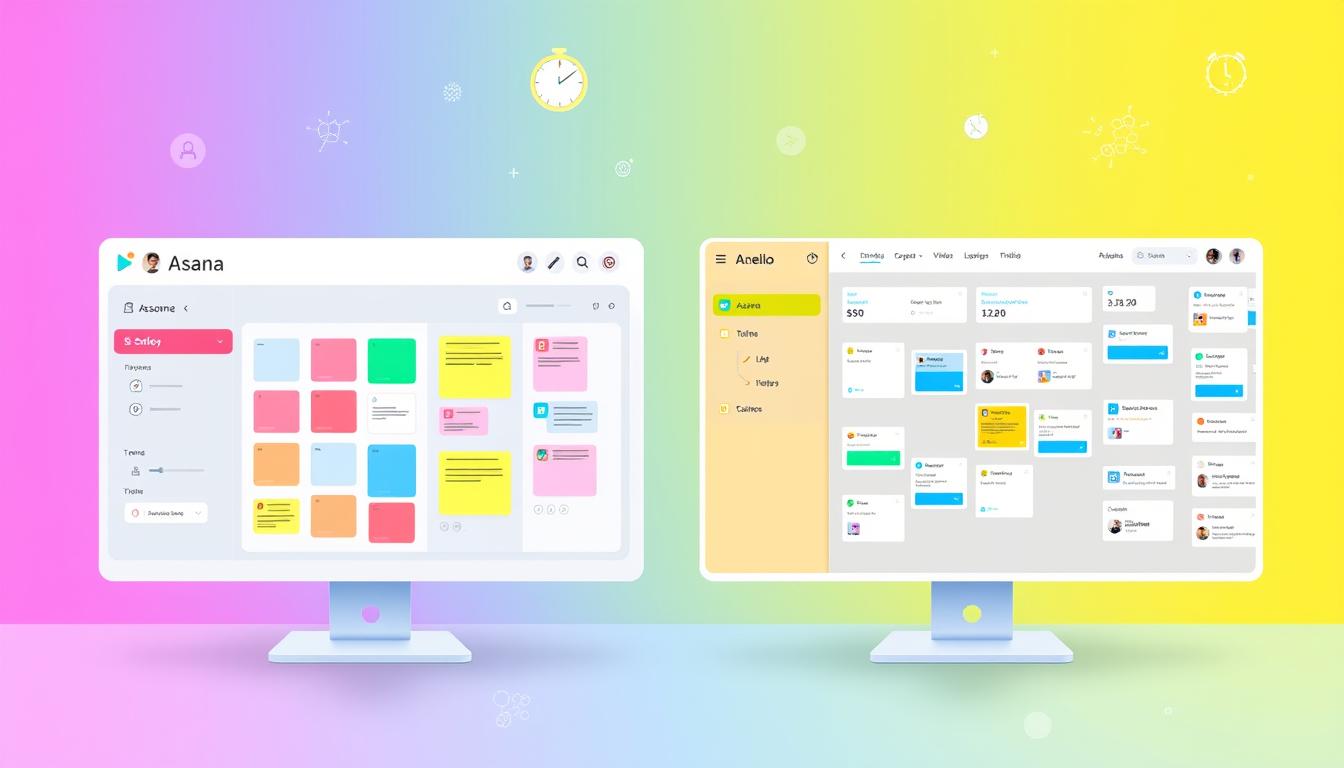
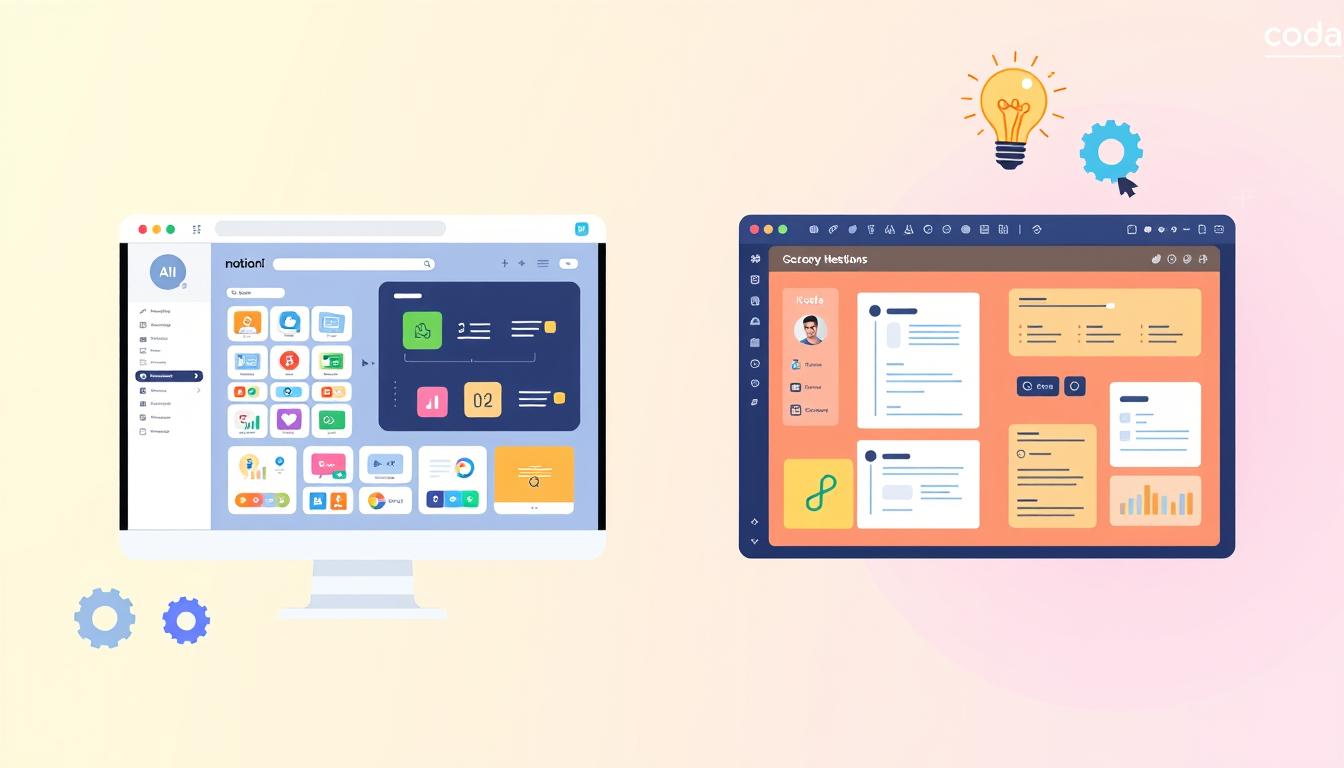
Expect concrete steps: scopes, milestones, feedback loops, and tools like Trello, Asana, Notion, Clockify, and Harvest to build visibility. These practices reduce rework and let your team focus on higher-value strategy.
By the end, you’ll have a simple playbook to improve contractor oversight, cut admin friction, and drive project success for your business.
Key Takeaways
- Learn a step-by-step approach so work runs smoothly without extra staff.
- Set clear scopes, milestones, and feedback to reduce rework.
- Use familiar tools to create visibility and align expectations.
- Address tax and payment basics to limit administrative friction.
- Establish communication cadences and security practices to keep the team in sync.
Why managing a distributed freelance team matters right now
The rise of remote contract talent has shifted how companies staff critical work.
You’re hiring in the most freelance-heavy market to date: 73.3 million U.S. independent workers in 2023, projected to exceed 90.1 million by 2028. That scale gives your business fast access to niche skills and flexible capacity without adding payroll.
But this shift brings clear challenges. Coordinating across time zones, aligning multiple contributors on marketing and product work, and streamlining diverse payment models can stall delivery if you don’t set simple rules.
What helps: an async-first rhythm, a single source of truth for briefs and brand assets, and lightweight checkpoints so quality stays high while speed improves. Use dashboards to surface progress without constant meetings.
- You can hire stronger skills than your local market offers, but you must align schedules and handoffs.
- Clear scopes and shared information reduce rework and keep your team focused.
- As freelancing surges, you’ll have more options for short-term jobs—so be precise about roles and outcomes.
Managing freelancers 101: the foundational mindset you need
Treating contract talent like business partners changes how you set expectations and measure results. A freelancer is an independent business owner, not an employee. They handle invoicing, taxes, and their own schedule.
Understand what a freelancer is and isn’t
You’ll focus on the quality of work and clear deliverables, not policing hours. Give context about the project and where their piece fits in the bigger goal.
Shift from time-in-seat to outcomes and deliverables
Define specs, acceptance criteria, and timelines. Make success measurable so you can assess results without tracking time minute-by-minute.
Balance freedom with clear processes
Set a simple process: expectations, reporting cadence, and asset locations. Agree on tools, check-ins, and escalation steps at kickoff so there’s no ambiguity.
“Give clear briefs, timely feedback, and the space to do great work.”
- Coach, don’t micromanage: offer context and constraints, then trust skills.
- Document the process: a minimum viable process helps new contributors plug in fast.
Choosing and hiring freelancers who fit your project and culture
Start by describing the result you need; talent self-selects from clarity. Write a short brief that names scope, required skills, deliverables, and acceptance criteria so applicants can self-qualify before you review resumes.
Where to look matters. Use marketplaces like Upwork, Fiverr, and Freelancer.com, plus referrals and niche communities. For marketing or product work, shortlist candidates by real portfolio samples tied to similar projects.
Vetting signals that predict success
Prioritize testimonials, clear references, and consistent availability. Ask candidates to walk you through a relevant case so you hear their decisions, constraints, and outcomes.
- Choose samples that show measurable results over generic mockups.
- Confirm rates and scheduling up front to avoid surprises.
- Run a small, paid test when stakes are high to verify collaboration style.
Be realistic with timelines and budget
Top talent can pick clients. Be honest about timelines and budget to attract the right expertise. Use tools like Trello, Asana, ClickUp, or Notion to outline the job and Clockify or Harvest to set budget checks.
“Clear briefs, fair pay, and fast feedback make you a preferred client.”
When you set selection criteria in advance—must-haves, nice-to-haves, and cultural fit—you turn hiring freelancers into a repeatable, low-bias process. For context on the changing landscape of independent work, see the future of freelancing.
Onboarding contractors the right way from day one
On day one, clear documentation and the right permissions shorten ramp time and reduce questions. Give context, tools, and a single place for answers so your new contributor can do great work quickly.
Share docs, brand rules, and NDAs
Start with a lightweight NDA, then share brand guidelines, voice and tone, style guides, and exemplar content. These items let a freelancer match your expectations without long back-and-forth.
Set communication cadence and channels
Agree on channels up front: async Slack updates, scheduled calls, and email for approvals. This communication rhythm keeps your team in sync across time zones and respects focused hours.
Clarify roles, reporting, and escalation
Document who approves work, who reviews drafts, and how to raise blockers. Clear escalation paths speed decisions inside your company and cut needless delays.
Kickoff checklist and structured check-ins
- Confirm access to CMS, design files, PM boards, storage, and passwords.
- List deliverables, milestones, timelines, and review cycles in your PM tool.
- Agree on file naming, versioning, and where content lives.
- Set a lightweight time/budget logging approach (Harvest or Clockify) if needed.
Don’t micromanage. Schedule predictable check-ins and centralize feedback with due dates. That preserves focus and gives you steady visibility into progress.
Tip: Keep onboarding materials evergreen so each new engagement starts faster and with fewer questions.
Communication, tools, and processes that keep projects on track
When teams span time zones, simple rules for communication and tools prevent small delays from becoming big problems. Start with an async-first rhythm: concise email summaries and short message threads give your team and contractors context without requiring immediate replies.
Use meetings only for decisions and blockers
Reserve real-time calls for complex decisions. Keep agendas tight. End with named owners and due dates so the next steps are clear.
Project boards and a single source of truth
Use Trello, Asana, ClickUp, or Notion to show status at a glance. Standardize workflow stages—Backlog, In Progress, In Review, Approved—so everyone sees where a project stands.
Track time and budget without micromanaging
Adopt Harvest, Clockify, or Time Doctor for transparent tracking. Focus on outcomes and exceptions, not every minute. This helps you keep track of scope while preserving autonomy.
- Templates and naming conventions speed onboarding and reduce version confusion.
- Dashboards surface upcoming deadlines and risks without status-chasing.
- Integrate marketing calendars into the PM tool to align launches and content.
- Response norms: set a 24-business-hour expectation per channel to reduce noise.
“Clear rules, shared tools, and a single repository cut friction and shorten delivery time.”
For tips on coordinating multiple initiatives and improving overall productivity, see multiple-projects productivity.
Tracking work, measuring success, and giving feedback that sticks
Clear success metrics turn subjective reviews into useful coaching moments. Start by defining role-specific KPIs so evaluation is objective and tied to outcomes.
Define KPIs per role and per funnel stage
Set simple, measurable indicators: content quality scores, design approval rates, bug counts, and marketing funnel metrics. Link each KPI to a milestone so you can accept work quickly.
Attribution when multiple contributors touch a project
Map deliverables to milestones like draft acceptance, stakeholder approval, and live performance. Use a lightweight scoring model to apportion credit and pinpoint blockers.
Feedback rhythm: constructive, actionable, and timely
Give feedback fast and specific. Reference the brief and user impact, and batch comments to reduce thrash for the freelancer and your clients.
- Project metrics: cycle time, revision counts, on-time delivery.
- Review cadence: weekly or biweekly sessions with a consistent rubric.
- Recognition: public call-outs and recap notes to boost motivation.
Motivation at a distance: recognition, context, and ownership
Share the “why” behind requests and show performance snapshots so contributors feel ownership. Track time only when needed to flag scope creep or repeated rework.
“Timely, specific feedback turns a pass into a learning loop rather than an argument.”
Payments, invoices, and U.S. tax considerations for managers
A predictable pay process protects relationships and keeps projects moving. Set clear rules for invoice fields, file formats, and payment runs so work doesn’t stall over paperwork.
Standardize invoice intake and payment schedules
Require a simple invoice template with PO number, line items, and due date. Pick terms (Net 15/30) that suit your approvals and tell each client and freelancer up front.
Using software to keep track of who’s owed what and when
Use AP or accounting tools to keep track of open invoices, upcoming payouts, and budget-to-actuals by project.
Setting rates, milestones, and change-order processes
Lock rates and milestones in the contract and add a short change-order workflow. Link payments to acceptance criteria so you pay for agreed outcomes, not hours.
Year-end documentation and Form 1099 considerations
Make sure you capture W-9s during onboarding so year-end 1099 reporting is smooth. Independent contractors handle their own taxes and often make quarterly estimated payments.
“Clear payment rules reduce surprises and keep teams focused on delivery.”
- Tip: Reconcile monthly and keep tax-friendly records so year-end taxes are easier for your business and your contractors.
Risk management for remote work: security, compliance, and boundaries
A single weak credential can expose sensitive company information across projects. Cybercrime losses topped $10 billion in 2022, so you must treat security as part of routine project setup.
Start with access control. Use least-privilege permissions and revoke credentials at offboarding. Separate production and staging access and log changes so you can audit who did what.
- Password hygiene: require strong passwords, MFA, and periodic resets. Use encrypted storage for secrets.
- Approved tools: list which collaboration and file-sharing tools are allowed and explain why others are blocked.
- Scopes and boundaries: write crisp briefs that limit revision rounds and define what’s out of scope to prevent scope creep and burnout.
Plan coverage across time zones. Set handoff times and on-call protocols before fixed deadlines so projects stay on track overnight. Make sure incident reporting and escalation paths are documented for legal or compliance questions.
“Turn security into a shared habit: teach phishing awareness, device hygiene, and how to flag risks early.”
Run periodic audits of access and tool usage. When your team, contractor, or freelancer can raise concerns without fear, you reduce risk and protect the work you rely on.
Conclusion
A clear closeout routine, turns one-off gigs into repeatable, reliable work for your company.
Use a short checklist: final deliverables, acceptance notes, light metrics, and a quick email recap. That keeps project management simple and preserves context for the next job.
Treat freelance relationships as strategic partnerships. Set expectations, use visible boards and reliable tools, and give timely, specific feedback so people deliver quality content and design on time.
Standardize payments, collect W-9s, and keep tax steps tidy. Do this and your business will move faster, protect client trust, and scale with the skills you need.