Tools
Tools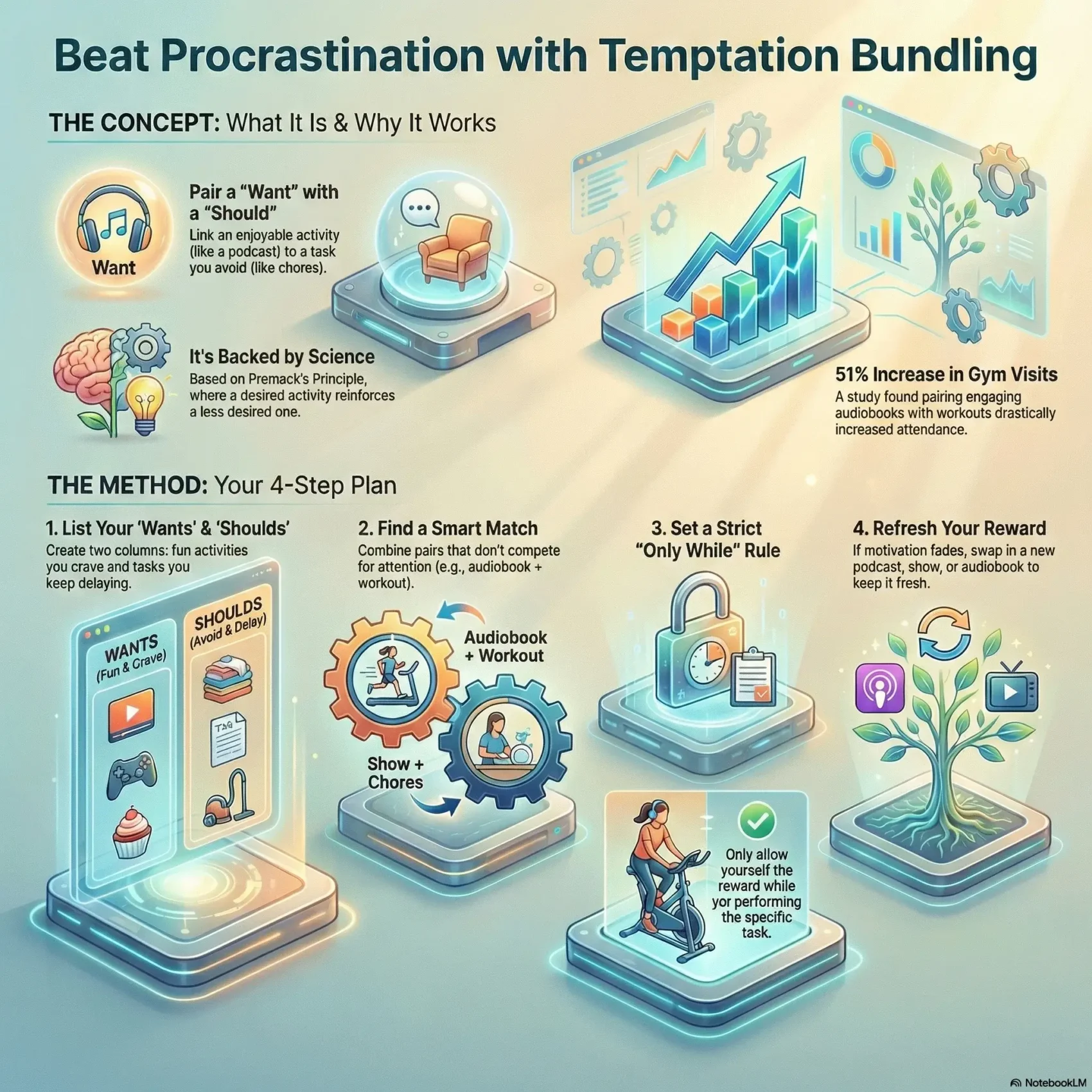
Last Updated on February 1, 2026
You can make progress feel fun instead of forced. This short intro shows how pairing a want with a should task helps you get things done without burning through willpower. Real examples range from Ronan Byrne’s Netflix-and-cycle setup to ABC’s Thursday-night ritual that turned TV time into a cozy habit.
The approach rests on Premack’s Principle: high-probability activities reinforce low-probability ones. Research by Katherine Milkman found that combining engaging audiobooks with gym visits raised attendance by 51% over ten weeks.
In this article, you’ll learn a clear strategy to pair your favorite activity with chores, reduce decision fatigue with simple “only while” rules, and refresh rewards after routine disruptions like holidays.
Key Takeaways
- What it is: Link a want activity with a should task to enjoy progress immediately.
- Why it works: Premack’s Principle and lowered reliance on willpower.
- Real examples: Netflix-and-cycle, TV with rituals, audiobooks at the gym.
- How it helps: boosts productivity, cuts procrastination, supports health and goals.
- Quick start: pick one task, pick one reward, set an “only while” rule.
What is temptation bundling and why it works
Definition: pairing a “want” activity with a “should” task
Link a desired activity—like an audiobook, podcast, or a favorite show—to a task you’d otherwise avoid. Make the fun conditional: you only listen or watch while you do the work. That simple rule turns the reward into a prompt and makes the task less painful.
The science: Premack’s Principle and the evidence
Premack’s Principle explains why this works: higher‑probability behaviors reinforce lower‑probability ones. A notable 10‑week study led by Katherine Milkman tested this idea in gyms.
Participants who could only listen to gripping audiobooks during workouts increased gym visits by 51% versus a control group.
The gains weren’t permanent: attendance dipped after Thanksgiving, showing that rewards may need refreshing after breaks. Big brands use the same trick. ABC’s weekly schedule turned ritualized shows into time cues that signaled relaxation.
- Why it helps: the reward becomes part of the activity, so you rely less on willpower.
- Where it works: gym sessions, chores, admin tasks, and almost any habit you want to build.
- Key tip: pick a clear want, a clear should, and set a strict “only while” rule to improve decision making and productivity.
How to use temptation bundling step by step
Start by making a clear two-column list: on the left, write the fun activities you crave; on the right, jot the chores you keep delaying. This simple visual helps you see obvious matches and avoids throwing everything at once.
Make a two-column plan
Create a compact list with 3–5 items per column. For example, podcasts, a favorite show, or a page‑turner audiobook on one side and workouts, overdue emails, or laundry on the other.
Check for conflicts
Match pairs that won’t compete for attention. Don’t pair a complex report with a fast-paced drama. Choose combos that let you perform both tasks without mistakes.
Set clear “only while” rules
Reduce decision fatigue by setting one rule: only watch that series while folding laundry, or only listen to that audiobook while on the treadmill. This removes willpower from the moment-by-moment choice.
Stack habits and lock the system
Use a formula like: After I finish lunch, I will do 20 minutes of emails. After emails, I’ll unlock the podcast. To prevent cheating, hand over a streaming password, pre-queue content, or set app limits.
Plan for refreshes
Expect dips after holidays—the study showed attendance can fall after breaks. When that happens, switch the audiobook or try a new show to re-ignite the routine and keep progress toward your goals.
Real-life examples and ideas to try today
Try small real-world pairings you can start this week to make chores and work feel more rewarding. Below are clear examples and ideas that map fun to less enjoyable tasks so you’ll start seeing progress fast.
Fitness and the gym
Example: allow your favorite podcast only during treadmill time. Or unlock a page‑turner audiobook exclusively at the gym.
This mirrors research showing that reserving audiobooks for workouts raised gym visits by 51% over ten weeks, so you could listen and exercise more often.
Work and admin
Make a temptation bundle: handle overdue emails at a reserved table in your favorite coffee shop or while getting a pedicure. The pleasant setting helps you finish a tedious task faster.
Household chores
Reserve a beloved show only for ironing, laundry, or cleaning. When the show equals the chore, you’ll move through household chores with less delay.
Social and errands
Meet difficult contacts at a cafe you love. The positive setting offsets the less enjoyable conversation and makes errands feel lighter.
Health and learning
Save specific audiobooks or a show for walks or bike sessions. If you only could listen while moving, daily exercise and learning become linked.
Keep it specific: set strict pairings, prep your media, measure what helps, and swap content when motivation fades. For one simple productivity method that pairs timing with focus, try a few focus sprints as you test pairings.
Conclusion
A clear rule that locks a reward to a task can quiet resistance and boost consistency. Use that rule to pair one small task with one enjoyable activity and watch your productivity rise.
The 10‑week study that tied audiobooks to the gym raised visits by 51%, showing this strategy works in the real world. If momentum falls after a break, swap the content and restart quickly.
Temptation bundling is a friendly, repeatable way to beat procrastination. Pick a task, pick a reward, set an “only while” rule, and protect it with simple limits. For a related tactic that helps with focused time blocks, try a few focus sprints as you lock in new habits and reach your goals.