Temptation bundling means you only allow yourself something you enjoy while you do something you keep putting off. The podcast plays only on the treadmill. The series runs only while you fold laundry. The task itself does not change, but starting it gets much easier.
The tactic comes from behavioral science and has been tested. It is also easy to get wrong, so the rules below matter more than the idea.
Key Takeaways
- What it is: a rule that ties a want activity to a should task.
- Why it works: the reward arrives during the task, not weeks later.
- The evidence: a nine-week gym trial found a large early effect that faded.
- Quick start: one task, one reward, one “only while” rule.
What temptation bundling is and why it works
Pairing a “want” with a “should”
Pick something you genuinely enjoy: an audiobook, a podcast, a show you are halfway through. Then pick a task you avoid. The enjoyable thing is available only during that task. That condition gives you a reason to start now and turns the reward into a cue.
The important word is “only”. If the podcast also plays on the sofa, nothing has been bundled.
The science: Premack’s principle
The idea rests on Premack’s principle, named after psychologist David Premack: an activity you are likely to do can reinforce one you are unlikely to do. The thing you would happily do anyway becomes the payment for the thing you would not.
That matters because postponed tasks share a timing problem. The effort is immediate, the payoff distant. A tidy flat or an empty inbox arrives weeks later. Bundling moves part of the reward into the moment of effort, so you lean less on self-discipline and more on the setup.
What the gym study actually found
The best-known test is a 2014 Management Science study by Katherine Milkman, Julia Minson and Kevin Volpp, run with 226 university gym members over nine weeks. One group got iPods with page-turner audiobooks that stayed locked at the gym. A second got the same audiobooks on their own devices, with encouragement to save them for workouts. A third received a gift card.
At the start of the study, the gym-only group visited about 51% more often than the control group and about 29% more often than the self-restricted group. (Milkman, Minson and Volpp, Management Science, 2014)
Two details are easy to lose. The 51% figure describes the early weeks, not a permanent gain. And the Thanksgiving break in week eight cut attendance sharply in every group, after which the advantage was much weaker. Bundling gets a habit moving; it does not protect it from a disrupted week.
How to use temptation bundling step by step
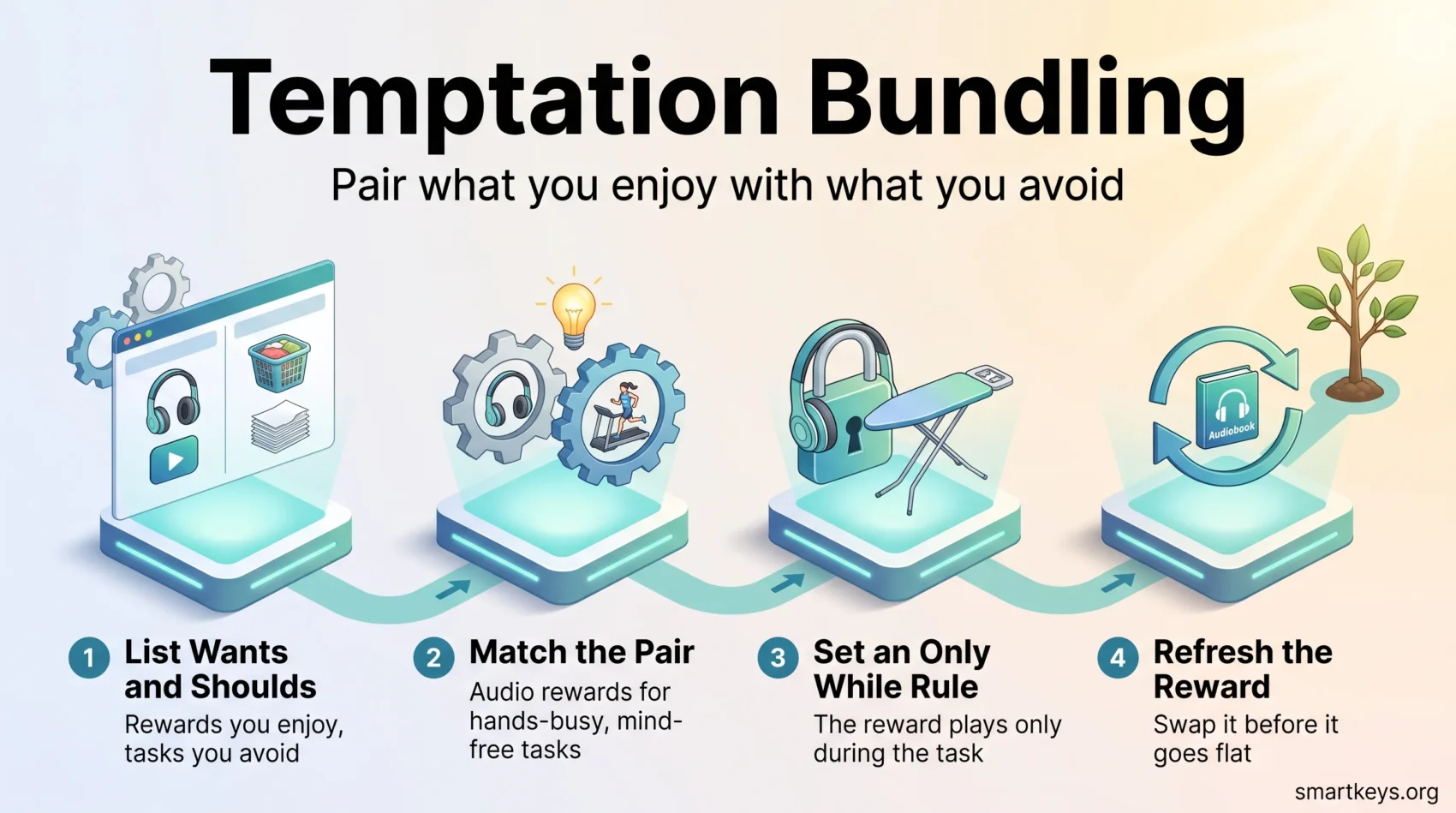
1. Make a two-column list
Write three to five things you enjoy in one column: a specific podcast, a series, an audiobook you want to finish. In the other write three to five tasks you keep pushing to tomorrow: the treadmill, expenses, ironing, the inbox. Be specific. “Watch something” is not a reward, and “sort out my admin” is not a task.
2. Match the pair to the task
Both halves have to run at once without damaging either. A gripping drama and a spreadsheet fight for the same attention, and both suffer. Match audio with hands-busy, mind-free work: walking, ironing, dishes, filing. Save visual rewards for tasks that need almost no thought. Anything that counts as deep work should not be bundled at all.
3. Write one “only while” rule
Say it in a single sentence: “I only listen to this audiobook while I am on the treadmill.” That removes the daily negotiation. You stop deciding whether to work out and start deciding whether to hear the next chapter. It is the same reason a written target beats a vague intention in goal setting.
4. Make the rule hard to break
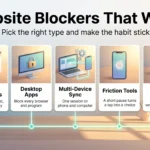
A rule you can break in one tap is not a rule. Keep the audiobook on a device you only take to the gym, or the series behind a profile you never use at home. Screen-time limits and website blockers close the easy route. An accountability partner makes the rule public and harder to drop.
5. Attach it to something you already do
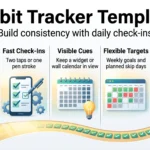
A bundle sticks faster when it hangs off an existing routine. That is habit stacking: after lunch, twenty minutes of email, and the podcast unlocks when the email starts. Starting small helps too, the way micro-habits survive weeks that ambitious plans do not. A habit tracker will tell you within two weeks whether the pair works.
6. Refresh the reward before it goes flat
Every reward wears out. The gym study saw the effect weaken after a holiday, and the same happens when a series ends or an audiobook drags. Plan the swap instead of waiting for the habit to collapse. After a break, restart smaller rather than at your best week.
Examples you can start this week
Fitness
Reserve one audiobook for cardio. This is the pairing the research tested, and it suits treadmill or bike sessions, where the body is busy and the mind is free. It fits what we know about exercise and productivity: the hard part is rarely the workout, it is getting started.
Admin and email
Do expenses or the inbox from the cafe you like, and only from there. The place becomes the reward, and it works just as well for a phone call you keep postponing.
Household chores
Keep one show exclusively for ironing, folding or cleaning. Chores are the ideal case: they take time, need little thought, and give nothing back until they are finished. The same logic works for a digital declutter session or an hour of desk organization.
Commutes and walks
Tie a podcast to your journey to work and nowhere else. Dead time becomes something you look forward to, a reliable way to build a productive commute. Walking calls work the same way and support the case for movement breaks.
Where temptation bundling fails
It is a starting aid, not a productivity system, and it fails in three ways.
It fails when the task needs your full attention. Bundling anything onto writing, analysis or a hard decision costs you quality. Keep the reward outside the block instead: run focus sprints or time blocking, and put the episode in the break.
It fails when the reward quietly stops being conditional. Most bundles die this way. You watch one episode on the sofa “just this once”, and the pairing becomes background noise.
It also fails when the real problem is not motivation. A task that keeps sliding because it is unclear, too big or someone else’s job needs a decision, not a reward; half-defined tasks are what open loops do to your attention. Bundling is one tool for overcoming procrastination, best used on tasks you simply do not want to start.
Conclusion
Temptation bundling is a small rule with an unusually good return. Pick one task you avoid, pick one thing you enjoy, and allow the second only during the first. Protect the rule with a separate device or an app limit, so the decision is made once.
Expect the effect to be strongest early and to need a refresh after holidays or a broken week. Treat it as the thing that gets you moving, then let the routine carry the weight. Used alongside habits that keep you staying motivated, it turns a task you dread into the only time you hear the next chapter.
Found this useful?
Make SmartKeys a preferred source on Google, and our articles will surface more often in your Top Stories, AI Overviews, and AI Mode.
Add as Preferred Source