Tools
Tools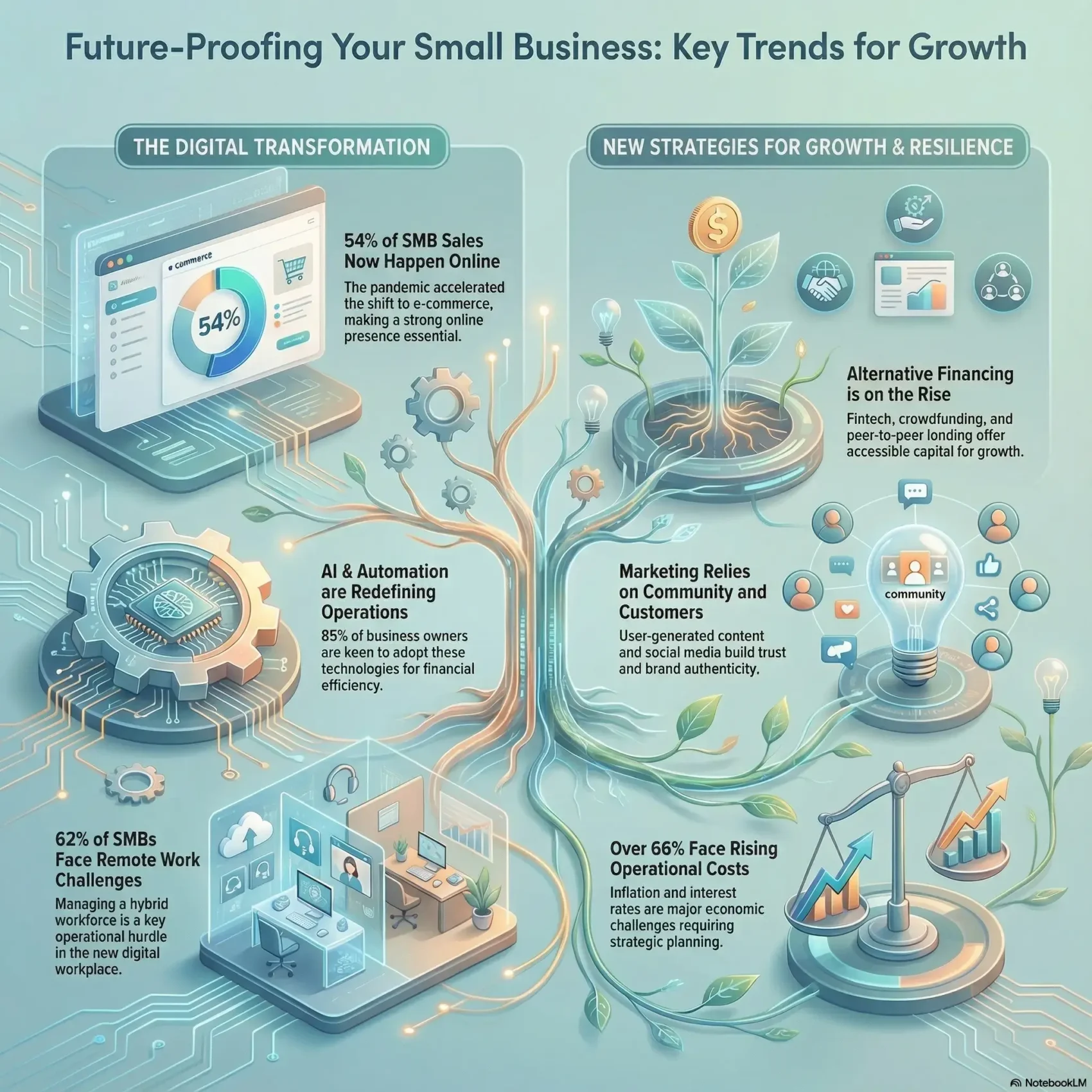
Last Updated on December 13, 2025
The small business landscape is undergoing a significant transformation. This change is driven by technological advancements, shifts in consumer behavior, and evolving market dynamics. With over 30 million small businesses in the U.S., many of which are sole proprietorships, the potential for growth is immense. This article explores the latest trends shaping the future of small businesses. It emphasizes the importance of innovation and adaptation in navigating an ever-changing economy.
Key Takeaways
- Technological advances are central to driving small business growth.
- Emphasizing social media marketing is essential for reaching broader audiences.
- Diverse financing options can help businesses overcome traditional loan barriers.
- Community support is vital for small business sustainability.
- Understanding and addressing economic challenges will foster resilience.
- User-generated content is a powerful tool for enhancing brand loyalty.
Introduction to Small Business Trends
The landscape for small businesses is rapidly evolving. Grasping small business statistics is crucial for navigating this dynamic environment. Trends affecting small businesses include technology adoption, customer preferences, and economic conditions. A significant 85% of survey respondents show enthusiasm for adopting automation and AI technologies to streamline financial operations, pointing to a clear trend towards efficiency.
Adapting to market changes is vital. For instance, 62% of small to mid-sized businesses (SMBs) report challenges in managing a remote or hybrid workforce. Remote work not only cuts office costs but also opens up a global talent pool. This shift underlines the need for robust digital strategies, as 2024 predictions suggest a growing reliance on digitalization for competitive advantage.
Customer expectations are also shifting. Seventy-one percent of SMBs note that customers expect online transactions, reflecting the rise of e-commerce as a key channel. Offering personalized experiences and unique products can help you stand out from competitors. With 90% of respondents agreeing that automation boosts efficiency, embracing these trends is crucial for long-term success.
In this era, staying abreast of small business statistics and evolving methods is key to proactive responses to an ever-changing economic landscape. Exploring innovative financing options and strengthening community partnerships can offer the support needed to overcome challenges. Focusing on operational efficiency through automation and data analytics will help in making informed decisions that align with emerging trends affecting small businesses.
Emergence of E-commerce as a Primary Sales Channel
The rise of e-commerce has significantly altered the landscape for small businesses. By 2023, retail e-commerce sales accounted for over 19% of total retail sales worldwide. This marks a significant shift towards online sales channels. Statista’s forecast suggests this trend will continue, reaching 25% by 2027. This underscores the critical need for small businesses to build a robust online presence.
It’s essential to understand the various e-commerce models available. Small businesses can opt for Business-to-Consumer (B2C), Business-to-Business (B2B), Consumer-to-Consumer (C2C), and more. These models enable small enterprises to connect with a wider audience. For example, Moore Brothers Wine Company has successfully leveraged online sales to boost their visibility and draw in new customers.
Online marketplaces, especially Amazon, have become key players in e-commerce. They show that small businesses can compete effectively across different market segments. These platforms provide a smooth shopping experience for customers and offer vital distribution alternatives. This is crucial for small businesses aiming to succeed in today’s competitive market.
E-commerce offers several advantages for small businesses, including convenience, a broader product selection, and potentially lower start-up costs. However, it also presents challenges, such as increased competition and the need for technological proficiency. Navigating these challenges is crucial for small businesses to remain relevant in the rapidly changing retail landscape.
Small Business Trends: Shifting Towards Online Platforms
The shift towards online platforms has revolutionized the small business landscape. Global events, especially the COVID-19 pandemic, have accelerated consumer shopping shifts. This has forced many entrepreneurs to adapt to a new reality. Online marketplaces have become crucial, offering small businesses a way to reach customers beyond traditional settings.
Growth of Online Marketplaces
Online marketplace growth has redefined sales strategies for small business owners. Platforms such as Etsy and Amazon are now vital for expanding customer bases. For example, Etsy saw a 62% increase in active sellers in 2020. Entrepreneurs quickly turned to these platforms to meet the evolving consumer demand.
Impact of COVID-19 on Shopping Habits
The pandemic brought about lasting changes in consumer behavior. The rise of online shopping led to a significant increase in e-commerce transactions. By 2023, 54% of sales from small- and medium-sized businesses came from online channels. This shift underscores the importance of digital accessibility and a robust online presence for small businesses to succeed in a competitive market.
Innovations in Financing for Small Businesses
Understanding the evolving landscape of small business financing is crucial for your enterprise. Many small and medium-sized businesses (SMBs) face hurdles when pursuing bank loans in today’s economic environment. Traditional loan requirements often include strict standards, lengthy application processes, and significant resource investments. Hence, alternative funding sources are emerging as viable solutions.
Rise of Alternative Financing Options
When exploring financing options, consider the growing trend of alternative funding sources. Crowdfunding, peer-to-peer lending, and revenue-based financing have become viable options for SMBs to secure capital. These methods offer faster processing times and less stringent qualification criteria, making them attractive for your business needs. In fact, alternative lenders report approval rates over 28% for small business loan applications, significantly higher than traditional banks.
Emergence of Fintech Solutions
Fintech innovations are pivotal in reshaping the financing landscape for small businesses. Technology like artificial intelligence (AI) and machine learning improves the evaluation of creditworthiness, leading to quicker and more precise loan decisions. Blockchain technology also plays a role by enhancing transaction transparency and security. Collaborations between traditional lenders and fintech companies broaden your access to diverse financing options, ensuring you can find solutions that match your business objectives.
Technological Advancements Transforming Operations
In the ever-changing world of small businesses, grasping the impact of technological innovation is crucial. Generative AI and automation trends lead the charge in redefining operations. They enable small businesses to boost efficiency in marketing, customer service, and product design.
Utilization of Generative AI
Generative AI stands out as a vital tool for small businesses. It excels at processing vast amounts of data to provide insightful recommendations. This technology allows for the customization of marketing strategies to match customer tastes. The surge in investments and job openings for generative AI shows its growing importance and adoption.
Many companies are leveraging this technology to enhance their products. They aim to deliver a more tailored experience to today’s consumers. This approach ensures a deeper connection with customers, setting businesses apart in a crowded market.
Automation in Small Business Processes
Automation is revolutionizing the daily operations of small businesses. By adopting automation tools, you can streamline processes, cut costs, and enhance customer interactions. These innovations lead to better team communication and more effective project management.
Integrating these technologies allows small businesses to concentrate on strategic growth. This is essential in a competitive market where staying ahead is key.
Community Engagement and Building Relationships
Engaging with your local community is crucial for building strong client relationships and supporting local businesses. In a fast-changing world, maintaining these connections helps small businesses stay strong. By investing time and resources in community initiatives, you can significantly improve your reputation and client loyalty.
Importance of Local Community Support
Active community engagement fills the economic and social gaps created by events like the COVID-19 pandemic. Many communities feel isolated, and small businesses can help bridge this gap. By taking part in local events, sponsoring activities, or offering volunteer opportunities, you show your commitment to the area’s well-being. These efforts foster a sense of belonging and community support, which strengthens client relationships.
Creating a Client-Centric Culture
A client-centric approach allows businesses to tailor their services to their community’s specific needs. By understanding what customers want, you can build strong relationships and engage effectively with your audience. Use data-driven strategies to analyze community feedback and preferences. This insight guides your decisions, ensuring your services meet the values and desires of your target market.
Marketing Strategies for Modern Small Businesses
Small businesses today face a competitive landscape that demands innovative marketing strategies. The focus has shifted towards leveraging social media to connect with a wider audience and maintain engagement. Digital marketing offers numerous channels for building a robust brand and boosting sales.
Increased Focus on Social Media Marketing
Social media marketing provides substantial benefits. Platforms like Facebook, Instagram, and YouTube are crucial for reaching potential customers worldwide. By creating authentic campaigns, you can engage your audience through likes, comments, and shares. Micro-influencers can amplify your message, increasing visibility and customer interaction.
User-Generated Content as a Marketing Tool
User-generated content is invaluable for small businesses. It fosters a community and adds authenticity to your brand. Positive reviews and testimonials can sway potential buyers. By showcasing UGC, you leverage customer advocacy and highlight your business’s integrity. This approach builds trust with consumers, leading to more engagement and a continuous cycle of marketing that highlights real-life experiences with your offerings.
Anticipating Challenges in a Growing Economy
Small businesses face significant hurdles in a dynamic economic environment. The rise in inflation and interest rates escalates risks, threatening their survival. To navigate these challenges, understanding the impact of inflation and interest rates is paramount. This knowledge is essential for crafting resilient strategies.
Handling Inflation and Rising Interest Rates
Inflation introduces numerous challenges for small business owners. Over two-thirds report a surge in operational costs. The scarcity of capital exacerbates the issue, with half of business leaders anticipating reduced loan and credit access. To overcome these obstacles, adopting just-in-time inventory management can enhance efficiency while conserving resources.
Adjusting to Economic Uncertainty
Adapting to economic uncertainty is crucial for sustaining growth. Collecting and analyzing client data helps in addressing diverse customer needs and informing business decisions. Effective business intelligence practices provide deeper insights into your organization’s complexities. Technology, particularly data analytics and AI, can strengthen margins and address workforce shortages.
When planning for future growth, balancing scaling with preserving your company culture is vital. A nuanced understanding of the market landscape enables targeted strategies, especially when facing new competitors. Strategic budgeting and exploring alternative financing can boost your resilience. This approach prepares you for potential strategic moves like acquisitions.
For more insights on managing these challenges, check out this guide on strategies for economic preparedness.
Conclusion
Looking ahead, the future of small businesses hinges on adaptability and innovation. The shift towards e-commerce and online platforms is driven by consumer behavior changes and the pandemic’s lasting impact. Small business owners who adapt to these changes are more likely to achieve sustainable growth and success.
Emerging technologies and strategic marketing will define the future of small businesses. By engaging with communities and building strong relationships, you can increase customer loyalty and visibility. This approach highlights the need to stay proactive, informed, and open to trends that can propel your business forward.
The future of small businesses is about thriving, not just surviving, in a rapidly changing economy. With a commitment to embracing change and a forward-thinking mindset, you can overcome challenges and seize opportunities for growth.