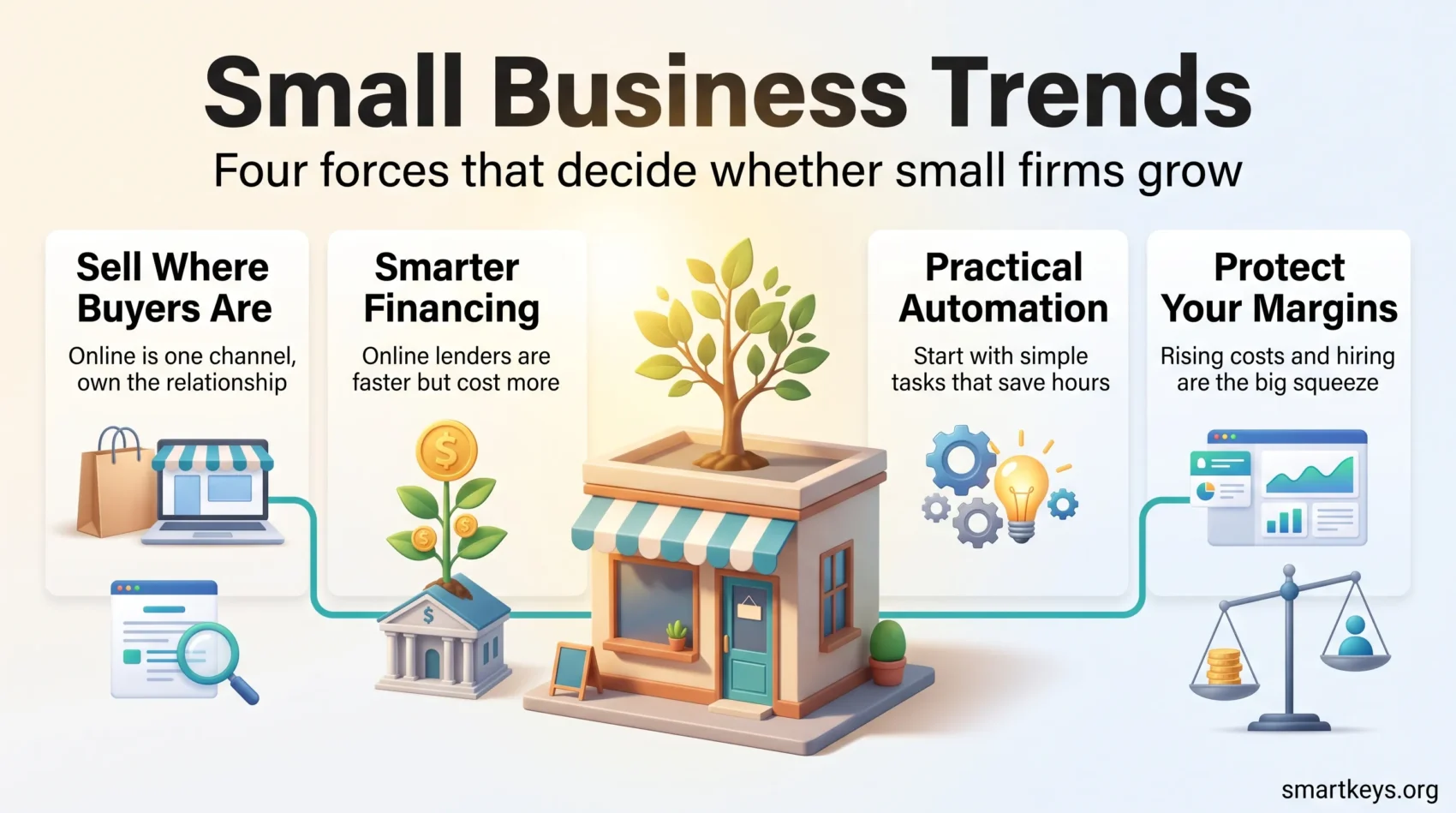
Small businesses are not a niche part of the American economy. The SBA’s Office of Advocacy counted 36,207,130 of them in February 2026, which is 99.9% of all US businesses. Together they employ 62.3 million people, or 45.9% of the private-sector workforce, and produce 43.5% of GDP.
That scale is why small business trends are worth reading carefully. This article covers what changed by 2026 in four areas that decide whether a small firm grows or stalls: where customers buy, where the money comes from, which technology is within reach, and which costs squeeze margins. Every figure below has a named source.
Key Takeaways
- E-commerce is a substantial channel, not the whole market: online sales were 17.1% of total US retail sales in the second quarter of 2026.
- AI adoption is real but uneven. Fewer than 20% of firms with four or fewer employees report using it, against 37% of firms with 250 or more staff.
- Financing has shifted. Online lenders took 29% of small business credit applications in 2025, up from 17% in 2020, and they cost more than most borrowers expect.
- Rising costs are the top financial complaint, reported by 77% of employer firms. Finding staff is the top operational one.
Where Small Businesses Stand in 2026
The mood among owners in 2026 is cautious rather than gloomy. The NFIB Small Business Optimism Index, a monthly survey of member firms, read 99.8 in July 2026, just above its 52-year average of 98.0. Not a boom, but not a slump either.
What changed is which problem sits at the top of the pile. In that same July survey, labor quality and availability outranked every other complaint, inflation included.
The financial picture is tighter than the headline suggests. In the Federal Reserve’s 2026 Report on Employer Firms, drawn from the 2025 Small Business Credit Survey, 77% of firms reported rising costs of goods, services or wages, or tariff-related challenges. Revenue growth held steady, but firms’ own expectations for the year ahead fell to their lowest level since 2020. Demand is holding, staffing is hard, and margin is the thing to watch.
E-commerce Is a Channel, Not the Whole Business
Selling online stopped being a strategic decision years ago. The useful question is how much of your business it should carry.
What the retail data actually shows
The US Census Bureau put e-commerce at $340.2 billion in the second quarter of 2026, or 17.1% of total retail sales. That surprises people who expect online shopping to have taken over. It has not. Roughly five of every six retail dollars are still spent somewhere other than a website.
The share varies enormously by category. Electronics, apparel and hobby goods sell online far above the average, while groceries, fuel and restaurant meals stay stubbornly physical. Check where your own category sits before investing in a storefront, because the average says very little about your business. Our overview of current e-commerce trends covers how those differences are shifting.
Marketplaces, social selling and owning the relationship
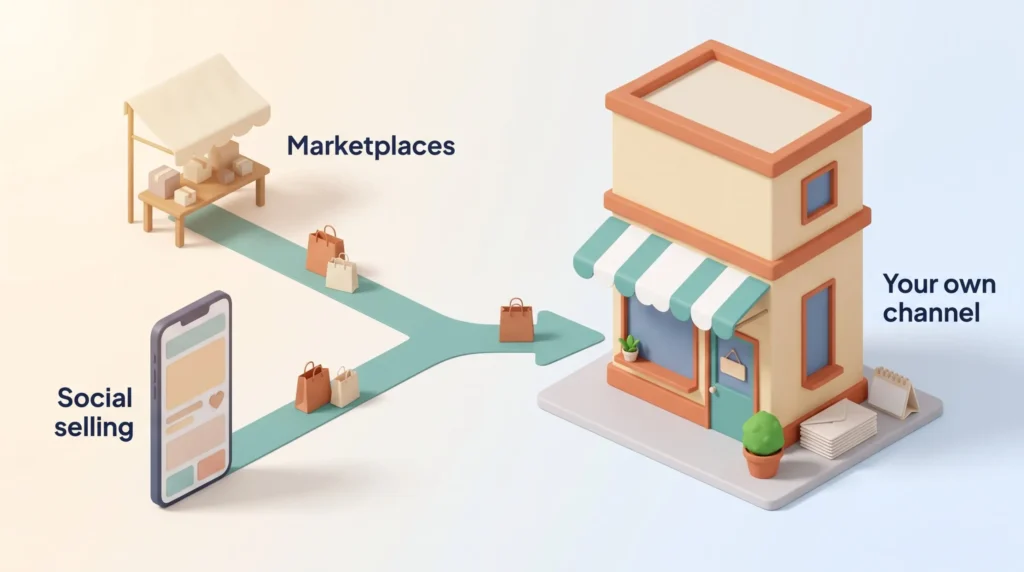
Selling through Amazon, Etsy or a social platform buys traffic you would otherwise have to earn. The trade is that the platform owns the customer relationship, sets the fees, and can change either at will.
Social platforms are now a real sales channel rather than a shop window. eMarketer expects US social commerce sales to pass $100 billion in 2026, and for visual products this is often the cheapest route to a first-time buyer. We cover how those checkout flows work in our piece on social commerce.
So use marketplaces and social platforms to acquire customers, then move repeat business somewhere you control: an email list, a booking system, your own site. A first-party data strategy makes that possible and protects you when an algorithm changes.
Financing: Where the Money Comes From Now
Access to capital quietly decides which small businesses can take an opportunity and which cannot.
Bank approvals and what they mean
Sixty percent of employer firms applied for financing in the twelve months the Federal Reserve surveyed. Of those seeking loans, credit lines or merchant cash advances, 42% got the full amount, 36% part of it, and 22% nothing.
Small banks approved 57% of applicants in full, the strongest rate of any lender type. Large-bank approvals held steady but stayed below pre-pandemic levels. If you have a community bank relationship, use it before shopping elsewhere.
Borrowing costs matter too. The Federal Open Market Committee held the federal funds rate at 3.50% to 3.75% in July 2026, with inflation still above its 2% target. Credit is off its peak but not cheap, and a variable-rate line will move again if policy shifts. Our guide to cash flow management covers how to stress-test a loan before signing.
Alternative lenders: faster, but pricier
Online lenders now take a much larger role: 29% of small business credit applications in 2025, against 17% in 2020. Approval is quicker, the paperwork lighter, and for a business with a thin credit file they are sometimes the only realistic option.
The catch is in the data. Sixty percent of borrowers who used an online lender said the cost was higher than expected, against 37% at small banks. That is not a reason to avoid them, but it is a reason to ask for the total repayment in dollars, not a rate or a factor, before accepting.
Crowdfunding, revenue-based financing and peer-to-peer platforms fill different gaps: crowdfunding suits a product with an audience, revenue-based financing suits steady income. The wider shift toward lending built into everyday software is covered in embedded finance, and the sector picture in fintech trends.
AI and Automation: A Real Gap Between Large and Small
Few topics generate more noise and less useful guidance for small firms than artificial intelligence. The measured picture is soberer than the marketing.
How many small businesses actually use AI
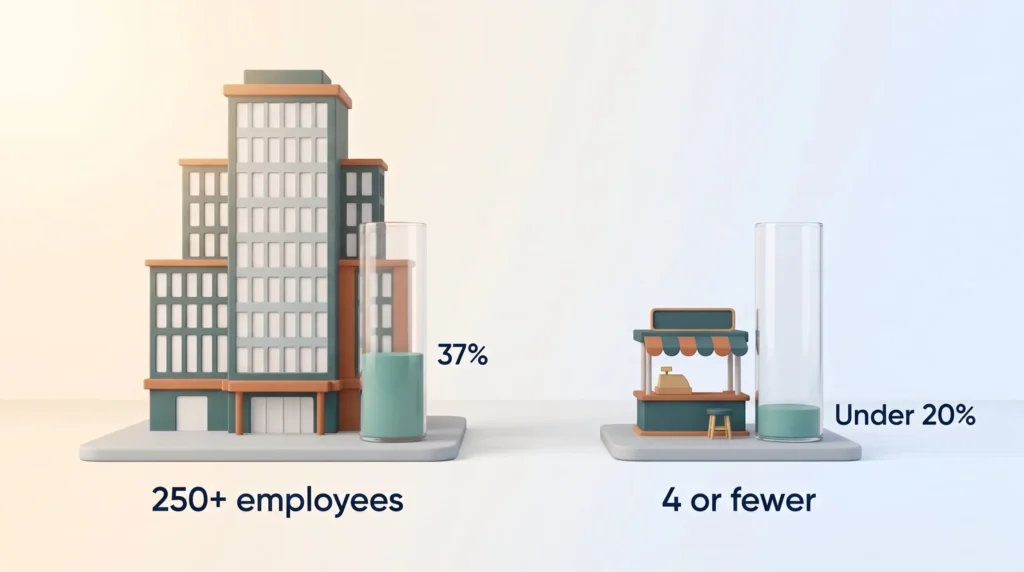
The Census Bureau’s Business Trends and Outlook Survey tracked AI use from December 2025 to May 2026 and found overall adoption running between 17% and 20%. The split by size is stark: 37% of firms with 250 or more employees used AI to help produce goods or services, against fewer than 20% of firms with four or fewer, with no meaningful increase across those six months.
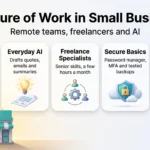
If you run a five-person company and feel behind on AI, you are in the majority. The gap is less about awareness than about the setup time involved, which is what a small team has least of. Technology is also changing how small firms staff their work, and our guide to remote work and freelance staffing in small businesses covers where hybrid schedules, contractors and AI tools have settled.
Where automation pays for a small team
Generative AI, meaning tools that produce text, images or code from a prompt, earns its place in a narrow set of jobs: drafting product descriptions, summarizing customer email, first drafts of proposals, repeat support questions. It is unreliable wherever a wrong answer costs money or trust, such as pricing, tax or contract wording.
Plain automation, the kind that moves data between tools you already pay for, often returns more per hour invested. Connecting your booking system to your accounting software removes a weekly chore permanently. Our overview of business automation trends shows what that looks like, and AI in business operations examines why so many AI projects show no return.
One caution: automating a customer-facing process also automates its failures. Test with real cases first, keep an obvious route to a human, and remember that every integration is another door into your data, a point our guide to cybersecurity trends takes up.
Marketing Without a Marketing Budget
Small businesses rarely lose on product quality. They lose on being invisible.
Organic reach has fallen for years, but short video remains the exception: one good clip can still reach people who have never heard of you. The realistic goal is not virality but consistency, so anyone who finds you sees an active, real business. Micro-influencers, meaning creators with audiences in the low thousands, usually fit a local or niche business better than large accounts, because their audiences trust them and the product match is tighter. Our article on social media and business growth covers how to tell whether it is working, and digital marketing trends takes the wider view.
Content made by customers, from photos to reviews, does something your own marketing cannot: it comes from someone with nothing to gain. Ask for it just after delivery, when goodwill is highest. Be honest about its limits, though. Reviews support a decision someone is already close to making; they rarely create demand from nothing. Turning first purchases into repeat ones is a separate discipline, covered in customer retention strategies.
One shift is worth watching: more product research now happens inside AI assistants and search summaries than on a page of blue links, which changes what makes a business findable. We cover that in generative engine optimization.
Community and Customer Relationships
Community engagement is usually described in vague terms. Concretely, it means being a recognizable presence where your customers already are: sponsoring the local team, showing up at the market, partnering with a neighboring business whose customers overlap with yours.
For a local business this is distribution, not sentimentality. A bakery that supplies a nearby cafe reaches that cafe’s customers at no acquisition cost, and referrals from other local businesses arrive pre-qualified. They take months to build, which is what makes them hard for a bigger competitor to copy.
Being client-centric means letting what customers say change what you do, not just how you talk. If three people a week ask for a service you do not offer, that is a product decision, and a small firm can act on it in a week. Our piece on customer loyalty covers turning that into repeat business.
The Cost Pressures That Define 2026
Margin, not revenue, is where small businesses feel this economy.
Rising costs and tariffs
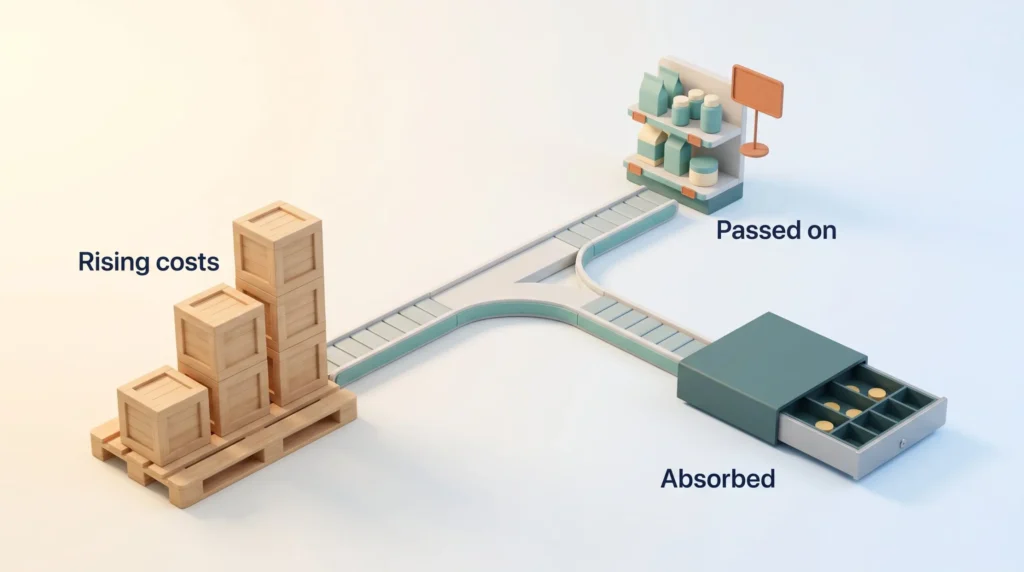
In the Federal Reserve survey, 77% of employer firms reported rising costs or tariff-related challenges. Nearly half, 48%, sourced inputs from outside the United States, and most of those saw prices rise. Firms responded in two ways that are not exclusive: 76% passed some cost on to customers and 60% absorbed some. Tariff exposure was heaviest in retail, at 69%, and manufacturing, at 62%.
Passing costs on has a limit, and finding it is a pricing exercise rather than a guess. A structured approach, set out in our pricing strategy framework, beats a uniform increase across everything you sell. On the supply side, the lesson of recent years is to know your second source before you need it, which our guide to supply chain resilience covers.
Labor is now the tighter constraint
The NFIB data makes the point plainly: labor quality and availability topped the problem list in July 2026, cited by 27% of owners, with 36% unable to fill openings. For a small employer, one vacant role is a far larger share of capacity than it is for a large one.
The levers available to a small business are mostly not pay. They are scheduling flexibility, a short path from hire to real responsibility, and a manager who is present. A small firm can offer those credibly; a large one usually cannot. Our overview of HR trends covers what the evidence supports on retention.
Conclusion
No single trend is remaking the small business economy in 2026. It is squeezed from several directions at once: rising costs, staff who are hard to find, platforms that own the customer relationship, and technology that promises more than it delivers to firms without a technical team.
What that rewards is not speed of adoption but clarity about which changes affect your business specifically. The advantages small firms have are unchanged: you decide quickly, you know your customers by name, and you can adjust in a week what a chain takes a quarter to move. If the wider technology question is the one you are wrestling with, our guide to digital transformation puts it in context.
Found this useful?
Make SmartKeys a preferred source on Google, and our articles will surface more often in your Top Stories, AI Overviews, and AI Mode.
Add as Preferred Source