Tools
Tools
Last Updated on December 9, 2025
The integration of AI into the workplace marks a significant shift towards personalized environments. Businesses are now focusing on individual employee needs to create a space where everyone can excel. As Alan Kay noted, “the best way to predict the future is to invent it.” This philosophy aligns with how companies are redefining work, aiming to boost job satisfaction, productivity, and engagement through cutting-edge technologies.
Picture AI systems suggesting personalized training based on your abilities and areas for improvement. Or, envision smart workspaces that adjust lighting and temperature to boost your efficiency. These scenarios are becoming a reality with AI personalization at work. In fact, 92% of companies have adopted AI-driven personalization to drive growth and meet their goals.
The future of work goes beyond just adapting to new tech; it’s about embracing it to craft a highly personalized work environment. By using machine learning and data analytics, organizations are setting the stage for better performance and lower turnover. This shows that AI-driven personalization can truly transform the workplace experience.
Key Takeaways
- AI-driven personalization enhances employee engagement and satisfaction.
- Smart workplaces can optimize productivity through adaptive technologies.
- 92% of businesses leverage AI-driven personalization for growth.
- Personalization leads to improved customer satisfaction and conversion rates.
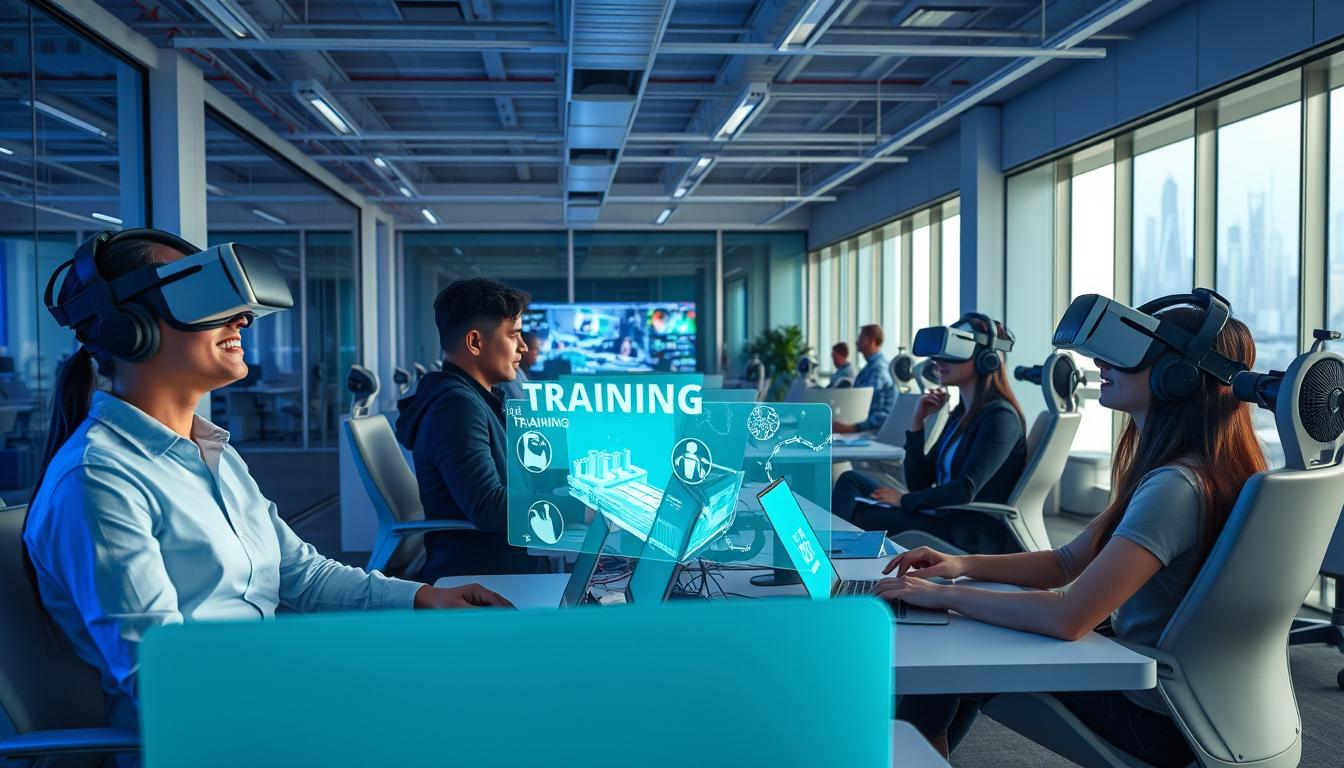
- AI-powered learning platforms offer tailored training experiences.
- 75% of business leaders recognize AI personalization as crucial for success.
Understanding AI-Driven Personalization
In today’s fast-paced work world, AI-driven personalization stands out as a key tool to boost your experience. It customizes interactions and services to fit your unique needs, preferences, and behaviors at work. By leveraging vast amounts of data from various sources, this technology ensures more effective and targeted interactions. At its core, AI-driven personalization transforms how we interact at work, leading to better communication and teamwork.
The Role of AI in the Workplace
AI is pivotal in making work experiences more personal by analyzing your patterns and behaviors. It allows companies to create experiences that truly connect with each employee. This technology moves away from a generic approach, tailoring strategies to fit different worker types. For instance, AI can:
- Automate task management, freeing you to focus on important tasks.
- Configure your workspace to boost productivity based on your habits.
- Adapt to your learning needs and preferences through evolving training platforms.
These advancements show how embracing AI can enhance workplace satisfaction and engagement. As businesses see the value of personalization, adopting effective AI-driven solutions becomes crucial for a motivated team.
Hyper-Personalization: The Next Frontier in Work
Organizations are now focusing on hyper-personalization, aiming to tailor the work experience like never before. This move goes beyond simple AI-driven personalization. It involves adjusting work environments to meet each employee’s unique needs. The aim is to create a workplace that boosts engagement by considering individual preferences, such as the perfect lighting and temperature.
Benefits and Implications
The impact of hyper-personalization is vast, touching many areas of workplace culture. By focusing on personalized experiences, companies can build a culture that boosts productivity and job satisfaction. Here are some key points:
- Enhanced Employee Satisfaction: Employees feel appreciated when their preferences are respected, leading to loyalty and lower turnover rates.
- Increased Productivity: A supportive work environment enhances efficiency, allowing employees to concentrate on their duties without distractions.
- Data-Driven Insights: Advanced AI helps companies understand employee data, guiding them to make adjustments that improve engagement.
- Customization Opportunities: Employees can personalize their work experiences, making their tasks more meaningful and enjoyable.
In today’s competitive market, companies that embrace these personalized strategies will have a clear advantage. Hyper-personalization is not just a trend; it’s a forward-thinking approach crucial for success in a rapidly changing work world.

The Impact of AI Personalization Work on Employee Productivity
The integration of AI personalization work significantly reshapes employee productivity in various professional settings. Organizations not only respond to individual needs but also enhance overall work efficiency. Reports indicate that 80% of employees utilizing AI tools have observed notable increases in productivity across tasks such as writing assistance, workflow automation, and data analysis. This trend illustrates how personalized AI applications can streamline processes and empower employees to excel in their roles.
Enhancing Efficiency and Focus
As organizations adopt AI technologies, a clear shift in employee engagement and job satisfaction emerges. Around 29% of AI users express heightened passion for their work. AI-powered solutions, particularly in marketing, sales, and customer service, help minimize repetitive tasks and allow employees to concentrate on high-value projects. For instance, 56% of marketing decision-makers now leverage generative AI to reduce tedious processes, enhance creativity, and generate meaningful insights.
Companies employing AI strategies report productivity increases of up to 40% in specific functions. More than 80% of workers who engage with generative AI daily anticipate improvements in their work efficiency within a year. This expectancy aligns with the growing emphasis on employee well-being and satisfaction, with those using AI noting a 26% improvement in work-life balance and a 31% boost in overall job satisfaction.
Ultimately, the benefits of embracing AI personalization work extend beyond simply meeting deadlines. It cultivates an environment where employees can thrive, invest time in relationship-building, and foster innovative solutions. The transition to a more personalized work approach significantly enhances focus and operational efficiency, leading to a more fulfilling workplace experience.
AI-Powered Learning Platforms: Customizing Employee Education
In today’s fast-paced work environment, keeping skills current is essential for employee growth and organizational success. AI-powered learning platforms are revolutionizing employee education by offering tailored training experiences that meet individual needs. With the rapid growth of AI capabilities, organizations can leverage these platforms to enhance the learning journey and foster skill development effectively.
Tailored Learning Experiences
Personalized training is at the forefront of these AI solutions. These platforms utilize advanced algorithms to create customized learning paths, enabling you to progress at your own pace. By analyzing your unique strengths, preferred learning styles, and career aspirations, the platforms can recommend courses that align with your professional goals. For instance, 360Learning enhances collaboration and upskilling opportunities within organizations, while Docebo’s AI-driven features ensure personalized suggestions that resonate with your interests.
The benefits of AI-powered learning platforms extend beyond just personalization. These systems automate administrative tasks, streamline course creation, and provide insightful analytics in real-time. By using platforms such as Absorb LMS, you can take advantage of intelligent recommendations that boost productivity and engagement. The ability to access adaptive learning, which adjusts content based on your performance, further enhances the overall experience.
Moreover, personalized training can significantly increase employee engagement. As statistics reveal, up to 43% of businesses focus on tailoring learning paths to different audiences. Techniques like gamification and real-time feedback ensure that learning remains engaging and motivating, enabling you to work towards specific goals and rewards. This approach not only makes learning relevant but also contributes to higher satisfaction in the workplace.
As the demand for specialized skills continues to rise, AI-powered learning platforms play a crucial role in adapting to the evolving workforce needs. By continuously refining educational experiences based on data-driven insights, organizations can foster a culture of ongoing education and development, allowing you to thrive in your career. If you’re interested in exploring how AI can reshape your learning environment, check this out: AI in the Workplace.
Personalization Algorithms: How They Shape Your Work Experience
In today’s workplace, personalization algorithms change how we interact with our tasks and responsibilities. They use data analytics to analyze information from various workplace touchpoints. This includes daily tasks, collaboration patterns, and personal preferences. The ability to deliver customized work experiences offers a unique opportunity for organizations to enhance productivity and engagement levels.
Leveraging Data for Customization
When implemented effectively, personalization algorithms can significantly improve your work life. For instance, these algorithms streamline scheduling by identifying optimal meeting times according to your individual work habits. Task prioritization becomes effortless, as the algorithms recognize which tasks align best with your workflow.
Consider the following benefits of embracing such technology:
- Increased efficiency through tailored task assignments
- Enhanced focus by minimizing distractions
- Greater satisfaction stemming from a personalized approach to work
As businesses adopt personalization algorithms, they witness a noticeable increase in employee engagement. More satisfied employees tend to display higher productivity levels, making these algorithms a vital tool for modern organizations. By harnessing data analytics, companies can invest in creating customized work experiences that resonate with both their goals and the preferences of their workforce.
AI Recommendation Systems: Tailoring Tasks to Individual Strengths
In today’s workplace, AI recommendation systems are crucial for task personalization. They analyze an employee’s past performance and preferences. This customizes assignments to match individual strengths. Understanding what motivates each team member encourages engagement and satisfaction.
Understanding Individual Capabilities
AI recommendation systems do more than suggest products or content. They are key in refining task assignments within teams. By using data-driven insights, these systems enhance collaboration among employees. This leads to higher productivity, as roles and responsibilities align with unique capabilities.
Task personalization is at the heart of this approach. It allows organizations to recognize and utilize the diverse strengths of each employee. Advanced algorithms predict which tasks suit individual skills best. This ensures employees are productive and valued in their roles.
Implementing AI recommendation systems can significantly improve your organization’s performance. For instance, a tailored task assignment strategy can enhance collaboration and reduce disengagement. It can also foster a more harmonious workplace culture. Discover how your company can benefit from AI recommendations to empower teamwork and increase efficiency.
Personalization Technology: Creating Optimized Work Environments
As businesses evolve, personalization technology becomes crucial for creating environments where employees can excel. It tailors the workplace to individual needs, boosting productivity and engagement. The future of smart workplaces will adapt to changing factors, whether in traditional offices or hybrid settings.
Smart Workplaces of the Future
Smart workplaces use personalization technology to change how we interact with our surroundings. They make real-time adjustments to enhance comfort and efficiency, focusing on your preferences. For instance, lighting and temperature adjust based on your activity, improving your productivity.
- Personalization technology drives employee satisfaction by considering individual needs.
- Optimized environments support various working styles, catering to diverse teams.
- Enhanced engagement leads to improved retention and workplace morale.
Companies embracing these tools see clear benefits, such as better performance and employee loyalty. Personalization technology in smart workplaces can revolutionize traditional models. It makes them more collaborative and responsive to workforce changes.
AI Personalization Work: Meeting the Needs of Modern Employees
The modern workforce is undergoing a significant transformation. Your expectations around work are evolving, especially for younger generations. They desire personalized experiences that resonate with their aspirations and meet their unique needs. AI personalization work is a solution, transforming traditional HR practices into ones that adapt to individual preferences.
AI personalization can greatly improve workplace culture and employee satisfaction. Organizations embracing this technology can better understand and meet your evolving demands. This leads to a more inclusive work environment. The growing recognition of AI’s importance across businesses is evident:
- 64% of knowledge workers believe a personalized work experience would enhance their investment in company growth.
- 69% express that personalization at work can boost their well-being.
- Two-thirds of workers wish for a more customized work approach.
AI-driven strategies can streamline how organizations meet employee needs while boosting productivity. Reports show that 94% of business leaders see AI as crucial for success. By integrating AI personalization, workplaces can meet modern employee demands, driving growth and innovation. Your desire for a tailored work experience, through supportive tools, flexible schedules, or personalized learning, makes AI essential for creating your ideal work environment.
More than 15,000 individuals have shared that AI fundamentally changes employer expectations. By using AI personalization, organizations can meet these demands and create workplaces where you truly thrive.
Emerging Personalization Strategies for 21st Century Workplaces
The work landscape is evolving rapidly, making personalization strategies essential for future workplaces. Companies will use AI to tailor work experiences to employee preferences. This approach will boost both organizational culture and job satisfaction.
Forecasting Future Developments
AI’s impact on the global economy is expected to reach $15.7 trillion by 2030. Businesses must focus on developing tools that create personalized work environments. These strategies will improve company performance and meet employee needs.
The World Economic Forum predicts significant job changes. While 85 million jobs might disappear, 97 million new ones could emerge. This highlights the need for AI literacy to stay competitive in the evolving job market.
Generative AI is leading the automation wave, set to automate up to 30% of work hours by 2030. It promises to boost productivity in STEM, creative, and business fields. Employees who adapt to AI will find new career opportunities.
The White House has introduced bills and educational funding to enhance AI literacy. This effort aims to help employees navigate AI integration, turning potential job loss into career growth.
The future of workplaces is moving towards personalized approaches, leveraging AI to meet organizational and employee needs. As we move forward, these innovative strategies will reshape the work environment.
Conclusion
The integration of AI personalization work into today’s workplaces marks a significant shift towards more tailored and efficient environments. By using predictive analytics, real-time recommendations, and advanced data integration, organizations can meet their employees’ needs and drive business growth. Companies that prioritize personalization will lead their industries forward.
Analytics show that AI personalization work boosts engagement rates and customer satisfaction. Tools like Amazon Personalize and Salesforce Einstein can transform how organizations interact with their workforce and customers. In today’s competitive world, this is not just an option but a necessity.
As you move through this evolving landscape, remember that effective personalization goes beyond technology. It’s about understanding and valuing human connection. By embracing AI personalization, you can create a culture of empowerment. This leads to higher employee satisfaction and retention rates. By using these insights, your organization will be well-positioned for success in the future of work.