Tools
Tools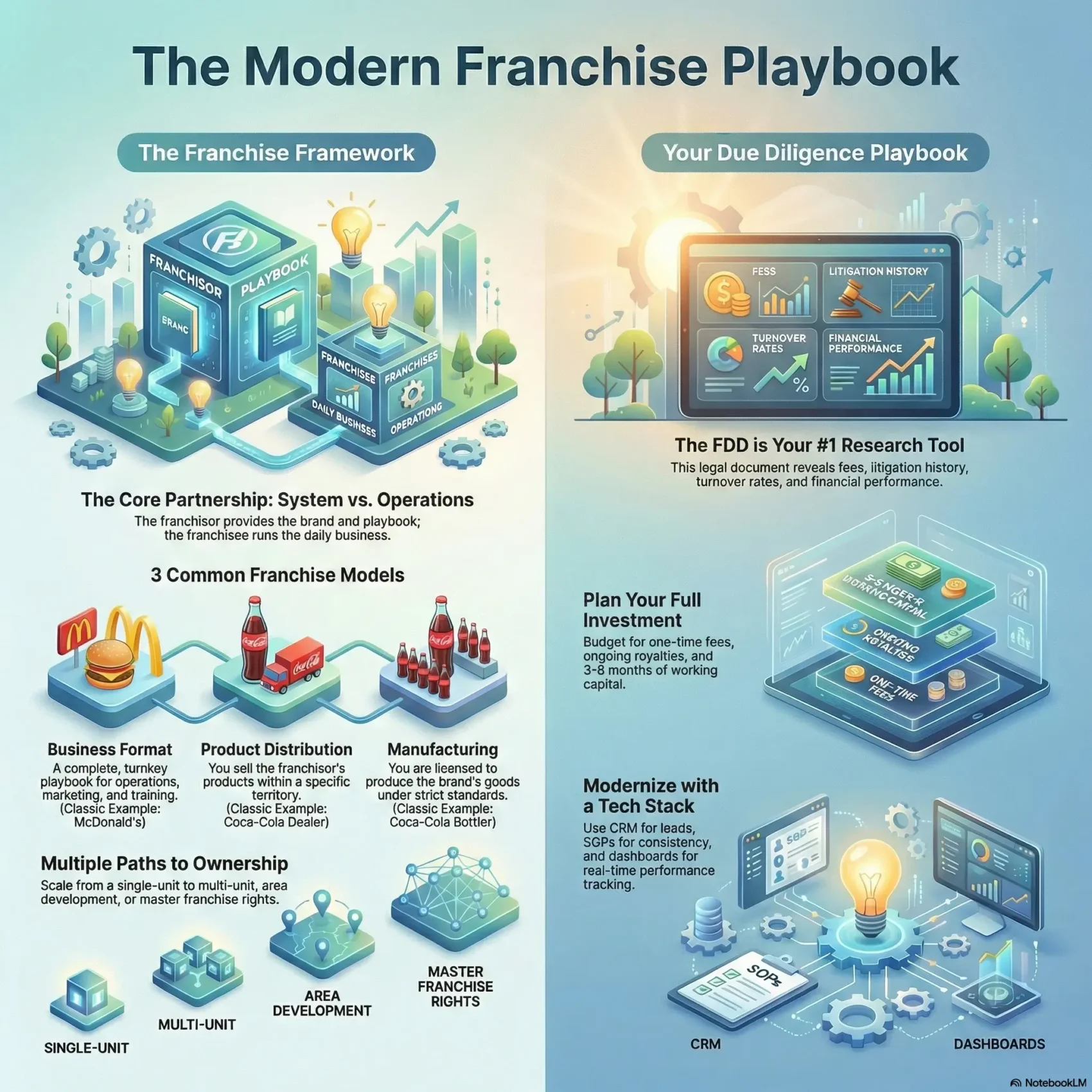
Last Updated on March 5, 2026
Ready to grow without shouldering all the capital? Today’s franchise model blends proven systems with new tech to help you scale faster. You’ll see how franchising turns a trusted brand and playbook into local success, while the parent company expands its reach.
You’ll learn how the Franchise Disclosure Document (FDD) and FTC rules protect buyers by revealing fees, renewal terms, and financials. Modern systems add data, smarter territory planning, and real-time tools so units run more predictably.
This guide walks you through what a business model looks like now, from single-unit deals to master agreements. Expect plain answers on costs, support, and how established brands keep balance between consistency and local flexibility.
Key Takeaways
- You’ll get a clear orientation to the franchise model and why it matters for growth.
- The FDD and FTC rules provide key protections and disclosure you should review.
- Modern franchising blends brand playbooks with analytics and automation.
- Standardized operations and local flexibility help you launch quickly and adapt.
- Different paths — from single-unit to larger agreements — match different goals.
Why Modernize Your Franchise Model Today
Modern upgrades let your system move faster into competitive markets and deliver consistent, digital-ready experiences.
You get a proven concept plus brand recognition and an existing customer base. At the same time, franchisors expand market presence using less capital and lower investment risk.
The FTC still requires an FDD that spells out fees, terms, and sometimes Item 19 performance data. Use that disclosure to compare support levels, expected revenue, and upfront costs before you commit.
Updating your approach improves lead handling, site selection, and launch timelines. Better support, automation, and standardized playbooks reduce day-one errors and speed time to revenue.
Data visibility across locations helps you allocate capital, forecast sales, and plan growth with fewer surprises. Practical upgrades to prioritize are CRM for lead flow, SOPs for operations, and dashboards for unit performance.
- Capture demand faster in competitive markets.
- Lower operational risk with clearer training and field coaching.
- Focus your investment where it moves the needle first.
Quick checklist: tighten SOPs, add CRM, and install unit dashboards before you scale.
Franchising Basics: How the Business Model Works for You
In practical terms, this relationship hands you a tested playbook and ongoing support in exchange for defined payments and obligations.
Franchisor vs. franchisee: roles, support, and ongoing royalties
The franchisor provides the system: brand standards, marketing, training, and operating procedures. You, the franchisee, run day-to-day operations and follow those standards.
Expect an initial fee and ongoing royalties. Fees typically cover national advertising, technology, and field visits that support unit performance.
Exclusive rights, trademarks, and brand standards in your agreement
Your agreement grants rights to use trademarks and access SOPs. It also lists obligations like local marketing and compliance with brand policies.
“The FDD discloses; the agreement governs.”
The FDD gives required disclosures under FTC rules, while the agreement defines legal rights and territory. Ask an attorney to review both so your expectations match the support cadence and performance measures.
- What you get: training, procurement help, and proven operations.
- What you pay: initial fee, ongoing royalties, and contributions to ad funds.
- Territory: exclusive rights may limit local competition but check development terms before you sign.
Types of Franchise Models You Can Choose From
Choosing the right structure affects how you operate, sell products, and scale across locations.
Below are the most common options so you can match one to your goals and capital.
Business format franchise
This is the turnkey path. The franchisor provides a standardized playbook: operations, marketing, and training. Examples include McDonald’s and 7‑Eleven.
You get systems that speed launch and reduce guesswork. That predictability often makes it easier to secure financing.
Product distribution franchise
Here you sell the franchisor’s products within a territory. Think Coca‑Cola or Goodyear dealers.
Exclusive routes and supply-chain ties matter most. Margins depend on pricing, logistics, and agreements for franchisor products.
Manufacturing franchise
Licensed production gives you rights to make or bottle branded goods under strict quality control.
Coca‑Cola bottlers are a classic example: you follow exact recipes and standards to protect the brand and consistency.
Hybrid approaches
Hybrids blend formats for flexibility — for example, a business format backbone plus product distribution or investment franchises with ghost kitchens (Wendy’s x Reef).
- Compare complexity vs. flexibility when evaluating hybrids.
- Check how franchisors handle supply, quality, and territory for mixed approaches.
- Match the option to your industry: quick‑service favors business format; goods often suit product distribution; beverages fit manufacturing.
Tip: assess how franchisor products, supply agreements, and quality rules affect margins and staffing before you commit.
Ownership Structures and Scale: From Single-Unit to Master Franchise
Choosing the right ownership path sets the pace for how fast you scale and how much control you keep.
Single-unit ownership is the usual entry point. It keeps complexity low and lets you focus on running one location well.
Multi-unit expansion lets you capture efficiencies: shared staffing, bulk purchasing, and unified marketing. You trade hands‑on control for faster reach across multiple units.
Single-unit and multi-unit paths
Compare the trade-offs:
- Single-unit: lower startup cost, full operational control.
- Multi-unit: higher capital, better margins through scale.
- Management shifts from daily tasks to oversight and delegation as you add units.
Area development and timelines
Area development grants exclusive rights to open a set number of locations in an area on a schedule.
Miss deadlines and you may lose territory or face penalties. Meet targets and you secure growth and market presence.
Master rights and sub-franchising duties
Master roles elevate you to regional partner: recruiting, training, and supporting franchisees. This requires capital, infrastructure, and strong people management.
“Master rights offer upside, but demand regional leadership and company-grade systems.”
Use this quick rubric: match your capital, experience, and timeline to the path that fits your business goals. That keeps growth steady instead of stretching you too thin.
Regulation in the United States: Your FDD, FTC Rules, and Item 19
Start by treating the Franchise Disclosure Document as your primary due‑diligence checklist before you sign anything.
The FTC requires the franchisor to give you an FDD that outlines the business model, fees, renewal and termination terms, and dispute resolution. Read it slowly and mark sections that affect cash flow and control.
What to look for in the FDD
Check Item 3 for litigation and Item 20 for turnover. These reveal company history and franchisee satisfaction trends that shape your risk.
Reading financial performance representations (Item 19)
Item 19 may show average unit revenue, margins, and profits if provided. Focus on averages, ranges, and any outliers that skew results.
- Verify the numbers: match Item 19 to what you hear at discovery day.
- Model the fees: include royalties, ad fund, and tech charges in your pro forma.
- Legal terms: review renewal and termination clauses in the agreement with an attorney and CPA.
“A disclosed Item 19 often signals a company confident in its unit performance.”
Costs, Fees, and Capital: Building Your Investment Plan
Start by mapping every upfront and ongoing cost so your investment plan has no blind spots.
Startup costs vary widely by brand and industry, from tens of thousands to several million dollars. Typical line items include the franchise fee, buildout (leasehold improvements, equipment), working capital, technology platforms, and opening marketing.
Key cost buckets to plan for
Keep each item explicit in your pro forma.
- One-time costs: franchise fee, buildout, equipment, and initial inventory.
- Ongoing fees: royalties, ad fund contributions, technology subscriptions, and support charges.
- Working capital: payroll, rent, utilities, and a buffer for the first 3–6 months of ramp-up.
- Technology & management: POS, CRM, scheduling, and analytics that support operations and reporting.
Use Item 19 (if provided) to estimate revenue, margins, and expected time to breakeven. Then stress-test your investment with conservative sales scenarios and sensitivity checks.
Funding paths: SBA loans, private investors, or partnerships are common. Match the capital source to your timeline and covenant needs so growth stays realistic and controllable.
Evaluating Support and Operations: Training, Playbooks, and Field Coaching
How a company supports you in launch week often predicts how profitable your unit will be after year one.
Look for a clear onboarding path that includes operational manuals, pre-opening training, launch marketing, and scheduled field coaching. These elements lower execution risk and speed time to steady cash flow.
How franchisor support impacts profitability and risk
Well-documented playbooks and SOPs reduce daily errors in hiring, inventory control, and customer service. They also let you standardize training across your team.
- You’ll verify help-desk response times and onboarding steps to predict your first 90 days.
- Regular field visits, benchmarking, and KPI dashboards help you course-correct faster.
- Automation tools cut administrative work so your management focus stays on customers and sales.
Ask current franchisees specific questions: how useful was initial training, how often coaching occurs, and whether marketing support drove openings. Their answers reveal the real quality of support and operations.
“Strong support reduces the learning curve and builds confidence across your team.”
Territories, Locations, and Exclusive Rights: Protecting Your Market
Before signing, confirm how the company draws area lines and what protections are promised as legal rights. Clear territory language can stop nearby openings that would cannibalize your sales.
Use data when you evaluate locations. Look at traffic patterns, competitor density, daytime population, and local rent levels. Match site criteria to the brand’s operating model so your unit hits expected benchmarks.
Area development agreements often tie protections to development milestones. Miss targets and you may lose exclusivity for future spots. Hit them and you lock in expansion rights across the local market.
- Negotiate clarity on adjacent territories and relocation rules.
- Ask for radius protections and co-tenancy limits in writing.
- Factor labor availability and demographics into your site plan.
Tip: Cluster units sensibly. Thoughtful density can reduce marketing costs and improve logistics without crowding demand.
“Confirm territory maps, radius protections, and performance criteria before you sign.”
Risk Management and Legal Considerations Before You Sign
Before you sign, focus on the hard facts that reveal where legal and operational risk lives. Use objective disclosures to form a clear view of the company and your exposure.
Turnover, litigation history, and renewal/termination terms
Check Item 3 in the FDD for litigation involving the franchisor and Item 20 for turnover figures. These sections show patterns that matter more than headlines.
Read renewal and termination language in the agreement so you know when relationships can end, who controls transfers, and what remodel or performance rules require.
Balancing brand control with local market realities
Strong brand control keeps consistency, but strict rules can hurt local fit. You’ll weigh trade-offs around pricing, promotions, and staffing flexibility.
- Use disclosures to flag frequent lawsuits or high closure rates as operational red flags.
- Ensure transfer rights, remodel obligations, and performance standards are clear.
- Build a risk plan: cash reserves, insurance, and contingency staffing to withstand shocks.
Practical step: ask the franchisor how they handle underperforming units and dispute resolution. Also speak with franchisees about field support before you commit capital or investment.
How to Choose the Right Franchise Model for Your Goals
Begin with a clear self-audit so your next step matches your skills, time, and appetite for growth. This simple check prevents picking an ownership path that drains your cash or burns out your schedule.
Self-assessment: skills, time, and growth ambition
List your strengths: operations, hiring, sales, or finance. Note hours you can commit and your tolerance for hands-on work.
Decide your pace: do you want one well-run location or fast multi-unit growth that needs delegation? Your answers shape the path.
Matching business format to industry, market demand, and capital
Business-format systems often fit QSR, fitness, and service sectors because they rely on consistent procedures. Product distribution and manufacturing align better with automotive and consumer goods.
Match the concept to local market demand, margin profiles, and how much capital you can deploy. That reduces early surprises and helps you forecast breakeven windows.
Decision checklist for comparing different types of franchise
- Compare fees, support depth, and brand recognition side-by-side.
- Ask franchisors for unit economics, training detail, and post-launch coaching.
- Factor products, staffing model, and seasonality into your choice.
- Weigh capital needs against desired growth so your investment supports scale without overreach.
Quick takeaway: complete the self-assessment, match the format to your market and capital, then use a short checklist to narrow to a few brands for discovery calls.
Modern Tools That Strengthen Your Franchise Business
A modern tech stack helps your teams close more leads while cutting repetitive admin work. You get faster follow-up, clearer KPIs, and less time buried in spreadsheets.
Start with a purpose-built CRM like ClientTether to automate lead capture, follow-up, and pipeline stages so you convert more inquiries into customers.
- Automate sales flow: reduce manual tasks so you coach teams and boost unit performance.
- Standardize operations: SOPs and playbooks create repeatable excellence from opening checklists to inventory targets.
- Data dashboards: monitor KPIs—average ticket, conversion, repeat customer rate, and unit profitability—in real time.
- Systems integration: connect POS and scheduling to your CRM so management choices use accurate data.
You can standardize tools across franchises so franchisors lift performance systemwide and make field coaching more effective.
“Dashboards and SOPs turn daily work into measurable improvement.”
Learn more about modern CRM trends and automation at CRM trends to see practical ways to scale your business and keep customer service consistent.
Franchise Model: Your Path to Sustainable Growth
A realistic roadmap keeps openings predictable and reduces costly surprises during ramp-up. Start by matching the growth path to your resources: single-unit for hands-on owners, multi-unit for operators who want scale, area development for timed rollouts, and master rights for regional leadership.
Setting realistic timelines and milestones for expansion
Translate choice into a milestone roadmap that lists site selection, financing, buildout, staffing, launch, and post-opening optimization.
- Define clear time frames for permitting, construction, and hiring so you don’t rush critical steps.
- Set management checkpoints and leading indicators: pre-sales, hiring pipeline, and training completion.
- Phase investment releases so capital aligns with milestones and preserves cash flow.
- Match your growth plan—single-unit, multi-unit, area, or master—to current leadership and future staffing needs.
- Use franchisor coaching and peer benchmarks in quarterly reviews to improve each new unit’s performance.
Finish with measurable goals: timelines, KPI targets, and funding triggers. With that plan, you scale sustainably while protecting customer experience and long-term growth.
“Milestones plus resources and coaching make expansion both predictable and repeatable.”
Conclusion
This guide leaves you ready to compare opportunities and run the numbers that matter before you invest.
You now know which legal disclosures to request, including the franchise disclosure and Item 19, and how Item 3 and Item 20 reveal litigation and turnover trends that affect risk.
Match a business format or alternative to your skills and capital. Assess fees, costs, territory rights, and local demand before you commit.
Use tech first: deploy a CRM, SOPs, and dashboards to lift sales, improve consistency, and make field coaching effective.
Next step: shortlist two or three brands, request their FDDs, model conservative scenarios, and speak with current franchisees. That practical work gives you confidence to move from research to investment.