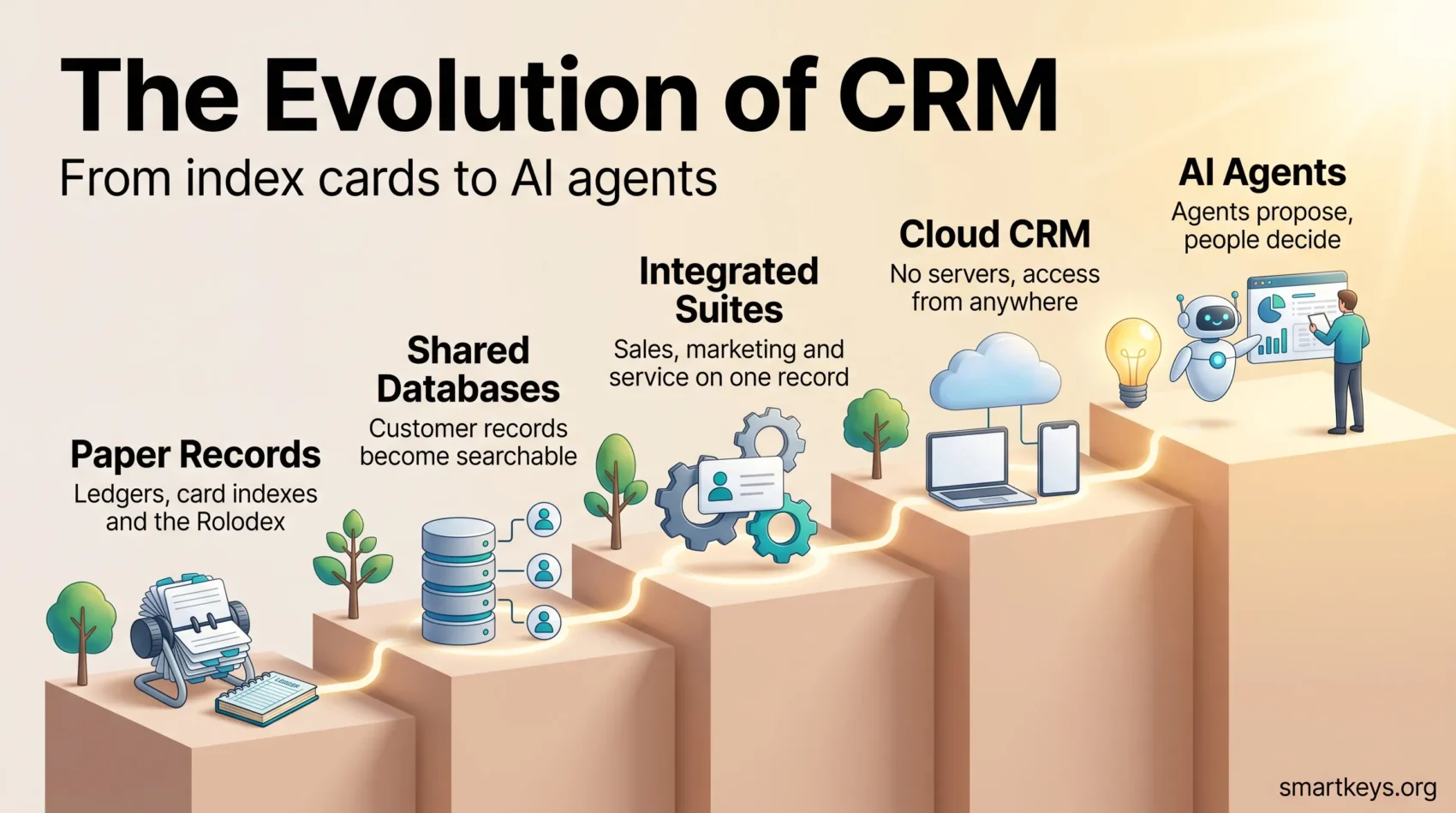
Customer relationship management started as a way to keep track of who you had spoken to. Four decades later it is the system of record most commercial teams run on, and in 2026 it is also where the first wave of production AI agents has landed. This article traces that arc and sets out what has actually changed for buyers this year.
Key Takeaways
- CRM moved from filing systems to databases to the web to the cloud, each step widening who could see customer data.
- AI is now a metered line item in most major suites, not a bundled feature.
- Cloud delivery is the default; the real decisions are about data quality, integration and governance.
- EU transparency rules for AI systems apply from August 2026, making disclosure a configuration question.
- Data security and compliance now shape platform selection as much as features do.
The roots of customer relationship management
The history of CRM is the history of writing things down about customers so someone else can act later. Long before software, merchants kept ledgers of who bought what and who could be trusted on credit. The problem has never changed: knowledge held by one person is fragile, knowledge shared by a team compounds.
Why customer relationships have always mattered
Through the 1980s and 1990s companies began automating routine administrative work, freeing sales and service staff for the accounts that mattered. That created demand for a shared place to record what happened in those conversations, and CRM systems emerged to fill it.
Early methods for managing customer information
Before dedicated software, the Rolodex, the card index and the filing cabinet were the customer database. They worked for one person at a time and lost their value the moment that person left. Early databases solved the sharing problem first; everything since has been an argument about how much structure to impose on top.
From digital Rolodex to advanced systems
The move from physical tools to digital ones is the largest jump in this story. Contact management software of the 1980s did little more than store names, numbers and notes, but it made customer information searchable for the first time.
The emergence of digital contact management
Relational database systems arrived commercially in the 1970s and gave companies a structured way to hold customer records. By the late 1990s the web changed the delivery model: instead of installing software on every machine, teams reached the same records through a browser. That is what made a shared, always-current customer view practical rather than aspirational.
From basics to comprehensive platforms
Modern platforms extended contact management in three directions: process (pipelines, approvals, service queues), analysis (reporting, forecasting, scoring) and connection (email, calendar, telephony, product data). A CRM is now less a database than an integration point, and most of its value comes from what flows into it – which is why teams increasingly pair one with a customer data platform or an integration platform.
The rise of CRM software in the 1990s
The 1990s turned a set of point tools into an industry. Sales force automation, marketing databases and help-desk software had developed separately; the decade’s contribution was the argument that they belonged together.
Siebel Systems and the first integrated suites
Siebel Systems, founded in 1993, built its business on that argument: sales, marketing and service should work from one customer record rather than three. The suite model it popularised is still the shape of every major CRM, and the trade-off it introduced – breadth against simplicity – is still what buyers argue about.
First steps towards web-based CRM
Late in the decade, browser-delivered CRM appeared. It removed the client install, made remote access routine and set up the delivery model that would dominate the following decade. It also set the expectation that customer records should be reachable from wherever the work happens.
The 2000s: the era of cloud CRM
The 2000s settled the delivery question. Software as a service moved CRM from a capital project to an operating expense, and that change in how it was bought spread adoption further than any single feature.
How Salesforce pioneered cloud CRM
Salesforce launched in 1999 with a subscription CRM delivered entirely over the web and grew into the category’s largest vendor through the 2000s. Removing the server, the install and the upgrade project made CRM viable for companies that could never have run an on-premise deployment. The same vendor still sits at the top end of the market – our Salesforce CRM review covers what that costs, and the Salesforce versus HubSpot comparison shows where alternatives bite.
What cloud CRM changed for businesses
The practical advantages held up:
- Lower entry cost: no hardware, no licence purchase, no upgrade project.
- Scalability: seats can be added or removed as the team changes.
- Shared context: everyone sees the same record at the same time.
- Access from anywhere: the phone became a legitimate CRM client.
What cloud delivery did not solve is data quality. A hosted system fed by inconsistent input produces the same unreliable forecast as an on-premise one.
Machine learning enters the stack
From the late 2000s, vendors folded statistical models into the product: lead scoring, churn prediction, next-best-action suggestions. Quiet features rather than headline ones, they set the pattern the current generation still follows – the model proposes, a person disposes.
Modern CRM systems: features and innovations
A CRM today is judged less on its contact list than on how much routine work it removes and how trustworthy its reporting is.
Sales automation and marketing capabilities
Automation handles assignment, follow-ups, approvals and handovers, so the process runs the same way every time. On the marketing side, most suites now include campaign execution and lifecycle nurture – our HubSpot Marketing Hub review covers that end of the spectrum, and AI-driven marketing workflows depend on the CRM’s records being current.
Customer support functionality
Service teams work from the same record as sales: an agent who can see open opportunities and a rep who can see open tickets both make better decisions. Where a suite’s service module is too thin, teams bolt on a dedicated tool such as Zendesk; the broader direction of travel is covered in our overview of customer service trends.
Messaging and social integration
Conversations that used to happen by phone and email now spread across chat, messaging apps and social platforms. Capturing them in the CRM matters less for the sentiment analysis than for the simple fact that the next person to speak to that customer can see what was said.
Data-driven decision making in CRM
Analytics is where a CRM either earns its keep or stops being trusted.
Analytics and business intelligence
Every major platform ships dashboards, and most connect to a warehouse or BI layer for heavier work. The value depends less on the visualisation than on definitions: a pipeline where “negotiation” means five different things produces confident-looking forecasts that are simply wrong.
Predictive analytics for forecasting
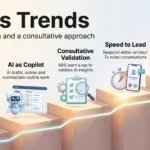
Predictive models score leads, flag accounts at risk and estimate close probability from historical patterns. They work best as a prioritisation aid rather than a substitute for judgement, and their accuracy is bounded by the activity data underneath – which is why automatic capture from email, calendar and real-time product signals matters more than the choice of algorithm.
The current landscape of CRM software in 2026
Two things define the market this year: AI has moved from demo to invoice, and buying has shifted from features to running costs. Vendors now compete less on what the software can do than on what it costs at volume.

Agentic AI moved into the product
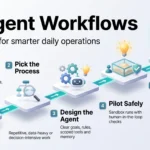
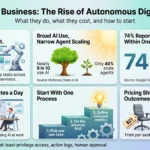
Salesforce set the tone in October 2025 with Agentforce 360, positioning autonomous agents as a first-class part of the platform rather than an add-on feature. Competitors followed with their own agent layers. In practice these agents handle scoped, repetitive work – qualifying inbound leads, drafting follow-ups, resolving routine service requests – and escalate anything ambiguous. The design patterns behind them are covered in our guide to AI agent workflows.
Consumption pricing changes the buying decision
The commercial model matters as much as the capability. Salesforce prices Agentforce through Flex Credits or a flat rate per customer-facing conversation, and HubSpot has moved parts of its Breeze agent line-up to outcome-based pricing. AI usage is therefore a variable cost that has to be forecast, monitored and capped – a different exercise from budgeting per seat. Smaller vendors took the opposite route: Pipedrive, Salesflare and Bitrix24 are worth a look before committing to a metered platform, and Freshworks versus Salesforce sets out the same trade-off at mid-market scale.
Automation, data quality and governance
Automating lead scoring and assignment frees teams for work that needs a person, but it multiplies the consequences of bad data. The practical constraint on AI features is rarely the model – it is whether records are complete enough to act on. That is why enrichment sources such as ZoomInfo have become standard, and why teams wiring the CRM into the rest of the stack usually reach for an iPaaS – our Workato versus Zapier comparison covers the trade-offs. Real-time signals from connected devices push in the same direction, a pattern visible in IoT deployments in healthcare.
What comes next for CRM systems
The near-term direction is less about new capability than about making the current generation dependable.
Where AI in CRM is heading
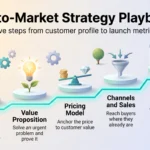
Expect agents to take on longer chains of work and to be judged on completion rates rather than suggestion quality, and expect vendors to compete on how well those agents can be constrained, audited and handed off to a human. The real differentiator will be data readiness, not model access – the same models are available to everyone, a clean and well-integrated customer record is not. This overlaps heavily with sales enablement and with how you build a go-to-market strategy.
Compliance becomes a configuration question
Regulation is now part of the CRM specification. Under the EU AI Act, the Article 50 transparency obligations apply from 2 August 2026: people must be told when they are interacting with an AI system, and AI-generated content has to be marked as such. The stricter high-risk obligations were deferred by the Digital Omnibus agreement – Annex III systems to December 2027, AI embedded in regulated products to August 2028 – but the disclosure duties were not. For most buyers that means a settings review: what does the chat agent say about itself, and what gets labelled.
Emerging interfaces
Voice, messaging and in-product surfaces are absorbing more customer interaction, and each produces records that belong in the CRM. Immersive interfaces such as AR and VR are still demonstrated more often than deployed in customer-facing sales, so treat them as an open question.

Conclusion
CRM has followed one logic for forty years: take knowledge that lived in one head, make it shared, then make it actionable. Index cards became databases, databases became web applications, web applications became cloud platforms, and cloud platforms are now growing an agent layer on top.
What changed in 2026 is the shape of the bill and the shape of the risk. AI capability is metered rather than bundled, so usage has to be modelled before signing. Disclosure rules apply from August, so agent behaviour has to be configured rather than assumed. And the difference between a CRM that works and one that produces confident nonsense is still the least glamorous part of the project: consistent definitions, clean records and integrations that capture activity without relying on anyone’s discipline.
If you are choosing or replacing a system this year, start from the process you run rather than the feature list you might grow into. Our overview of current sales trends is a reasonable place to begin.
Found this useful?
Make SmartKeys a preferred source on Google, and our articles will surface more often in your Top Stories, AI Overviews, and AI Mode.
Add as Preferred SourceFAQ
What are the main CRM trends in 2026?
The defining trend is agentic AI moving from demonstration into the product itself, with Salesforce’s Agentforce 360 launch in October 2025 setting the pattern that other vendors followed. Alongside it sits a commercial change: AI capability is increasingly sold as metered consumption rather than bundled into the seat price, so buyers now have to forecast usage as well as headcount. The third strand is governance. EU transparency rules for AI systems apply from August 2026, which turns disclosure into a configuration task. Underneath all three, the practical constraint remains data quality – agents and predictive models are only as useful as the records they read.
How has CRM software evolved over time?
CRM began as paper: ledgers, card indexes and the Rolodex, all of which worked for one person and lost their value when that person left. Relational databases made customer records shareable, and contact management software of the 1980s made them searchable. Siebel Systems, founded in 1993, popularised the idea that sales, marketing and service should work from a single record – the suite model every major CRM still uses. Browser delivery removed the client install in the late 1990s, subscription cloud delivery removed the server in the 2000s, and the current step is an agent layer that acts on the record rather than just storing it.
What role does cloud CRM play in modern businesses?
Cloud delivery is now the default rather than a differentiator. It removed the hardware purchase, the installation project and the upgrade cycle, which is what made CRM affordable for small companies in the first place. In practice it means seats can be added or removed as the team changes, everyone sees the same record at the same time, and mobile access is normal rather than an add-on. What it does not solve is data discipline: a hosted system fed by inconsistent input produces the same unreliable forecast as an on-premise one.
How does machine learning improve a CRM system?
Machine learning in a CRM mostly does prioritisation and drafting. It scores leads and opportunities by likelihood to convert, flags accounts showing signs of churn, suggests a next action, and drafts emails and summaries. The reliable pattern is that the model proposes and a person disposes: these features work best for deciding what to look at first, not as a replacement for judgement about a specific account. Accuracy is bounded by the activity data underneath, so automatic capture from email, calendar and product usage improves results more than switching models does.
What are the benefits of predictive analytics in CRM?
Predictive analytics turns historical patterns into a ranked list of where attention is worth spending. In sales that means opportunity scoring and close-probability estimates that make forecasts less dependent on individual optimism. In service and account management it means early warning: usage dropping, tickets rising, renewal risk climbing before anyone raises it in a meeting. The benefit is timing rather than insight – teams act earlier on things they would have spotted eventually. Treat the output as a prompt to investigate rather than a verdict, since sparse input produces confident but hollow predictions.
How much does a CRM cost in 2026?
There are three separate cost lines and only the first is on the pricing page. Seat licences run from free entry tiers through mid-market plans to enterprise editions, and most tiers above the entry level are billed annually rather than monthly. AI is increasingly a second line: Salesforce meters Agentforce through Flex Credits or a flat rate per customer-facing conversation, and HubSpot has moved parts of its Breeze agent range to outcome-based pricing. The third line is implementation – configuration, data migration and admin time – which for anything beyond a small deployment often exceeds first-year licence costs. Model all three before committing.
Do AI features in a CRM fall under the EU AI Act?
Some of them do, and the relevant date has arrived. Article 50 transparency obligations apply from 2 August 2026: people must be told when they are interacting with an AI system, and synthetic content has to be marked as such. That directly affects customer-facing chat agents and AI-generated outbound messages run from a CRM. The stricter high-risk obligations were pushed back by the Digital Omnibus agreement – stand-alone Annex III systems to December 2027 and AI embedded in regulated products to August 2028 – but that deferral does not cover the disclosure duties. For most teams the practical step is a settings review rather than a compliance programme.