Tools
Tools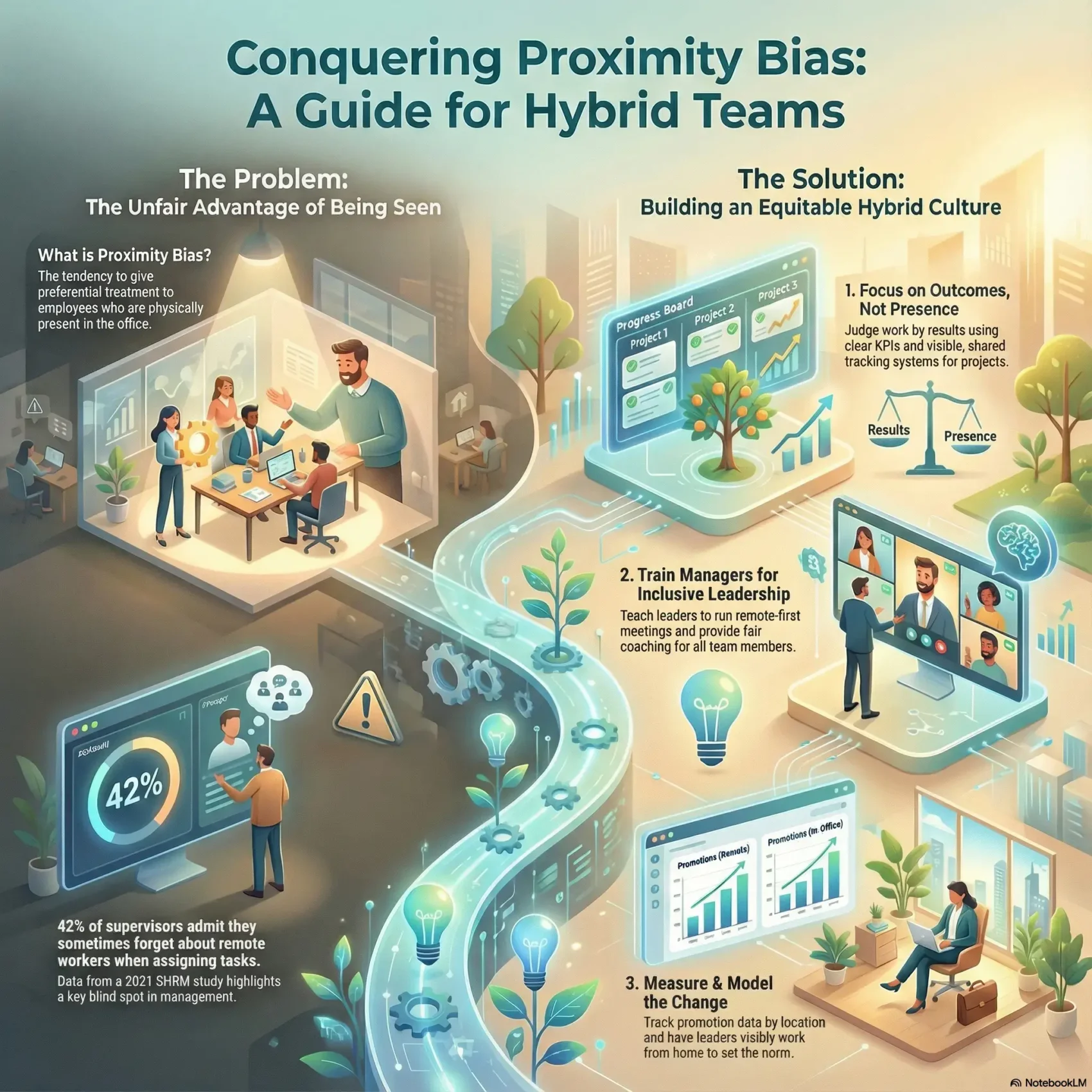
Last Updated on January 10, 2026
You face a real workplace issue when people who sit near leaders get better treatment than remote employees. This tendency shows up in hiring, promotions, and daily assignments. SHRM data from 2021 found many supervisors prefer staff in the office and sometimes forget remote workers when assigning work.
This creates an uneven playing field in hybrid teams. It hurts retention, performance, and fairness for workers across roles. Leaders who equate visibility with effort can favor those nearby even if outcomes match.
At your company, small changes make a big difference. Synchrony Financial asked leaders to work at least one day from home to signal that remote work matters. You can use clear output-based goals, remote-first meeting norms, and simple tracking so people get credit for real contributions.
Key Takeaways
- You’ll learn what proximity bias is and why it persists in hybrid work.
- The issue is a business risk that affects employees, retention, and access to opportunities.
- SHRM data shows managers often favor in-office staff and can forget remote workers.
- Practical steps include outcome-based reviews, visible tracking, and leadership modeling.
- Measure progress with engagement data, promotion trends, and regular pulse checks.
What proximity bias is and why it matters in today’s hybrid workplace
In hybrid teams, who is visible can become a shortcut for who is valued. Proximity bias is the tendency to grant preferential treatment to in-office employees simply because they are seen more often.
This effect comes from mental shortcuts. Managers and leaders overweight what they observe in person and undervalue remote contributions. SHRM research shows supervisors often prefer staff who work on-site and may see remote employees as more replaceable.
The result turns into an access problem. People physically near the office get early information, quick feedback, and face time that leads to better opportunities. That skews performance signals and makes management decisions uneven.
- The tendency harms retention and misallocates talent across teams.
- It creates an opportunity gap for caregivers, people with disabilities, and workers outside commuting range.
- Even without bad intent, treatment differences add up and cost the company real results.
You can fix this by centering evaluations on outputs and by making work and access visible to everyone.
How proximity bias shows up at work: real signs you can spot
You can often tell who the organization favors by watching who gets the quick wins and quiet praise. These signs show up in everyday routines and add up to real career differences for employees and workers.
Preferential treatment tied to visibility: recognition, raises, and promotions
Watch for patterns where recognition and raises go to in-office employees more often than remote employees. Promotions can follow visibility, not objective performance. SHRM found 42% of supervisors sometimes forgot about remote workers when assigning tasks — a red flag for unequal opportunity.
Information gaps and exclusion from meetings, decisions, and social interactions
Office conversations at lunch or in hallways often become early access to resources and decisions. Remote workers hear about changes later and miss informal coaching.
Skewed performance evaluations when presence is mistaken for productivity
Evaluation drift happens when managers praise “always here” instead of measurable results. That language substitutes presence for performance and can push remote employees out of high-impact roles.
Time zone and technology barriers that sideline remote employees
Recurring meetings set to on-site hours, audio or camera issues, and chat inputs being ignored all reduce remote participation. These tech and time problems shape who gets airtime and influence during decisions.
“Document specific examples — who was invited, who presented, who closed the loop — to confirm patterns, not just anecdotes.”
- You’ll spot calendar clues that favor the office and limit remote participation.
- You’ll review assignment patterns to see who gets high-impact projects.
- You’ll track coaching frequency and real-time feedback across the team.
Takeaway: Record concrete examples and run a simple survey to check if your team’s culture and tools give fair access to people in all locations. For a deeper look at building an inclusive work approach, see remote company culture.
How to prevent proximity bias in your hybrid teams
Start by anchoring decisions to measurable outcomes so location doesn’t drive rewards. Define success with clear KPIs, documented deliverables, and a shared tracking tool that shows who completed which project and when.
Set clear, outcome-based performance criteria
Make performance about output, not hours. Use standardized KPIs and written deliverables so managers judge work by results. Track progress in a single place so opportunities and assignments are visible to everyone.
Train managers on inclusive remote leadership
Provide training that helps managers spot unconscious patterns and run inclusive rituals. Teach structured agendas, rotating facilitators, and fair coaching so remote workers get the same development and opportunities as on-site staff.
Adopt remote-first meeting norms
Enforce equal airtime, use chat and hand-raise tools, record sessions, and publish written recaps. These steps create transparent decisions and let remote employees follow up and contribute on equal footing.
Use async tools to make work visible
Rely on project boards, Slack updates, and documented email threads to surface contributions across time zones. Async records make accomplishments verifiable and reduce the temptation to reward whoever is easiest to see.
Build trust with predictable check-ins and role modeling
Schedule regular 1:1s, set smaller iterative goals, and require leaders to rotate work-from-home days as a visible example. Leadership modeling signals that remote work and development are valued.
“Define success by outcomes, document contributions, and make access to resources equal across locations.”
- You’ll set outcome-based KPIs and track deliverables so performance is judged on impact.
- You’ll train managers on inclusive practices that protect remote employees’ development.
- You’ll deploy async tools and meeting norms so decisions and opportunities are transparent.
Measuring and monitoring proximity bias to keep progress on track
Use fast, focused data to tell if people in different places get equal chances. Measurement turns impressions into action so you can fix gaps in how people receive recognition, assignments, and growth.
Use pulse surveys and audits that segment results by work location. Add targeted items such as “I have equal access to growth and development opportunities, regardless of where I work,” “I feel recognized for my contributions by my manager,” and “Decisions that affect my work are communicated clearly and inclusively.”
Use pulse and engagement surveys segmented by work location
Run frequent, short surveys and break results into remote and in-office groups. That shows gaps in access, recognition, and communication that simple impressions can hide.
Track promotions, ratings, and high-impact assignments for equity
Audit promotion rates, performance ratings, and who gets high-impact projects by location. Keep objective records of project outcomes so management can compare like-for-like work and adjust the process or resources where needed.
- You’ll run segmented pulse and engagement surveys by location to reveal gaps.
- You’ll track promotions, ratings, and project assignments for fair treatment.
- You’ll add quick pulse checks and leader 1:1s with remote employees to catch problems early.
- You’ll build dashboards that show trends by location and share findings quarterly.
“Document what you change from the data and close the loop with people.”
Conclusion
Conclusion
Fixing this issue starts when leaders choose habits that make remote work normal and fair. Use the clear playbook: define outcomes, train managers, run remote‑first meetings, and document contributions so proximity bias loses its grip.
Model the change—Synchrony Financial’s rule that leaders spend at least one day working from home shows how leadership can set norms. Use segmented data and pulse checks to make progress visible.
Commit to small, steady routines that protect opportunities for remote workers. Keep measuring, celebrate wins, and refine the process so your company rewards results, not who sits nearest the office.