Tools
Tools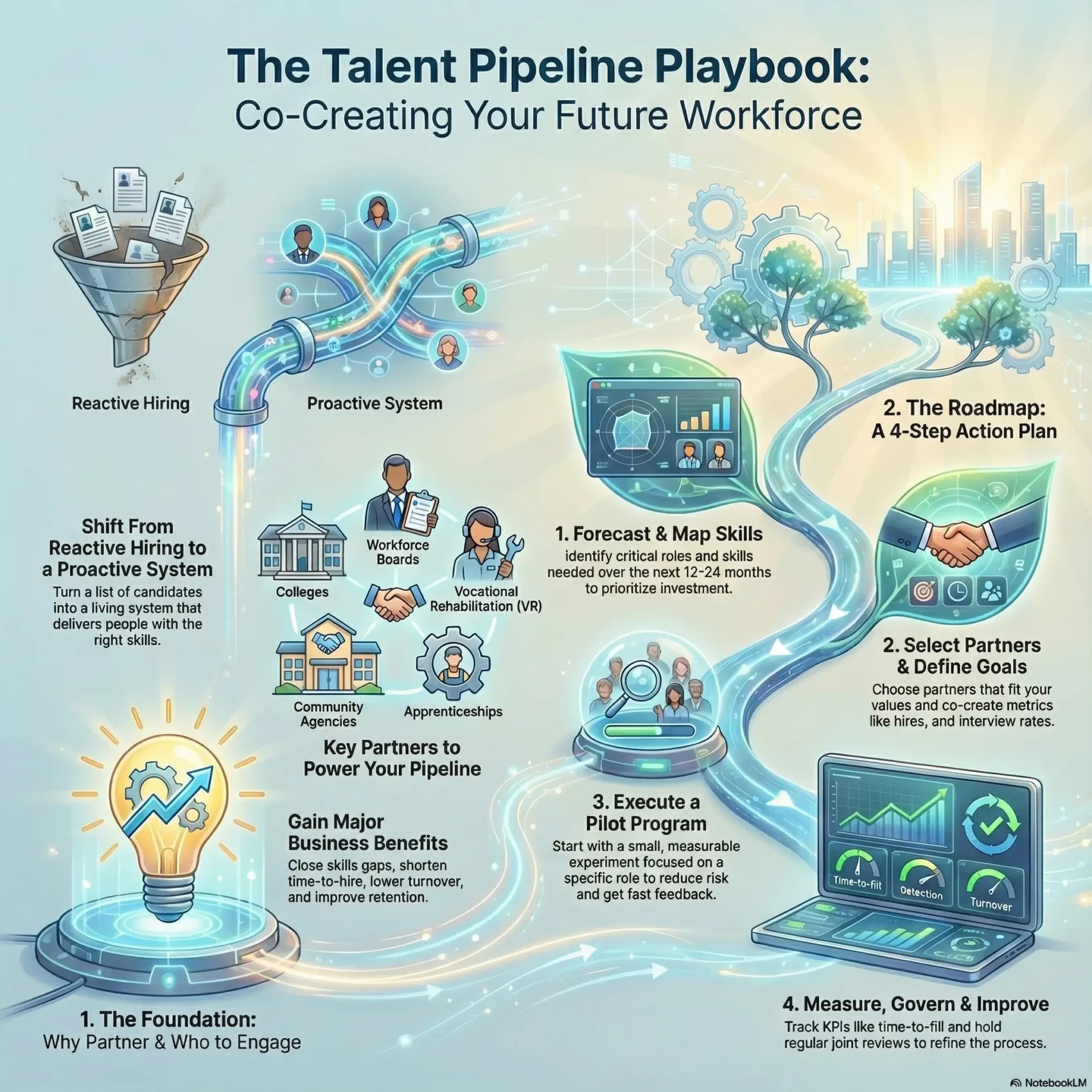
Last Updated on December 13, 2025
Your company can stop reacting to open roles and start shaping the people you will need. A clear approach helps you forecast skills, align training, and build steady hiring flows that match real industry needs.
This model links employers with education and training providers across the United States to turn lists of candidates into a living system. That system readies people with the right skills, boosts hiring speed, and improves quality for your organization.
When you work with aligned partners, you gain resilience during market shifts. You also lower hiring risk and create internal growth paths while opening external opportunities.
Read on for concise insights and a practical roadmap that shows how forecasting, partner selection, training design, and governance make hiring more predictable and faster today.
Key Takeaways
- Proactive planning helps your business anticipate future workforce needs.
- Working with aligned partners turns a list of candidates into a skills-ready system.
- This strategy improves hiring speed, quality, and resilience in your industry.
- Blend external opportunities with internal growth to stabilize hiring.
- Follow a clear roadmap from forecasting to governance for predictable hiring.
Why Partnerships Matter for Building Your Future Workforce Today
Proactive collaboration closes skills gaps before they slow your operations. By forecasting needs, you shape recruitment and reduce disruption when roles open.
Working with education, public, and nonprofit groups expands reach to workers you might miss. That broadened reach creates more opportunities today and builds a steady flow of candidates.
Coordinated strategy across brand, sourcing, CRM, screening, and development links your talent pipeline to real hiring results. You get better candidate readiness and shorter time-to-hire.
- Engage early: nurture prospects so you’re top-of-mind when they’re ready.
- Align training: match workforce development to your exact needs, from hard skills to soft skills.
- Share risk: businesses that partner externally reduce hiring challenges and improve retention.
“CEOs name skills availability as a top threat—acting now protects growth.”
These coordinated efforts tackle shifting labor dynamics and skill shortages. The result is a more resilient employer strategy and clear insights you can act on today.
What Are Talent Pipeline Partnerships and How They Strengthen Your Recruitment Process
Instead of filling roles reactively, you can shape who enters your organization by co-designing learning pathways. A talent pipeline is a continuous system to identify, attract, and nurture potential candidates for current and future roles. When you move from a standalone pipeline to collaborative programs, providers help build curricula so applicants are ready from day one.
From single systems to co-created programs
Standalone flows focus on sourcing and short-term screening. Co-created programs align forecasting, sourcing, engagement, and assessment with providers so the recruitment process runs smoothly.
Core benefits for hiring and retention
You get faster hiring cycles and stronger quality of hire through real-world training tied to your company. Lower turnover follows because new hires better match role expectations and culture.
Aligning values, culture, and business needs
Co-defining roles, skills, and screening criteria reduces mismatched expectations. Employers that map competency-based pathways can attract top talent with clear advancement signals.
- Broadened reach to diverse candidates
- Inclusive steps baked into each stage
- Metrics that guide which partnerships to deepen
Partner Categories That Power Your Pipeline
Local and regional organizations offer concrete channels to turn learning into on-the-job experience for your future hires. Each category brings different strengths that speed hiring and improve retention.
Colleges and universities
Internships, co-ops, and capstone projects translate coursework into hands-on roles. Use these programs for early-career pipelines and short-term placements that reveal strong candidates quickly.
Regional workforce development entities
Workforce development boards deliver demand-driven training tied to industry credentials. Tap them for accelerated upskilling for priority roles and faster time-to-hire.
State Vocational Rehabilitation (VR) programs
VR services reduce barriers for workers and employees. They offer accessibility consulting, ADA training, ASL, on-the-job coaching, accommodations, tax-credit guidance, and apprenticeship support.
Community-based agencies and disability organizations
These groups widen inclusive sourcing and connect you with overlooked candidates. They help you adopt practices that lower barriers across recruitment and onboarding.
Registered apprenticeships and pre-apprenticeships
Earn-and-learn models combine paid experience with structured learning. They create reliable pipelines into skilled roles that match your job requirements.
- Decide which organizations fit your roles, timelines, and industry needs.
- Dedicate resources, join advisory groups, and host mock interviews or job fairs.
- Build feedback loops to refine training, screening, and shared outcomes.
How to Build talent pipeline partnerships that deliver results
Start by forecasting which roles will matter most over the next 12–24 months and link them to measurable skills. This focus helps you align hiring with business goals and keeps your talent acquisition efforts realistic.
Forecast roles and map skills
Identify critical jobs and the skills each requires. Map gaps against industry trends so your company can prioritize where to invest.
Evaluate and select organizations
Choose partners that match your values and culture, and that have capacity to deliver training and supports. Assess inclusion strengths and operational fit.
Co-create objectives and metrics
Define shared outcomes such as referrals hired, interview rates, and training completions. Use these metrics to guide the process and refine agreements.
Design the recruitment process
Create referral workflows, structured screening, and accommodations plans. Focus on a smooth candidate experience that reduces drop-off across each job stage.
- Stand up on-the-job coaching, accessibility, and safety training through VR and community groups.
- Leverage grants, tax credits, and apprenticeship sponsorships to extend resources without overspending.
- Assign internal liaisons and enable hiring managers so timelines and communications stay on track.
Embed feedback loops so both employer teams and partners iterate quickly using data. Small, measurable steps make scaling this strategy predictable and repeatable.
Execution Playbook: From Pilot to Scaled Workforce Development
Begin by running a short, measurable experiment that links precise roles to partner supports and learning goals. A small pilot reduces risk and gives you fast feedback on selection criteria, timelines, and resource needs.
Start small with clear scope
Define the role, timeline, and success metrics up front. Limit cohort size so you can iterate quickly and control costs.
Engage candidates consistently
Keep candidates warm with CRM sequences, targeted social media posts, and local community events. Consistent touchpoints raise conversion and keep interest high.
Enable hiring teams
Train managers on inclusive interviewing, ADA obligations, and bias reduction so hiring stays consistent across locations. On-the-job coaching and mentor pairing accelerate readiness for each role.
Blend internal mobility and documentation
Promote internal employees into new careers alongside external hires to stabilize your pipeline. Document every step—from referrals and assessments to offers and onboarding—so you can replicate success across the company.
- Align employer branding with partner messaging for a cohesive candidate journey.
- Plan contingency resources to handle volume spikes without harming experience.
- Use apprenticeships or pre-apprenticeships where they fit to scale learning and job placement.
“Start small, measure often, and document everything so scaling becomes predictable.”
Measure, Govern, and Improve Your Partnership Strategy
Track outcomes in real time to turn data into fast, practical fixes for recruitment bottlenecks. Start with a small set of KPIs so leaders can make clear decisions.
Pipeline KPIs that guide decisions
Focus on time-to-fill, quality of hire, and source of hire. Add conversion rates, diversity, candidate engagement, and offer acceptance to round out the view.
Outcome tracking with partners
Standardize reports for referrals, hires, training completions, and retention. Use those figures to spot which pipelines and channels need more resources.
Governance cadence and continuous improvement
Hold joint reviews on a regular cadence. Capture small wins to build momentum and refine agreements quickly.
Staying agile as needs shift
Analyze bottlenecks by roles, skills, and stages. Then update curricula or tweak screening with partners so your company can scale or pause intakes without losing candidates.
- Align leaders on a dashboard that shows the most critical KPIs for your organization and business.
- Link talent acquisition analytics to investment choices so you fund the most productive channels.
- Stress-test plans against market shifts and keep playbooks ready for fast action.
“Small, measurable reviews turn insight into sustained results.”
Conclusion
,Wrap up with a practical playbook that turns outreach and training into on-the-job results. Keep plans small, measurable, and centered on the roles your business needs now and next year.
Use community supports like VR and local agencies for accessibility consulting, ADA training, on-the-job coaching, and tax-credit guidance. These resources make hiring and retention easier for candidates and employees alike.
Focus on three things: clear process steps, simple governance, and ongoing measurement. That lets your organization scale development, attract top talent, and keep the pipeline active.
For a hands-on approach to sourcing and engagement, see crowdsourcing talent and adapt the ideas to your teams.