Tools
Tools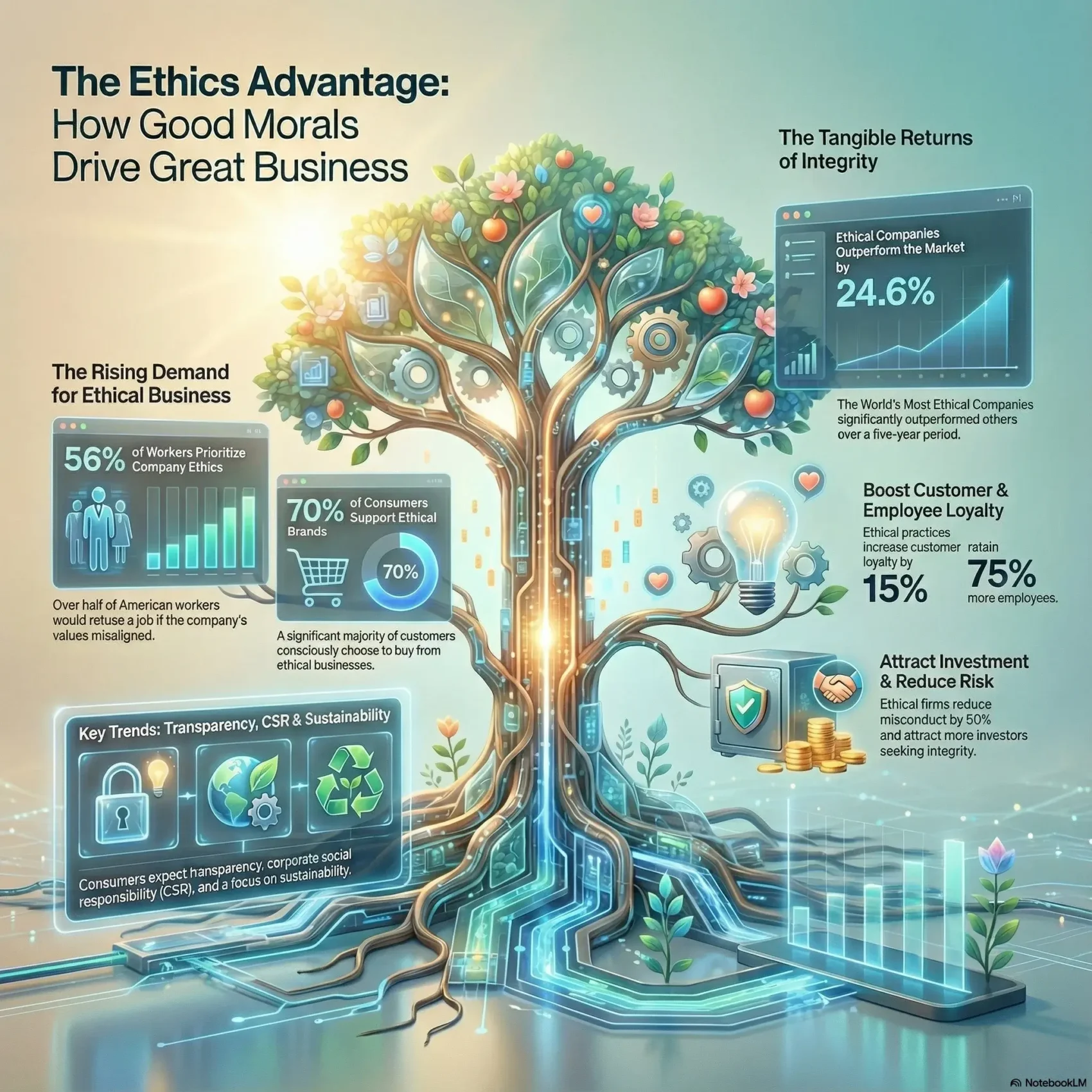
Last Updated on January 3, 2026
In today’s competitive world, ethics in business is more crucial than ever. Companies like Apple, Amazon, and Tesla prove that upholding high ethical standards strengthens their reputation and attracts stakeholders. Ethics are a cornerstone, shaping decisions and guiding actions within companies. The World’s Most Ethical Companies of 2022 outperformed others by 24.6% over five years, highlighting the link between ethics and success.
A survey found that 56% of American workers would decline a job if they didn’t agree with the company’s ethics. This shows how crucial it is for businesses to align with employee values. Ethical behavior builds trust, ensures legal compliance, and boosts a company’s reputation. In a society focused on ethical consumerism, grasping the importance of ethics in business is vital for growth and success.
Key Takeaways
- Ethical businesses are more likely to attract and retain loyal customers.
- Employee satisfaction and company morale improve in an ethical workplace.
- Consumers increasingly favor brands with clear ethical standards.
- Firms with a strong ethical foundation enhance their reputational capital.
- Balancing profit with ethics presents challenges but is essential for sustainable growth.
- Ethical leadership shapes corporate culture and encourages responsible behaviors.
Understanding Business Ethics
Business ethics are vital in shaping how companies operate. They are the moral guidelines that direct actions and decisions within an organization. These principles deeply influence corporate governance, affecting how businesses interact with stakeholders and handle ethical challenges. Companies that focus on ethics develop policies that reflect these values, improving their public image and relationships.
Defining Business Ethics
Business ethics cover a broad spectrum, from corporate governance to social responsibility. It’s crucial for professionals to grasp that ethical principles define an organization’s culture. Scenarios like Enron’s collapse or BP’s ongoing scrutiny highlight the importance of a strong ethical base in preventing failures.
Importance of Ethical Principles in Business
Adhering to ethical principles is crucial. Companies seen as ethical build a dedicated customer base, leading to increased profitability. In a world where transparency is key, firms that prioritize ethics connect better with their audience.
- Trust strengthens relationships with clients and stakeholders.
- Compliance with regulations reflects a commitment to ethical governance.
- Investors are increasingly drawn to companies with robust ethics programs.
- Ethical operations can greatly enhance a company’s reputation.
The Importance of Business Ethics in Modern Practices
Business ethics are vital for building a solid base in the workplace and engaging with the community. They help create trust among stakeholders, ensuring legal compliance, and boosting a company’s reputation.
Building Trust Among Stakeholders
Trust is key in business. Ethical practices create an environment where employees, customers, and investors feel respected. This leads to a 15% increase in customer loyalty. Moreover, 70% of consumers prefer to support ethical businesses, showing the power of trust.
Legal Compliance and Ethical Governance
Following legal standards is now part of ethical governance. Companies with ethics programs see an 85% drop in legal issues and mistakes. This approach protects against lawsuits and builds a culture of respect, boosting trust.
Enhancing Company Reputation
A good reputation based on ethics is crucial in today’s market. Companies like Coca-Cola and Toyota show how ethics attract customers. Ethics policies reduce negative publicity and damage to reputation. This focus on ethics builds trust, fostering lasting relationships with customers and stakeholders.
Business Ethics Trends Shaping Today’s Corporations
Today’s corporations face a rapidly evolving landscape, shaped by shifting business ethics trends. As consumers become more aware, their expectations for ethical practices have grown. This has led to a push for transparency and accountability from companies. It’s part of a larger movement towards ethical responsibility in business.
Increasing Consumer Demand for Ethical Practices
Consumer awareness is driving the demand for ethical practices in companies. Several factors are influencing this trend:
- Transparency: Consumers want to know how products are made and their environmental and social impacts.
- Accountability: Businesses are now expected to be responsible for their actions and their societal effects.
- Investment in Ethics: Companies that prioritize ethical practices tend to build a loyal customer base.
Focus on Corporate Social Responsibility
Corporate social responsibility (CSR) is key in shaping business ethics today. Brands like Unilever and Microsoft have made CSR a central part of their strategies. This includes:
- Community Engagement: Companies are now more involved in local initiatives that benefit society.
- Ethical Sourcing: Businesses focus on sourcing materials that support fair labor and environmental practices.
- Positive Environmental Impact: Brands aim to reduce their ecological footprint through sustainable practices.
Emphasis on Sustainability Practices
Sustainability is now a critical part of business ethics trends. Companies like Tesla and Adidas show how sustainability can guide corporate decisions. Businesses are focusing on:
- Reducing Waste: Efforts to minimize waste help companies meet sustainability goals.
- Embracing Eco-friendly Technologies: Investing in sustainable technologies improves operational efficiency.
- Establishing Long-term Goals: Companies set ambitious targets for carbon neutrality and resource efficiency.
Impact of Ethical Leadership
Understanding the role of ethical leadership is crucial for building ethical cultures in organizations. Leaders who focus on ethical behavior foster an environment that encourages ethical decision-making. This can significantly impact a company’s performance. When leaders model integrity, transparency, and respect, they inspire their teams to do the same. This creates a culture that values fairness and equity.
Role of Leaders in Shaping Ethical Cultures
Ethical leaders set the organization’s tone by:
- Promoting respect for individuals from diverse backgrounds without discrimination.
- Fostering an open culture of trust and communication among employees and customers.
- Advocating for transparency, ensuring all stakeholders are informed about the organization’s values and mission.
- Encouraging a workplace where mistakes are viewed as opportunities to learn and grow.
With a focus on ethical leadership, organizations can establish a culture based on honesty, accountability, and respect. This foundation not only boosts employee job satisfaction but also draws in better talent. Many individuals look for workplaces that match their personal values.
Encouraging Ethical Decision-Making in Teams
Encouraging ethical decision-making involves giving your teams the tools they need to make responsible choices. Ethical leaders can:
- Prioritize people over profits, ensuring fair treatment and equal opportunities for all.
- Commit to promoting diversity and inclusion to prevent biases and discrimination.
- Dedicate themselves to continuous improvement, refining strategies to create a more efficient business environment.
- Instill a sense of accountability and integrity in all decision-making processes.
Research shows that ethical leadership is linked to higher employee engagement and satisfaction. A strong ethical culture leads to better team dynamics and overall success. Creating an environment where ethical decision-making is the norm greatly benefits both employees and the organization.
Creating an Ethical Culture in the Workplace
Creating an ethical culture in the workplace is crucial for a healthy work environment. A code of ethics lays the groundwork, guiding employees in their actions and choices. It helps prevent unethical behavior and promotes accountability among team members.
Implementing a Code of Ethics
A well-defined code of ethics offers a guide for employees facing ethical dilemmas. It should be easily accessible and communicated regularly to ensure everyone is on the same page. Recognizing employees who show integrity boosts motivation and reinforces the company’s values.
When employees feel empowered to uphold ethical standards, the ethical culture grows. This leads to better morale and commitment.
Promoting Transparency and Accountability
Transparency is key to a strong ethical culture. It ensures employees can report unethical behavior without fear. Most misconduct is linked to managerial actions, highlighting the need for accountability.
Senior management should set the tone by acting ethically and being accountable. Transparency builds trust and encourages a socially responsible work environment. In such cultures, misconduct is rare, with only 20 percent of employees witnessing unethical behavior.
Ethical Decision-Making and Compliance Standards
In today’s business world, ethical decision-making is crucial, alongside compliance standards. Organizations must blend these elements to create a culture based on business ethics. A solid ethical decision-making foundation not only meets compliance but also strengthens an organization’s integrity and reputation.
Frameworks for Ethical Decision-Making
Frameworks are vital in guiding ethical decision-making processes. They help individuals evaluate consequences and benefits, and their impact on stakeholders. Key frameworks include:
- Utilitarian Approach: Focus on the greatest good for the greatest number.
- Rights-Based Approach: Emphasize protecting individual rights and freedoms.
- Justice Approach: Advocate for fairness and equality in treatment.
Integrating these frameworks aids in making ethical decisions, especially in complex situations where compliance is key. Walmart is a prime example, with their ethical guidelines reinforced through extensive training for their 2.1 million associates.
Understanding Compliance Standards in Business
Compliance standards are the foundation for legal and ethical expectations in business. With evolving regulations and public scrutiny, organizations face pressure to uphold high compliance standards. Understanding these standards can greatly reduce legal risks and boost ethical integrity. A report shows that 87% of employees believe their workplace lacks a strong ethical culture, pointing to an area for improvement.
Walmart manages compliance through a comprehensive Ethics and Compliance program, overseen by their Global Governance team. The company stresses the need for ethical practices, including anti-corruption and responsible sourcing. Through regular assessments and training, employees are prepared to spot and report unethical behavior.
In conclusion, using established frameworks and grasping compliance standards can significantly boost ethical decision-making in businesses. Cultivating a culture of business ethics not only betters internal practices but also builds trust with customers, employees, and stakeholders. As ethical practices evolve, businesses must stay vigilant and adapt.
Engaging Stakeholders in Ethical Practices
Effective stakeholder engagement is crucial for building a strong ethical culture within your organization. Clear communication of your corporate values is key. Transparency is essential for successful stakeholder engagement. It builds trust and shows your dedication to ethical practices at every level of the business.
Communicating Corporate Values
To engage stakeholders meaningfully, your corporate values must be consistently shared. This can be done through various channels, including:
- Regular updates during stakeholder meetings
- Informative newsletters highlighting ethical initiatives
- Transparent reporting on sustainability efforts
Creating a culture of openness invites stakeholders into the conversation. It makes them feel valued and respected.
Involving Employees in Ethical Initiatives
Employees are crucial for building a strong ethical culture. By involving them in ethical initiatives, you strengthen their connection to the company’s mission. This also enhances the overall integrity of the organization. Consider the following actions:
- Forming cross-departmental teams focused on ethical project management
- Encouraging feedback on corporate values and ethical practices
- Implementing training sessions that emphasize the importance of stakeholder engagement
These steps can significantly improve stakeholder satisfaction. They also reinforce the ethical foundation of your business, contributing to its long-term success.
Long-Term Benefits of Business Ethics
Strong ethical practices in business yield significant long-term advantages. They foster a culture of integrity and enhance customer relationships and investor attraction. This approach not only builds trust but also sets a solid foundation for future success.
Customer Loyalty and Brand Trust
Brand trust is crucial for customer loyalty. Over half of U.S. consumers avoid companies seen as unethical. Conversely, those that stand by ethical principles gain loyal customers who promote them on social media. Brands like Johnson & Johnson have seen the positive impact of ethical practices on customer loyalty.
Companies that uphold ethical values see a boost in their market reputation. This leads to long-term benefits. For example, 75% of employees prefer to stay with companies that value ethical culture. Such commitment results in teams that focus on customer satisfaction and retention.
Attracting Investors Through Ethical Standards
Investors now look for companies with high ethical standards. Those listed as the World’s Most Ethical Companies outperform the Large Cap Index by 10.5% over three years. This shows that ethical practices are key to financial success. Ethical cultures also reduce misconduct by 50%, reassuring investors about a company’s integrity.
As awareness of business ethics grows, 55% of accountants expect more focus on ethical practices. Ethical operations lead to better performance, higher employee engagement, and sustainable growth. Companies committed to ethics build trust and draw in investors who support responsible businesses.

Conclusion
In today’s fast-paced business world, the significance of business ethics is paramount. Companies that truly adopt ethical practices stand out for their long-term success. They focus on corporate governance and integrity, earning the trust of customers and stakeholders. This trust leads to loyalty and a strong reputation, vital in a competitive market.
The move towards accountability and transparency is essential, not just a passing trend. Businesses must adapt and adopt ethical standards, especially with the rise of Environmental, Social, and Governance (ESG) issues. The need for corporate sustainability reporting and stricter compliance shows a commitment to ethical business practices.
Embracing business ethics goes beyond just avoiding wrongdoings. It means actively weaving these principles into all parts of your operations. Therefore, for success, it’s crucial to invest in ethical practices. This is not just for legal compliance but also for creating a culture that respects human rights and benefits society. For more insights on implementing these strategies, consider exploring resources on AI in the workplace and its ethical implications. Useful information can be found at smartkeys.org.