Tools
Tools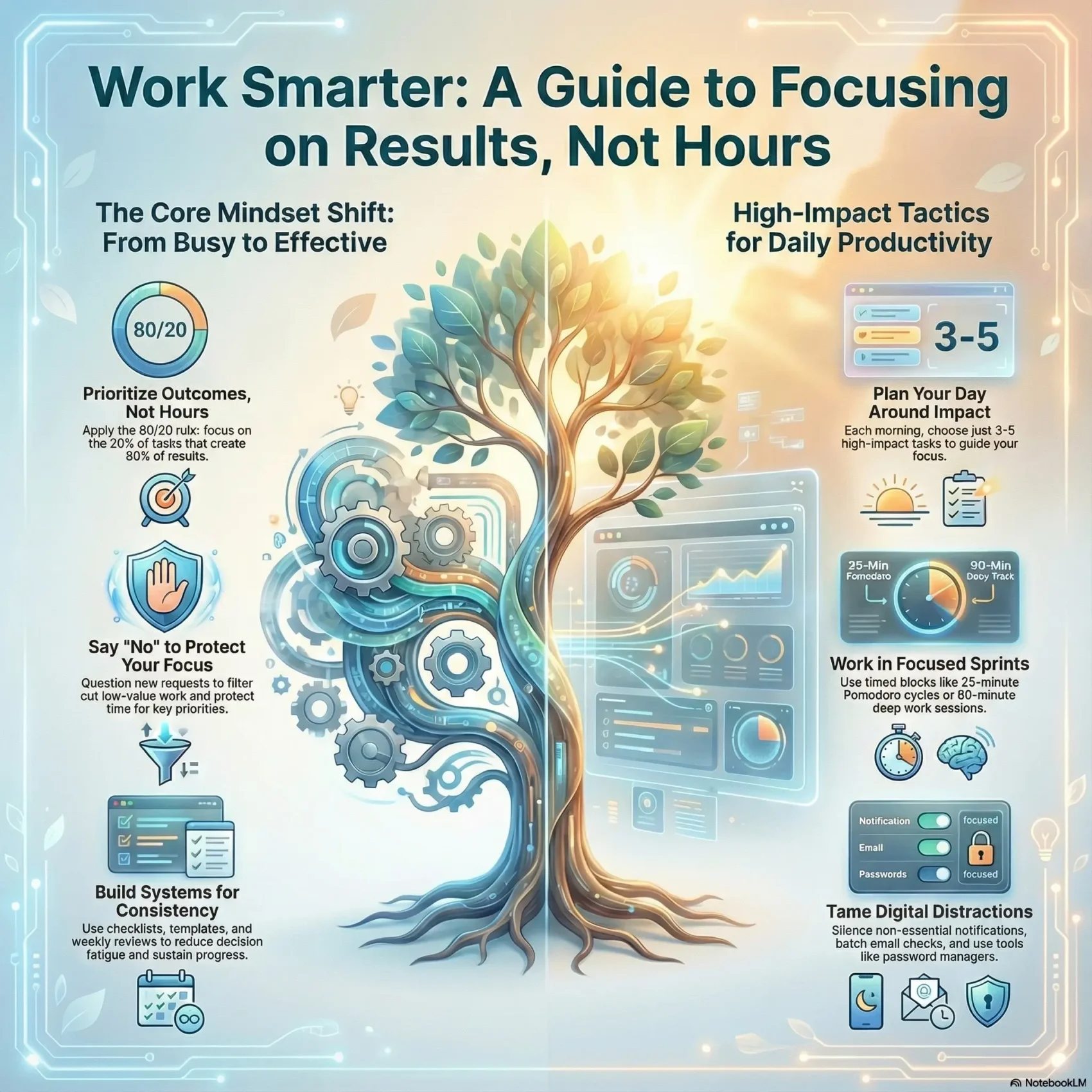
Last Updated on December 13, 2025
Shift from counting hours to tracking value. This approach puts outcomes first so your time goes toward what matters most.
Planning ahead, a realistic list, and fewer interruptions protect your focus. Simple routines like 25-minute sprints and batching similar tasks cut mental friction.
Remote work proved that time does not equal quality. When you measure results, job satisfaction and team performance rise without stealing your life outside the office.
Small habits—Inbox Zero, ruthless unsubscribes, and a password manager—remove digital clutter. Clear agendas and short meetings keep your team aligned and free up deep-focus hours.
Key Takeaways
- Frame your day around results so your efforts match real value.
- Use short sprints and batching to lower cognitive load and boost productivity.
- Protect focus: limit notifications and plan a practical list each morning.
- Adopt simple tools like Inbox Zero and password managers to cut friction.
- Shift team habits to short agendas and summaries to save collective time.
Why working smarter matters right now
Information overload from notifications, constant email, and small meetings is eroding your attention every day.
That flood of interruptions raises stress and wastes precious time. Your brain has limited focus, so frequent context switches make tasks take longer and invite mistakes.
Research-backed steps help. Focus on results, batch email checks, and mute nonessential alerts. These simple rules protect deep stretches of concentration and improve productivity fast.

Teams that give autonomy and clear priorities gain trust and higher engagement. When team members tackle fewer, high-impact tasks from a clear to-do list, outcomes and morale rise.
- Reclaim time by limiting interruptions and scheduling email windows.
- Prioritize high-value tasks, not hours, to boost performance this week.
- Small weekly reviews and process tweaks compound into steady growth.
“Less busy, more effective: guard your focus and the rest follows.”
For individuals, that means lower stress, better life balance, and more visible career gains through improved management of tasks and time.
Mindset shifts that help you work smarter, not harder
Shifting how you think about tasks changes what you accomplish each day.
Focus on outcomes so your decisions match real value. This lets you allocate time and resources where they count.
Prioritize outcomes over hours and ditch perfectionism
Set clear deadlines and split big work into small steps. When you aim to finish one task and iterate, perfectionism fades.
Start with why and say no more often
Begin every request by asking why it matters. Saying no protects focus; offer alternatives when you can. This filters competing demands and frees you for high-value tasks.
Build systems for consistency, not just habits
Use checklists, templates, and weekly reviews. Systems reduce decision fatigue and sustain progress when motivation dips.
- You’ll gain the ability to spot what truly moves the needle and develop practical skills.
- Adopt a simple approach: name the result, list three next actions, block time.
- Create SOPs that help members align quickly and avoid rework.
“Small systems beat big willpower—make good work the default.”
Plan your day and manage time like a pro
Start each morning by picking three to five high-impact items so your day begins with purpose. Planning ahead lets you start with priorities instead of sorting in the moment. Keep that to-do list short to avoid overwhelm and calm your brain.
Create a realistic to-do list and theme your weekdays
Theme days—for example, one day for meetings and another for deep project work—reduce context switching. Cluster similar tasks so you spend fewer times shifting focus and more time on meaningful activities.
Use time blocks, micro-scheduling, and short deadlines
Block your calendar in 25–30 minute segments with small recovery breaks. For longer projects, schedule a 90-minute deep block. Short deadlines keep momentum and stop tasks from drifting.
Track your time and apply the 80/20 rule
Track minutes for one week to see where you lose time. Then double down on the 20% of tasks that produce 80% of results. This reveals which activities deserve most of your attention.
End your day with a shutdown routine and plan tomorrow
Spend 15 minutes to review wins, capture open items, and pick tomorrow’s first task. A tidy desk and clear list make starting easier and help you end day with closure.
- Pick 3–5 high-impact tasks to focus your energy.
- Theme your week so the brain switches less often.
- Use blocks of time and short deadlines to stay efficient.
- Track a week of minutes and apply the 80/20 rule.
- Close the day with a quick shutdown routine.
For additional practical guidance on time management, use a planner that fits your style—digital or paper—so you reliably follow through on what matters most.
Boost deep focus and tame distractions
Protecting focused minutes beats juggling many tiny tasks at once. When you guard those blocks, your concentration and output improve. The tips below help you limit context switches and get more done in less time.
Single-task, don’t multitask
Commit to one task at a time so your brain can fully engage. Multitasking lowers accuracy and slows you down.
Set clear micro-goals for each session and finish a task before moving on. This reduces errors and speeds completion of important tasks.
Work in sprints: Pomodoro, 90-minute deep blocks, and short bursts
Try 25/5 Pomodoro cycles or a 90-minute deep block, then take planned breaks. Minutes-based bursts help you find the best cadence.
Track how long a task actually takes and adjust your time blocks to match complex work needs.
Silence notifications with Do Not Disturb and silent hours
Turn on Do Not Disturb and set silent hours so only priority alerts get through. Limit app notifications to essentials.
Create rules: allow calls from key contacts, but mute everything else during focus windows.
Design minimalist, tidy workspaces that support concentration
Declutter daily. Use trays and folders and adopt a “one in, one out” rule for supplies.
A clear desk cuts visual noise and helps you start faster when you return to a task.
Create if-then plans to handle interruptions and maintain flow
Write simple cues: If Slack pings, then finish the current 10-minute block before checking. These small rules preserve momentum.
Protect long focus windows and use short recovery breaks so your energy stays steady and your overall productivity rises.
- You’ll spend less time switching and more on meaningful tasks.
- You’ll notice fewer context switches and more usable minutes each day.
- You’ll complete complex tasks with higher quality and less stress.
Smarter tools and automation to eliminate repetitive tasks
Automating routine steps saves you time and cuts errors across projects. Use a focused set of tools that plug into your workflow so the stack stays lean and easy to manage.
Leverage productivity apps, AI assistants, and automation
Tools like AI assistants can draft, summarize, transcribe, and analyze. Automate data entry, scheduling, and reporting to free minutes for strategic work and reduce human mistakes.
Batch recurring activities and use templates and canned responses
Group similar tasks—billing, scheduling, and email—into timed batches. Use templates and canned responses so routine replies take seconds, not minutes. For example, calendar booking tools remove endless back-and-forth.
Declutter your digital life: Inbox Zero, unsubscribes, and password managers
Pursue Inbox Zero with aggressive unsubscribes, filters, and scheduled email windows. Add a password manager to create unique logins and avoid lockouts while keeping security simple.
- You’ll identify repetitive tasks and automate them to reclaim time.
- You’ll use AI to create first drafts and summaries, then refine quickly.
- You’ll batch activities, use templates, and keep a short list of trusted tools.
- You’ll measure minutes saved and redeploy them to higher-value project work.
Make meetings and communication work for you and your team
Meetings should earn the time they take by driving clear outcomes. Require a short agenda and a stated purpose before you accept. If a quick update will do, send a crisp async summary instead.
Keep gatherings short and end with next steps
Limit sessions to 15–30 minutes so attention stays high. Decline calls that arrive without an agenda.
Always finish with clear next steps, named owners, and due dates. This ensures progress between meetings and cleaner handoffs on any project.
Use stand-ups and accountability to align team members
Run quick daily stand-ups to surface blockers and sync priorities. Assign owners for tasks so each member knows their responsibilities.
Control inboxes, notifications, and scheduling friction
Batch email checks into set windows and tell your team members when you’ll reply. Turn off nonessential notifications to protect focus and minutes.
Use calendar booking tools to stop back-and-forth and group similar events to guard your time.
- Require an agenda and use templates for summaries to save hours.
- Keep meetings brief—focused minutes beat long calls.
- End every session with action items, owners, and deadlines.
- Schedule email times, silence nonessential alerts, and use booking tools.
“Fewer, clearer meetings speed decisions and lift team productivity.”
Energy, stress, and well-being: the foundation of sustainable productivity
Your daily energy is the single biggest lever for reliable output and clear thinking. Treat sleep, movement, and food as core tools that shape how you handle tasks and decision-making.

Prioritize sleep. Rest boosts memory, creativity, and problem-solving. Lack of sleep impairs attention and leads to poorer choices the next day.
Sleep, move, and eat for focus and brain health
Move daily. Short walks and light exercise improve mood and concentration. They also help sleep quality so your energy stays steady across the day.
Eat nutrient-rich meals—omega-3s, whole grains, fruits, and vegetables—to avoid afternoon crashes and keep your brain fueled for long tasks.
Use breaks, mindfulness, and tech-free zones to reduce stress
Schedule short breaks: stretches, five-minute walks, or breathing minutes. These resets lower stress and restore concentration.
Create tech-free zones, especially before bed, and add a simple mindfulness practice each day. These steps reduce anxiety and make it easier to focus when time is tight.
- Treat sleep like a performance tool—it sharpens your brain and creativity.
- Move and eat for steady energy to sustain minutes of focused concentration.
- Use short breaks and mindfulness to lower stress and protect your time.
- Small recovery activities compound into better decision-making and less burnout.
“Caring for life outside the office isn’t indulgent—it’s the base that makes hard tasks feel easier.”
Lead teams to smarter work
Great leaders shape how teams spend their minutes and what they deliver. You can guide members to focus on impact by changing small habits and clear expectations.
Delegate, ask early questions, and sharpen communication skills
Delegate high-volume or out-of-scope tasks so the right people handle routine items and you keep strategy time. Ask clarifying questions at the start of a project to align scope, resources, and success criteria.
Teach concise updates and require a short summary and next steps at every handoff. This reduces rework and speeds decisions.
Gamify progress, learning lunches, and creative sabbaticals
Try light gamification—points, badges, or a leaderboard—to boost engagement on repeat tasks. Host monthly learning lunches so team members share skills and practical examples.
Support creative sabbaticals to spark new ideas that feed back into projects and drive better outcomes.
Test meeting-free blocks and a four-day week
Pilot meeting-free blocks and measure cycle time, on-time delivery, and quality. Consider a four-day week trial if metrics show sustained results and higher satisfaction.
End every meeting with named owners and due dates so accountability stays visible. Add short mindfulness moments to rituals to reduce pressure and help everyone show up ready.
“Delegate clearly, ask early, and measure what matters.”
- You’ll free time for strategy and accelerate project delivery.
- You’ll reduce rework by aligning scope and resources up front.
- You’ll grow skills and engagement through learning activities and gamification.
Aim for results, not time spent — how to work smarter every day
Start the day by naming one action that will move a project forward and schedule it when your energy peaks. Keep a short, prioritized to-do list so the next step is always clear and you can complete tasks faster.
Use 20–30 minute bursts for quick wins and 90-minute blocks for complex work. Micro-schedule around your energy: put demanding tasks in your best hours and smaller items in low-energy times.
Batch email, set windows, and use canned responses. Apply the 2-minute rule for tiny items and set hard stops to protect personal time and hours you need for concentration.
Bring AI and lightweight tools into drafts and summaries so projects move faster without losing quality. Turn off nonessential notifications during focus minutes and restore them after.
- Define one next step that will complete tasks and schedule it when your energy is best.
- Build the day around focused minutes and clear hard stops to end day with calm.
- Batch communication, use templates, and let simple routines boost long-term productivity.
“A reliable approach beats sporadic marathons—practice small rhythms that deliver results.”
Conclusion
Wrap your day with a quick review to keep momentum and reduce friction. Choose one next step for your project and block time for it first thing tomorrow.
You’ll leave with a clear way to work smarter: prioritize outcomes, simplify planning, and protect the minutes you need for meaningful tasks. Repeat short, focused execution and weekly reviews so productivity and growth compound.
Keep meetings lean, end with named owners and next steps, and use simple tools plus mindful pauses to lower stress. Measure results, not hours, and adjust your management habits to sustain progress.
Start with one example today—time blocking or a shutdown routine—and build from there. By aligning priorities, clear communication, and small process tweaks, individuals and your team will end each week with steady improvement and more confident delivery.