Tools
Tools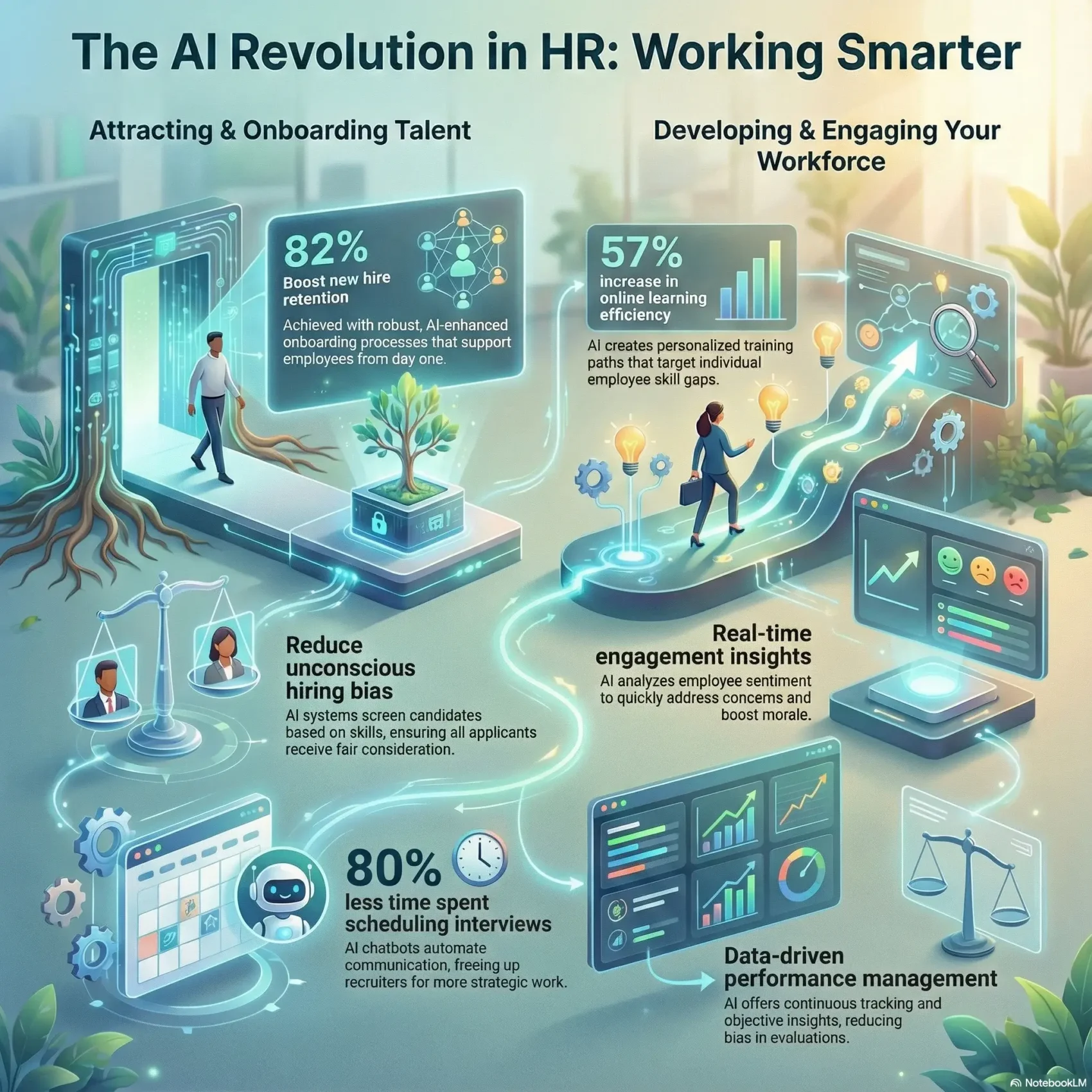
Last Updated on January 3, 2026
Artificial Intelligence (AI) is transforming employee management, reshaping how companies function. For those navigating human resource management, grasping AI’s impact is crucial for optimizing your workforce. By integrating AI-driven solutions, you can significantly streamline HR tasks like recruitment, onboarding, performance management, and employee engagement. With 78% of HR leaders using AI for key functions, it highlights a shift towards more efficient, data-driven decision-making.
The workplace is evolving, and the numbers reflect this. By 2024, most workforce management solutions will incorporate AI algorithms, emphasizing the need to adopt these technologies. AI automates routine tasks and boosts personalized employee experiences, enabling HR professionals to concentrate on strategic initiatives. This leads to better workplace dynamics and resource utilization. By embracing AI in employee management, you can redefine how your organization values and develops its most critical asset—its people. For deeper insights on AI’s effects, explore this resource.
Key Takeaways
- AI is revolutionizing employee management across various HR functions.
- A vast majority of HR leaders are implementing AI solutions.
- AI optimizes recruitment and onboarding processes by automating tasks.
- Data-driven decisions enhance employee satisfaction and engagement.
- AI tools support compliance management and reduce risks in HR operations.
- Integration of AI in workforce management leads to more effective resource allocation.
- By harmonizing AI with human touch, organizations cultivate high-performing teams.
Introduction to AI in Employee Management
Artificial Intelligence is revolutionizing employee management, making it more efficient and effective. Companies are turning to AI to streamline human resource functions. The market for AI in human resources is expected to jump from USD 5.26 billion in 2023 to USD 10.70 billion by 2028. This represents a compound annual growth rate (CAGR) of about 15.26%. This surge highlights a shift towards digital HR solutions for the modern workforce.
Machine learning for HR enables organizations to sift through vast data sets, aiding in better decision-making. AI helps in optimizing processes like talent acquisition, onboarding, and performance management. AI-powered tools are adept at reviewing resumes, predicting candidate fit, and analyzing data for quicker, more accurate hiring outcomes.
Implementing AI in HR not only cuts down on time but also enhances employee experience. For example, AI can tailor training to individual preferences and skill deficits. It also offers insights into employee engagement and automates routine tasks, allowing HR to focus on strategic planning.
AI plays a key role in managing the employee lifecycle, from hiring to career development. By using predictive analytics, companies can anticipate talent needs and spot future leaders. AI-driven insights help craft strategies that boost employee satisfaction and retention in competitive markets.
How AI is Transforming Human Resource Management
AI is transforming Human Resource Management by automating key processes and enhancing decision-making. By leveraging AI-driven talent management solutions, organizations can significantly boost their efficiency. Statistics show that companies using AI have cut the time HR teams spend on administrative tasks by 19%. This shift allows for a greater focus on strategic initiatives and creating a more engaging workplace.
Smart employee performance analysis enables HR professionals to deeply analyze workforce data. This analysis allows companies to tailor their strategies for a productive work environment. AI technologies predict talent performance and identify candidates who best fit an organization’s values, driving success in talent management. Companies adopting AI see a 16% improvement in turning talent acquisition into a competitive advantage.
Integrating AI into HR practices leads to better onboarding experiences. A robust onboarding process can improve employee retention rates by up to 82%. When employees feel supported from the start, they are more likely to engage and contribute to the company’s goals.
As AI continues to evolve, the potential for smarter, data-driven approaches to HR will grow. By embracing these innovative tools, HR departments can streamline their processes and cultivate a more effective and satisfied workforce.
Streamlining Recruitment Processes with AI
In today’s competitive job market, organizations are increasingly turning to automated recruitment systems to revolutionize how they attract talent. Leveraging advanced technology enhances candidate selection criteria, making the entire hiring process more efficient and effective. AI plays a pivotal role in minimizing hiring bias while ensuring a vastly improved candidate experience.
Reducing Hiring Bias Through Data-Driven Assessments
With approximately 72% of resumes going unseen by human eyes, automated recruitment systems can analyze vast sets of data to identify qualified candidates. By employing data-driven assessments, AI streamlines the screening process, ensuring that all applicants receive fair consideration. This method not only helps in identifying talent but also fosters a more diverse hiring environment by evaluating candidates based on their skills rather than societal biases. Tools powered by AI can capture subtleties in candidate responses, thus refining the assessment process.
Enhancing Candidate Experience with Automation
Automation improves the candidate experience significantly. AI can manage personalized communication with all applicants, making sure they feel valued and remain informed throughout the recruitment process. For example, chatbots can engage with candidates, schedule interviews, and provide timely updates. As a result, companies like Deliveroo have seen an 80% reduction in interview scheduling time, leading to a smoother hiring process. Such advancements not only attract top talent but also shape a positive image of the organization.
AI Employee Management: Improving Onboarding Experiences
The integration of automated onboarding processes has transformed how companies welcome new employees. In the US, over two-thirds of organizations have adopted AI in their onboarding to streamline routine tasks. This automation includes tasks such as paperwork, sending introductory messages, and utilizing chatbots for feedback. As a result, HR professionals can now focus more on building critical relationships.
AI facilitates personalized onboarding experiences, tailored to each new hire’s background, skills, and preferences. Through automated chats and onboarding surveys, insights are gained into strengths and areas for development. Predictive analytics can also anticipate new hires’ needs, providing proactive support. This proactive approach enhances engagement and smoothens the integration into the workplace.
Many companies are now embracing innovative solutions like virtual onboarding through platforms such as Accenture’s metaverse. This approach offers new employees an immersive experience where they can explore their workspace and interact with team members’ avatars. Such immersive training environments have been shown to significantly improve information retention compared to traditional methods.
Organizations that implement structured onboarding practices report a 25% increase in employee retention over two years. Leveraging AI in onboarding can also lead to a 30% increase in new hire readiness and satisfaction. With AI-powered assistants like IBM’s Watson, administrative tasks can be reduced by 75%, resulting in higher new hire satisfaction.
Embracing automated onboarding not only shortens the onboarding period but also increases productivity as new employees adapt faster to their roles. By integrating these advanced tools into your onboarding strategy, you ensure a successful transition for your new hires. This approach guarantees they feel valued and engaged from the very beginning.
Boosting Employee Engagement Through AI Solutions
Employee engagement is key to a productive workplace. AI solutions can greatly improve employee satisfaction and morale. With AI, companies can create a more connected workforce.
Leveraging AI-Powered Feedback Systems
Real-time feedback systems provide insights into employee sentiments and performance. These AI tools collect data on experiences, helping address concerns quickly. Research shows 61% of employees welcome AI in various tasks, showing a strong desire for support at work.
Personalized engagement is crucial for a satisfying work environment. AI tailors communication and activities to individual preferences, making each team member feel valued. For example, 68% of companies use AI in hiring and onboarding, showing AI’s role in providing a seamless experience.
Real-time feedback systems improve the connection between management and staff, leading to better performance. Employees are comfortable with AI in performance appraisals, with 37% satisfied with AI’s evaluation role. These tools predict future performance, guiding personalized learning and development.
AI also automates paperwork for new employees, tracking training progress. An efficient recognition system links employee achievements with performance appraisals, motivating staff. AI provides 24×7 support through engagement bots, fostering continuous improvement and engagement.
Enhancing Learning and Development with AI
Artificial Intelligence is reshaping the learning and development sector, changing how companies train their employees. The global corporate e-learning market is expected to hit $44.6 billion by 2028. This surge has led businesses to embrace AI-driven learning solutions, meeting the varied and changing needs of their workforce.
AI’s strength lies in creating customized educational paths. This ensures each employee gets training suited to their unique needs. Such personalization not only enriches the learning process but also optimizes training programs. Statistics show a 57% increase in online learning efficiency and a rise in course completion rates among businesses using AI. These improvements make learning more engaging and effective.
- 77% of global employees express willingness to retrain and acquire new skills.
- 59% of employees today are focused on upskilling and reskilling.
- A major investment by Deloitte, Project 120, aims to deliver highly personalized learning solutions.
AI tools enable organizations to quickly analyze performance data, pinpoint skill gaps, and offer targeted coaching. This swift response boosts skill development and employee retention, ensuring talent matches organizational goals. Schneider Electric, for instance, has seen significant productivity gains, highlighting the positive effects of integrating AI in learning management systems.
Embracing AI-driven learning solutions has significant implications for the workforce. It helps address labor shortages and improves worker adaptability, making continuous learning a priority. As change speeds up, AI in learning and development may be crucial for success in today’s corporate world.
Performance Management Revolutionized by AI
AI has transformed traditional performance management, offering a dynamic approach to track and evaluate employee performance. Real-time tracking allows organizations to monitor progress instantly, adjusting strategies as needed for success.
AI’s ability to analyze vast amounts of data, such as employee contributions and engagement levels, delivers insights crucial for setting realistic goals. This ensures individual goals align with broader business objectives, fostering a unified effort.
Using AI, organizations automate routine performance reviews and reduce cognitive biases in evaluations. This creates a fairer environment where all employees are judged by consistent criteria. AI’s predictive capabilities forecast performance trends, enabling proactive measures for potential issues.
- Real-time tracking swiftly identifies successes and challenges.
- AI offers tailored recommendations for improving productivity.
- Automated scheduling of reviews reduces administrative tasks.
AI tools also facilitate career pathing by providing actionable steps for professional growth. These enhancements lead to higher employee engagement and satisfaction. By focusing on data analytics, organizations make informed decisions on talent management, ensuring effective contribution to goals.
Integrating AI in performance management streamlines operations, allowing HR professionals to focus on strategic initiatives like coaching. This evolution optimizes employee performance and supports long-term success. For those interested in future work trends, exploring AI in performance management is crucial. Learn more about these transformative changes here.
The Role of AI in Talent Management
AI-driven talent management is revolutionizing how companies identify and develop their workforce. It leverages advanced analytics to align talent acquisition with organizational goals. This method provides crucial insights, improving hiring decisions by quickly identifying candidates with the right skills. Consequently, the hiring process becomes faster, making recruitment more agile and responsive.
AI tools, such as TalentGPT, simplify the creation of job descriptions, matching them with the skills your organization requires. These tools aid in finding the right candidates and assess current employees’ skills, highlighting potential gaps. This information is crucial for strategic reskilling and promoting internal mobility, keeping your workforce adaptable and competent.
AI’s integration into talent management enhances personalized experiences for attracting and engaging talent. It offers customized recommendations for training, projects, and roles based on individual skills and preferences. As companies adopt explainable AI, they can reduce biases in recruitment and talent management, leading to more equitable outcomes.