

Future of Work
The future of work is no longer a forecast — it is already showing up in AI-assisted hiring pipelines, four-day workweeks, teams spread across a dozen time zones, and job titles that did not exist five years ago. Smart Keys tracks that shift and translates it into decisions you can actually make.
AI and automation at work. Where algorithms genuinely augment human judgment, where they replace it, and how to govern both. We cover AI in recruitment and performance management, algorithmic management ethics, automation risk assessment, and the governance frameworks companies need before deployment, not after.
Remote, hybrid and distributed teams. Practical guidance on hybrid work policies, asynchronous collaboration, proximity bias, digital nomad rules, cross-border payroll, and the security questions that come with working from anywhere.
Skills and careers. Upskilling and reskilling strategies, micro-credentials, mid-career retraining, career lattices, and the human capabilities — judgment, communication, adaptability — that stay valuable as tools change.
Workplace tech and culture. VR training, wearables, robotics, workforce analytics, employee experience platforms, and the wellbeing, inclusion and right-to-disconnect questions each one raises.
Policy and the bigger picture. Gig economy regulation, data privacy law, universal basic income debates, and how governments are rewriting the rules of employment.
Whether you lead a team, run HR, or are planning your own next decade of work, start here.
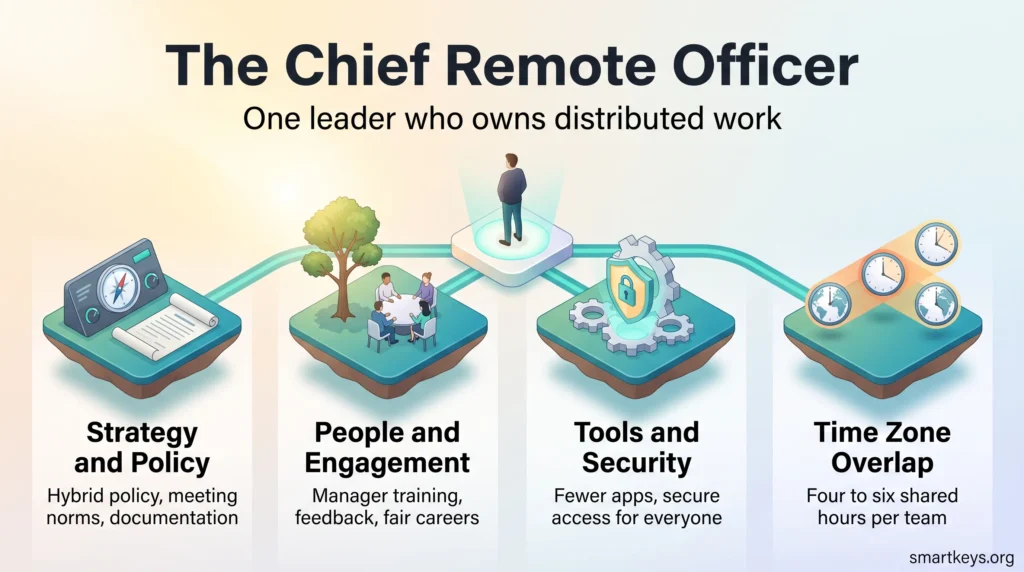
Chief Remote Officer in 2026: Why Companies Hire Heads of Remote Work
What a chief remote officer actually does, how Atlassian and Cimpress run distributed work, what…
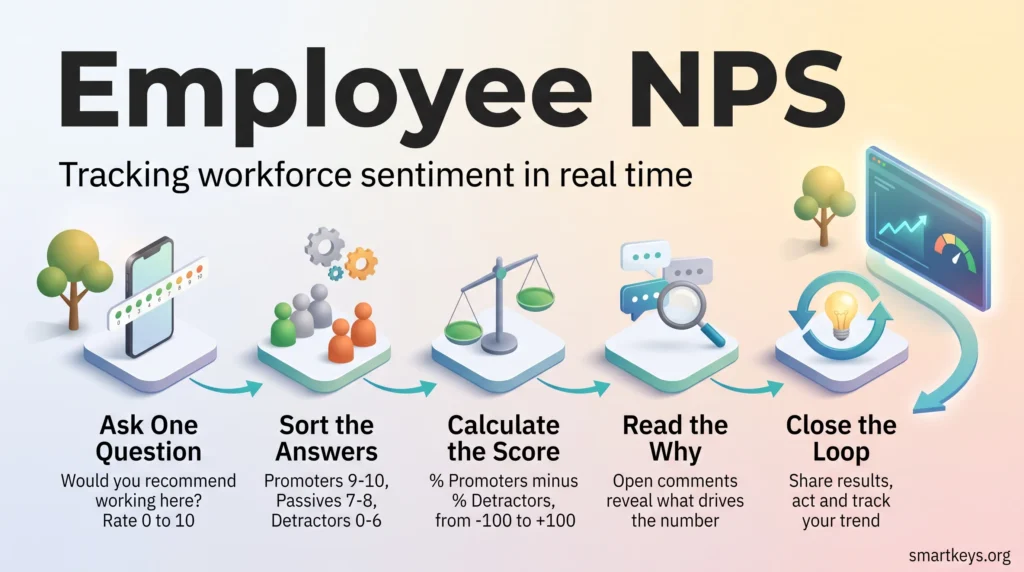
Employee NPS (Net Promoter Score): Tracking Workforce Sentiment in Real Time
Employee Net Promoter Score (eNPS) gives you a fast, clear view of how your people…
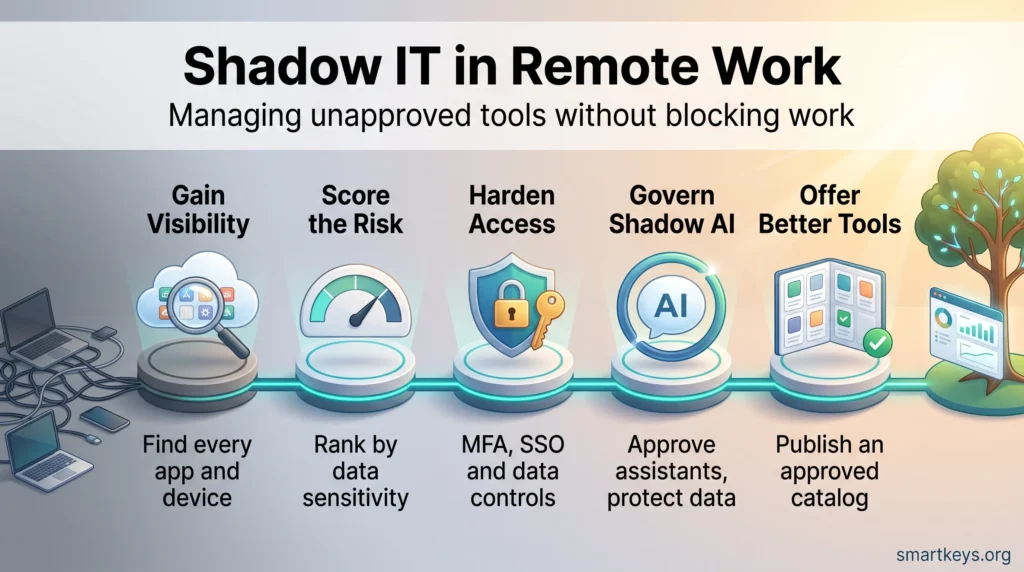
Shadow IT in Remote Work: Managing Unapproved Tools and Risks
Shadow IT is any tool used for work without IT approval, and in 2026 it…
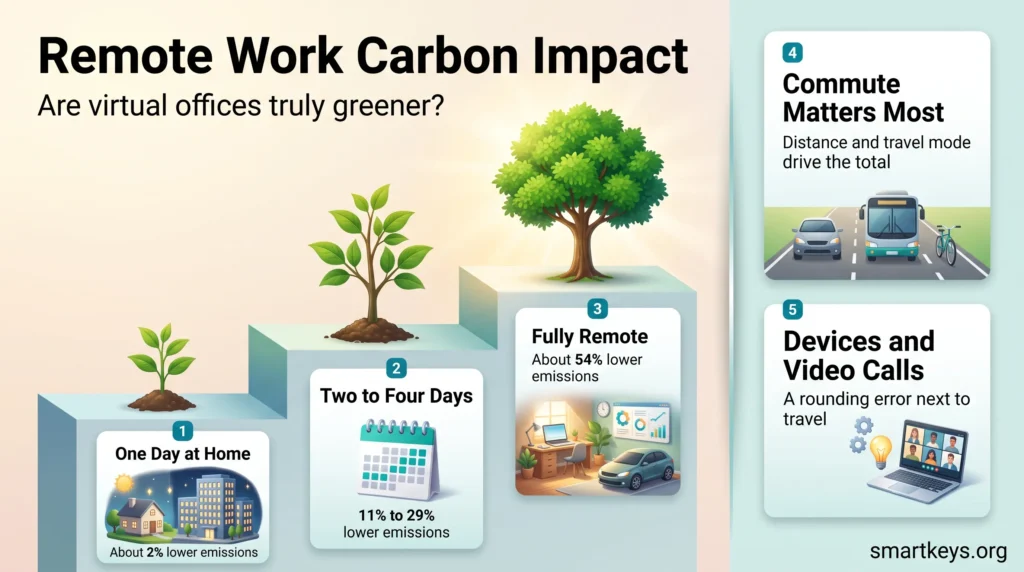
Remote Work Carbon Impact: Are Virtual Offices Truly Greener?
Fully remote work cut individual emissions by about 54% in the largest study to date,…
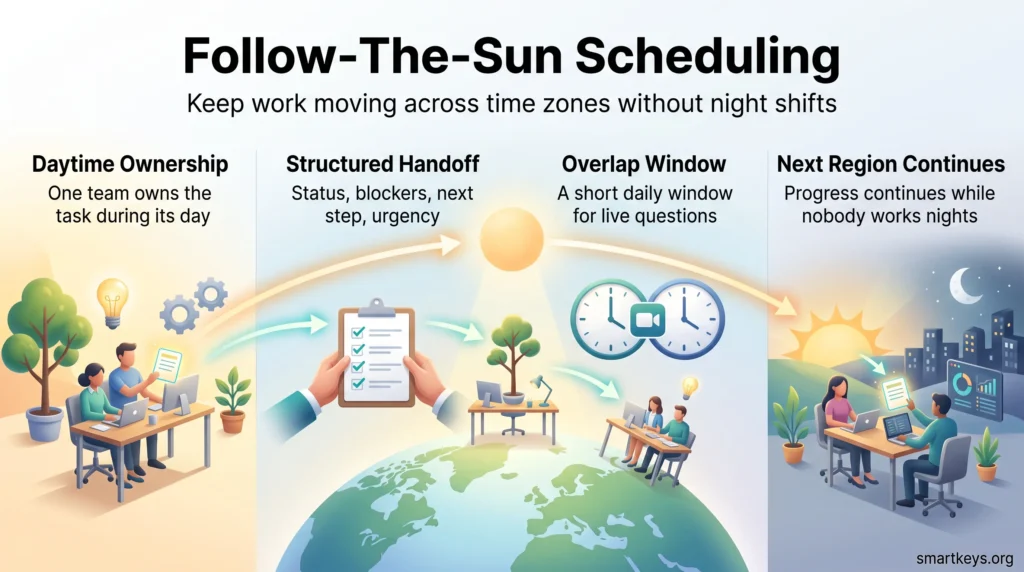
Follow-The-Sun Scheduling: Maximizing Productivity Across Time Zones
How follow-the-sun scheduling works: one team owns a task during its own daytime, then hands…
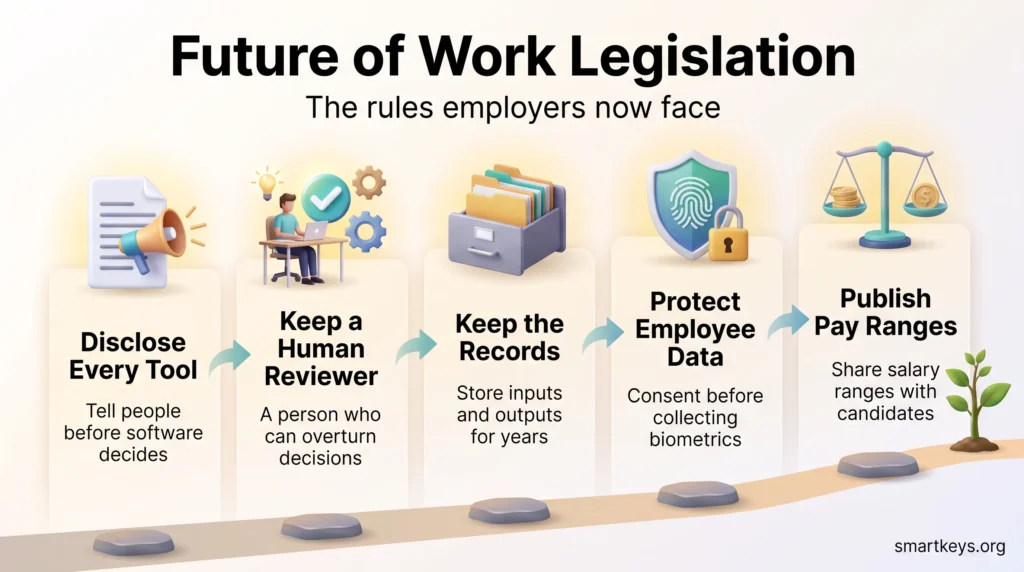
Future of Work Legislation in 2026: The Rules Employers Now Face
Which workplace AI, monitoring, layoff and pay transparency rules actually apply in 2026. Dates and…
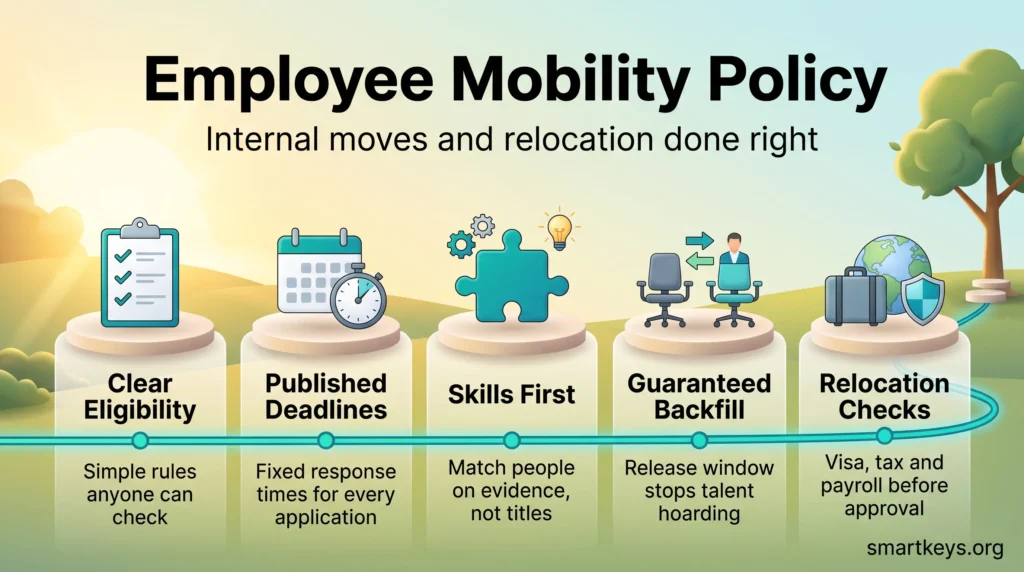
Employee Mobility Policy: Internal Moves and Relocation in 2026
What an employee mobility policy needs to cover in 2026: eligibility rules, published timelines, skills-first…
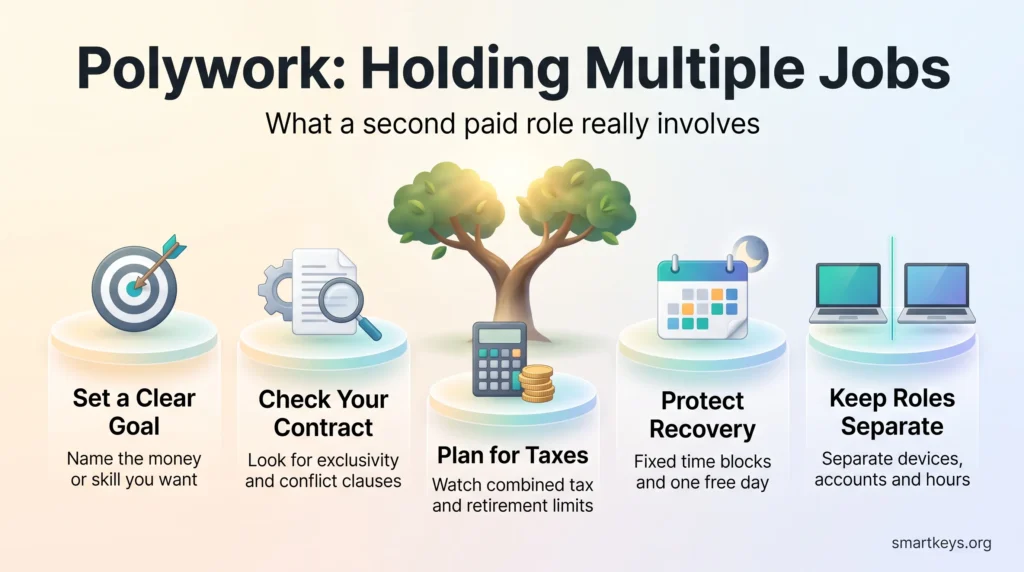
Polywork in 2026: What Holding Multiple Jobs Actually Involves
Polywork means holding more than one paid role at once. What the 2026 BLS figures…
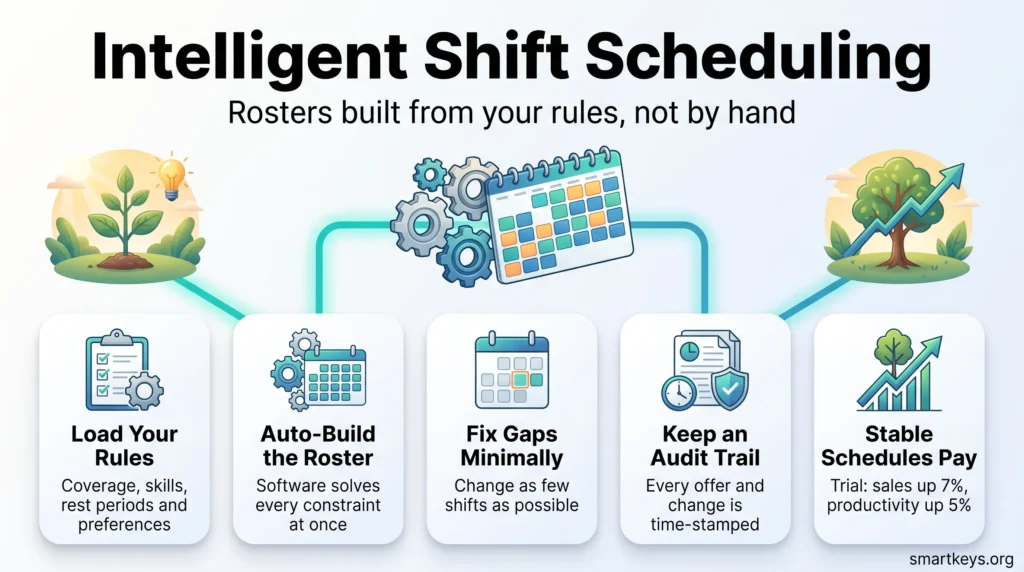
Intelligent Shift Scheduling: What AI Rostering Delivers in 2026
What AI shift scheduling actually does, the rules a roster must encode, the evidence on…
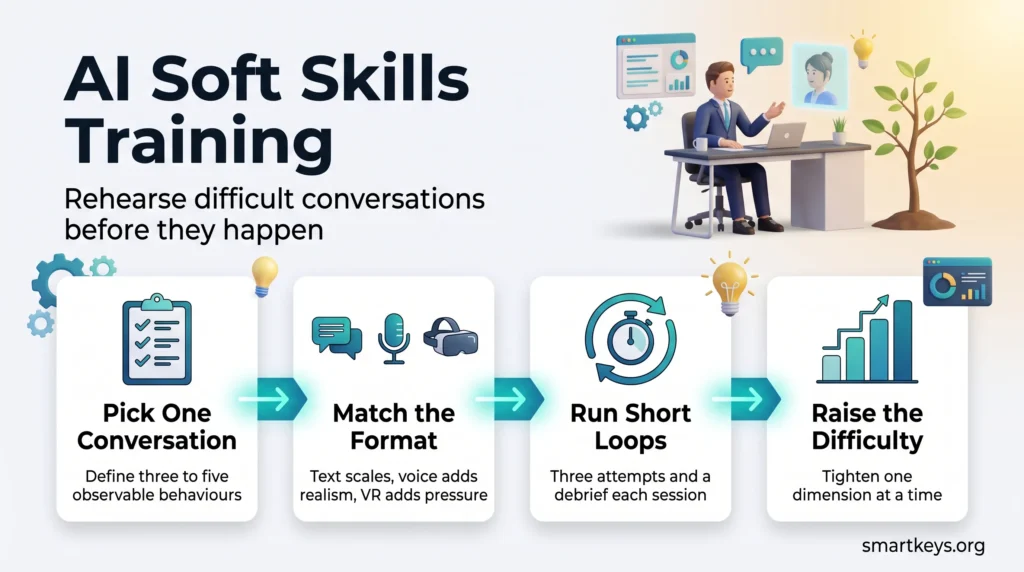
AI Soft Skills Training: Simulating Difficult Conversations for Managers
AI role play lets managers rehearse the conversations they postpone. What simulations do well, which…
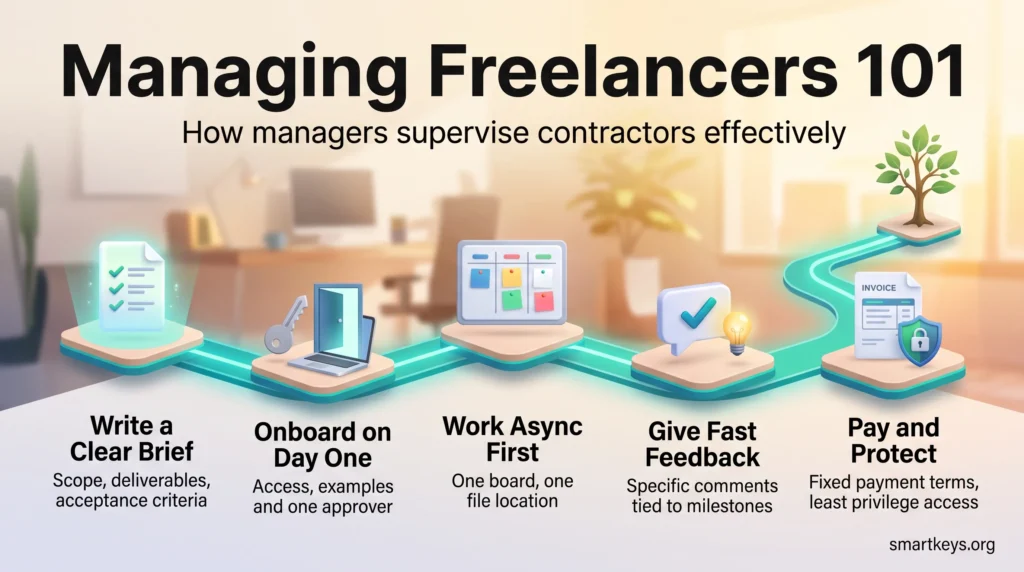
Managing Freelancers 101: Training Managers to Supervise Contractors Effectively
Hiring a freelancer is easy. Getting reliable work out of one, month after month, is…
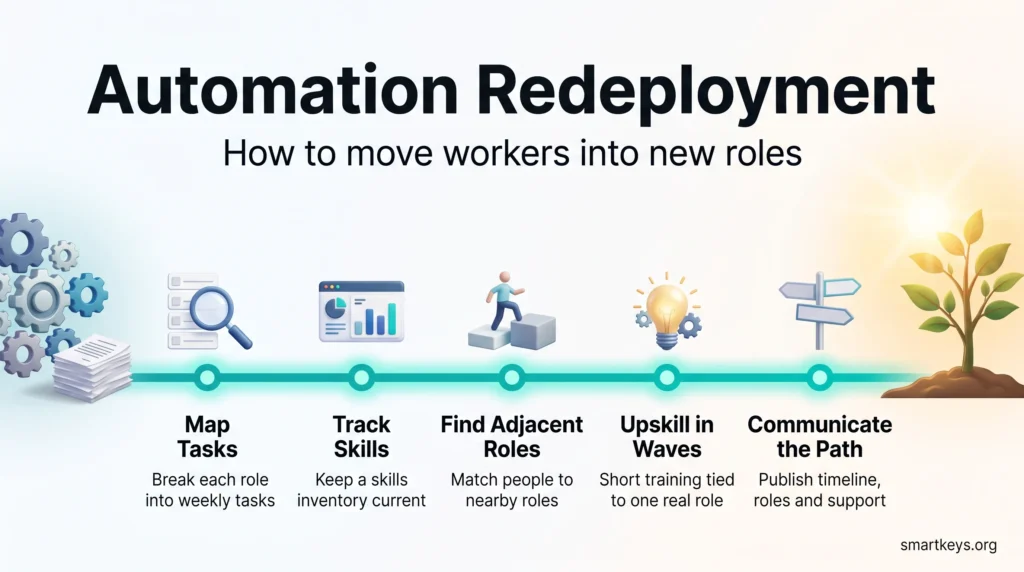
Automation Redeployment in 2026: How to Move Workers Into New Roles
Automation redeployment moves employees out of tasks software now handles and into work that needs…