Two people do the same job to the same standard. One lives in Amsterdam, the other in a small town four hours away. Should they earn the same?
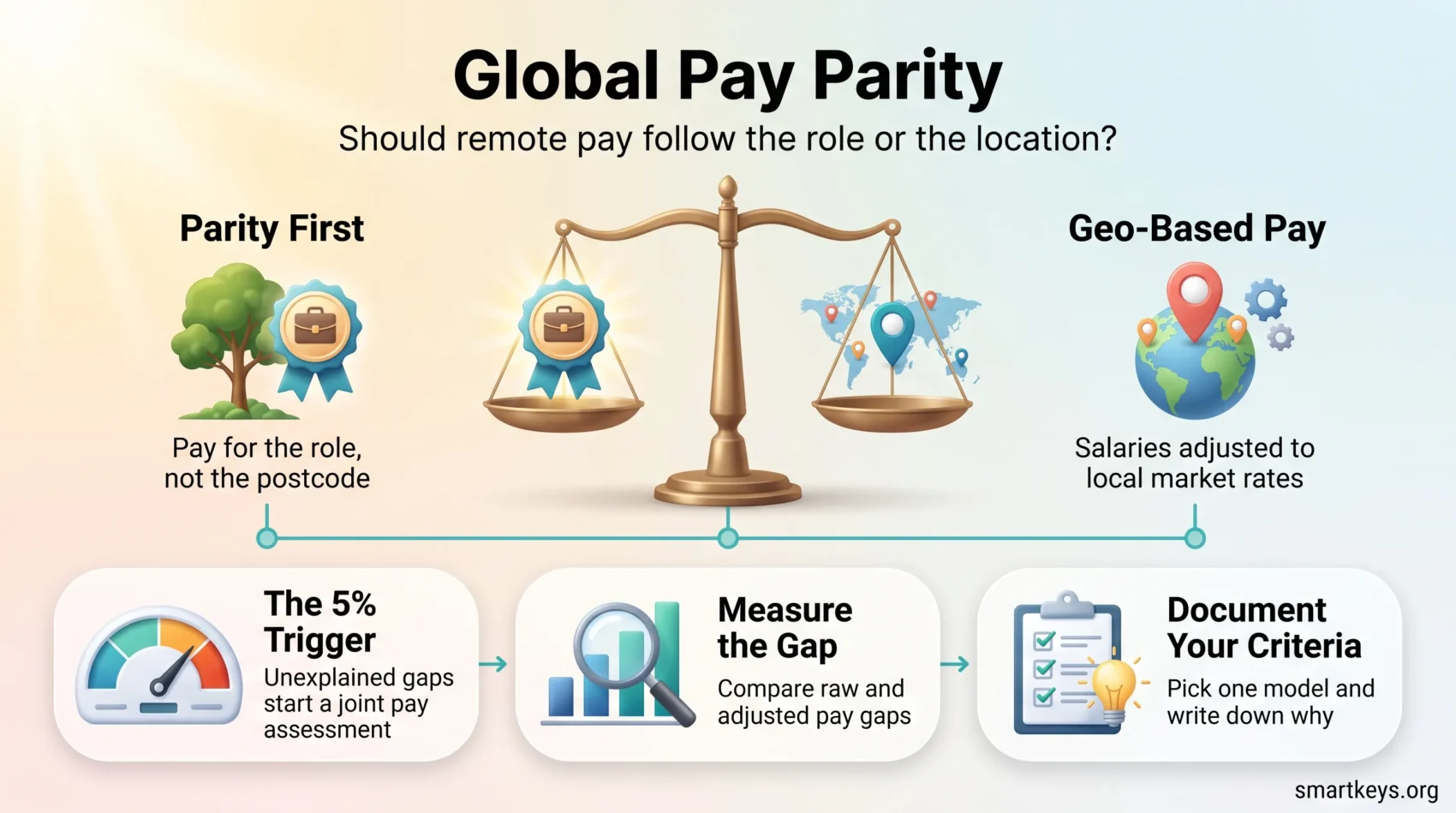
That is the question behind global pay parity. Pay parity means paying for the role, not the postcode. The opposite approach, a geographic differential (often shortened to geo-pay), adjusts salaries to local market rates. Remote hiring made this a decision employers must defend in writing, and 2026 attached a legal deadline to it.
The stakes reach past the budget. The United Nations puts the global gender pay gap at around 20%, with women earning roughly 77 cents for every dollar men earn for work of equal value. A pay model that tracks where people live can carry that gap into a distributed team.
Key Takeaways
- Parity-first pays for the role; geo-based pay adjusts for location. Each has a real cost.
- The EU Pay Transparency Directive deadline passed on 7 June 2026, and most member states missed it.
- Employers with 250 or more staff face their first EU pay gap report by 7 June 2027.
- An unexplained gap of 5% or more in a job category triggers a joint pay assessment.
Pay equity and equal value: the two ideas behind every pay decision
Pay equity means people doing work of comparable value are paid comparably, and any difference has a reason you can name. Equal value decides what counts as comparable: jobs are scored on four factors, namely skill, effort, responsibility, and working conditions.
That is why a warehouse supervisor and a senior care coordinator can land in the same band despite having nothing in common on paper. The International Labour Organization standard covers exactly this case.
Reviews that stop at base salary miss most of the picture. Remuneration includes overtime, bonuses, allowances, equity, insurance, and benefits, so an engineer on a smaller salary but double the pension contribution may be the better paid. The same applies when you design an employee benefits package for 2026 across countries.
The numbers worth knowing
- Around 20%: the global gender pay gap (United Nations, ILO Global Wage Report).
- 77 cents: what women earn per dollar men earn for work of equal value (United Nations).
- 2.5 times: the extra hours a day women spend on unpaid care and domestic work (UN Women).
- 123 years: time to full gender parity at current rates, with the gap 68.8% closed (World Economic Forum, Global Gender Gap Report 2025).
Global pay parity vs. location-based pay: how should remote wages be set?
Your choice between the two models shapes hiring, retention, and how much explaining you do later.

Parity-first: pay for the role
Parity-first anchors pay to role value. Everyone in the same band earns within the same range, whether they work from Lisbon or Oslo. People can move without a pay cut, which matters if you run a digital nomad policy or an internal mobility programme. Offers are easier to explain. The cost is paying above local rates in cheaper markets.
Geo-based differentials: pay for the market
Geo-based differentials adjust salaries by local market rates. Mercer, which runs a US geographic salary differential survey, reports the San Francisco differential rose from 19% to 26% above national averages within four years, so these adjustments move fast.
Budget control is the benefit. The risk is drift: if groups that are already underpaid cluster in lower-cost regions, the differential widens an existing gap. Decide in advance whether pay follows anyone who relocates, including staff using a digital nomad visa.
The trade-offs side by side
- Fairness and cost: parity-first treats people consistently but raises the wage bill; geo-pay controls cost and can compound disadvantage.
- Hiring: LinkedIn survey data found 91% of US respondents said a salary range in a job post would affect their decision to apply.
- Compliance: whichever you pick, document the criteria in writing.
What changed in 2026: the rules behind your pay decisions
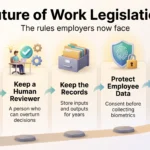
Transparency stopped being a culture choice in 2026. This is the part of future of work legislation that reaches ordinary employers fastest.
Europe: the Pay Transparency Directive deadline has passed
EU member states had to transpose the Pay Transparency Directive into national law by 7 June 2026. Only four managed it on time: Italy, Slovakia, Lithuania, and Malta. The obligations still arrive, just unevenly, so multi-country employers track several timetables at once.
What the directive requires:
- Pay levels or ranges disclosed in job postings and during recruitment.
- A ban on asking candidates about their pay history.
- A worker right to request their own pay and the average pay for comparable roles, split by sex.
- Gender pay gap reporting annually for employers with 250 or more workers, and every three years for those with 100 to 249.
- First reports due 7 June 2027 for employers with 150 or more workers, and 7 June 2031 for those with 100 to 149.
- A joint pay assessment with worker representatives where a report shows a gap of 5% or more in any worker category that objective, gender-neutral criteria cannot justify and that is not fixed within six months.
That 5% trigger is the line to plan around: it turns a spreadsheet number into a formal process with employee representatives.
Sustainability reporting moved the other way
The Corporate Sustainability Reporting Directive once looked like the main vehicle for equal pay disclosure. The Omnibus I package, adopted on 13 November 2025, narrowed it sharply: reporting now applies to companies with more than 1,750 employees and net turnover above 450 million euros. If your plan was built around the CSRD, check whether you are still in scope. Our guides to CSR reporting and ESG frameworks cover the wider effect.
United States: federal retreat, state expansion
On 14 May 2026 the EEOC proposed rescinding the EEO-1 report and the related EEO-2 to EEO-5 collections, which would end federal collection of workforce data by race, ethnicity, and sex. The proposal is still under review, so current filing duties stand.
States went the other way. Fourteen states plus the District of Columbia now require pay ranges in job postings, including Illinois and Minnesota (1 January 2025), New Jersey (1 June 2025), Vermont (1 July 2025), and Massachusetts (29 October 2025). Connecticut moves to proactive disclosure on 1 October 2026. For remote hiring the rule is simple: the strictest state you hire into sets your posting standard, as our pay transparency guide explains.
New Zealand shows progress can reverse
New Zealand’s Equal Pay Amendment Act 2025, enacted on 6 May 2025, discontinued all 33 pay equity claims then in progress and raised the claim threshold from a workforce that has been 60% female to 70% female for ten consecutive years. Build your pay equity work on governance you control, not on the assumption that external rules keep tightening.
Why the gap persists: care, sorting, and bias
Unpaid care. Women spend 2.5 times as many hours a day on unpaid care and domestic work as men, according to UN Women. Fewer continuous paid hours means fewer promotions and lower lifetime earnings.
Occupational sorting. Women are concentrated in sectors such as care and education that pay less. That gap comes from hiring patterns, not individual pay decisions.
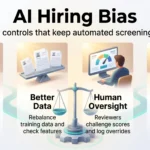
Bias in the process. Inconsistent hiring and evaluation create differences nobody can explain afterwards, and the risk grows when you automate: see bias in algorithmic recruitment tools.
Equal value reviews have to look past job titles to what actually determines pay and progression.
Scheduling touches all three, though the evidence on flexible work schedules is worth reading first.
Your employer playbook: fair, compliant remote pay
1. Measure the raw gap and the adjusted gap
The raw gap is the plain difference between average pay for two groups, and it tells you about the shape of your workforce. The adjusted gap is what remains once you account for role, level, experience, hours, and location, and it tells you about your pay decisions.
What is left after adjustment is the unexplained portion, and that is what the EU 5% trigger measures. Budget for corrections before you run the analysis, and review bonuses, equity, and benefits too.
2. Standardise offers, ranges, and promotions
Most unexplained gaps come from thousands of small discretionary calls, not one bad policy. Publish band ranges internally, use the same promotion criteria everywhere, and route out-of-band offers through a single approver. If you use performance-based pay, define how bonus decisions get reviewed.
3. Decide what you will publish, and to whom
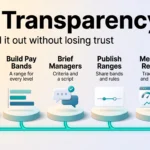
Transparency is a spectrum, not a switch: bands internally, ranges in job ads, your methodology, or your gap figures. Pick a level and hold it, because transparency that changes each quarter erodes trust faster than saying nothing, as our piece on building a transparency culture sets out.
4. Train managers and track progress
Managers make the offers and the raise decisions, so they need scripts, a written framework, and a route to escalate. Set owners, metrics, and dates, and review on a fixed interval rather than when a complaint arrives. This shows up in talent retention and employee engagement; getting it wrong shows up in your attrition data.
5. Handle the awkward cases in advance
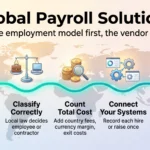
Contractors sit outside most pay equity duties but not outside reputational risk, so read how gig economy regulation is changing and what that means for pay in the global gig economy. Multi-country payroll complicates every comparison, and global payroll platforms show the total package in one place, as does our guide to cross-border remote teams.
Conclusion
Choose a model, write down why, measure often, and act on what you find.
The World Economic Forum puts full gender parity 123 years away at current rates, and no single company changes that. What you can change is whether your own pay decisions are explainable before someone asks.
The 2026 rules made that concrete: in Europe a 5% unexplained gap starts a formal process, and in the US the strictest state you hire into sets your standard. Start with one honest analysis, fix what it shows, then make the review a fixture, like remote company culture and work-life balance.
Found this useful?
Make SmartKeys a preferred source on Google, and our articles will surface more often in your Top Stories, AI Overviews, and AI Mode.
Add as Preferred Source