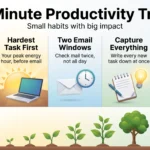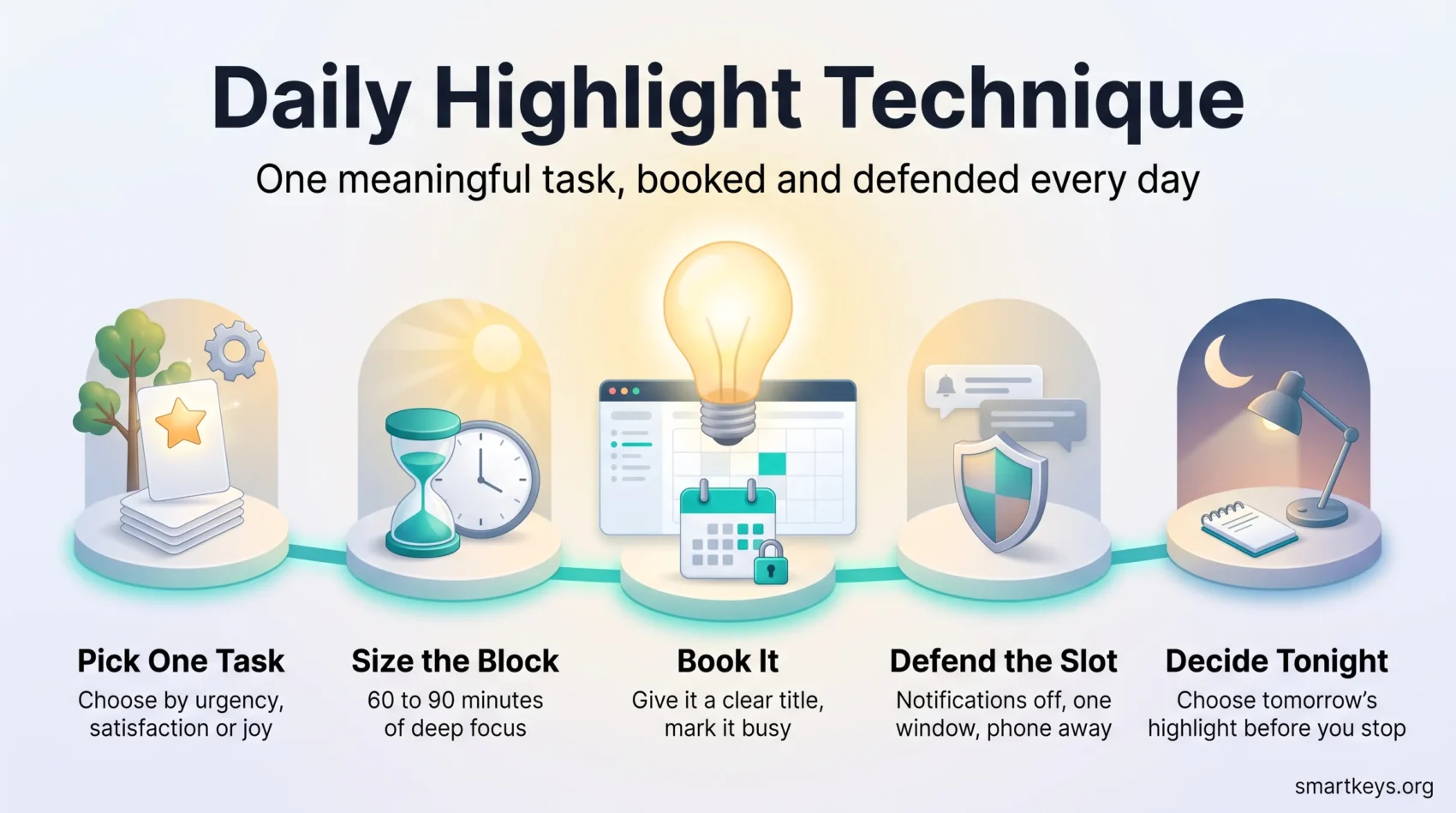
The Daily Highlight technique comes from Make Time by Jake Knapp and John Zeratsky, and it asks one thing of you: pick a single meaningful activity for the day, put it on your calendar, and treat it like a meeting you cannot move. That one block becomes the centre of your day instead of whatever is left over at 5 p.m.
Why it matters more in 2026: the average knowledge worker is now interrupted roughly every two minutes during core hours — around 275 times a day — according to Microsoft’s research on the “infinite workday”. A longer to-do list cannot survive that. One protected block can.
In this guide you’ll learn how to choose the right task, how long to block, how to defend the slot when meetings and messages come for it, and what to do on the days it falls apart.
Key Takeaways
- Pick one meaningful task each day and schedule it like a meeting.
- Choose it with three lenses: urgency, satisfaction, or joy.
- Block 60–90 minutes — long enough for flow, short enough to defend.
- Protect the slot actively: calendar title, status, notifications, and a script for saying no.
- Decide tomorrow’s highlight tonight, so the morning costs you no willpower.
- Consistency beats perfection — a highlight finished four days out of five still compounds.
What the Daily Highlight Technique Actually Is
A highlight is not your whole day and not your entire to-do list. It is the one task you would name if someone asked at dinner, “What did you actually get done today?” Everything else still happens — email, meetings, admin — but only the highlight gets planned for and protected.
From the “Busy Bandwagon” to a day you design
Knapp and Zeratsky describe two forces that quietly own your attention. The Busy Bandwagon is the culture of full calendars and default overwork, where being booked reads as being valuable. The Infinity Pools are the apps that never run out of content to refill.
The highlight is the counter-move. Instead of reacting to whatever arrives, you decide in advance what the day is for. It is a small act of design, and it costs about 60 seconds.
Why one focal point beats a longer list
The research summarised in Winifred Gallagher’s Rapt makes the case that your experience is largely shaped by what you attend to. Name one target before the day starts and you remove dozens of small “what should I do now?” decisions — the ones that quietly drain the energy you need for the actual work.
The numbers back it up. Gloria Mark’s long-running attention research at UC Irvine found it takes an average of roughly 23 minutes to return to full focus after a single interruption, and that average time on a single screen has fallen to about 47 seconds. Hubstaff’s 2026 benchmarks put the typical worker at just two to three hours of genuine focus time in an eight-hour day. If that is your budget, spending it on one thing that matters is not a nice-to-have — it is the whole game.
This is the same logic behind monotasking: fewer switches, deeper work, fewer errors.
The 2026 twist: your calendar is contested space
Microsoft’s Work Trend Index data shows knowledge workers now spend more hours per week in meetings than in uninterrupted focus blocks, and roughly 60% of meetings are booked ad hoc. An empty slot on your calendar is no longer a slot you own — it reads as availability.
That is why the highlight has to be booked, not merely intended. If it isn’t on the calendar, someone else will fill the gap. Cutting the meeting load in the first place helps too; our meeting reduction playbook covers how to shrink the invitations before you start defending against them.
How to Choose Your Daily Highlight
Pick the one task that, if finished, would make the rest of the day feel like a win. Three lenses make the choice fast — and if a task passes two of them, stop looking.
Lens 1 — Urgency: the must-do that can’t slip
Urgency points to work with a real deadline or a real consequence. Not tiny chores, not open-ended projects. Think a client quote due Thursday, a board slide that blocks three other people, or helping your kid finish a project due tomorrow.
Pick something medium-sized you can genuinely close in one focused session. If it needs six hours, the highlight is the first meaningful chunk, not the whole thing.
Lens 2 — Satisfaction: break the “someday” cycle
Satisfaction is for the work that never screams but always matters: the proposal you keep re-opening, the chapter, the hiring process, the documentation nobody owns. These lose every fight against urgent noise, which is exactly why they need a booked slot.
If you consistently struggle to name one, the problem may be that you are carrying too many parallel priorities. Doing less to achieve more is a useful reset.
Lens 3 — Joy: the day needs fuel too
Sometimes the right highlight is energy, not obligation. Practise an instrument, take the long walk, build the thing you actually enjoy building, spend the hour with your kid without a phone in reach.
This is not a day off from productivity. Recovery is what makes tomorrow’s focus block possible.
Scope it: the 60–90 minute sweet spot
Sixty to ninety minutes is long enough to get past the awkward start and into real work, and short enough that you can defend it against most calendars. It also lines up with the body’s natural attention cycles — see how to work with your ultradian rhythms to place the block where your energy actually is.
A quick scoping test: if you cannot describe what “done” looks like in one sentence, the highlight is still too big.
Make It Happen: Schedule, Protect, Finish
Choosing is the easy half. The technique lives or dies on whether the block survives contact with the rest of your day.
Put it on the calendar as a real appointment
Book it at a realistic hour and give it a specific title — “Draft Q4 pricing proposal,” not “Focus time.” A vague block invites a double-booking; a specific one reads as a commitment.
Set it as busy, not tentative. If your team can see your calendar, that single setting does most of the defending for you.
Match the block to how your day is built
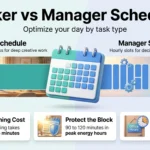
If your role is mostly deep creation, protect a morning block before the day fragments. If you run on back-to-back calls, look for the one seam you actually control. The maker vs. manager schedule distinction is the fastest way to work out which pattern you’re in — and to stop fighting the wrong battle.
Let your tools defend the block
This is where 2026 genuinely differs from when Make Time was written. AI scheduling assistants like Reclaim.ai and Motion now place recurring focus blocks automatically and reshuffle them when a meeting lands on top, rather than simply letting the meeting win. Copilot and Gemini have added lighter scheduling suggestions inside Outlook and Google Calendar.
A caution worth keeping: automation decides when, never what. The choice of highlight stays yours — outsource it and you are back to a calendar full of blocks that mean nothing. And treat these tools as a backstop, not a system; our timeboxing playbook covers the manual version that works with any calendar.
Cut the interruption sources before you start
Do-not-disturb, chat closed, phone in another room, one browser window. These take ninety seconds and remove the majority of what would otherwise break the block.
The deeper fix is setting expectations rather than hiding: agreeing response-time norms with your team means nobody has to guess whether your silence is a problem. Our guide to instant messaging boundaries has the scripts.
Learn to say no so you can say yes
Have one sentence ready so you’re not improvising under pressure: “I’m blocked until eleven — can I come back to you right after?” Deferring is usually enough; you rarely need a hard no. For more, see how saying no protects your priorities, and use the four Ds — do, defer, delegate, delete to sort what’s left.
Decide tonight, not tomorrow morning
Spend ten minutes at the end of the day writing tomorrow’s highlight first, then three supporting tasks. That’s the entire list. Choosing in the evening removes the decision from a morning that will be noisier than you expect.
If your head is too full to choose, a five-minute brain dump clears it first. And if mornings are where you want the block to live, build the runway with a morning routine that gets you to the desk already decided.
Optional: two highlights — one for work, one for life
- Run one work highlight and one personal highlight on days that need balance.
- Batch shallow tasks before or after the block, never inside it.
- Close with a two-minute wrap: save, and write the exact next step for tomorrow.
Common Mistakes That Kill the Highlight
- Picking a project, not a task. “Redesign the website” is not a highlight. “Write the homepage copy” is.
- Booking it at the end of the day. By 4 p.m. the block has absorbed every delay since lunch. Place it early enough to survive.
- Choosing three highlights. Three highlights is a to-do list with better branding, and it fails the same way.
- Letting the block become admin time. Inbox is not a highlight. If it keeps eating the slot, the problem is the habit, not the calendar — a not-to-do list helps name it.
- Quitting after one bad day. Missing a highlight is data about your estimate, not evidence the method fails.
Your First Week: A Simple Starter Plan
- Tonight: pick tomorrow’s highlight and book 60 minutes for it. Nothing else changes.
- Day 2: add the ninety-second shutdown ritual — notifications off, one window, phone away.
- Day 3: use a different lens than yesterday. If you’ve picked urgent twice, pick satisfaction.
- Day 4: extend to ninety minutes and add a midpoint checkpoint.
- Day 5: make it a joy highlight and notice what it does to the rest of the day.
- Weekend review: count how many blocks survived and why the others didn’t. If you want to track this properly, our guide to personal productivity metrics shows what’s worth measuring.
Conclusion
Close the day with a decision, not a wish. Reserve 60–90 minutes for one meaningful task, choose it with urgency, satisfaction, or joy, put it on the calendar, and defend it like any other meeting.
Keep the list short: the highlight first, then three supporting tasks. Start on time, wrap with a quick note, and repeat tomorrow.
The method is meant to bend. If the day collapses, slide the block or cut the scope so the core thing still gets finished. That flexibility is the point — it is why this survives real weeks, not just ideal ones.
Start now: pick tomorrow’s highlight before you close this tab.
Found this useful?
Make SmartKeys a preferred source on Google, and our articles will surface more often in your Top Stories, AI Overviews, and AI Mode.
Add as Preferred Source