
Many meetings go wrong before they start. People arrive unsure why they were invited, and the first minutes go to catching up. Meeting preparation fixes that, and it does not need an hour. Ten focused minutes are enough for most meetings you attend.
The cost of skipping it is real. In a 2024 Atlassian survey of 5,000 knowledge workers, respondents judged meetings ineffective 72% of the time. And 78% said the number of meetings made it hard to get their own work done (Fortune).
This guide is for attendees as much as organizers. If you run the meeting, our guide to running effective meetings covers agendas and facilitation in depth.
Key Takeaways
- Ten minutes of preparation is enough for most routine meetings.
- Start with the purpose: know what the meeting should decide and why you are there.
- Prepare one clear contribution instead of a long list of thoughts.
- If there is no agenda, ask for one or question whether you need to attend.
- Record outcomes right after the meeting.
The 10-Minute Meeting Preparation Routine
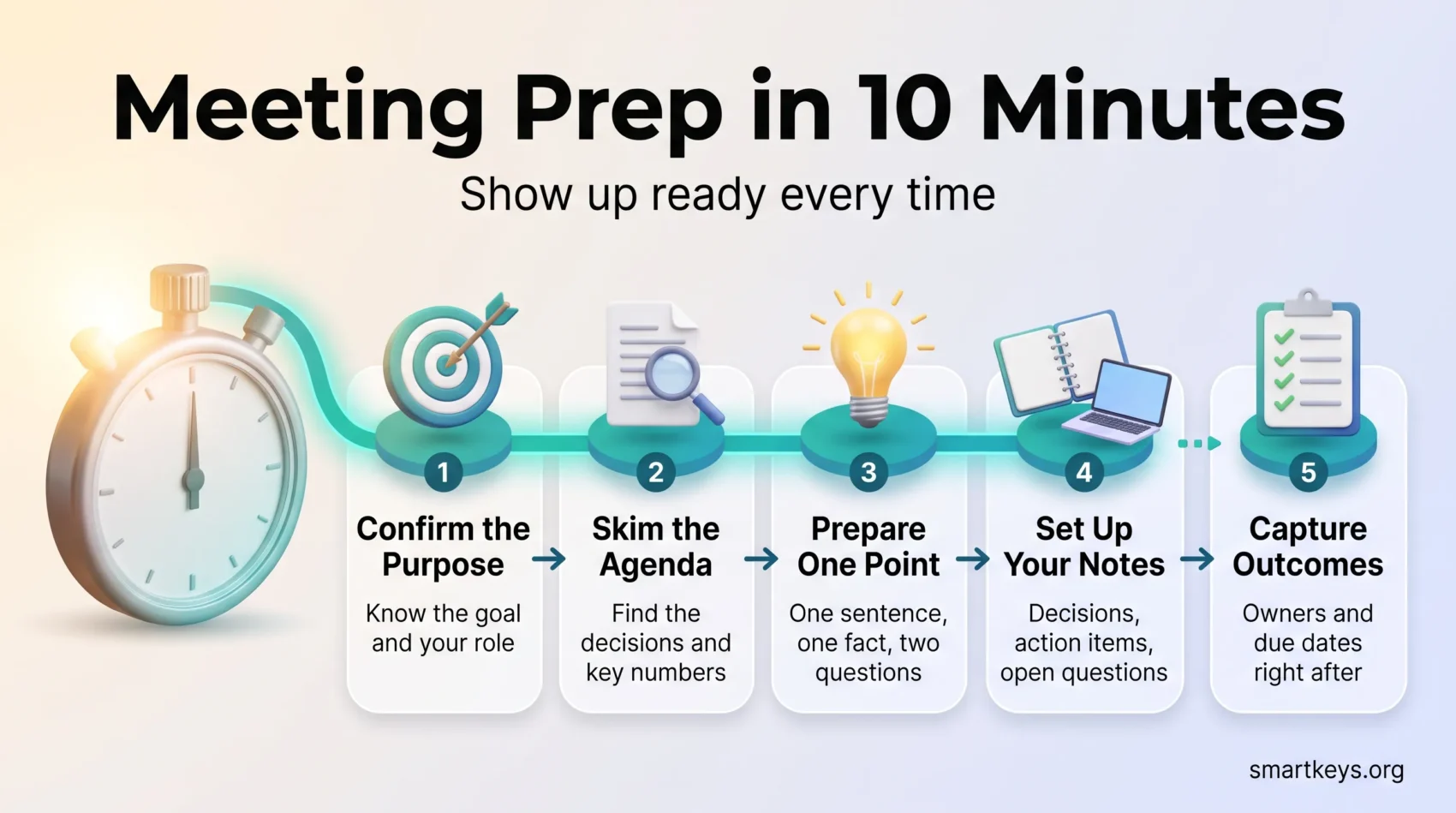
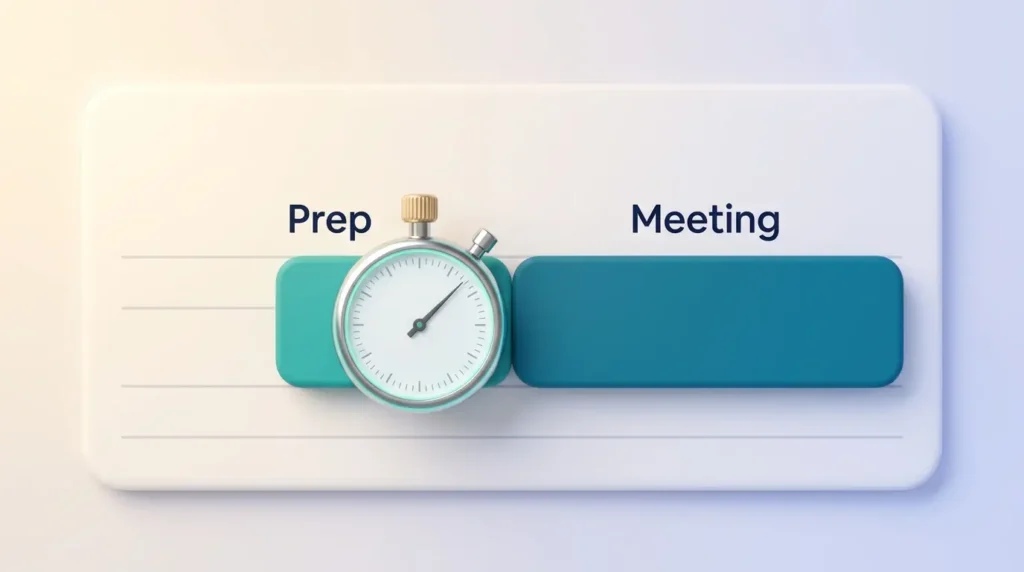
The routine has four short steps. Block the ten minutes right before the meeting, or earlier if there is reading to do.
Minutes 1 to 2: Confirm the Purpose and Your Role
Find the objective in the invitation. A good one names an outcome, such as “choose a supplier for Q1”. A vague one, such as “sync on suppliers”, is a cue to ask what the meeting should achieve.
Then ask why you were invited: to decide, to advise or to listen? Productivity specialist Adriana Girdler, president of CornerStone Dynamics, advises asking what kind of meeting it is in the first place. If it is only a status update, a short written summary often does the job better. Our guide on choosing between email, chat and a meeting helps you make that call.
Minutes 3 to 5: Skim the Agenda and Pre-Reads
Skim the agenda and the pre-reads, the documents meant to be read before the meeting. Look for three things: the decisions on the table, the numbers they depend on, and anything that affects your work.
Girdler also warns that material often arrives the night before, which leaves too little time to prepare. When documents come early, read them early and mark what matters to you.
Minutes 6 to 8: Prepare Your Contribution
Write the one point you most need to make in a single sentence, plus the fact that supports it. For example: “We should pick Supplier B, because it is the only one that can deliver before our launch.” Then note one or two questions you need answered before you can agree.
A short, prepared point lands better than an improvised summary, especially with senior people, as our guide to managing up explains.
Minutes 9 to 10: Set Up Your Notes and Tech
Open a notes page with three headings: decisions, action items, open questions. A meeting notes template saves you from building this each time. If an AI note-taker joins the call, our AI meeting notes workflow shows how to check what it captures. For video calls, check your audio and the file you plan to share.
Adjust the Routine to the Meeting Type
- Decision meetings: focus on the pre-reads and your position.
- One-on-ones: bring your topics, wins and blockers. A one-on-one meeting template keeps this quick.
- Hybrid meetings: check how remote people will be heard. See our hybrid meeting etiquette guide.
- Silent or written meetings: the reading happens in the room, so prepare questions. See our guide to silent meetings.
When There Is No Agenda
A missing agenda is a signal. Ask the organizer: “What should we decide, and is there anything I should read first?”
If no clear answer comes back, ask to receive the notes instead. Many recurring meetings survive only out of habit. A meeting audit helps you spot them, and moving routine updates to asynchronous work frees time for meetings that matter.
After the Meeting: Two Minutes That Protect Your Prep
Right after the call, write down every decision and action item with an owner and a due date.
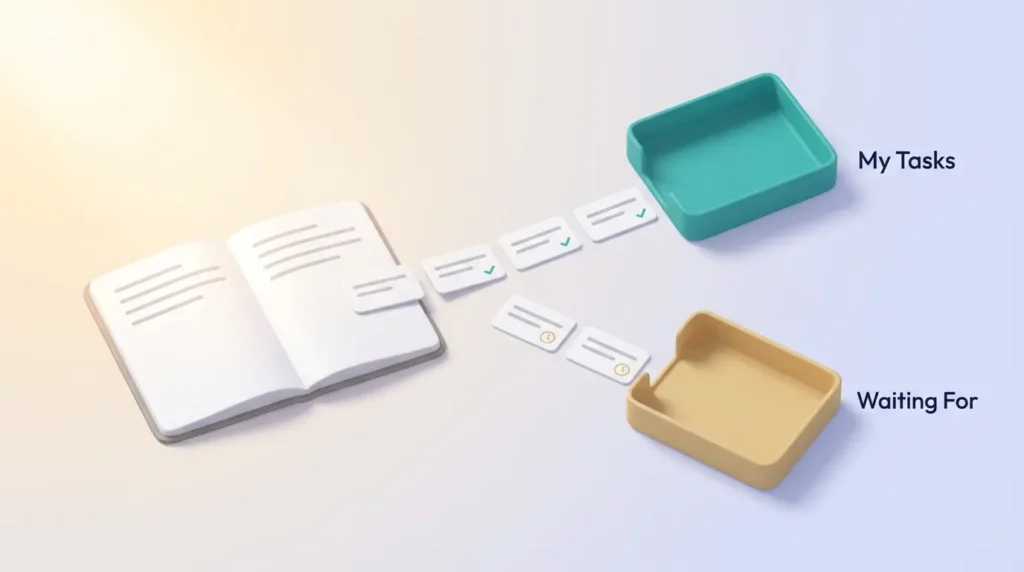
Move your own tasks into your task system, using the same habit you use to capture tasks. Put anything you are waiting on from others on a waiting-for list, and check both in your weekly review.
Make Meeting Prep a Habit
The routine sticks when it has a fixed slot. Leave a ten-minute buffer before important meetings, a basic rule of good calendar management. Or prepare all of the next day’s meetings in one block, which works well with timeboxing.
Conclusion
Good meeting preparation is small and repeatable. Know the purpose and your role, skim what matters, prepare one point and your questions, then record the outcomes right after.
Try the 10-minute routine before your next three meetings and notice how much faster they reach a decision.
Found this useful?
Make SmartKeys a preferred source on Google, and our articles will surface more often in your Top Stories, AI Overviews, and AI Mode.
Add as Preferred SourceFAQ
How long should I spend preparing for a meeting?
For most routine meetings, about ten minutes is enough. That covers checking the purpose, skimming the agenda and pre-reads, preparing your main point and setting up your notes. High-stakes meetings, such as negotiations or client pitches, deserve more time. Spread it over a day or two. The key is to scale effort to what is at stake, not to how long the meeting lasts.
How can I ensure my meetings are productive?
As an organizer, start by writing one clear objective that names an outcome, such as a decision to make. Share an agenda with a time slot for each topic and attach any reading in advance, so people can prepare. Invite only the people the decision needs. Close by reading back decisions, owners and due dates, and send short notes the same day so nothing gets lost afterwards.
How can I manage my time effectively during a meeting?
Keep an eye on the time slot for each agenda item. If a discussion runs over, say so politely and suggest a next step, such as a follow-up call with only the people involved. Offer to “park” off-topic points in the notes so they are captured without taking over the meeting. Make your own prepared point early and briefly, not in the rushed final minutes.
What if I have questions during the meeting?
Write questions down as they come up, then ask them when the related agenda item is discussed. That keeps the meeting on track without losing your thought. If a question is urgent because a decision depends on it, raise it before the decision is made. Questions that only matter to you can often go in a short message to the right person after the meeting.
Can AI tools help me prepare for meetings?
Yes, with limits. An AI assistant can summarize long pre-reads, pull together notes from earlier meetings and suggest questions to ask. AI note-takers can also record decisions and action items for you. Treat every summary as a draft and check key facts against the source, because AI can miss or misstate details. Do not paste confidential material into tools your company has not approved, and tell participants when a meeting is being recorded.