
For years, paid search worked the same way. You typed a few keywords, and ads appeared above a list of links. That model is changing. More people now ask an AI assistant a full question and read one written answer. In 2026, that answer became ad space.
Google now shows sponsored results inside AI Mode, its chat-style search experience, and OpenAI shows ads in ChatGPT. This guide explains how these ads work, what Google announced at Google Marketing Live 2026 and what it means for your budget. New to the jargon? Our AI glossary helps.
Key Takeaways
- Ads now appear inside AI answers, not only above search results, and carry a “Sponsored” label.
- In October 2026, Google expanded ads in AI Mode from the U.S. to ten more countries.
- ChatGPT ads now run in 89 countries on the Free and Go plans. Plus, Pro and Enterprise stay ad-free.
- Product data and landing pages now matter more than keyword lists.
What changes when search becomes a conversation
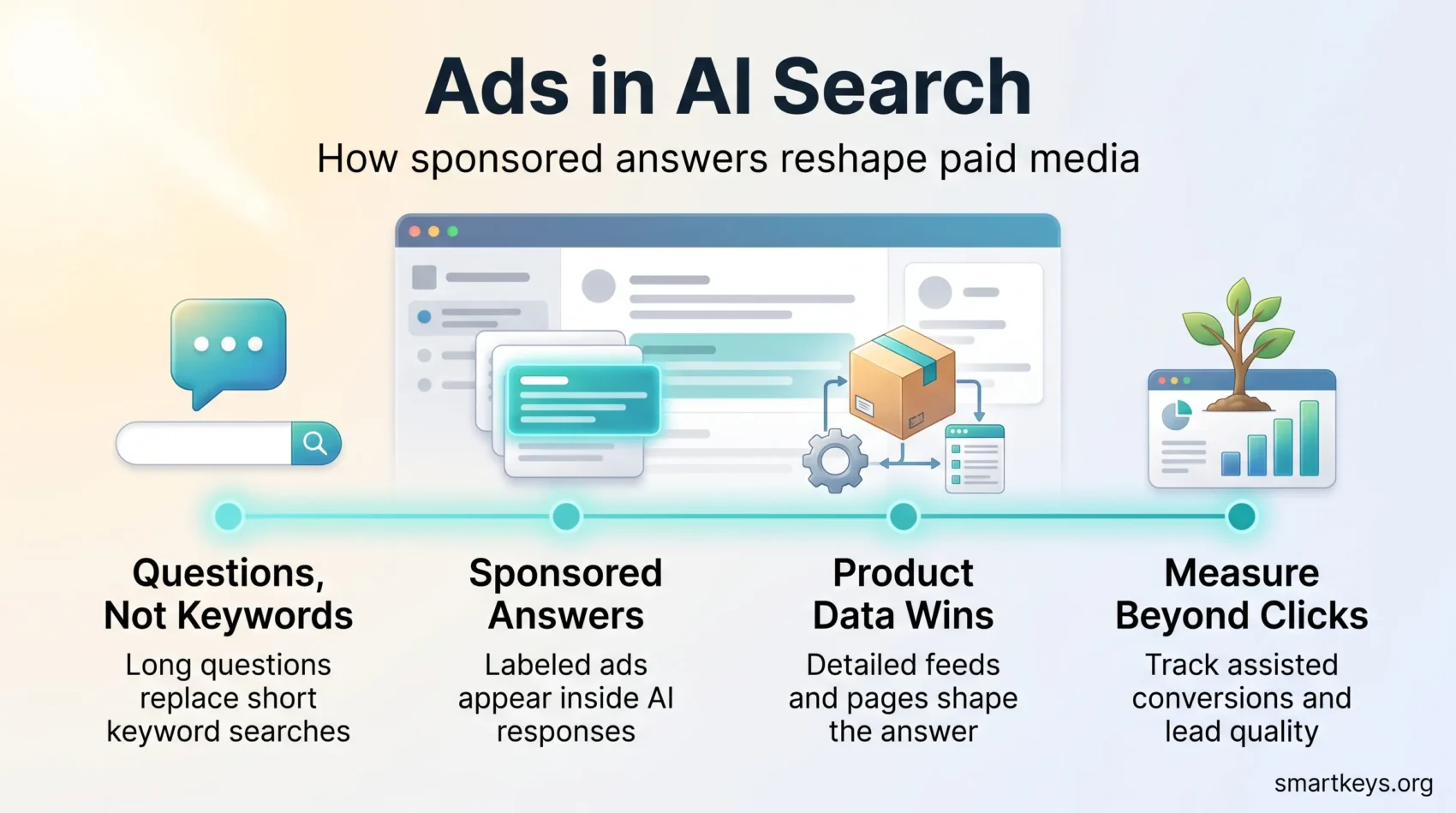
Classic search ads are tied to keywords. You bid on “running shoes”, and your ad shows when someone types those words. AI search works differently. People ask long, specific questions, such as “Which running shoes suit flat feet for a first half marathon?” Google says AI Mode queries are on average three times longer than classic searches.
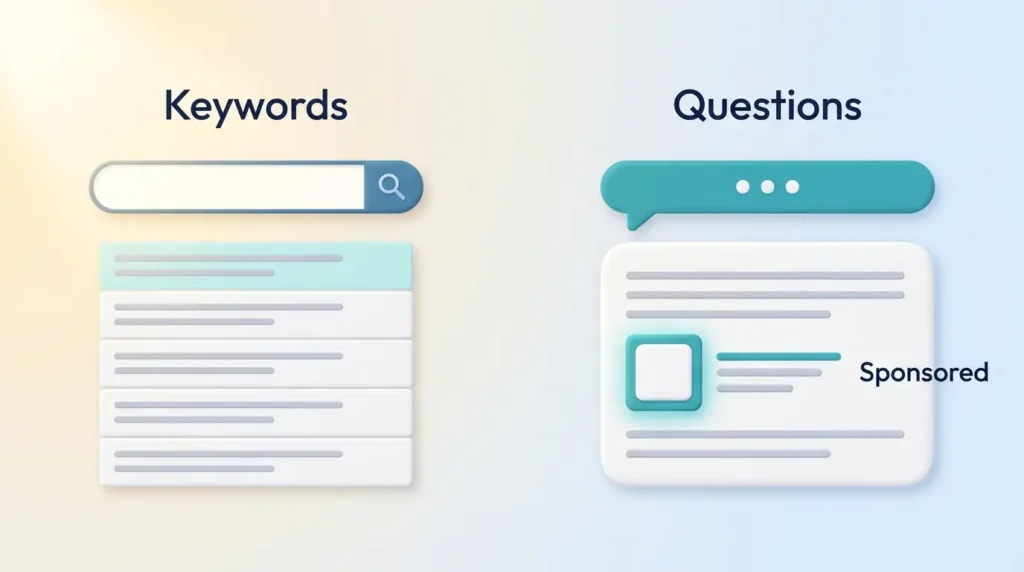
The AI reads the whole question, writes an answer and picks a sponsored result that fits. Paid ads and organic mentions now share one screen. So paid search and generative engine optimization, the work of getting your brand cited in AI answers, belong in one plan.
The new Google ad formats from Marketing Live 2026
At Google Marketing Live in May 2026, Google introduced formats for AI Mode and AI Overviews, the AI summaries above regular results.
Conversational Discovery ads
These ads respond to the exact question someone asks. Say a user asks for low-maintenance ways to make their home smell like a spa. A fragrance brand could answer with reed diffusers that run for months.
Highlighted Answers
Highlighted Answers place a relevant ad inside an AI-generated list of recommendations. One of five suggested tools could be sponsored, with a “Sponsored” label to set it apart.
AI-powered Shopping ads
Shopping ads are the product listings with an image and price that appear in Google results. The new versions use Gemini, Google’s AI model, to explain why a product may fit the shopper. That helps most with big purchases like refrigerators or TVs. It extends AI product recommendations into search.
Business Agent for Leads
This format replaces a static lead form with a chat. A student could tap “Chat” in a university ad and ask about fees. The agent answers from the advertiser’s website, like the AI chatbots used in customer service, and opens a paid door to conversational commerce.
Direct Offers and native checkout
Direct Offers let brands attach discounts, bundles or coupons to AI answers. Google also expanded its Universal Commerce Protocol (UCP), a standard that lets shoppers buy inside Google’s AI experience without visiting the store’s site. Shops with agent-ready storefronts connect more easily. Reported integrations include the buy now, pay later providers Klarna and Affirm, and travel partners such as Booking and Expedia. This is an early step toward agentic commerce, where AI assistants handle more of the buying.
Where ads in AI search are live in 2026
Ads in AI Mode started in the United States. On October 28, 2026, Google announced it is scaling them to Australia, Canada, India, Kenya, Malaysia, New Zealand, Nigeria, Pakistan, the Philippines and Singapore. Brazil, Mexico and the United Kingdom are planned for the fourth quarter of 2026. In the U.S., Google is also launching multi-turn ads, which can appear on follow-up questions in the same conversation.
ChatGPT is the second channel. OpenAI began testing ads with logged-in U.S. adults in February 2026, on the Free plan and the low-cost Go plan. Ads reached 31 European markets in late August. On October 21, 2026, OpenAI expanded them to 89 countries in total. Plus, Pro and Enterprise subscriptions stay ad-free.
The ads are labeled and kept separate from the answer, and OpenAI says advertising does not influence what ChatGPT writes. Advertisers can buy through partners or a self-service Ads Manager.
What the shift means for your campaign planning
- Test broad AI matching with guardrails. AI Max for Search lets Google expand your keywords and adapt ad text from your site. At its 2025 launch, Google reported a typical 14% lift in conversions at a similar cost per conversion. Campaigns built mostly on exact and phrase match, the strict settings that only trigger ads for close variants of your keywords, saw 27%. These are Google’s averages, so test one campaign first.
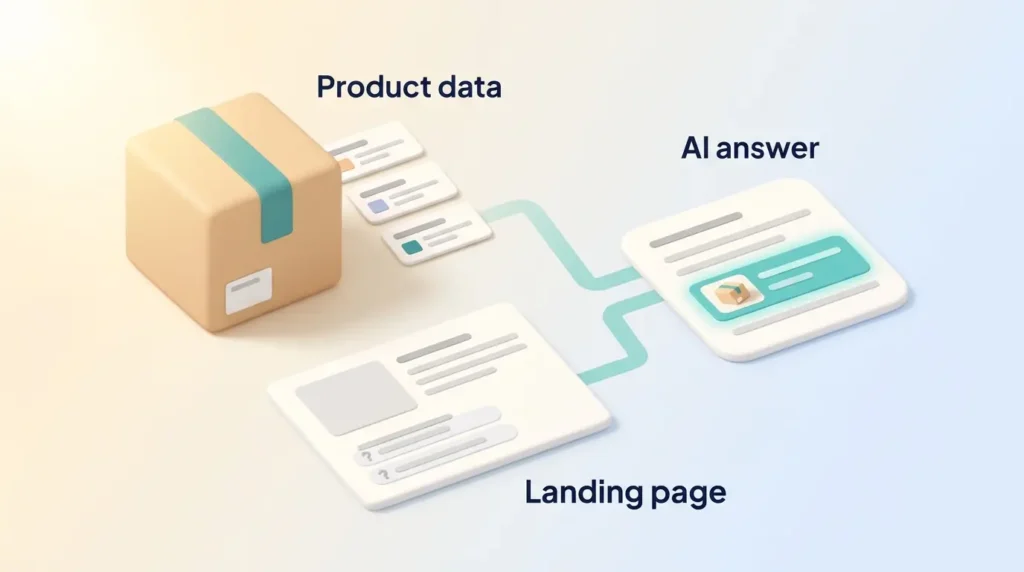
- Treat product data as ad creative. The AI builds answers from your feed, pages and assets. Add sizes, materials and use cases. A customer data platform and a clear first-party data strategy keep those signals accurate. For variants, see our AdCreative.ai review.
- Make landing pages answer real questions. Clear specs, visible prices and FAQ sections help shoppers and AI systems alike, similar to voice search optimization.
- Measure more than clicks. Some AI journeys end in native checkout or a later branded search. Track assisted conversions, meaning sales the ad helped earlier in the journey, and lead quality too, as our omnichannel marketing guide explains.
Risks remain. Users may trust answers less if they feel sold to, and lost digital trust is hard to win back. You also see less detail about which question triggered an ad. Meanwhile, retail media networks compete for the same budget.
Conclusion
Ads in AI search turn the answer into the ad slot. Google is rolling out sponsored formats in AI Mode across more markets, and ChatGPT ads now reach 89 countries. Brands with accurate data and useful pages will win. Start with one test campaign. For broader context, read our guides to AI in marketing and how digital marketing has evolved.
Found this useful?
Make SmartKeys a preferred source on Google, and our articles will surface more often in your Top Stories, AI Overviews, and AI Mode.
Add as Preferred SourceFAQ
How do conversational discovery ads work?
Conversational Discovery ads show creative that matches the specific question a person asks in Google’s AI Mode, rather than a short keyword. Because AI Mode questions are longer, the system knows more about the need behind them. A fragrance brand could appear for a question about low-maintenance ways to keep a home smelling fresh. Advertisers influence these ads mainly through product data, flexible creative and clear landing pages.
What are highlighted answers in search results?
Highlighted Answers are sponsored entries placed inside an AI-generated list of recommendations in Google’s AI Mode. Each one carries a “Sponsored” label, so readers can separate paid and organic picks. The placement is valuable because it appears right where people compare options. It also means the ad sits next to neutral suggestions, so specific, honest claims tend to work better than hype.
How do AI-powered shopping ads benefit customers?
AI-powered Shopping ads add a short explanation, written with Google’s Gemini model, of why a product may suit the shopper’s needs. This helps most with big purchases like TVs or refrigerators, where buyers compare many features. The quality of that explanation depends on the product feed, so detailed attributes are essential.
What is the Business Agent for Leads feature?
Business Agent for Leads replaces a static lead form with a chat inside the ad. Prospects tap a chat button and ask questions, and the agent answers from the advertiser’s website content. A university could let students ask about deadlines or fees before sharing contact details. This lowers effort and qualifies leads earlier, but only if the website content is current and accurate.
What are direct offers in advertising?
Direct Offers let brands attach discounts, bundles or coupons to Google’s AI experiences, with Gemini helping to create the offers. Through the Universal Commerce Protocol, shoppers can in some cases claim an offer and check out without leaving Google. Travel partners such as Booking and Expedia add deals to AI trip planning. The program began as a pilot, so check availability for your market in Google Ads.
Can advertisers pay to change what an AI answer says?
No, according to the platforms. Google shows ads in AI Mode with a “Sponsored” label next to or within the answer area, and OpenAI says advertisers cannot influence ChatGPT’s responses. The organic answer is generated separately. Brands can still improve how they appear in organic AI answers by publishing clear, accurate content. Paid placement and organic visibility are separate levers, and most brands need both.