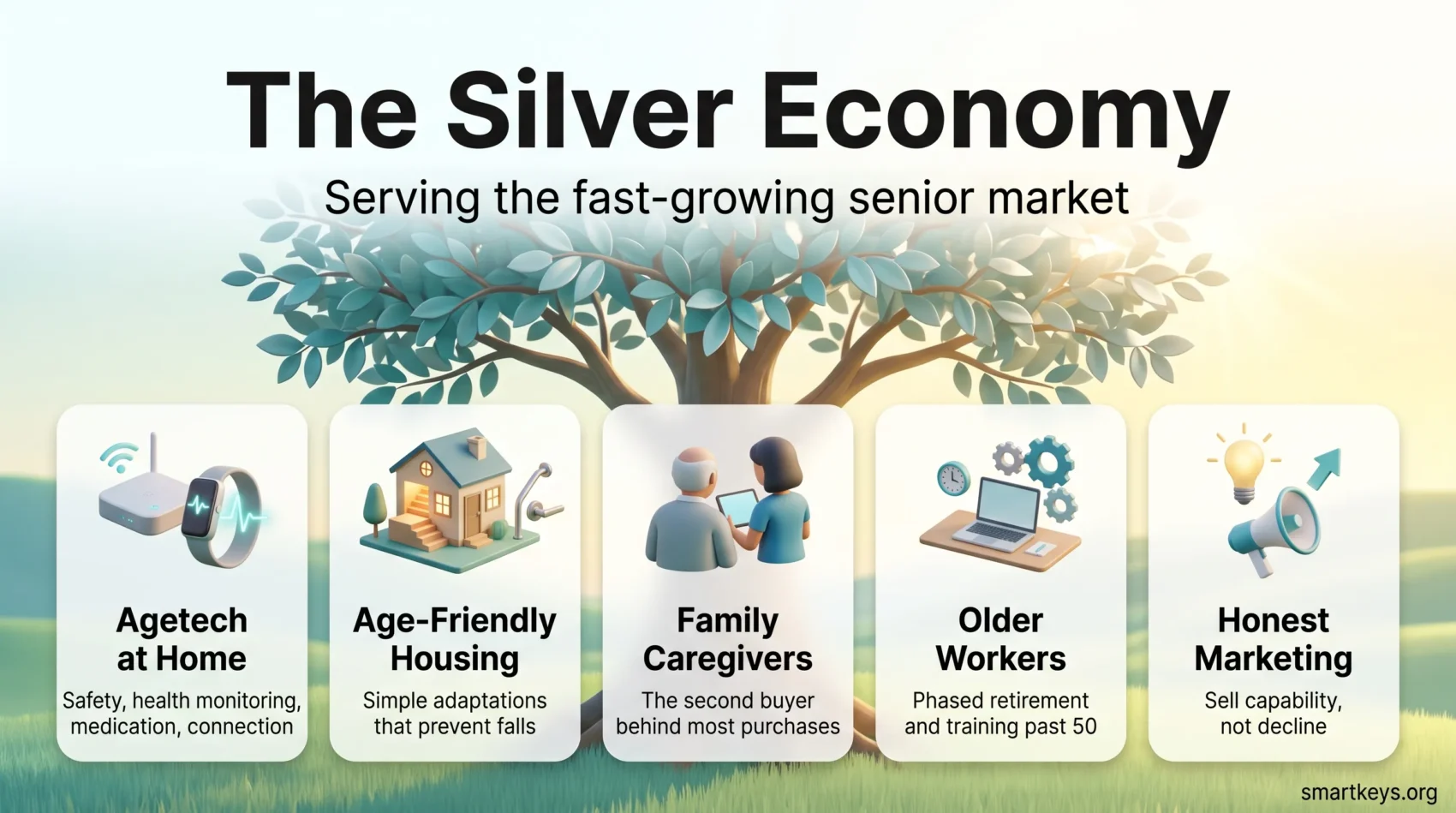
The silver economy is the whole set of goods, services and jobs built around people in later life. It covers what older adults buy, what they earn and what their families buy on their behalf. Businesses used to treat this group as a niche. In 2026 it sits closer to the center of consumer demand.
The scale is easy to underestimate. Adults aged 60 and over account for about 19 trillion US dollars of consumer spending worldwide each year. World Data Lab projects that will reach 34 trillion by 2036, close to one in every three consumer dollars (July 2026). In the United States, AARP’s Longevity Economy Outlook of 2 June 2026 puts the annual contribution of Americans aged 50 and over at 12.5 trillion dollars, more than 2 trillion above 2018.
This article explains where that money goes and which parts of the market are real today. It is written for owners, team leads and managers facing one practical decision: whether to build products, marketing and hiring around older customers and colleagues.
Key Takeaways
- People aged 60 and over spend roughly 19 trillion dollars globally each year, heading for a projected 34 trillion by 2036 (World Data Lab).
- Americans aged 50 and over contribute 12.5 trillion dollars a year to the US economy and make up about 36 percent of the population (AARP, June 2026).
- The global population aged 60 and over is projected to double from 1 billion in 2020 to 2.1 billion by 2050 (WHO).
- Roughly 54 million Americans aged 50 and over are working, and the 65-plus group has grown from 3 percent of the labor force to 8 percent in 25 years.
- Family caregivers are a second buyer for almost every product aimed at older adults, and often the ones who research, pay for and install it.
- The reliable openings are in housing adaptation, health monitoring, finance, retail and employment, not in vague “senior branding”.
What the Silver Economy Actually Means
The term covers products sold directly to older people, services their families buy for them, and the value older workers create by staying employed longer.
It is broader than the older idea of a “silver market”, which emerged in Japan in the 1970s and mostly meant special products for frail seniors. The European Commission adopted the wider framing in its 2018 Silver Economy study. It treated aging as a driver of demand across health, housing, finance, technology and tourism, not as a cost problem to contain.
One term you will meet often is gerontechnology, now usually called agetech: technology designed with the physical and cognitive changes of later life in mind. Larger buttons, louder audio, simpler setup and remote support are not cosmetic. They decide whether a product gets used or returned.
The Numbers Behind the Market in 2026
Two figures answer different questions. The first is total spending by older consumers. World Data Lab estimates that people aged 60 and over, about 15 percent of the world’s population, account for 19 trillion dollars a year. North America contributes 7.4 trillion and Asia Pacific 4.9 trillion. The second is the dedicated market of products made specifically for older adults, put at roughly 4.5 trillion dollars and growing at about 7 percent a year.
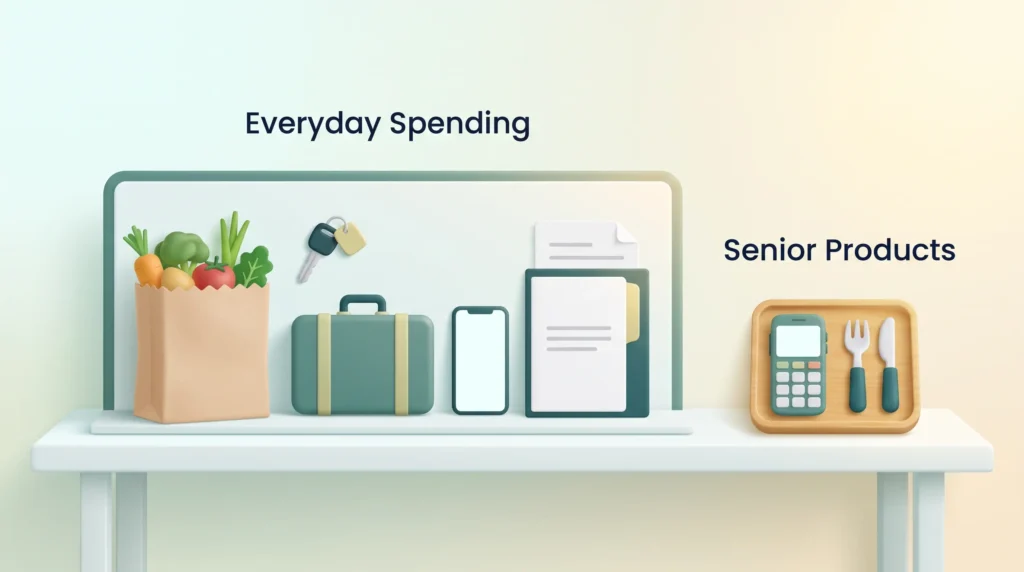
The gap between them matters for strategy. Most money older people spend goes on ordinary things: groceries, cars, holidays, insurance, phones. Only a minority goes on anything labeled for seniors. The bigger opportunity is usually making a mainstream product work well for a 70 year old, not launching a separate senior line.
In the United States, AARP reports that adults aged 50 and over are about 36 percent of the population, roughly 123 million people, growing by more than a million a year.
Demographic Shifts Driving Demand
This demand will not reverse. It follows from two slow, well documented changes: people are living longer, and fewer children are being born.
The World Health Organization counted 1 billion people aged 60 and over in 2020. It projects 1.4 billion by 2030 and 2.1 billion by 2050, when roughly 22 percent of the world will be in that age group. The number of people aged 80 and over is projected to triple to 426 million by 2050. Two thirds of older people will live in low and middle income countries, which is where product design and pricing assumptions from wealthy markets tend to break.
The consequences reach every part of a business. Fewer entrants to the labor market means recruiting gets harder, one reason demographic change is reshaping how work is organized. More customers in later life means service design, packaging and support must account for reduced vision, hearing and dexterity. And more employees are working while caring for a parent.
Working Longer: Retirement Becomes a Phase, Not a Date
Retirement is turning into a gradual transition rather than a single day. In the United States, about 19.2 percent of people aged 65 and over were in the labor force in 2023, up from 17.2 percent a decade earlier. That comes from a Pew Charitable Trusts analysis of Census Bureau data published in August 2025. AARP’s 2026 figures show workers aged 65 and over now making up 8 percent of the labor force, compared with 3 percent 25 years ago.
The reasons split roughly in two. Some keep working because they want to; others because they have to, since Pew found poverty rates of 16.5 percent among people aged 65 and over in the large cities it studied, against 11.3 percent nationally.
For employers, this is a supply of experienced staff at a time when hiring is difficult. AARP notes that in sectors already short of workers, people aged 50 and over make up more than a third of employment. Practical responses include phased retirement programs that reduce hours gradually, mid-career retraining, and upskilling programs that do not quietly stop at age 50. Mixed-age teams need explicit attention too, as our guide to multigenerational teams sets out.
Where Older Consumers Actually Spend
Spending in later life is not lower so much as differently shaped.
Health care rises, and AARP projects that health spending by Americans aged 50 and over will more than double by 2060. Housing stays a large category, with growing demand for modifications rather than new purchases. Travel, leisure and insurance hold up well among households with savings. Everyday retail continues, but the channel shifts: more delivery, more online research, more purchases made jointly with an adult child.
The economist Andrew J. Scott has argued in The Lancet Healthy Longevity and The Journal of the Economics of Ageing that longer lives should be treated as an economic transformation rather than a burden on public budgets. Commercially that reframes the question: not “how do we serve frail people cheaply” but “what do healthy 70 year olds want to buy”.
Averages hide enormous variation, though. A 68 year old with a paid-off house and a pension and a 68 year old renting on Social Security alone are not the same customer. Segment by income, health status and digital confidence before you segment by age.
Agetech and Health Monitoring at Home
Technology aimed at later life has moved from concept to purchase. Research published by AARP and the Consumer Technology Association in January 2025 found that 80 percent of older Americans already own at least one piece of technology supporting aging at home. Seventy percent said they felt very comfortable using it. The same research projects agetech as a 120 billion dollar industry by 2030.
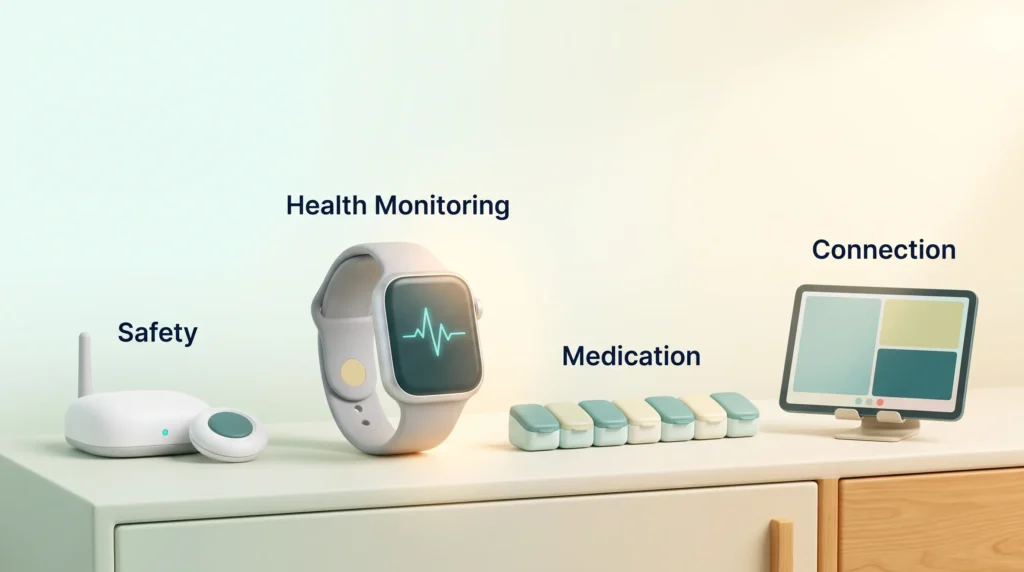
The categories that recur are:
- Safety: fall detection, smoke and heat sensors, and devices that call for help without the user needing to reach a phone.
- Health monitoring: devices tracking activity, heart rate, blood pressure and glucose, often shared with a clinician or a family member.
- Medication support: dispensers and reminders that reduce missed or doubled doses.
- Connection: video calling and captioned tablets, which matter because a large share of older adults live alone.
The barriers are equally consistent, and they are commercial rather than technical. In the AARP and CTA research, 60 percent named cost, 41 percent doubted reliability, and 64 percent said technology is not designed with their age in mind. There is also a visible gap between interest and ownership: only 3 percent owned a connected medical alert device while 18 percent said they were likely to buy one. That gap is a distribution and trust problem, not a demand problem.
Anything that streams health data into the home raises consent and security questions immediately. Treat it as a regulated data project and read our overview of current data privacy rules before designing the onboarding flow. Connected devices in the home also inherit the operational issues covered in our piece on IoT in healthcare.
Age-Friendly Housing and Home Adaptations
Most older adults want to stay put. A Pew Research Center survey of 2,582 Americans aged 65 and over ran in September 2025 and was published in February 2026. It found 60 percent would prefer to stay in their own home and have someone care for them. Assisted living drew 18 percent and moving in with family 11 percent.
Wanting it and affording it are different things. Only 37 percent of those who preferred care at home thought it was extremely or very likely to happen, and just 21 percent of adults aged 65 and over hold long-term care insurance. That uncertainty is itself a market. It explains demand for affordable adaptation, clearer financing, and services sold in stages rather than all at once.
The adaptations that make a measurable difference are unglamorous. Lever handles need less grip strength than round knobs. Stoves that switch themselves off remove a common fire risk. Better stair lighting, a walk-in shower and a bathroom grab rail prevent the falls that often trigger a move into care. The obstacles are affordability, building codes and a shortage of trained installers, so the businesses capturing this demand are the ones solving financing and fitting, not just hardware.
Serving Family Caregivers, the Second Buyer
For many products aimed at older adults, the person who researches, pays for and installs them is an adult child. Designing only for the end user misses half the decision.
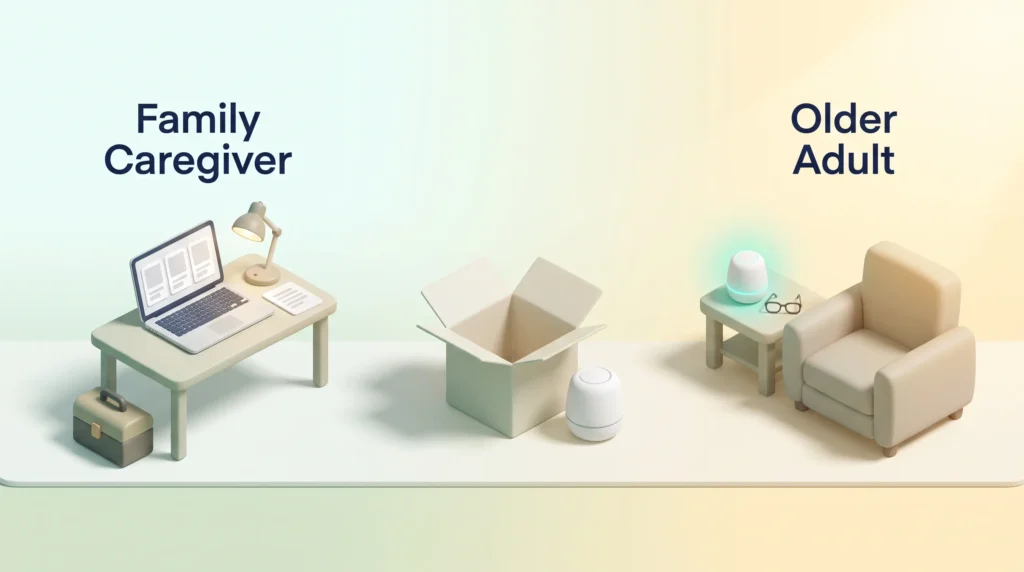
The scale is documented. The Alzheimer’s Association’s 2026 Facts and Figures report puts the number of Americans providing unpaid care for someone with dementia at nearly 13 million. They delivered more than 19 billion hours of help in 2025, labor worth more than 446 billion dollars. AARP separately values unpaid caregiving and volunteering by Americans aged 50 and over at 1.2 trillion dollars in 2024, and notes that this group provides 59 percent of elder care.
What this means in practice:
- Write product pages for two readers at once: the person who will use the device and the relative comparing three options at midnight.
- Make setup something a visiting family member can finish in one afternoon.
- Price transparently. Monitoring fees hidden behind cheap hardware are the fastest route to a cancellation and a bad review.
- Offer real support by phone. Chat-only support fails exactly the customers you are trying to serve.
- Build shared access so a family member can help without the older adult losing control of their account.
Employers meet the same group from the other side. Employees caring for a parent show up as absence, refused promotions and resignations. Flexible schedules and caregiving support are part of how benefits packages are changing and a factor in retaining experienced staff.
Hiring and Keeping Older Workers
Older employees bring continuity: knowledge of why decisions were made, established customer relationships and the ability to mentor. Where turnover is eroding institutional memory, that is a competitive asset rather than a courtesy.
Age bias remains the main obstacle, and it shows up in process rather than in stated policy. Job adverts asking for “digital natives”, training budgets concentrated on staff under 40, and promotion rounds that skip long-tenured employees all produce the same outcome. Structured interviews, documented promotion criteria and workforce data broken down by age make the pattern visible.
Physical work needs adjustment as well. Better lighting, adjustable workstations, sensible shift patterns and assistive equipment keep experienced people productive, and some manufacturers are testing exoskeletons for physically demanding roles. Wider practice sits in our overview of HR management trends in 2026.
Marketing to a Mature Audience Without Stereotypes
The quickest way to lose older customers is to advertise at them as though they were ill. Most people aged 60 to 75 do not consider themselves old, and frailty imagery gets ignored.
Practical adjustments:
- Sell capability, not decline. Independence, confidence and staying in control test better than safety framed as fear.
- Recognize the caregiver in your audience. Retail marketing often targets women in their forties and fifties without noticing that many are buying for a parent.
- Make the format accessible. Readable type, real contrast, captioned video and prices stated plainly beat clever design. This overlaps closely with inclusive design practice.
- Earn trust before asking for the sale. Older buyers are a frequent target of fraud, so clear terms, an easy cancellation route and a named contact matter more than urgency tactics.
- Personalize with restraint. The techniques in AI-driven personalization work here, but heavy-handed targeting based on inferred health reads as intrusive.
Policy and Economic Implications
Population aging pressures pensions, health systems and labor supply at once, but unevenly. Countries that aged quickly and have low immigration face the sharpest constraints; the United States and Canada age more slowly and can partly offset the shift through migration.
Track four things: the retirement age and pension rules, tax treatment of home adaptation and long-term care, health coverage for remote monitoring, and reimbursement rules deciding whether a device is bought privately or paid by an insurer. That last point often decides an entire business model. Related ground is covered in our pieces on insurtech and gig economy regulation.
Global Perspectives: United States, United Kingdom and Beyond
Lessons From the United Kingdom and Europe
The United Kingdom and the European Union tend to define the group broadly, from age 50, and to frame policy around health, participation and continued economic contribution rather than care alone. The European Commission’s 2018 Silver Economy study established that framing and remains the reference point for EU programs on healthy aging.
Japan as the Early Case
Japan aged first, which is why the original silver market appeared there in the 1970s. It is the longest running experiment in care robotics, age-friendly retail and workplaces that retain staff past 65. Results are mixed and worth reading honestly. Some robotics pilots in care homes were quietly withdrawn because they added work for staff rather than removing it, a caution that applies to any automation project.
Aging Before Getting Rich
China, and later India, face rapid aging at lower income levels than Europe or North America did. Their populations are growing older faster than their pension and health systems are developing. For companies, this means the largest volume growth in older consumers over the next decade will happen in markets where price sensitivity is high and formal care infrastructure is thin.
Trends Worth Watching
Artificial intelligence is the most visible development. It is already useful for triaging health data, for transcription in care settings and for reducing paperwork; our overview of AI augmentation at work covers the general pattern. Voice interfaces deserve particular attention, because speaking is easier than typing for many older users, as we explain in voice AI assistants.
Digital identity and electronic health records are advancing in most countries, making continuity of care possible and privacy failures more damaging.
Flexible and gig work keep growing among people between full-time employment and full retirement, without necessarily bringing pension contributions or sick pay with them. Preventive health and nutrition are a genuine growth area, though the evidence for personalized nutrition products is thinner than the marketing suggests.
Using Data and Research Properly
Two mistakes are common: treating everyone over 60 as one segment, and trusting market-size headlines published by vendors selling into the market.
Segment by income, health status, living arrangement, digital confidence and geography. A retired couple in a paid-off house and a renter with a chronic condition need different products at different prices, whatever their birth year says. Approaches from our guide to customer data platforms transfer directly.
Then pair the numbers with conversations. Survey data tells you what share of people own a medical alert device; twenty interviews tell you why the rest do not, which is usually cost, stigma or a setup nobody could finish. Set measurable indicators before you scale: adoption after 90 days, support contacts per customer, and cancellation reasons.
Building Cross-Industry Partnerships
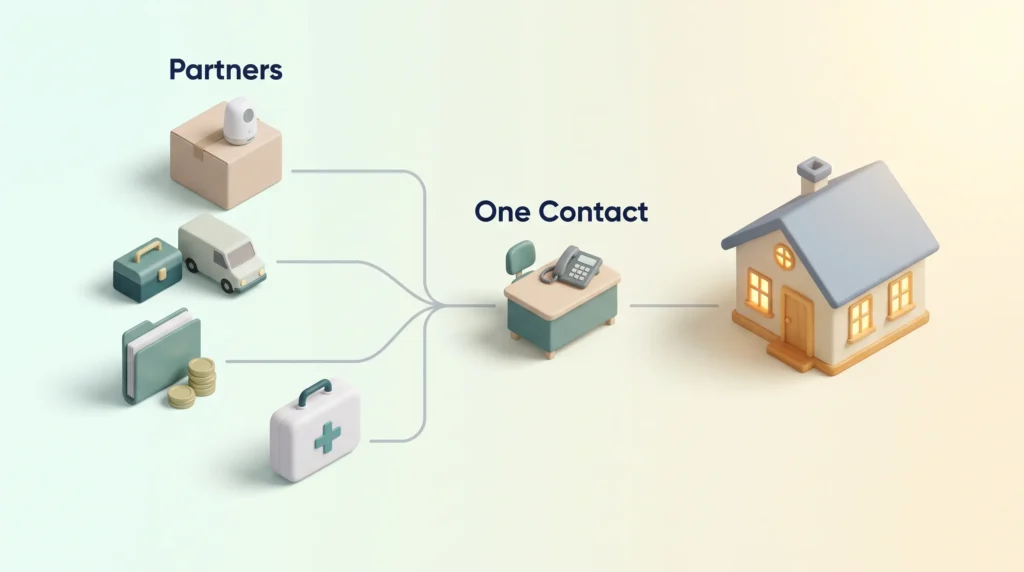
Very few companies can serve an older customer end to end. A device maker needs a distributor with a service network; a housing firm needs a financing partner; a health service needs someone to install the hardware and answer the phone at 9pm. Partnerships that work share four features:
- A defined joint outcome: fewer falls, faster discharge from hospital, longer independent living, measured the same way by every partner.
- Clear data governance: agreed up front on who holds health data, on what legal basis, and what happens when the partnership ends.
- One point of contact for the customer: older adults and their families should never have to work out which of four companies is responsible.
- A pilot with an exit: a defined test period with success criteria, so a failing project stops instead of drifting.
These are ordinary alliance-management problems, and the ground rules in our guide to strategic alliances apply without modification.
Conclusion
The silver economy is not a forecast. It is the current shape of consumer demand in most developed markets, worth about 19 trillion dollars a year globally and 12.5 trillion in the United States alone.
The companies doing well in it rarely launched a senior brand. They made an existing product easier to use, priced it clearly, supported it by phone, and wrote for the adult child as well as the parent. On the employment side, they kept experienced people longer by adjusting hours and training instead of waiting for them to leave.
Start with one decision rather than a strategy document. Pick a single product or hiring practice, test it with people over 65 and with the relatives who buy on their behalf, and measure what changes. That will tell you more than another market report will.
Found this useful?
Make SmartKeys a preferred source on Google, and our articles will surface more often in your Top Stories, AI Overviews, and AI Mode.
Add as Preferred SourceFAQ
What is the silver economy?
The silver economy is all economic activity connected to people in later life: what older adults buy, what families buy for them, and what older workers still produce. It is usually measured from age 50 or 60 upwards. Globally, people aged 60 and over account for roughly 19 trillion dollars of consumer spending a year, which World Data Lab projects will reach 34 trillion by 2036. Most of that goes on ordinary goods and services rather than anything marketed to seniors, so the larger opportunity is usually making a mainstream product work well for an older customer.
What agetech and health monitoring products do older adults actually buy?
Four categories recur: safety devices such as fall and smoke detection, health monitors for activity, heart rate, blood pressure and glucose, medication reminders and dispensers, and connection tools such as video calling and captioned tablets. Research by AARP and the Consumer Technology Association in January 2025 found 80 percent of older Americans already own at least one technology that supports aging at home. The barriers are commercial rather than technical: 60 percent named cost, 41 percent doubted reliability, and 64 percent said products are not designed with their age in mind.
Should we market to older adults or to their family caregivers?
Usually both, in the same materials. For many products aimed at later life, an adult child does the research, compares options, pays and handles installation, while the older adult uses the product daily. Product pages should answer the relative’s comparison questions and the user’s practical ones. Setup should be completable by a visiting family member in an afternoon, and shared account access should let a relative help without the older adult losing control.
How can businesses engage older consumers without stereotyping them?
Start by dropping the frailty imagery. Most people between 60 and 75 do not think of themselves as old and will ignore advertising built around decline, so sell capability and independence instead. Then fix the practical details: readable type, real color contrast, captioned video, plain prices and a phone number that reaches a person. Segment by income, health and digital confidence rather than by age alone.
Is hiring workers over 60 worth it for employers?
In most cases yes, particularly where hiring is difficult. AARP reports that in sectors already short of staff, workers aged 50 and over make up more than a third of employment. The 65-plus group has grown from 3 percent of the US labor force to 8 percent over 25 years. Experienced employees bring customer relationships, institutional knowledge and mentoring capacity. The practical work is on the employer side: structured interviews that remove age bias, training budgets that do not stop at 50, phased hours, and workstation adjustments where the job is physical.
How do other countries approach the silver economy?
Japan aged first and is the longest-running case study, which is where the original silver market appeared in the 1970s. Its care robotics results are mixed, since several pilots added work for staff instead of removing it. The United Kingdom and the European Union define the group broadly from age 50 and frame policy around health, participation and continued economic contribution; the European Commission’s 2018 Silver Economy study set that direction. China and India are aging faster than their pension and care systems are maturing, so volume growth there comes with high price sensitivity.