Job crafting means reshaping your own job from the inside: changing which tasks you do, who you work with, and how you think about the work, without waiting for a new job title. The idea behind it is simple. The person doing the work usually knows best where it is being wasted.
The need is real. Gallup’s State of the Global Workplace 2026 report puts global employee engagement at 20 percent and manager engagement at 22 percent, and estimates the cost of low engagement at around 10 trillion dollars, roughly 9 percent of global GDP. Rewriting every job description is not a realistic answer. Letting people adjust their own roles, within limits, is.
What Job Crafting Means
Amy Wrzesniewski and Jane Dutton introduced the term in a 2001 paper in the Academy of Management Review, “Crafting a Job: Revisioning Employees as Active Crafters of Their Work”. Their argument: employees already adjust their work all the time. Job crafting makes that adjustment deliberate.
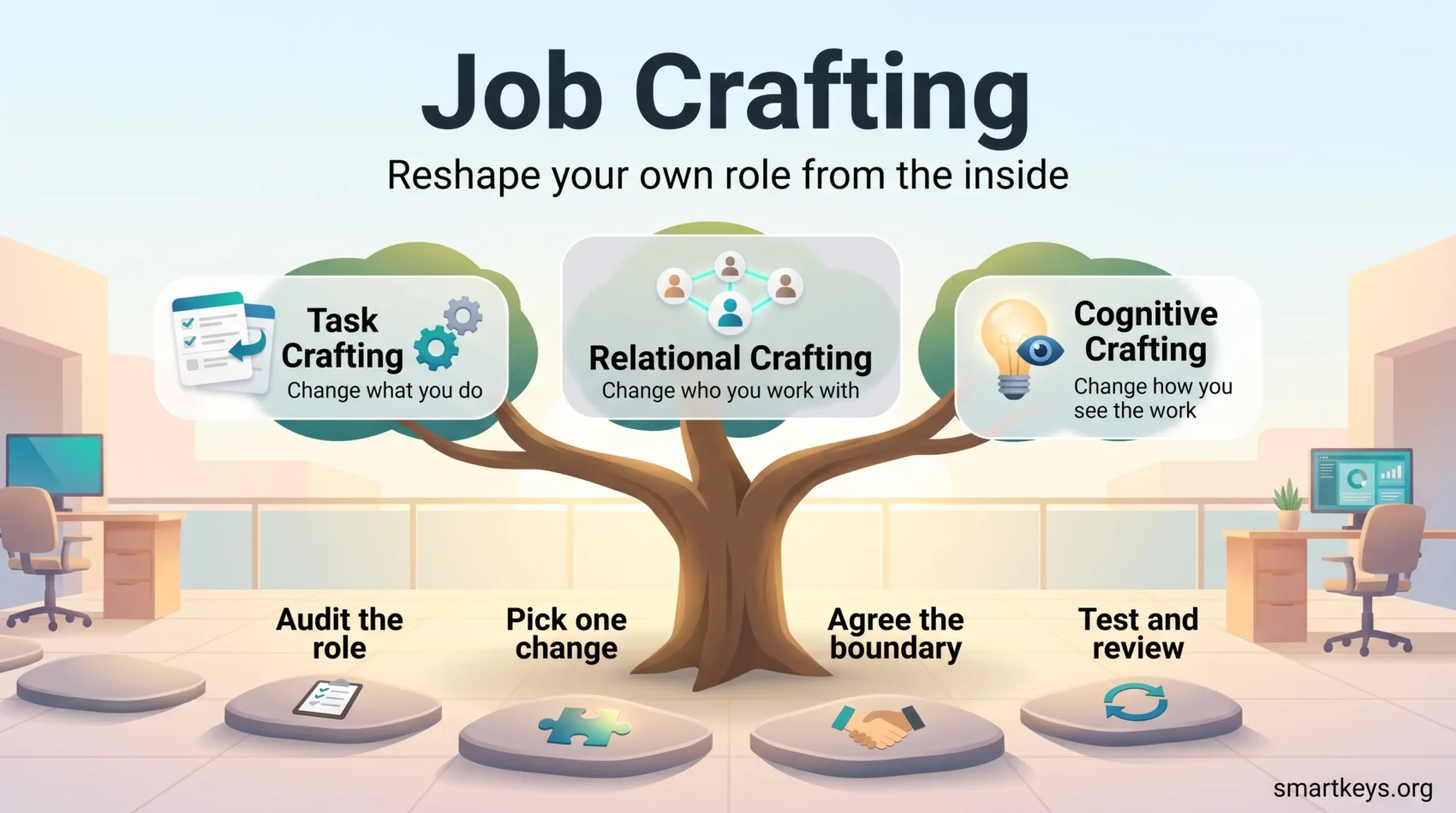
They described three forms:
- Task crafting: changing what you do. You take on work that plays to your strengths, hand off work that does not, or change your method.
- Relational crafting: changing who you do it with. You build a link to another team, mentor a junior, or reduce contact that drains you.
- Cognitive crafting: changing how you see it. Instead of “I clean rooms”, a hospital cleaner sees “I help patients heal”. The task list stays the same; the meaning changes.
A second tradition, from Maria Tims and Arnold Bakker, describes the same behaviour as adjusting job demands (the parts of work that cost energy) and job resources (the parts that help you get things done, such as autonomy, feedback or support).
The difference from traditional job design matters. Job design is top down: a manager defines the role and the employee fills it. Job crafting runs bottom up, which puts it close to participatory management, where employees get a real voice in decisions. It fills the gap that job design always leaves.
What the Evidence Shows
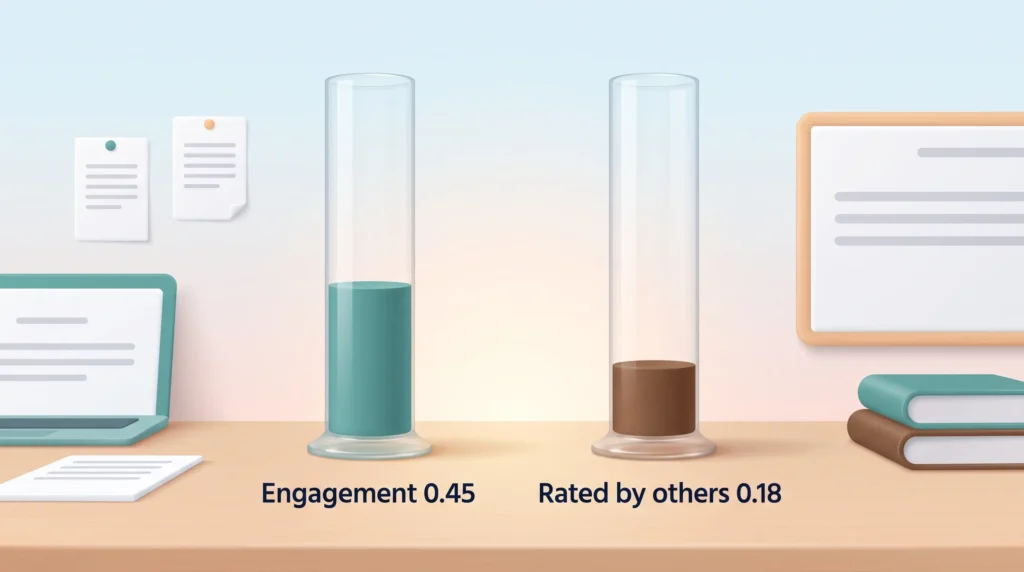
The largest summary is a meta-analysis by Rudolph, Katz, Lavigne and Zacher in the Journal of Vocational Behavior (2017). A meta-analysis pools many separate studies to see what holds up across all of them. This one covered 122 independent samples and 35,670 workers. The pooled correlations:
- Work engagement: 0.45
- Job satisfaction: 0.29
- Self-rated performance: 0.27
- Performance rated by someone else: 0.18
Read those two ends carefully. Job crafting reliably makes work feel better. Its effect on output as others judge it is real but much weaker. These are correlations from field studies, not proof of cause. Engaged people may simply craft more.
The type of crafting matters too. Taking on more challenging work showed the strongest link to performance rated by others, at 0.42. Removing the parts of a job you dislike did not deliver the same benefit. Adding a stretch beats subtracting a nuisance.
Crafting also correlated strongly with a proactive personality, at 0.54. A study by Bakker, Tims and Derks in Human Relations (2012) traced the path: proactive people craft more, crafting raises engagement, and engagement shows up in colleague ratings. If your team waits to be told, expect crafting to need encouragement.
How to Start: A Simple Role Audit
Before changing anything, spend twenty minutes on four lists. Skipping this step is how crafting turns into random tinkering.
- Every recurring task in a normal week.
- The tasks that give you energy, and the ones that drain it.
- Your strengths, including the ones the role does not use.
- The autonomy you have: what you can change alone, what needs a conversation, what is fixed.
A two week log beats memory here. Our guide to personal productivity metrics covers how to track your time without turning it into surveillance.
Then run one change, not five. Pick the outcome you want, agree the boundaries with your manager, test the change for a fixed period, and review the effect on motivation and on results. Reversible experiments are far easier to get approved.
In practice: a support agent who keeps guessing at delivery delays sets up a monthly call with the warehouse team. A finance analyst who explains numbers well runs a quarterly session for sales.
Three Ways to Craft Your Job

Task Crafting: Change What You Do
Task crafting means adding, dropping, reordering or redesigning the work itself. A developer who enjoys teaching takes over onboarding. A project manager tired of status meetings replaces two of them with a written update. Quality, deadlines and the people downstream set the limits.
The cleanest form is a trade, not an addition. If you want four hours a month for something new, find the four hours first. That often means learning to delegate or outsource low-value work, or tightening the week with practical time management techniques. Crafting that only adds work turns into burnout.
Relational and Cognitive Crafting: Change Who and Why
Relational crafting changes the map of people around your work: seeking out expertise, building a mentoring link, or spending more time with the people whose work depends on yours. Structure helps, which is why mentorship matching platforms and peer learning programmes exist. In multigenerational teams it is often the fastest way to move knowledge nobody wrote down.
Cognitive crafting changes the frame rather than the facts. Done well, it connects a narrow task to the outcome it serves. Done badly, it becomes a way to talk yourself out of a problem that needs solving. If a job is genuinely broken, reframing is not the fix.
Two extensions appear in later work. Skill crafting steers your work toward capabilities you want to build, which connects to mid-career retraining and to how organisations measure the return on development spending. Wellbeing crafting shapes the day around your health, including how you use wellbeing stipends.
Connecting Daily Work to Purpose
Purpose sounds abstract, so treat it as a filter: does this task connect to an outcome you care about, and can you see the connection?
Martin Seligman’s work on wellbeing describes meaning as using your strongest abilities in service of something larger than yourself. That test has two halves. A task can matter enormously and still not suit you. Another can suit you perfectly and serve nothing. Crafting works when both line up.
A practical version: write down the outcome your team is accountable for, then mark which recurring tasks visibly move it. Tasks with no line to it are candidates for handing off or stopping.
If the crafting you want points away from your current role, the honest answer may be a move. A career lattice that treats sideways moves as progress, backed by an internal talent marketplace, beats crafting a role into something it was never meant to be.
The Model Behind It: Demands and Resources
Most academic work on job crafting sits on the Job Demands-Resources model, set out by Arnold Bakker and Evangelia Demerouti in 2007. It is worth knowing because it predicts which changes help.
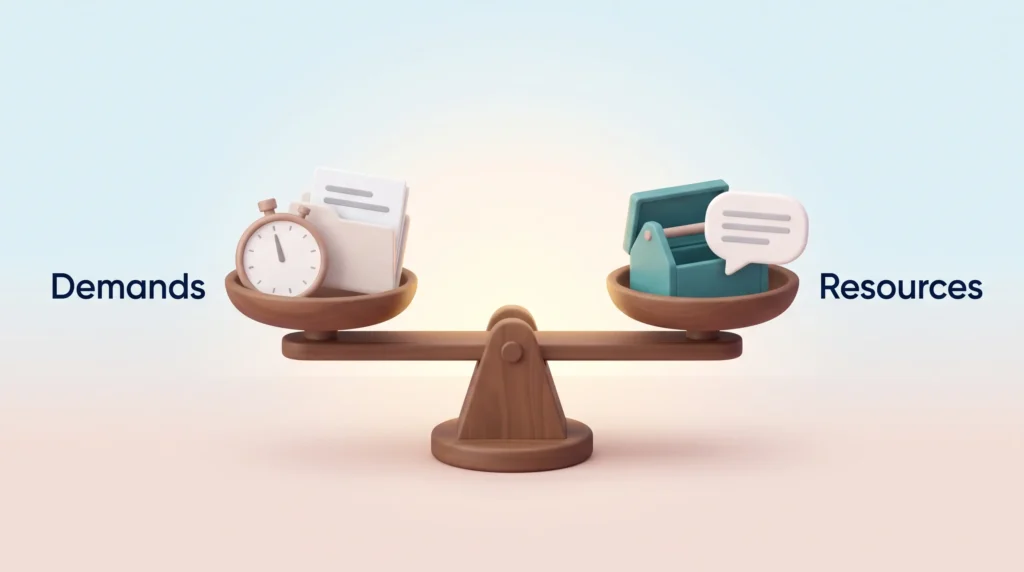
The model splits every job in two. Demands cost effort: deadline pressure, emotional load, unclear priorities, too many handoffs. Sustained high demands lead to exhaustion. Resources help you meet those demands: autonomy, feedback, useful tools, supportive colleagues, room to learn. Resources drive motivation.
The model also explains the finding above. Work that stretches you without overwhelming you is motivating. Cutting friction that produces no learning feels good but adds little to performance. Both are worth doing; only one shows up in how colleagues rate your work.
A one page worksheet is enough: current demands, current resources, one resource to increase this quarter, one hindering demand to reduce. Review it at quarter end.
Where Job Crafting Runs Into Limits
Job crafting is not a universal fix. The first limit is autonomy. In the original research, senior employees mostly named time as their barrier, while people lower in the hierarchy named permission. Where a role has no discretion, crafting shrinks to cognitive crafting, and that is thin comfort in a genuinely poor job.
The second limit is interdependence. In tightly coupled work, your output is someone else’s input, so changing your sequence can quietly break a colleague’s day. The more handoffs a role has, the more crafting has to be negotiated rather than simply tried. Roles that carry continuity risk need extra care, which is where workforce contingency planning matters.
The third limit is drift. A role crafted beyond recognition is no longer the role the team needs. A chef can improve how a dish is presented, but cannot decide that food safety checks are not personally energising. Before approving a change, run a short risk check: who else is affected, does anything regulated change, does workload move onto someone else, and how will you know whether it worked?
How Managers and Teams Can Support It
Job crafting spreads when managers make it legitimate. Left informal, it happens only for confident people with good relationships, and quietly widens the gap with everyone else.
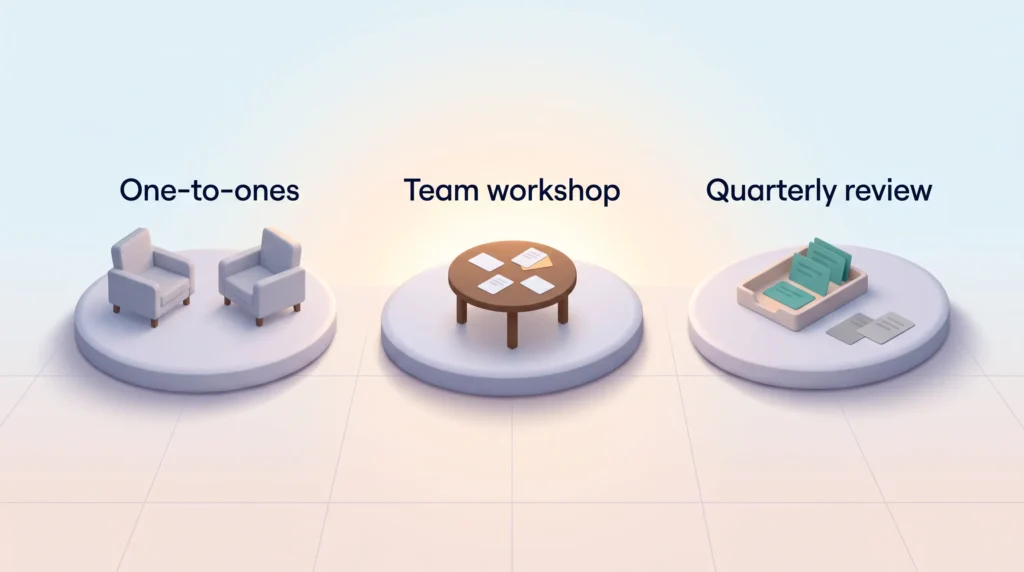
Three low-cost mechanisms work. Add one question to regular one-to-ones: which part of your work would you change, and what is the smallest version of that change? Run a short workshop where a team does the audit together and each person leaves with one experiment. Review those experiments as a group after a quarter and keep what held up.
Managers hold the boundary. They protect the outcomes the team is accountable for while giving people room inside them. That is a coaching stance, and it matches what current leadership trends and the evidence on talent retention both point to: people stay where they have influence over their own work.
Structure makes crafting easier. Clear internal mobility rules give people a route when adjustment is not enough, and schedule experiments such as a four-day workweek change the container the crafting happens in.
One caution for HR teams. Job crafting does not substitute for fixing pay, workload or a broken manager. If the underlying engagement problem is structural, asking people to reframe it will read as exactly that.
Conclusion
Job crafting gives people a way to improve their work without waiting for a reorganisation. The evidence is clearest on how work feels: across 122 samples, crafting correlated at 0.45 with work engagement. The effect on performance as others see it is smaller, and comes mainly from taking on more challenging work.
So start small. Audit the role, pick one change, agree the boundary with your manager, run it for a fixed period, and review it. If the change survives the review, keep it. If the role needs more than crafting can deliver, that is useful information too.
Found this useful?
Make SmartKeys a preferred source on Google, and our articles will surface more often in your Top Stories, AI Overviews, and AI Mode.
Add as Preferred SourceFAQ
What is job crafting?
Job crafting is reshaping your own role from the inside, without changing your job title. Wrzesniewski and Dutton described three forms in 2001: task crafting changes what you do, relational crafting changes who you work with, and cognitive crafting changes how you understand the work. The employee starts the change rather than being assigned it, and it stays inside the outcomes the role is accountable for.
Does job crafting actually improve performance?
It improves how work feels more reliably than what it produces. A 2017 meta-analysis by Rudolph, Katz, Lavigne and Zacher in the Journal of Vocational Behavior pooled 122 samples covering 35,670 workers. Crafting correlated at 0.45 with work engagement and 0.29 with job satisfaction, but only 0.18 with performance rated by someone else. The strongest performance link came from taking on more challenging work, at 0.42. These are correlations, not proof of cause.
Can you craft your job if you have little autonomy?
Partly, and the limits are worth naming. Research on barriers found senior employees usually name time as the constraint, while people lower in the hierarchy name permission. With little discretion, task crafting shrinks to small choices about sequence and method, and relational crafting to who you ask for help. Cognitive crafting still works, but reframing is thin comfort if the job itself is poor. In interdependent work, most changes need negotiating first.
What should a manager do when someone wants to craft their role?
Hold the outcome, not the method. Be clear about what the role is accountable for and what cannot move, then give room inside those limits. Ask for one change rather than several, and set a review date before the trial starts. A short risk check helps: who else is affected, does anything regulated change, does workload shift onto a colleague, and how will you judge the result. Make the offer explicit, because informal crafting rewards only the most confident people.
Where does job crafting fail?
In three predictable ways. Crafting that only adds work, without trading anything away, raises workload and pushes people toward burnout. Crafting that drifts too far turns a role into something the team no longer needs, which is why reversible experiments and review dates matter. And crafting offered instead of fixing pay, staffing or a poor manager will be read as exactly that. It improves a reasonable job; it does not repair a broken one.