
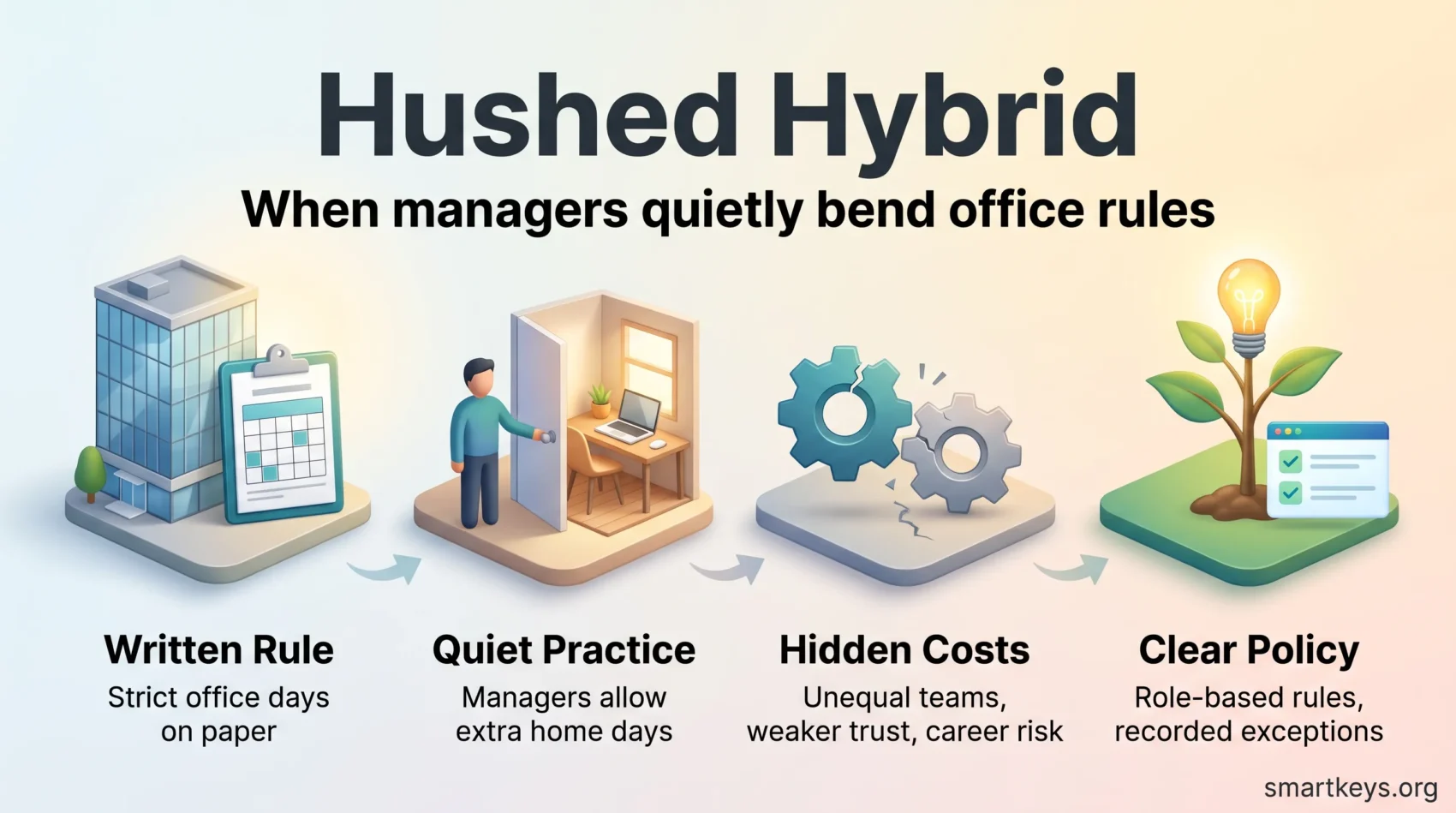
Many companies have tightened their return-to-office (RTO) rules, the policies that set how many days staff must spend at the office. Yet on many teams, the real schedule looks different. A manager approves an extra home day or simply stops checking attendance. This quiet gap between the written rule and daily practice has a name: hushed hybrid.
The term spread in 2024 after a UK survey by Owl Labs, a maker of video meeting hardware. It found that 70% of UK managers had let team members work from home despite a company policy that said otherwise (UC Today, March 2024). Recent data suggests the pattern persists: many employers still require more office days than their staff actually show up for.
Key Takeaways
- Hushed hybrid means a manager informally allows more remote work than the official policy permits.
- Managers usually allow it to keep strong performers and protect team morale, not to defy leadership.
- Flex Index data shows required office time rising much faster than actual attendance.
- The risks are a two-tier workforce, weaker trust in leadership and hidden career costs.
- The fix is usually a written policy that matches how good teams already work, not stricter enforcement.
What Is a Hushed Hybrid Workplace?
In a hushed hybrid workplace, the official rule says one thing and the manager allows another, without announcing it. Picture a company that requires four office days a week. One team lead lets her analysts work from home on two of them because their work is mostly focused writing. Nobody tells HR.
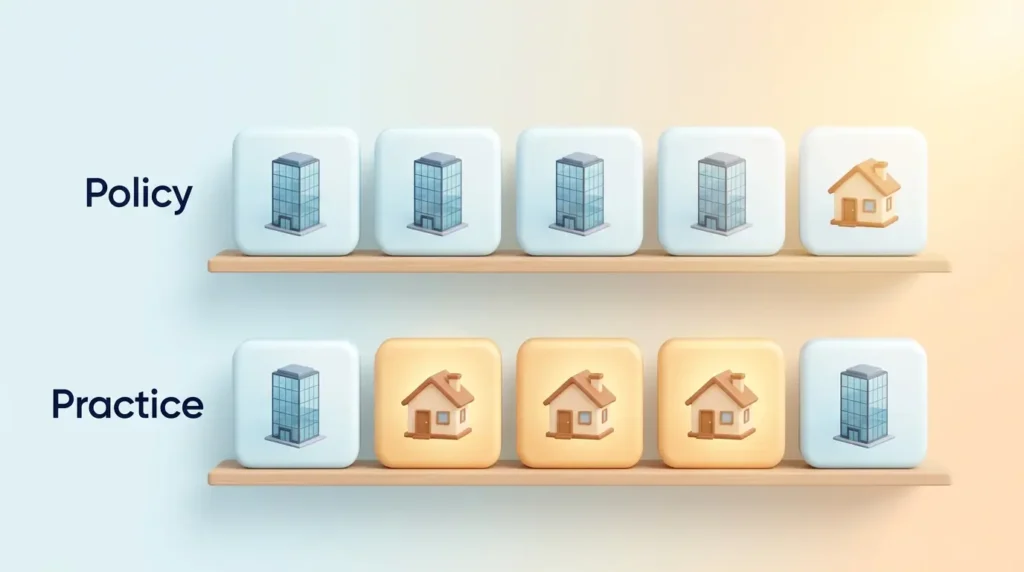
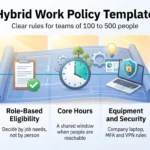
The difference from an official hybrid policy is documentation. A formal policy, such as one built from a hybrid work policy template, states who is eligible, how many office days apply and how exceptions work. Hushed hybrid depends on one person’s discretion, so it can vanish when that manager leaves.
It is also different from coffee badging, where employees swipe in at the office, stay briefly and then leave. In coffee badging, the employee bends the rule. In hushed hybrid, the manager does.
How Common Is Hushed Hybrid in 2026?
Nobody can count secret arrangements directly, so the best evidence compares written policies with real behavior. The Flex Index, which tracks office policies at thousands of U.S. companies, found that 34% of U.S. firms required full-time office attendance in Q3 2025 (FlexOS summary of Flex Index data).
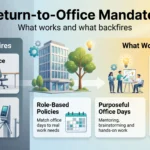
The more telling number is the gap. Required office time rose about 12% between early 2024 and Q3 2025, but actual attendance rose only 1% to 3%. Part of that gap is managers choosing not to enforce the rules. For the wider picture, see our guide to return-to-office mandates and what backfires.
Why Managers Quietly Allow Remote Work
Most managers who look the other way are not rebels. They are trying to hit their targets.
- Keeping good people. When a strong performer hints that a stricter schedule would push them to leave, an extra home day looks cheap compared with months of rehiring. Our article on remote employee engagement explains why autonomy matters so much.
- Protecting focus. Many managers judge work by results, not desk time. If a developer ships more at home, a rigid rule feels counterproductive. The same logic drives flexible work schedules.
- Matching rules to roles. A receptionist needs to be on site, while a data analyst often does not. When a company-wide mandate ignores that, managers fill the gap themselves.
Research supports that last point. A 2023 BCG study found people were far more satisfied when their team set its own work model than under top-down mandates (BCG).
The Hidden Costs of Hushed Hybrid
Unofficial flexibility feels good on the teams that get it. The problems show up company-wide.
A Two-Tier Workforce
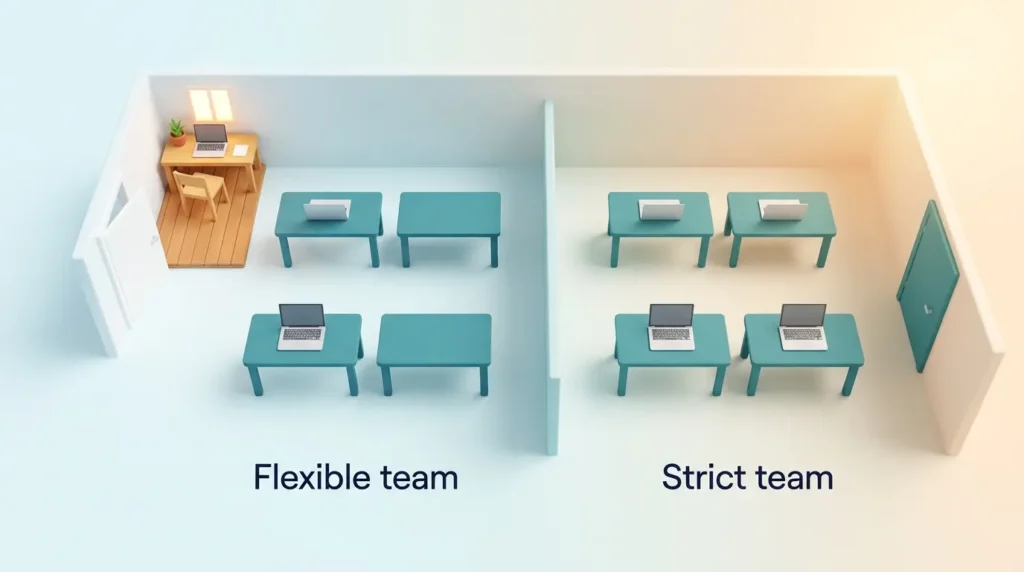
If one team works from home twice a week and the team next door cannot, people notice. Molly Johnson-Jones, CEO of the jobs platform Flexa, warned in 2024 that this “risks creating a two-tier workforce and breeding resentment among staff” (People Management). What you get depends on your manager, not your performance.
Weaker Trust in Leadership
When the written rule and real practice drift apart, employees stop knowing which one counts. The policy loses credibility, and trust is slow to rebuild, as our guide on digital trust in remote teams explains.
Hidden Career Costs
Many senior leaders still link office presence to advancement. KPMG’s 2024 CEO Outlook found that a large majority of CEOs expect to reward employees who come in with better assignments, raises or promotions (Fortune). So an employee may work from home with a manager’s blessing while a promotion committee only sees low attendance. This is proximity bias, the tendency to favor people we see in person. Managers carry risk too. If leadership starts checking, they have no policy to point to. That adds to the pressure described in our piece on the great flattening.
What Employees Can Do
- Get it in writing. Ask your manager to confirm your remote days in a short message. It protects you both.
- Make results visible. Brief weekly updates on finished work are the best answer to doubts. Our guide to remote career advancement has more ideas.
- Use office days well. Save meetings and collaboration for days on site, as covered in making office and remote days productive and our hybrid meeting etiquette guide.
- Do not assume it will last. A new manager can end the deal quickly.
What Leaders and HR Can Do
Hushed hybrid signals that the official policy does not fit how work gets done. Punishing managers rarely fixes that. Clear rules do.
- Ask what is really happening. Find out, anonymously if needed, where policy and practice differ and why.
- Base rules on roles. Group jobs by how much in-person work they truly need.
- Give teams a say. Let teams agree on shared office days within a company framework.
- Record exceptions. A simple approval process makes exceptions visible and consistent.
- Measure outcomes, not presence. Our guide to outcome-based work shows how. Weigh the real remote vs. office ROI. Heavy employee monitoring software tends to erode trust further, as our article on productivity paranoia explains.
Conclusion
Hushed hybrid reveals a mismatch. Employers write stricter office rules, while managers quietly keep the flexibility that helps their teams do good work. That protects morale for now but creates unequal treatment, weaker trust and career risks for people who rely on unwritten deals.
The healthier path is transparency. When leaders base rules on real job needs and record exceptions openly, flexibility stops being a secret favor and becomes fair policy. That openness is the core of a transparency culture, in line with a broader shift in work culture toward results.
Found this useful?
Make SmartKeys a preferred source on Google, and our articles will surface more often in your Top Stories, AI Overviews, and AI Mode.
Add as Preferred SourceFAQ
What is a hushed hybrid workplace?
A hushed hybrid workplace is one where managers quietly allow employees to work remotely more often than the official return-to-office policy permits. The arrangement is informal and usually not written down or reported to HR. For example, a company may require four office days a week while one team lead lets her staff work from home on two of them. The term became popular in 2024 after an Owl Labs survey of UK workers.
How does hushed hybrid differ from an official hybrid work policy?
The difference is documentation and consistency. An official hybrid policy is written down and applies the same rules to everyone in a given role, including how exceptions are approved. Hushed hybrid depends on one manager’s personal decision. That makes it flexible but fragile: it can disappear when the manager changes jobs, and employees on other teams may never get the same option.
How common is hushed hybrid work in 2026?
There is no direct count, because these arrangements are hidden by definition. The clearest signal is the gap between policy and behavior. Flex Index data shows that required office time at U.S. companies rose about 12% from early 2024 to Q3 2025, while actual attendance rose only 1% to 3%. The 2024 Owl Labs survey, in which 70% of UK managers admitted allowing remote work against policy, remains the most cited direct measure.
Is hushed hybrid the same as coffee badging?
No. They are related but come from different people. Coffee badging is something employees do: they swipe their badge at the office, stay briefly and leave, so attendance looks better than it is. Hushed hybrid is something managers do: they knowingly allow remote work the policy does not permit. Both point to the same problem, a policy many people feel does not fit their actual work.
Could unwritten arrangements affect career opportunities?
Yes. Many senior leaders still link office presence to promotions and raises, and KPMG’s 2024 CEO Outlook found that most CEOs expect to reward employees who come into the office. Someone working from home with a manager’s informal approval may still look absent to leaders who only see attendance data. To reduce that risk, get the arrangement confirmed in writing and share your results regularly.
Should HR crack down on managers who allow hushed hybrid?
A crackdown usually treats the symptom, not the cause. Hushed hybrid often shows that the official policy does not match how work gets done on certain teams. A better first step is to ask where policy and practice differ and why. HR can then base office rules on the needs of each role, let teams agree on shared office days and record approved exceptions, keeping what works while making it fair.