
Employers now pay noticeably more for people who can work well with artificial intelligence, and not only in tech jobs. This extra pay is called the AI skills premium: the difference in salary between jobs that ask for AI skills and comparable jobs that do not.
Two large datasets put numbers on it. PwC’s 2026 Global AI Jobs Barometer, published in June 2026, analyzed more than one billion job ads in 27 countries and territories and found an average wage premium of 62%. Lightcast’s “Beyond the Buzz” report from July 2025 found that US job postings listing AI skills advertise salaries about 28% higher, or nearly $18,000 more per year.
Key Takeaways
- PwC measures an average 62% wage premium for AI skills in 2026, up from 57% a year earlier.
- Lightcast found that US postings with AI skills offer about 28% (nearly $18,000) more per year.
- In 2024, 51% of postings that asked for AI skills were outside IT and computer science.
- Employers increasingly pair AI skills with judgment, communication and leadership.
What “AI fluency” means in practice
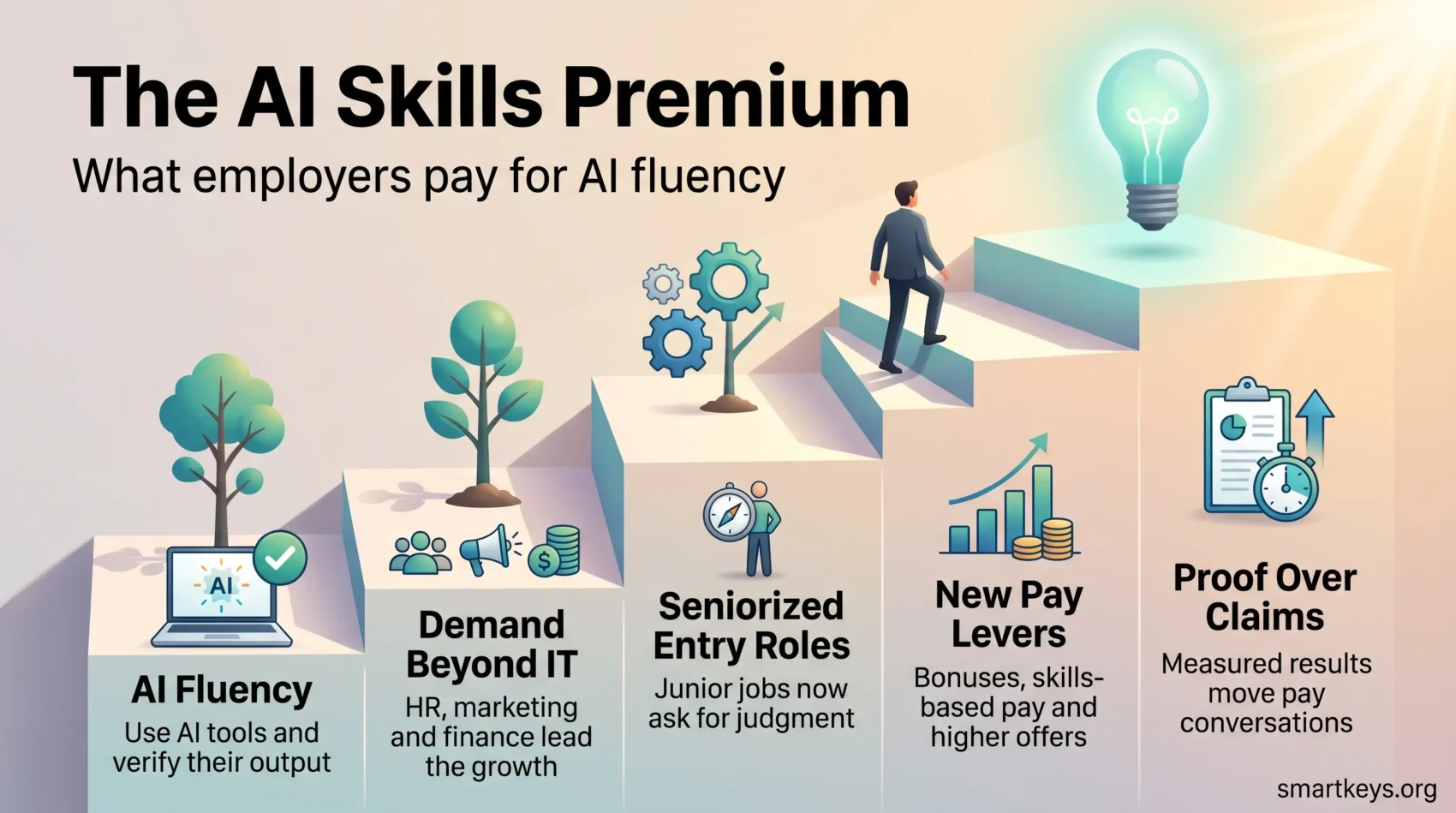
AI fluency is the ability to use AI tools for real work and to spot when their output is wrong. It is not the same as building AI models. A recruiter who drafts job ads with an AI assistant, then checks them for bias and accuracy, shows AI fluency. So does an analyst who summarizes earnings calls with AI and verifies the figures.
Job ads signal this with named skills such as generative AI, prompt engineering (writing clear instructions for AI tools) or machine learning. Both studies below count postings by these listed skills. If you want a broader view of which capabilities employers ask for, see our guide to the skills most in demand.
What the 2026 data says about the AI skills premium
PwC compares jobs that require AI skills with other jobs in the same occupation. Its 2026 figure of 62% is up from 57% in the previous edition, so the gap is still widening. The premium also varies a lot by sector. PwC reports up to 118% in consumer markets and 16% in government and the public sector.
Lightcast took a different angle. It drew on more than 1.3 billion job postings and compared the salaries advertised in the US. Postings that list AI skills offer about 28% more. In dollar terms that is close to $18,000 per year.
The numbers differ because the methods differ, but both show a clear price on AI skills. One caution: these are averages. They do not prove that learning one AI tool will raise your salary by 28%. Part of the gap exists because AI skills appear more often in better-paid roles and companies. The premium is real, but you earn it through the work you do with the skill.
Which roles and sectors reward AI fluency?
The premium is spreading well beyond software teams. According to Lightcast, 51% of postings that required AI skills in 2024 were outside IT and computer science. Here is where the growth stood out:
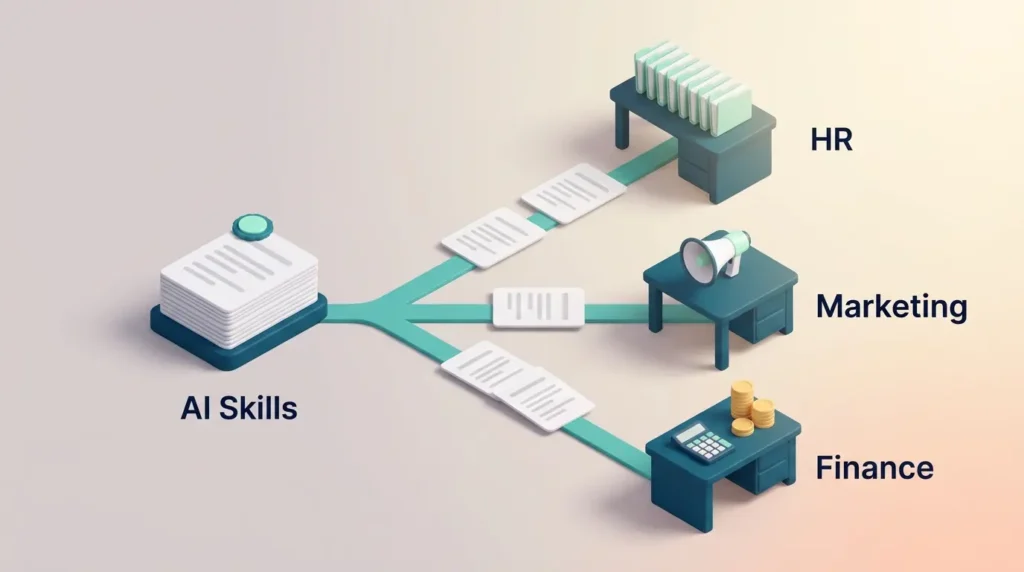
- Human resources: AI skill demand grew 66% year over year, the fastest of any field Lightcast tracked. Recruiting and talent acquisition roles led the way.
- Marketing and PR: about 8% of postings already ask for AI skills, and that share grew 50% in a year.
- Finance: demand rose 40%, starting from a low base.
- Education and training: adoption is still the lowest, but generative AI demand grew 200%.
Lightcast also found that generative AI demand in non-tech roles has grown about 800% since 2022. If you work in HR, marketing or finance, AI skills are becoming part of the normal job. Our look at how job descriptions changed in the AI era shows what that looks like in real postings.
PwC adds a useful distinction. In “professionalized” roles, such as recruiters or radiologists, AI takes over routine tasks and expertise becomes more central. In “democratized” roles, such as medical secretaries, AI makes the work easier for non-experts. Professionalized roles show twice the job growth and 42% faster salary growth. The premium goes to people who use AI to do more expert work. This links closely to the shift toward hybrid jobs shared between humans and AI.
How AI is changing entry-level expectations
PwC reports that jobs requiring AI skills grew 69%, compared with 9% for all jobs. The number of AI jobs is almost twice its 2024 level.
At the same time, junior roles are changing. PwC studied 2.4 million US entry-level jobs. The roles most exposed to AI are seven times more likely to ask for skills that used to be reserved for senior staff, such as judgment and leadership. PwC calls these “seniorized” entry-level roles. Since 2019, openings for them grew 35%, while other entry-level roles shrank 10%.
Example: a junior marketing coordinator once spent hours formatting reports. Now AI drafts them in minutes, and the coordinator is expected to decide which numbers matter and explain them. That is a senior-style task in a junior job. We cover this shift in more depth in AI and entry-level jobs.
How employers are putting AI skills into pay
A premium in job ads does not automatically mean a raise for current staff. Most companies set pay through job architecture, the system of titles, levels and salary bands, and changing it takes time. So many employers start with more flexible tools:
- Bonuses and variable pay tied to measurable results, such as hours saved or faster turnaround. Our guide to performance-based pay models explains how these schemes work.
- Skills-based pay, where verified skills move you up within a salary band, even without a title change.
- Promotion to new roles that did not exist two years ago, such as AI operations or automation leads.
- Higher starting offers for external candidates who can prove AI skills. This is the part of the premium that job ads make visible.
Employers pay for outcomes, not claims. “Familiar with ChatGPT” on a resume is rarely enough. A documented result, such as cutting a weekly report from four hours to one, moves a pay conversation. Rules on pay transparency in the US and EU also mean more postings now show salary ranges, which makes the premium easier to see and to negotiate against.
Why training is part of the pay equation
Many companies would rather grow AI skills internally than pay the full premium to hire them. Microsoft and LinkedIn’s 2024 Work Trend Index found that 66% of leaders would not hire someone without AI skills. Yet only 39% of AI users said their company had given them AI training.
Employers that fund training, coaching and clear career paths tend to keep people longer. Our articles on upskilling and reskilling and on measuring upskilling ROI show how companies set this up. A digital skills gap analysis is a good first step to see where training will pay off. Some teams then use AI-powered learning platforms to match courses to each employee’s gaps.
For employees, asking about funded AI training is a fair part of any offer discussion. For employers, it is a practical lever for talent retention.
How to strengthen your AI fluency and career value
You do not need a computer science degree to earn part of the premium. You need skills that fit your role and proof that they work:
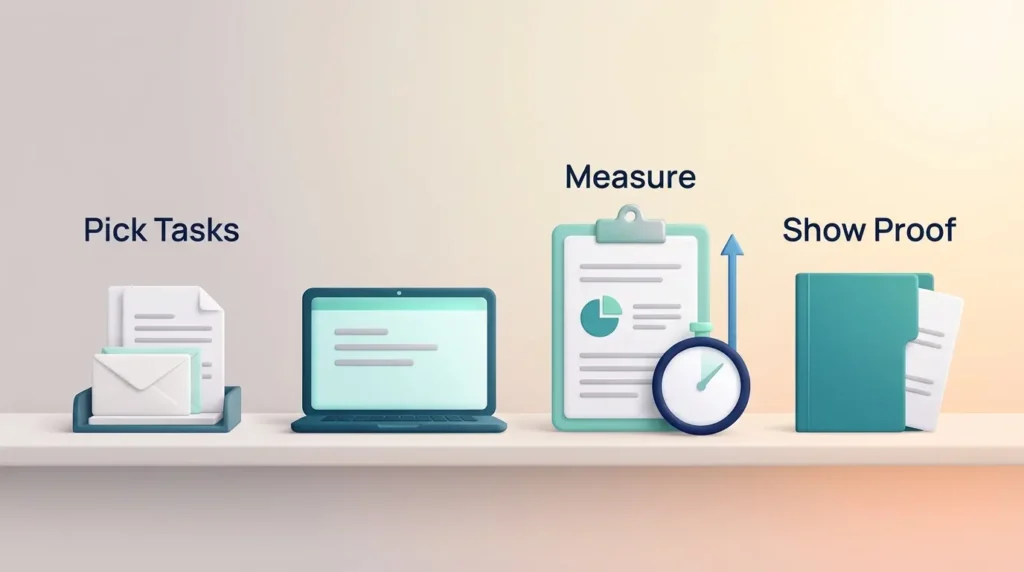
- Pick two or three weekly tasks, such as drafting emails, summarizing documents or cleaning data.
- Use an AI tool on them, within your company’s rules. Check your employer’s generative AI usage guidelines before you paste in any confidential data.
- Measure the result: time saved, errors avoided or faster delivery.
- Build the human skills around it. PwC finds employers increasingly reward judgment, creativity and leadership. Our piece on soft skills for future work covers these.
- Make your skills visible. Short courses and micro-credentials help, but a small portfolio of real results usually counts for more. Employers that practice skills-based hiring look for exactly this.
Further into your career? Our guide to mid-career retraining shows how to build new skills without starting over.
Conclusion
The AI skills premium is one of the clearest pay signals in today’s job market, and more than half of the demand sits outside IT. It is not automatic, though. It goes to people who combine AI tools with judgment and can show measurable results. For employers, training existing staff and rewarding verified skills is usually the cheaper route. For employees, the best next step is to improve a few weekly tasks with AI and document what changed.
Found this useful?
Make SmartKeys a preferred source on Google, and our articles will surface more often in your Top Stories, AI Overviews, and AI Mode.
Add as Preferred SourceFAQ
What is the AI skills premium?
The AI skills premium is the extra pay employers offer for jobs that require AI skills, compared with similar jobs that do not. PwC’s 2026 Global AI Jobs Barometer puts the average at 62% across 27 countries and territories, up from 57% a year earlier. Lightcast found that US postings listing AI skills advertise about 28% more, or nearly $18,000 per year. Both are averages, so individual gains vary by role and results.
How much more can I earn with AI skills?
There is no fixed amount, but the averages are large. Lightcast links AI skills to about $18,000 more per year in advertised US salaries. PwC reports an average premium of 62%, ranging from 16% in government to up to 118% in consumer markets. Part of the gap exists because AI skills appear more often in better-paid roles. You capture the premium most reliably by showing concrete results during a job change or promotion.
Do I need a technical background to benefit from the AI skills premium?
No. Lightcast found that 51% of postings requiring AI skills in 2024 were outside IT and computer science, with HR, marketing and finance growing fastest. These roles usually want AI fluency: using AI tools well in daily work and checking their output. A marketer who tests campaign ideas faster with AI, or an HR specialist who summarizes applications responsibly, benefits without writing code.
Are entry-level jobs affected by AI skill requirements?
Yes. PwC studied 2.4 million US entry-level jobs and found that the roles most exposed to AI are seven times more likely to ask for skills once expected from senior staff, such as judgment and leadership. Openings for these roles grew 35% since 2019, while other entry-level roles shrank 10%. AI now handles many routine junior tasks, so new hires are expected to review its output and explain what matters.
How do employers build AI skills into compensation?
Most employers start with flexible tools rather than a full pay redesign. Common options are bonuses tied to measurable results, skills-based steps within a salary band, promotions into new AI-related roles and higher starting offers for candidates who prove AI skills. Changing job levels and pay bands takes longer because HR, finance and managers are involved. In every case, verified outcomes count far more than a line on a resume.
Why does AI training matter for pay and career growth?
Training is how many employers close their AI skills gap without paying the full market premium to hire. Microsoft and LinkedIn’s 2024 Work Trend Index found that 66% of leaders would not hire someone without AI skills, yet only 39% of AI users had received AI training from their company. Funded training helps employers retain people and gives employees skills that strengthen their next pay review.
What steps can I take to improve my AI fluency?
Start with your own work. Choose two or three tasks you repeat every week and try an AI tool on them, following your company’s AI rules. Measure what changes, such as time saved or fewer errors, and keep a short record. Build the human skills around the tool: judgment, clear communication and checking output. A small portfolio of real, measurable results is the strongest proof when you ask for a raise or change jobs.