Tools
Tools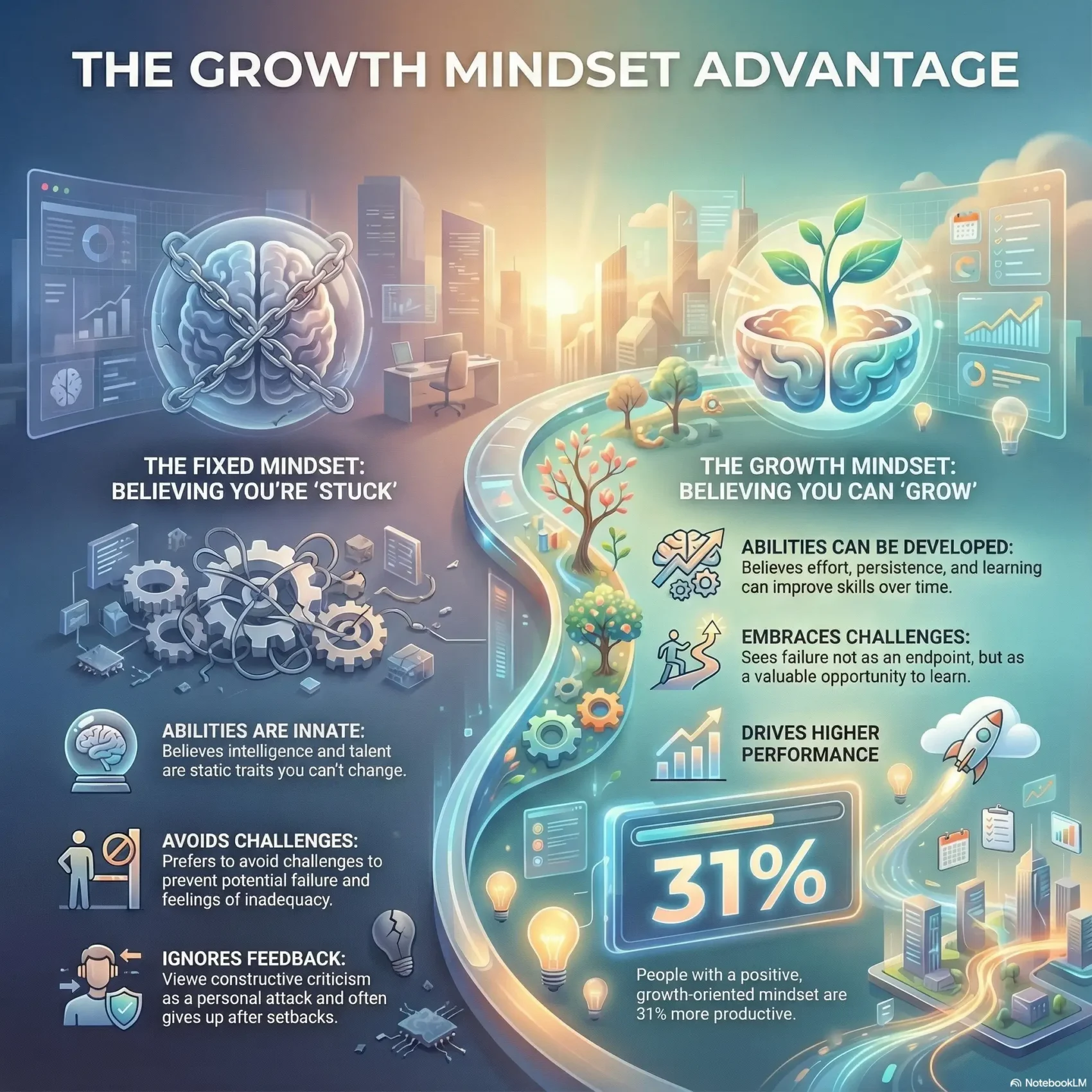
Last Updated on December 9, 2025
In today’s fast-paced world, adopting a growth mindset can significantly boost your productivity. This mindset believes that your abilities and intelligence can be improved through effort and dedication. It’s not just about personal growth but also a key factor in achieving success. Research indicates that about 65% of employees in growth-oriented organizations feel empowered to take risks, leading to higher productivity.
This article will delve into the core of developing a growth mindset and its impact on both personal and professional spheres. We will explore strategies, highlight the mindset’s benefits, and provide practical ways to integrate it into your daily life.
Key Takeaways
- Embracing a growth mindset enhances your approach to challenges.
- A significant percentage of individuals actively apply a growth mindset in their lives.
- Organizations that foster a growth mindset report higher collaboration and innovation rates.
- Adopting productivity strategies can lead to measurable increases in work efficiency.
- Mindset plays a critical role in both personal and professional success.
Understanding the Concept of a Growth Mindset
A Growth Mindset is the belief that your abilities and intelligence can grow with effort, dedication, and persistence. This idea, brought to light by psychologist Carol Dweck, contrasts with a fixed mindset, which sees abilities as unchangeable traits. Embracing a growth mindset is crucial for personal growth, as it builds resilience and adaptability.
Studies reveal that those with a growth mindset tend to excel more than those with a fixed mindset. They see success as a result of hard work and are more open to learning from their mistakes. This mindset encourages tackling challenges head-on, seeing them as chances for growth rather than hurdles.

- Embracing challenges and viewing them as opportunities for learning.
- Being willing to learn from mistakes and failures.
- Seeking out feedback and challenges to continuously improve.
Adopting a growth mindset enhances resilience, leading to a more satisfying life. By incorporating phrases like “yet” into your self-talk, you can alter how you perceive challenges and boost your determination. This mindset not only improves your learning approach but also enriches your outlook on overcoming life’s obstacles.
Benefits of Adopting a Growth Mindset
Adopting a growth mindset brings significant benefits to both personal and professional development. It makes you more receptive to challenges and encourages effort, leading to better performance. This mindset is crucial for personal growth and professional success.
- You are more likely to persist through difficult tasks, leading to improved academic and career performance.
- This mindset encourages you to take on new challenges, enhancing your skill set and advancing your career.
- People with a growth mindset tend to embrace diversity, viewing different perspectives as opportunities for innovative solutions.
- Resilience is another key benefit, allowing you to bounce back more easily from setbacks and challenges.
- Pursuing learning goals rather than focusing solely on proving your abilities can lead to continuous personal development.
Research indicates that those with a growth mindset exhibit higher motivation and a greater willingness to seek feedback for improvement. This is in stark contrast to those with a fixed mindset, who often avoid constructive criticism.
Developing a growth mindset changes how you approach personal development. It fosters adaptability and enhances problem-solving skills. By embracing challenges and seeing failures as opportunities, your path to lasting success becomes clearer and more attainable.
How a Positive Mindset Affects Productivity
A Positive Mindset can revolutionize how you tackle work and life. Positive psychology research highlights that such mindsets boost problem-solving skills, thus increasing productivity. By staying optimistic, you open up to numerous possibilities, making it easier to find creative solutions to obstacles.
Studies show that those exposed to positive imagery outperform others in finding solutions. This inclination towards *positive thinking* not only fuels creativity but also raises overall productivity. People with a Positive Mindset tend to be 31% more productive than those with negative outlooks.
- Practicing optimism acts as mental hygiene, promoting discipline that ultimately leads to higher productivity.
- Improving daily efficiency by just 1% can yield a remarkable 37.78% increase in productivity over a year.
- According to studies, employees in positive environments are 40% less likely to face significant stress at work.
Companies that promote positivity see a 21% higher productivity rate than those that don’t. Leaders who display positive traits motivate their teams, leading to a 17% increase in creativity and innovation. This environment encourages team members to strive for excellence, boosting their engagement and productivity.
Switching to a Positive Mindset fosters continuous learning. Those with a growth mindset are 25% more likely to seek personal development, aiding their productivity journey. By adopting positivity, you can tap into your full potential and create a space where success flourishes.
Growth Mindset Techniques for Personal Development
Applying effective Growth Mindset Techniques can significantly enhance your journey of Self-improvement and Personal Development. It’s important to understand that building a growth mindset isn’t an overnight process. Consistent effort and practice are key to this transformation.
Setting realistic and actionable goals is a powerful technique. By outlining specific objectives, you can track your progress and celebrate your achievements. Reflective journaling allows for self-assessment, letting you document your thoughts, feelings, and progress over time. This creates a deeper understanding of your personal growth.
- Utilizing resources like StrengthsFinder can help identify areas for Self-improvement, guiding you to enhance your skills.
- Engaging in continuous learning activities opens up opportunities for knowledge acquisition and personal growth.
- Embracing feedback is vital; constructive criticism guides your development, enhancing your ability to face challenges.
- Recognizing and celebrating small victories promotes self-esteem and motivates ongoing efforts.
- Adopting an optimistic yet realistic viewpoint can help mitigate stress and anxiety.
As you implement these techniques, remember the influence of notable educators like Carol Dweck. Her research on growth mindset shows that a positive approach significantly increases motivation and productivity. By actively incorporating these strategies into your daily routine, you enhance not just your personal development but also your overall growth trajectory in life.
Embracing Failure as a Learning Opportunity
Embracing Failure often seems daunting, but it’s crucial for developing a Growth Mindset. Thomas Edison, J.K. Rowling, and Steve Jobs show us that setbacks are not dead ends but valuable Learning Opportunities. Edison’s 10,000 attempts at inventing the light bulb highlight persistence’s power. Rowling’s journey, marked by numerous rejections, demonstrates how resilience can turn failure into triumph.
When facing obstacles, seeing them as temporary hurdles is key. Resilient individuals view failure as a detour leading to new prospects. This adaptability is essential for personal and professional growth. Companies that encourage embracing failure often see a surge in innovation. Open discussions about failures and successes foster a learning environment.

Having a mindset that accepts failure empowers you to face challenges confidently. Carol Dweck, a leading psychologist, coined the Growth Mindset, stating that abilities grow through hard work and dedication. Those who embrace failure enhance their problem-solving skills by reflecting on their experiences. Instead of giving up, they analyze their mistakes, using these insights to better navigate future challenges.
This approach not only builds resilience but also fosters confidence, driving you forward. Learning from failures transforms them into stepping stones for growth. This shift in perspective encourages you to take risks, explore new challenges, and develop personally with zeal. As you continue learning, your path becomes clearer and more fulfilling, proving that every setback can be a setup for a comeback.
Skills to Foster a Growth Mindset
To cultivate a Growth Mindset, it’s essential to develop specific skills. These practices encourage learning and adaptability, leading to personal development. Here are key skills to focus on:
- Adaptability: Embrace change and adjust your strategies when faced with new challenges. Flexibility helps you respond positively to setbacks.
- Thirst for Knowledge: Always seek opportunities to learn. This curiosity fuels growth, showing that intelligence can be improved over time.
- Openness to Feedback: View constructive criticism as a valuable resource for development. Being open to feedback lets you reflect and make necessary adjustments.
- Creative Problem-Solving: Approach problems with creativity and innovation. This mindset helps in overcoming obstacles and encourages collaboration with others.
By embodying these skills, you strengthen your Growth Mindset and set the stage for ongoing personal development. For example, tackling tasks with a willingness to learn improves your performance, echoing Carol Dweck’s research. Students who embrace challenges tend to adopt similar beliefs and behaviors in their professional lives.
Integrating these skills into daily work interactions boosts team dynamics. It promotes a collective commitment to growth. In a supportive environment, individuals see mistakes as learning opportunities. This fosters resilience and perseverance.
Growth Mindset vs. Fixed Mindset: Key Differences
Understanding the distinction between a Growth Mindset and a Fixed Mindset is crucial for personal and professional growth. A Growth Mindset posits that abilities and intelligence can be developed through effort and persistence. This mindset fosters resilience, enabling individuals to overcome obstacles and see challenges as opportunities for growth. Conversely, a Fixed Mindset restricts individuals, leading them to believe their qualities are unalterable.
Here are some key differences to consider:
- Belief in Abilities: Individuals with a Growth Mindset believe they can improve their skills through effort, while those with a Fixed Mindset view their abilities as innate and unchangeable.
- Response to Challenges: A Growth Mindset encourages you to embrace challenges as learning opportunities. A Fixed Mindset may lead to avoiding challenges to prevent feelings of inadequacy.
- Handling Failure: Those with a Growth Mindset see failure as a valuable lesson, fostering persistence. In contrast, individuals with a Fixed Mindset often give up easily after setbacks.
- Attitude Toward Learning: Embracing a Growth Mindset promotes ongoing learning and self-improvement. Conversely, a Fixed Mindset may result in a lack of curiosity or unwillingness to develop new skills.
Recent studies indicate that students with a Growth Mindset exhibit brain activity when reviewing mistakes, indicating a processing of errors as opportunities for growth. In contrast, those with a Fixed Mindset often do not engage in this learning process. Embracing a Mindset Shift from Fixed to Growth can significantly improve your approach to challenges, leading to greater achievements and success in your endeavors.
Incorporating Feedback into Your Growth Mindset
Incorporating feedback is crucial for developing a growth mindset. Only 5% of employees receive feedback that aids in personal growth. This highlights a vast opportunity for workplaces to improve their feedback strategies.
Leaders with a growth mindset can turn feedback into supportive discussions. By focusing on what’s next, not what’s past, they create an environment that welcomes feedback. This approach helps employees see feedback as a growth opportunity, not a personal attack.
Encouraging peer feedback builds a culture of ongoing improvement. Clear guidelines on giving constructive feedback using a growth mindset can empower teams to communicate freely. When employees view feedback as a chance for growth, they see performance talks as valuable learning moments.
- Fostering an open and trusting atmosphere is essential.
- Encouraging immediate and direct feedback encourages transparency.
- Implementing regular feedback discussions helps strengthen relationships within teams.
A fixed mindset can lead to hiding information and avoiding honest talks. Building a feedback culture demands leadership commitment and team buy-in. Positive outcomes, like better morale and success rates, often result from teams that embrace a growth mindset and a strong feedback culture.
Feedback is more than just evaluations; it’s about fostering personal and collective growth. When individuals adopt a growth mindset, they see their talents as improvable through effort and input from others. This belief enhances individual and team performance.
Strategies for Cultivating a Growth Mindset in the Workplace
Enhancing Workplace Productivity significantly benefits from cultivating a growth mindset. Effective strategies foster an environment where improvement and innovation flourish. Here are several impactful approaches to guide you in this process:
- Promote Continuous Learning: Encourage employees to embrace opportunities for growth. This could involve workshops, training sessions, or informal learning circles.
- Adjust Recruitment Messaging: Highlight the importance of a growth mindset during the hiring process. Seek candidates who demonstrate resilience and a willingness to learn.
- Celebrate Learning from Failure: Foster a culture where risks are taken without the fear of repercussions. View setbacks as valuable learning experiences that contribute to development.
- Avoid Groupthink: Encourage diverse thinking and viewpoints. This can stimulate creativity and innovation in problem-solving.
- Connect Evaluations to Learning: Shift the focus from simply meeting objectives to achieving personal and professional growth. Assess employees based on their development journey.
- Encourage Open Communication: Create a safe environment for sharing ideas and challenges. This strengthens trust among colleagues and enhances collaboration.
When organizations actively adopt these Growth Mindset Techniques, they reap multiple benefits. Employees become more engaged, experience increased job satisfaction, and demonstrate greater perseverance through challenges. The focus shifts from fearing failure to valuing the journey of learning itself, leading to a more dynamic and productive workplace.
Developing a Growth Mindset Culture for Team Success
Building a robust Growth Mindset Culture within your team is crucial for enduring Team Success. This culture fosters collaboration, innovation, and a robust sense of community. These elements significantly enhance Workplace Productivity. To cultivate this environment, consider the following best practices:
- Celebrate Team Achievements: Acknowledging collective success boosts morale and reinforces the belief that teamwork yields greater outcomes.
- Promote Peer Support: Encouraging team members to support each other creates a sense of belonging and facilitates knowledge sharing.
- Recognize Individual Contributions: Highlighting specific achievements makes team members feel valued, enhancing their job satisfaction.
Organizations that prioritize a growth mindset over mere skill evaluation often see individuals develop a strong desire for learning and growth. In a supportive environment, employees are 34% more likely to feel committed to the company. Moreover, 49% believe their organization fosters innovation. Embracing Diversity, Equity, and Inclusion (DEI) practices can further boost job satisfaction and lower turnover rates, thereby driving Workplace Productivity upwards.
By nurturing qualities such as adaptability, openness to feedback, and problem-solving, you foster a team adept at overcoming obstacles. Encouraging a culture where failure is seen as a stepping stone to success cultivates creativity. This approach not only enhances employee satisfaction but also increases engagement.
Celebrating Success and Growth in Your Journey
Recognizing and celebrating success is key to nurturing a Growth Mindset. Many overlook their achievements, focusing on the negatives. This shift in perspective creates a more positive environment.
Start by setting milestones, which serve as powerful reminders of your progress. Acknowledge each small victory. Daily practices like jotting down one thing you’re proud of can motivate and encourage personal growth.
Gratitude should be a core part of your routine. Appreciating small wins lays the groundwork for a growth-oriented mindset. Consider keeping a “sunshine folder” for your successes, to revisit during tough times.
Having a supportive community amplifies the celebration of success. Sharing achievements inspires collective growth. Celebrating milestones within a team builds unity, boosts morale, and validates everyone’s efforts.
- Learn from mistakes while allowing yourself to feel upset.
- Encourage regular reflection on what worked and what didn’t.
- Share at least one win with someone daily to instill positive habits.
Recognizing growth at every stage is crucial for a continuous learning mindset. As goals change, understanding the significance of incremental progress is vital. Making celebrations a habit boosts confidence and prepares you for future challenges.
Gratitude’s value enhances relationships and overall happiness. Your personal development journey is continuous, and every achievement, no matter how small, should be celebrated.
For more insights, discover how to set achievable goals with SMART criteria. This method aids in tracking progress and reaching personal development milestones effectively.
Building Continuous Learning into Your Routine
Integrating continuous learning into your daily life can significantly enhance your personal development and overall effectiveness. Embracing this lifelong learning approach helps you adapt to changes while bolstering your growth mindset techniques. Here are some practical steps to incorporate continuous learning into your routine:
- Dedicating Time for Learning: Set aside specific times each week exclusively for learning new skills or concepts. This consistent approach fosters a habit of continuous learning.
- Enroll in Courses: Take advantage of online platforms offering courses in areas that interest you. These can include technology, leadership, or even creative pursuits, enhancing your professional toolkit.
- Set Personal Growth Goals: Define clear, achievable goals. Utilize methodologies like SMART goals to guide your learning objectives.
- Participate in Online Communities: Engaging with peers in forums or social media groups can enrich your learning experience and provide fresh perspectives on various subjects.
- Utilize Technology: Leverage e-learning tools, webinars, and podcasts to fit learning into your lifestyle. These resources contribute to your continuous learning journey.
Embracing a growth mindset leads to an environment where learning thrives. By welcoming feedback, sharing knowledge with others, and fostering collaboration, you can enhance innovation and strengthen problem-solving skills within your personal and professional spheres.
Conclusion
Embracing a Growth Mindset is more than a concept; it’s a powerful approach to personal development. It significantly boosts your productivity by showing that your abilities can grow with dedication and hard work. This mindset turns challenges into learning opportunities, key for ongoing growth.
Strategies like seeking constructive feedback and keeping a passion for learning are vital for this mindset. Research, including Carol Dweck’s insights, reveals that engaging with experiences and persisting through setbacks leads to greater success. For tips on overcoming procrastination, visit this resource.
The path to a Growth Mindset is continuous. Everyone has the potential to improve their skills and reach their goals. Start your journey today, keep learning, and see how it enhances your productivity and well-being.