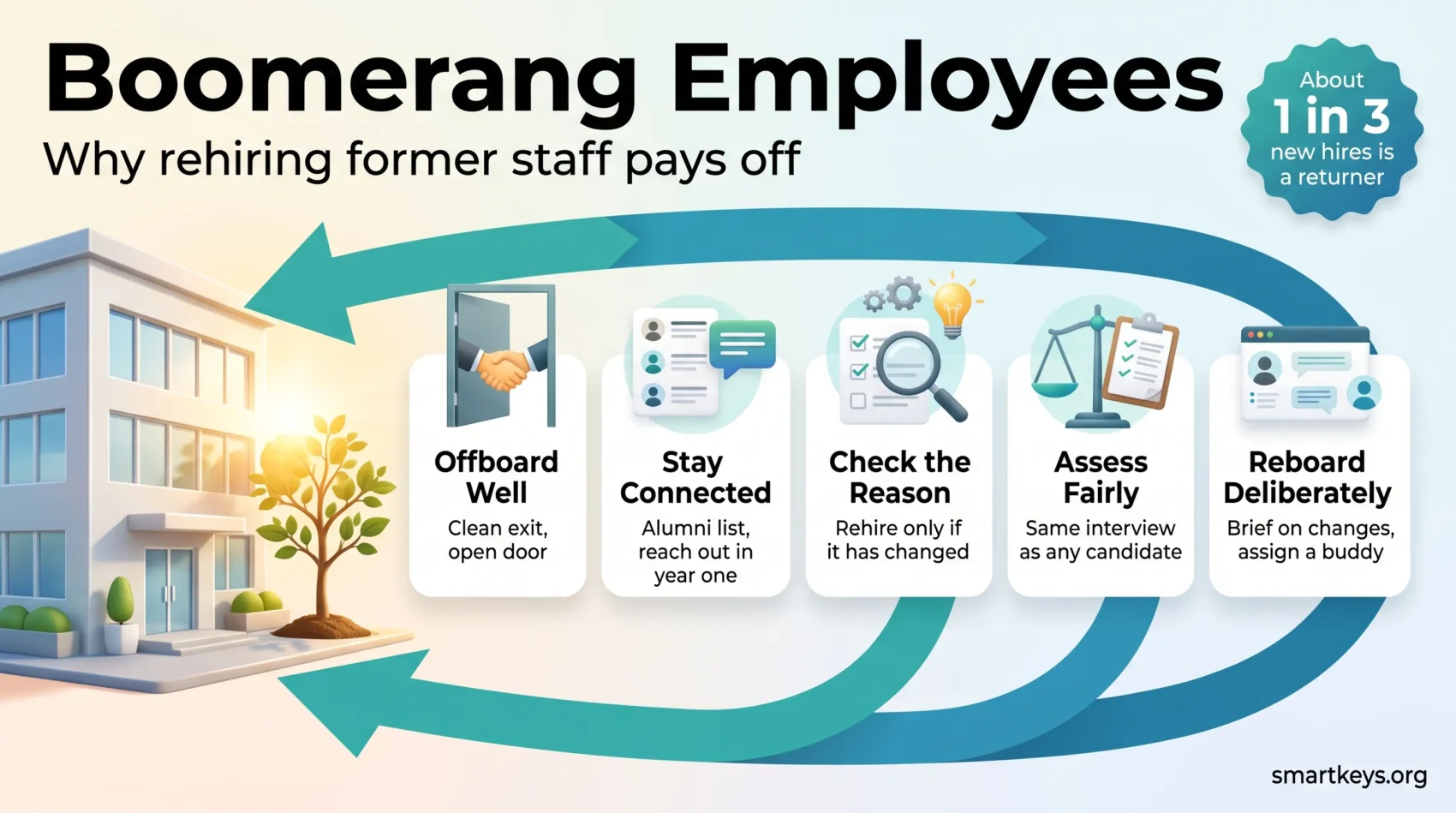
A boomerang employee is someone who leaves your company and later comes back. What used to be an oddity is now one of the most common ways a role gets filled. ADP Research found that returning workers made up 35 percent of all new hires in March 2025, up from 31 percent a year earlier, and that they have averaged 31 percent of new hires since 2018.
Two things explain that. Staying put is no longer the norm: US median job tenure fell to 3.9 years in January 2024, the lowest since 2002 (Bureau of Labor Statistics). And the hiring market has gone quiet, with the quits rate stuck near 2.0 percent through 2026 against roughly 3 percent at the 2022 peak. Fewer people are moving, so employers look harder at the ones who already know the job.
Key Takeaways
- Boomerangs were 35 percent of new hires in March 2025, but only about 2 percent of active staff (ADP Research).
- Median US job tenure is 3.9 years, so most hires leave within about four years.
- Returners ramp up faster because they already know the tools, the products and the people.
- A rehire only works if the reason the person left has actually changed.
- Write the process down: clean offboarding, an alumni list, a rehire policy, reboarding.
What Counts as a Boomerang Employee
A boomerang employee is a professional who leaves an employer and later rejoins it, often in a similar or more senior role. The gap can be months or years. What defines it is not the length of the break but the fact that the relationship restarts with someone who already has history in the company.
The pattern is ordinary. Seasonal retail staff come back each December and some move into permanent roles. A developer joins a startup, learns a new stack, and returns two years later to lead the team they once sat in. People leave for reasons that do not always last: a blocked promotion path, burnout, a difficult manager, or better pay elsewhere.
Keep one number in mind. ADP found boomerangs make up only about 2 percent of the active workforce. They are a large share of hiring events, not of your people. Rehiring is a useful channel, not a staffing plan on its own.
Why Rehiring Is Rising Now
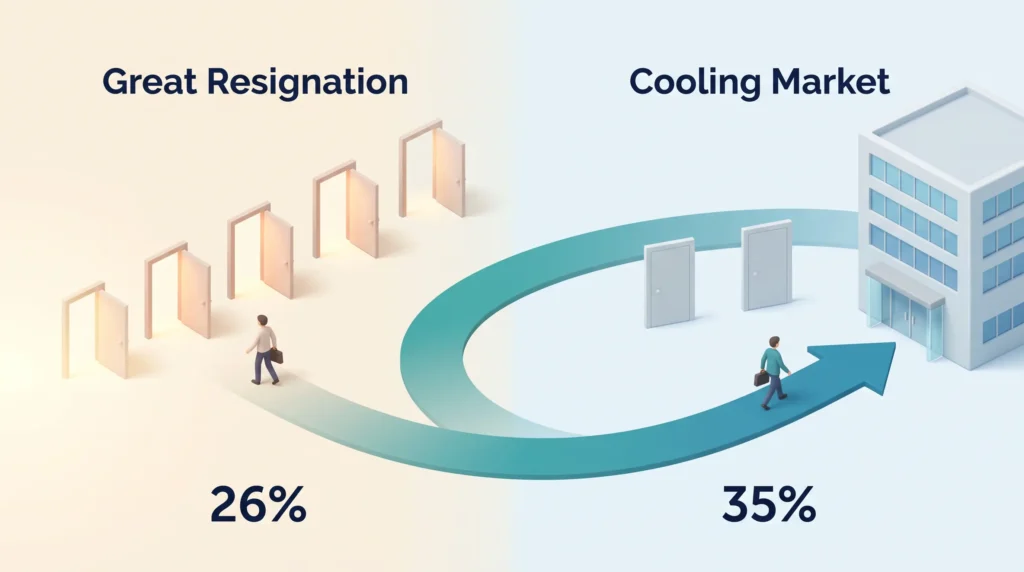
Boomerang hiring moves in the opposite direction to job hopping. During the Great Resignation in early 2022, when workers had offers everywhere, the boomerang share of new hires fell to 26 percent. It climbed back to 35 percent by March 2025 as the market cooled.
The effect is sharpest where hiring slowed most. In the information sector, which covers software, media and telecoms, nearly two thirds of new hires in March 2025 were returners, about double the year before. When open roles are scarce, both sides fall back on a known quantity. That is why alumni belong in your workforce contingency planning rather than in a recruiting slide deck.
What You Actually Gain
The clearest benefit is speed. A returner already knows your product, your tools, your approval chains and half your customers. Onboarding shifts from teaching the basics to briefing on what changed, so they are billing, shipping or selling in weeks rather than months.
The second is signal. When a well-regarded former colleague comes back, current staff read it as proof that leaving is not a betrayal and that the company is worth returning to. It sits alongside every other lever in your talent retention strategies, costs nothing to pull, and tends to show up in your employee engagement numbers.
The third is what they bring back: exposure to different tools, processes and markets. A salesperson returns with a live network, an engineer with an incident process you do not have. Visier’s analysis of its customer database found that returning employees had generally performed at medium to high levels when they resigned, which is a sensible filter to start from.
Where Rehiring Goes Wrong
The most common mistake is assuming the company someone left still exists. Teams get restructured, managers change, priorities move. Say what is different before an offer goes out.
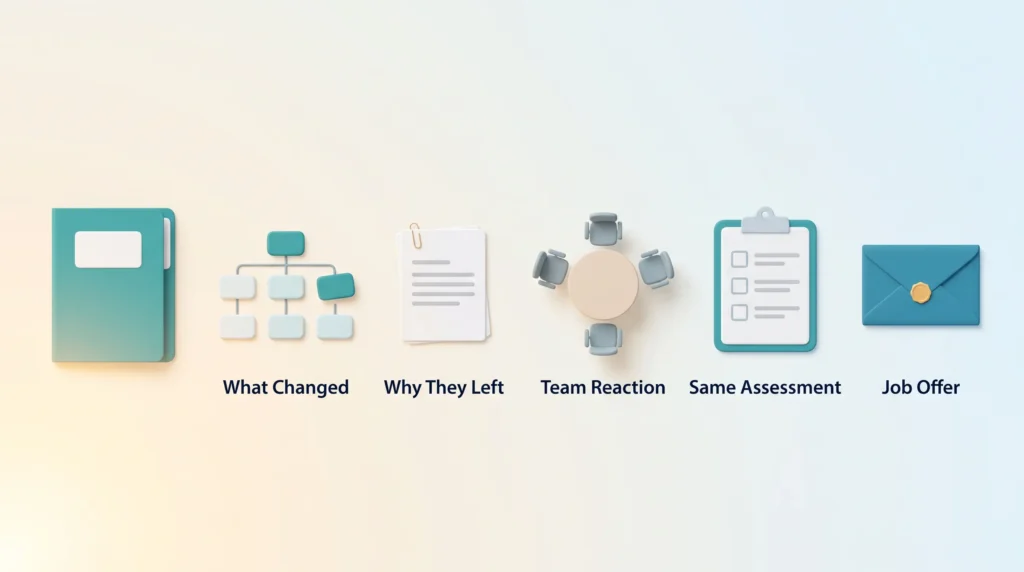
The second is ignoring why they left. If someone resigned over blocked promotions and nothing about your progression model has changed, you are buying the same resignation again. A serious answer means offering a real path: a promotion, a sideways move through a career lattice, or a role posted on your internal talent marketplace.
Third, the team has feelings about it. Colleagues who stayed and covered the extra work may not enjoy seeing the leaver return on a higher salary, and Visier found returners came back with a pay rise of roughly 20 to 25 percent on average. This is where pay transparency either helps you or exposes you. Talk to the team before the rumour does.
Fourth, do not skip the assessment. Familiarity tempts you to wave someone through, so run the same structured interview and reference checks as for anyone else. If screening is automated, note that historical data can quietly favour former staff, one form of bias in algorithmic recruitment tools. Where you are unsure, contract-to-hire arrangements let both sides test the fit on a project first.
Building a Rehire Process That Works
Offboard People Properly
Every rehire starts with the exit. Run a real exit interview, record the reason for leaving, and keep a personal contact address with consent, because work addresses die on the last day. Say clearly that the person would be welcome to apply again, if that is true.
People compare their exit with their entry. A rushed last day, a forgotten handover or a late final payslip costs you the option of a return. Capturing what leavers know protects you either way, which is where knowledge management practices earn their keep.
Keep an Alumni List and Write the Policy Down
Build a simple corporate alumni network: a list, an occasional update, an invitation to events. No software needed. The first twelve months after departure are the best window, because that is when people know whether the new job delivered what it promised.
Then write the policy. Who is eligible to return and who is not. Whether tenure, holiday entitlement or vesting resumes or restarts. Who signs off. How the salary is set, which is easier if you already run performance-based pay models. Ambiguity here turns a good rehire into a grievance.
Train managers to contact suitable alumni directly when a role opens. That habit turns an address book into a real channel, much as talent pipeline partnerships turn university contacts into applicants.
Reboarding: The Part Most Companies Skip
Returning staff are neither new hires nor continuing employees. Standard onboarding wastes their time. No onboarding leaves them guessing about a company that moved on without them. Build a short reboarding plan covering what actually changed: new tools and systems, new team structures and reporting lines, and the initiatives launched while they were away. Two focused days beat two weeks of generic induction.
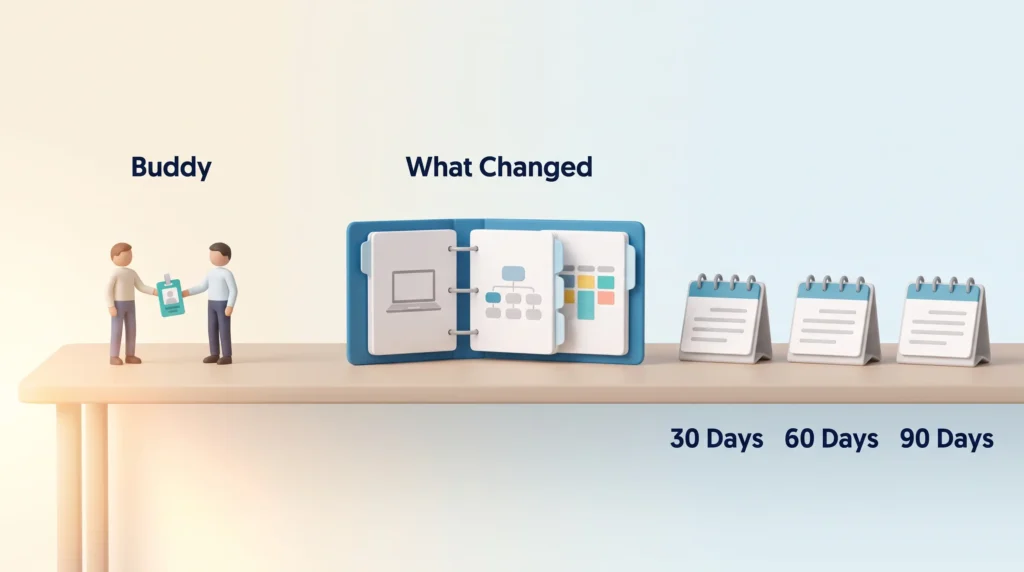
Assign a reintegration buddy who can answer the small questions a returner feels awkward asking, such as which channel replaced the old one. A mentorship matching platform does this at scale, but a named person on day one is the minimum. Then check in at 30, 60 and 90 days and compare how returners score against everyone else in your employee net promoter score.
Ask what they learned elsewhere. Institutional memory plus outside experience is the point of the rehire, and boomerangs often make useful translators in multigenerational teams. A returner who is never asked about their time away is being used as a cheap replacement, and they will notice.
Conclusion
Rehiring former staff is a mainstream channel now, not a curiosity. About a third of new hires in the US worked at the company before, and in slower sectors the share is far higher.
It works when three things line up: the person performed well, the reason they left has genuinely changed, and you reboard them deliberately. It fails when familiarity replaces assessment. It should also not be your only source of flexibility, so pair it with a cross-training strategy and visible career advancement from afar for the people who stayed.
The practical version fits on one page. Offboard people with respect, keep a contact list, write down who may return and on what terms, and reach out inside the first year. Do that and the alumni channel keeps producing candidates. Ignore it and every rehire stays an accident.
Found this useful?
Make SmartKeys a preferred source on Google, and our articles will surface more often in your Top Stories, AI Overviews, and AI Mode.
Add as Preferred SourceFAQ
What is a boomerang employee?
A boomerang employee is someone who leaves a company and is later hired back by it, into a similar role or a more senior one. The gap can be months or years. What matters is that the relationship restarts with a person who already knows the organisation. People return for a range of reasons: the new job did not match the promise, a manager they clashed with has gone, a career break has ended, or the former employer now offers the pay or the role they wanted in the first place.
How common is boomerang hiring?
More common than most people assume. ADP Research reported that returning employees made up 35 percent of new hires in March 2025, up from 31 percent a year earlier and averaging 31 percent since 2018. In the information sector nearly two thirds of new hires that month were returners. The share moves with the labour market: it fell to 26 percent in March 2022, when job hopping peaked, and rose again as hiring slowed. Boomerangs still make up only about 2 percent of all active employees.
Do boomerang employees earn more when they return?
Usually. Visier’s analysis of its customer database found that returning employees came back with a pay increase of roughly 20 to 25 percent on average compared with what they earned when they left. Part of that is the market rate moving while they were away, part is the extra experience they gained. Plan for it before you make an offer: a returner paid well above colleagues in the same band creates a fairness problem that surfaces quickly, especially where salary ranges are published.
What are the biggest risks of rehiring a former employee?
The main risk is that the reason the person left has not changed. If they resigned over blocked promotions, an unmanageable workload or a specific manager, and none of that is different, you will repeat the exit. The second is assuming the company is as they remember it, when structures, tools and priorities have moved on. The third is skipping assessment because the candidate feels familiar. The fourth is the reaction of colleagues who stayed, especially if the returner comes back on a higher salary.
What should a rehire policy cover?
Put the decisions in writing before you need them. Cover who is eligible to return, for example whether people dismissed for conduct are excluded. State whether tenure, holiday entitlement, pension or equity vesting resume or start again. Name who approves a rehire and how the salary is set against your bands. Define the assessment steps, which should match what an external candidate goes through. Finally, describe the reboarding the returner will get. Without this, every case is negotiated from scratch, which is slow and hard to defend.