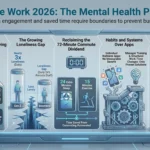
Workplace loneliness is the gap between the connection you want at work and the connection you actually have. It is not the same as working alone. You can feel it in a full office and barely notice it on a distributed team.
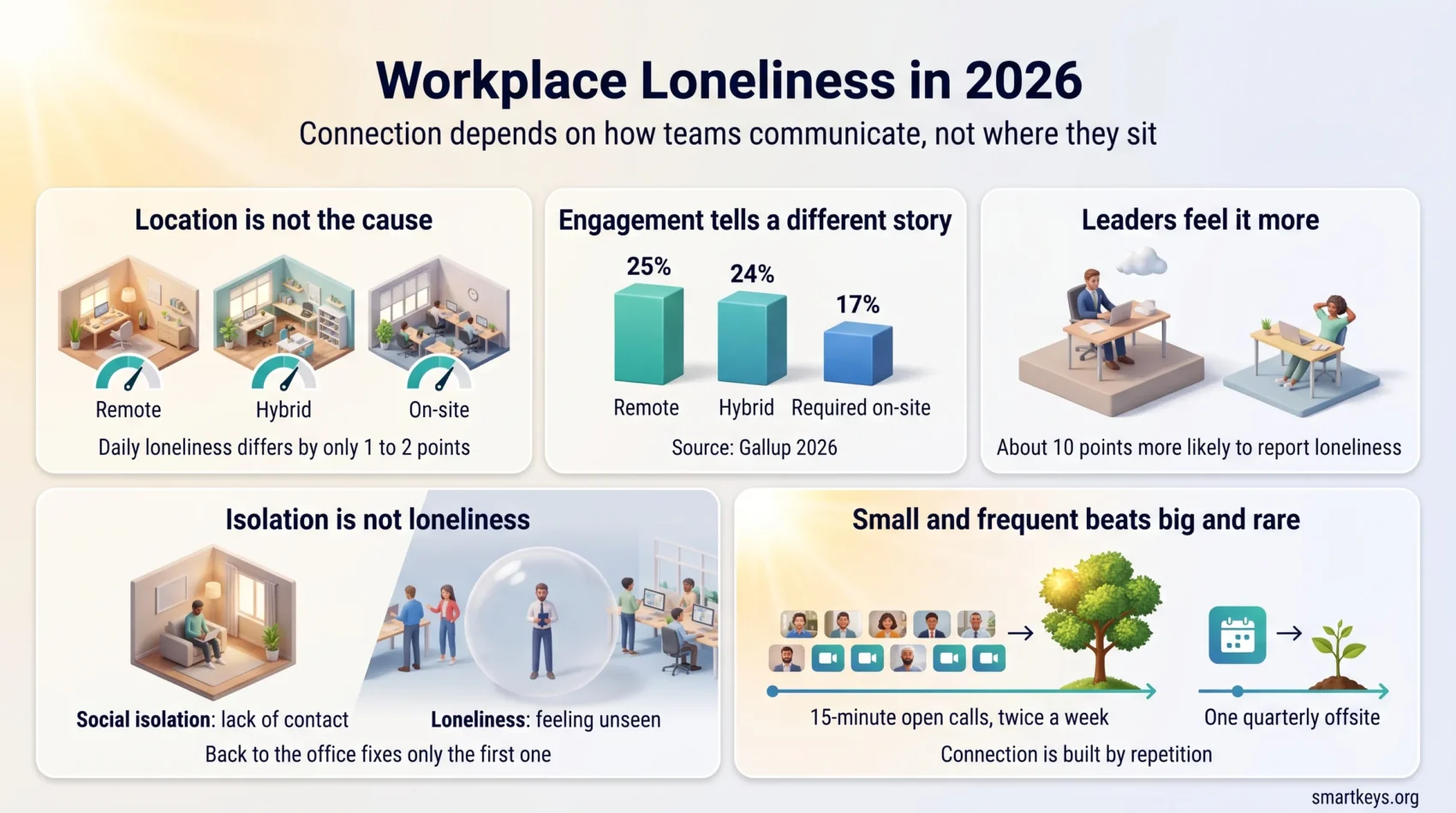
The World Health Organization put numbers on it in June 2025. Around one in six people worldwide feels lonely, and loneliness and social isolation are linked to an estimated 871,000 deaths a year. The WHO also separates two ideas that get mixed up. Loneliness is the painful feeling that comes from a gap between the connections you want and the ones you have. Social isolation is the objective lack of contact with other people.
That difference matters at work. The standard fix, bringing everyone back to the office, addresses isolation and does little about loneliness. Here is what the 2026 data shows and which changes actually help.
Key Takeaways
- Loneliness is a feeling, not a seating plan. Remote, hybrid and on-site workers report it at similar rates.
- Gallup’s 2026 data puts daily loneliness at 19% in the US and Canada and 28% in South Asia.
- Leaders report loneliness more often than the people who report to them.
- Communication norms, optional rituals and trained managers beat social events.
What the 2026 Data Shows About Loneliness at Work
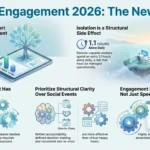
Gallup’s 2026 State of the Global Workplace found global employee engagement fell to 20% in 2025, a second year of decline. Loneliness varies by region: about 19% of workers in the United States and Canada felt lonely a lot of the previous day, against 28% in South Asia and 12% in Latin America and the Caribbean.
The more useful finding is what barely moves. Daily loneliness sat within a point or two across fully remote, hybrid and remote-capable on-site workers. Engagement split sharply instead: 25% of fully remote and 24% of hybrid workers were engaged, against 17% of remote-capable people required on site. On thriving in life overall, remote and hybrid workers reached 45%, the on-site group 32%.
Seniority predicts loneliness better than location. Gallup found leaders more likely than individual contributors to report loneliness on a given day, by around 10 percentage points, along with more stress, sadness and anger. Our overview of what is changing in leadership in 2026 covers the pressure behind that.
An office is not a connection strategy. Eight people on one floor who interact only through a ticket queue will feel more isolated than a distributed team that holds one honest half-hour call a week. The evidence on remote employee engagement and on how remote work settled after the pandemic points the same way.
Recognizing the Signs of Loneliness at Work
Loneliness rarely announces itself. It shows up as something else first, which is why it goes unaddressed for months. Watch for these patterns:
- Contact with the team has shrunk to task updates and nothing else.
- Asking for help feels like an imposition, so questions go unasked.
- Motivation drops on work that used to be interesting.
- Contributions feel invisible, even when the work lands.
- Someone stops speaking in meetings they used to lead.
Age matters. The WHO reports that 17% to 21% of people aged 13 to 29 feel lonely, so early-career colleagues arrive carrying more of this than managers assume.
Chosen time alone and unwanted time alone feel nothing alike. A developer who blocks three hours to concentrate is not lonely. A new joiner who has had no unscheduled conversation in two weeks probably is. When low contact starts affecting sleep, mood or motivation, treat it as a health question, as our guide to remote work and mental health explains.

Strategies to Overcome Workplace Loneliness
Start by auditing how your team communicates. Most teams have too many channels and too little contact. Count where a week’s messages land. If almost everything arrives as a notification and almost nothing as a conversation, people feel busy and unseen at once. Choosing between written updates and live calls is the core skill of asynchronous work, and the trade-offs sit in our guide to asynchronous communication tools.
Then build a mix of contact types rather than adding meetings. Teams need three: focused sessions with a clear purpose, optional drop-in time with no agenda, and one-to-one conversations that are not status reports. The third carries the relationship and is the easiest to let slide. A simple one-on-one meeting template keeps it short and useful.
Rituals help when they are small, repeated and genuinely optional. Weekly wins, rotating coffee pairings and one informal question at the start of a call all work. Never track attendance or expect personal disclosure, or the ritual becomes a performance.
Protect the time this takes. Connection that only happens after hours excludes anyone with caring duties or a different time zone. Managers also need to know what to do when someone is struggling: listen, resist the rush to fix, and know what support exists. Isolation, exhaustion and disengagement arrive together, so this sits close to burnout prevention and managing stress. The evidence on managing employee burnout makes the same point: workload and management are the root cause.
Finally, work on the conditions that make connection possible. People do not open up where information is hoarded or follow-through is unreliable. Building digital trust in remote teams and a culture of open communication are the groundwork; rituals sit on top.
Building Deeper Connections for Enhanced Wellbeing
Belonging is not the same as socialising, and treating them as identical is why connection programmes fail. Employee resource groups, mentoring pairs and interest-based channels let people find each other around something real, without requiring anyone to be outgoing. That matters for colleagues who find unstructured social time draining, as our guide to neurodiversity and inclusion at work covers in detail.
Offer more than one format. Some people connect in a room, some in a shared document, some while volunteering together. An occasional desk day gives distributed teams the in-person option without a daily commute, and corporate coworking partnerships are one way to fund it.
Be honest about the limits of work. A meta-analysis led by Julianne Holt-Lunstad at Brigham Young University, published in PLOS Medicine in 2010, found people with stronger social relationships had roughly a 50% higher likelihood of survival across the periods studied. Colleagues are part of a social life, not a substitute for one. Benefits that fund connection outside work, such as employee wellbeing stipends or the wider approach in employee wellness for virtual teams, age better than another team-building afternoon.
Practical Tips for Re-Establishing Connection in Remote Teams
Investing in Social Engagement Activities
Keep the pressure low. Virtual lunches, interest groups and optional coworking sessions work because people can arrive and leave without explaining themselves. Small and frequent beats large and rare: a 15-minute open call twice a week outperforms a quarterly offsite. Give the team one obvious place where its conversation lives, so joining in does not mean checking six tools. Our look at hybrid workspaces and employee wellbeing shows how much of this is design rather than enthusiasm.
Fostering a Culture of Trust and Belonging
Managers set the tone by being predictable. Do what you said you would do, make sure quiet people get airtime, and notice contributions out loud. Regular feedback rather than an annual verdict keeps people connected to how their work is seen, which is the case for continuous performance management. Relationships are also one of the strongest levers in most talent retention strategies. Asking how a colleague’s weekend went, and remembering the answer, beats any single event.
Conclusion
Loneliness at work is a real cost. The 2026 evidence spreads it evenly across remote, hybrid and office-based teams, which is encouraging: if location were the cause, most organisations would be stuck.
Name the signs so people recognise them. Cut channel noise, protect one-to-one time, keep rituals optional, and train managers to respond well. Connection is built by repetition, not by events.
Found this useful?
Make SmartKeys a preferred source on Google, and our articles will surface more often in your Top Stories, AI Overviews, and AI Mode.
Add as Preferred SourceFAQ
What are the signs that you are lonely at work?
The clearest sign is that contact with your team has shrunk to task updates and nothing else. Other signals are hesitating to ask for help, losing interest in work you used to enjoy, feeling that contributions go unnoticed, and going quiet in meetings where you used to speak. Loneliness often looks like low motivation first, so it is easy to misread. If you cannot remember your last unscheduled conversation with a colleague, pay attention.
Does going back to the office fix workplace loneliness?
Usually not on its own. In Gallup’s 2026 State of the Global Workplace, daily loneliness was almost the same for fully remote, hybrid and on-site workers, while engagement and life satisfaction were lower among remote-capable people required to work on site. Sitting near colleagues creates no conversation if the day is booked solid or coordination happens through tickets. Office time helps when it is designed around shared work, not attendance.
How can I improve my connections with colleagues?
Start with repetition rather than intensity. Pick two or three colleagues and set up a short recurring call that is not about status. Ask one question about something other than work and remember the answer. Join an interest channel or a drop-in session where leaving early is normal. Connection grows from many small contacts, so a 15-minute chat every week beats one long social event a quarter.
How can I encourage my team to talk about loneliness?
Make it normal before you make it personal. Say in a team setting that isolation is common and that Gallup finds leaders report it too, which removes the sense that admitting it is a weakness. Then create private routes: regular one-to-ones that are not status reports, and an anonymous pulse question. When someone speaks up, listen without rushing to solve it, and know what support your organisation offers.