A deepfake is audio, video, or an image created by artificial intelligence to make a real person appear to say or do something they never did. Deepfake fraud is what happens when criminals point that technology at your company: a cloned voice on the phone, a familiar face on a video call, a payment request that feels routine because it seems to come from someone you already trust.
These attacks rarely break through your firewall. They persuade a person to open the door instead. That is why they succeed at companies with solid technical security, and why the defense belongs in your payment process and your verification habits as much as in your IT stack.
This guide explains how the attacks work, what the verified numbers show, and which controls stop the common scenarios. It also covers what changed on 2 August 2026, when the EU AI Act transparency rules began to apply.
Key Takeaways
- Deepfake fraud uses AI-generated voice, video, or images to impersonate someone the target already trusts.
- In a Deloitte poll of more than 1,100 executives, about 26 percent said their organization had faced at least one deepfake incident aimed at financial or accounting data in the previous year.
- Two documented cases show the range: $243,000 lost by a UK energy firm in 2019, and roughly $25 million lost by engineering group Arup in 2024.
- Callbacks to known numbers, dual approval on payments, and phishing-resistant multifactor authentication stop most attempts.
- Since 2 August 2026, the EU AI Act requires deepfake content to be disclosed to the people who see it.
Deepfake Fraud: Unpacking the AI Impersonation Threat
AI impersonation means using synthetic media, meaning images, audio, or video generated by software rather than recorded from life, to make someone appear to be a trusted executive, a supplier, or a colleague. The goal is almost never the technology itself. The goal is a transfer, a credential, or a file.
Fraudsters exploit trust rather than technical gaps. A convincing voice on a call can talk an employee into approving a payment that no firewall would ever see, because the payment is authorized through the normal channel by someone with the authority to request it. That is the whole trick.
The scale is easier to judge from survey data than from headlines. Deloitte polled more than 1,100 C-suite and other executives in May 2024. Around 26 percent reported at least one deepfake incident targeting their financial or accounting data in the prior twelve months, and 51.6 percent expected such attacks to grow in number and size. Almost 10 percent said their organization did nothing at all to guard against them. (Source: Deloitte, “Half of Executives Expect More Deepfake Attacks on Financial and Accounting Data in Year Ahead”, 21 May 2024.)
What separates these attacks from ordinary edited media is consistency. The small errors people normally notice are gone. Add a plausible reason to hurry, and any check that rests on a single familiar voice or channel stops working.
What Are Deepfakes and How Do They Work?
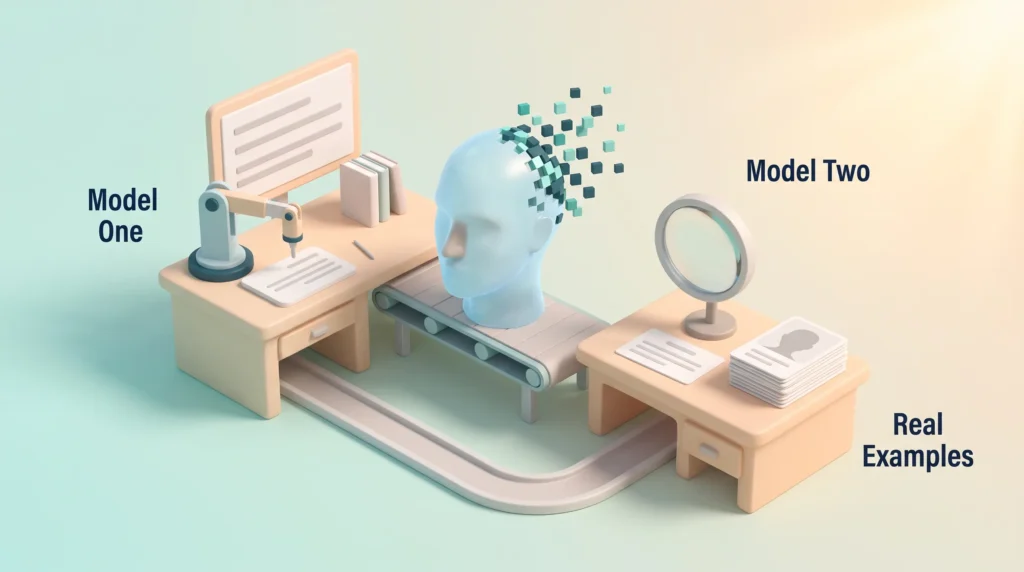
Most deepfakes come out of a setup called a generative adversarial network, or GAN, which is two AI models trained against each other. One model produces fake content. The second model tries to tell the fake from real examples. Each round, the first model gets a little better at fooling the second. After enough rounds, the output holds up to a casual look.
Voice is the cheapest target. McAfee research published in 2023 found that roughly three seconds of recorded audio was enough to produce an 85 percent match to a person’s voice using freely available tools. Three seconds is a voicemail greeting, a conference talk, or a clip from a company video.
Video takes more work but is no longer exotic. Face-swapping puts one person’s face onto another person’s movements, and real-time processing does this during a live call. That turns a video meeting from a verification step into an attack surface.
Two things follow. Seeing a familiar face is no longer evidence of identity, and the raw material for faking your executives is usually already public, sitting in webinars and earnings calls.
The Evolution of Deepfake Scams and Fraud Techniques
The first widely reported business case dates to March 2019. Criminals cloned the voice of the German chief executive of a UK energy firm’s parent company and called the UK managing director, who transferred roughly $243,000 to an account in Hungary. The case became public through the firm’s insurer, Euler Hermes, and was first reported by the Wall Street Journal. A single call, a familiar accent, and an urgent supplier payment were enough.
By 2024 the attacks had moved to video. An employee in the Hong Kong office of engineering group Arup joined what looked like a routine video conference about a confidential transaction. The chief financial officer and several colleagues on the call were all AI-generated. The employee approved transfers totaling about HK$200 million, roughly $25 million. Arup later confirmed that false voices and images had been used.
The pattern repeats across three common shapes. Executive impersonation targets finance staff with an urgent, confidential payment. Vendor or supplier fraud uses a cloned contact to change bank details on a real invoice. Credential attacks use a familiar voice to talk an IT administrator into a password reset or an access change.
Reported losses give a sense of the surrounding volume. The FBI’s Internet Crime Complaint Center logged 1,008,597 complaints and $20.877 billion in reported losses for 2025. Business email compromise alone accounted for 24,768 complaints and about $3.05 billion. Deepfake tooling does not create these categories; it makes the persuasion step in them far more reliable.
Recognizing Warning Signs and Behavioral Cues in Deepfake Attacks
Technical tells still exist. On video, watch for lip movement that drifts out of sync, mechanical blinking, lighting that does not match the room, and shimmering edges around hair or glasses. On audio, listen for flat emotion, pauses in odd places, and background noise that cuts in and out.
Do not rely on those cues alone. The 2019 voice clone matched the executive’s tone, accent, and cadence closely enough that the person on the other end had no reason to doubt it. Detection by ear is a bonus, not a control.
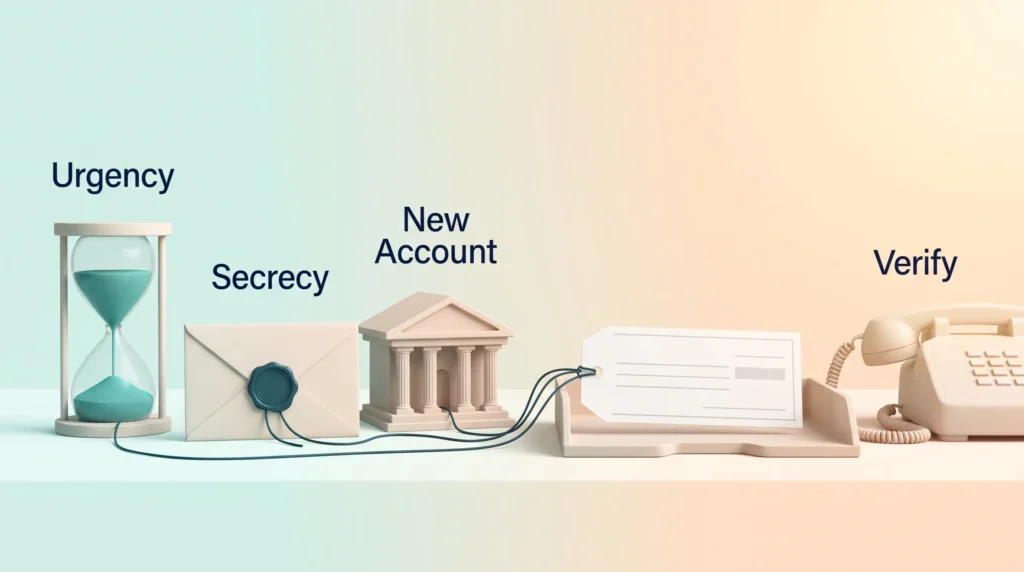
The behavioral signals are more dependable, because the attacker needs them to succeed. Urgency is the constant: a deadline that leaves no time to check. Secrecy is the second: a request not to involve the usual approvers, often framed as confidentiality around an acquisition or a legal matter. The third is a change of destination: a new bank account, a new country, or a payment method the counterparty has never used before.
The rule for staff is simple: the more a request combines authority, urgency, and secrecy, the more verification it needs. That reflex belongs in your wider cybersecurity program, not in one annual reminder.
Advanced Tools and Technologies to Combat Deepfake Fraud
No detection tool is reliable enough to stand alone, so the useful technologies check the transaction rather than the media.
Behavioral analytics compares a request against normal patterns: time of day, device and location, payment size, and whether this requester has ever asked for anything similar. Unusual combinations get held for review, which catches attacks that sound perfect to a human ear.
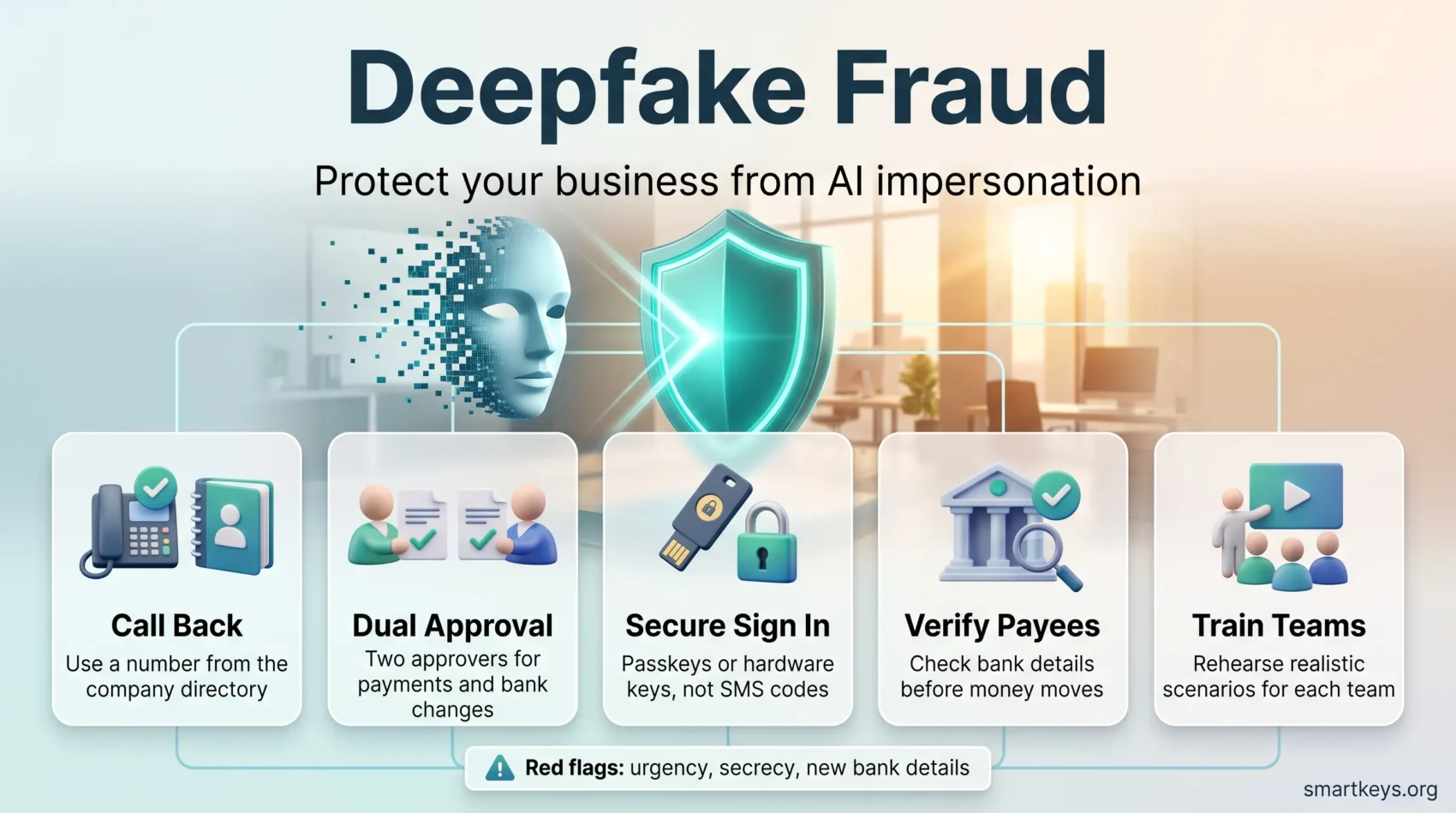
Payee verification, sometimes sold as confirmation of payee, checks bank details against an authoritative source before money moves. It defeats the most common goal of these scams, redirecting a legitimate payment. Many finance automation platforms now include this step, and RegTech tools can automate the audit trail around it.
Phishing-resistant multifactor authentication, meaning hardware security keys or passkeys rather than codes sent by SMS, protects accounts even when an attacker successfully talks an employee into cooperating. A cloned voice cannot produce a physical key. Pair it with the continuous checks of a zero-trust security model, which treats every request as unverified regardless of how familiar the requester seems, and with a distributed cybersecurity mesh if your systems are spread across cloud providers and offices.
Detection software for synthetic media has a place, but treat its output as one signal among several. Attack tools improve faster than detectors do. Put the controls in a documented risk management framework so responsibility for each step is clear.
Secure Verification Protocols for Authenticating Identities
Process beats technology here. Four controls cover most realistic scenarios, and none require new software.
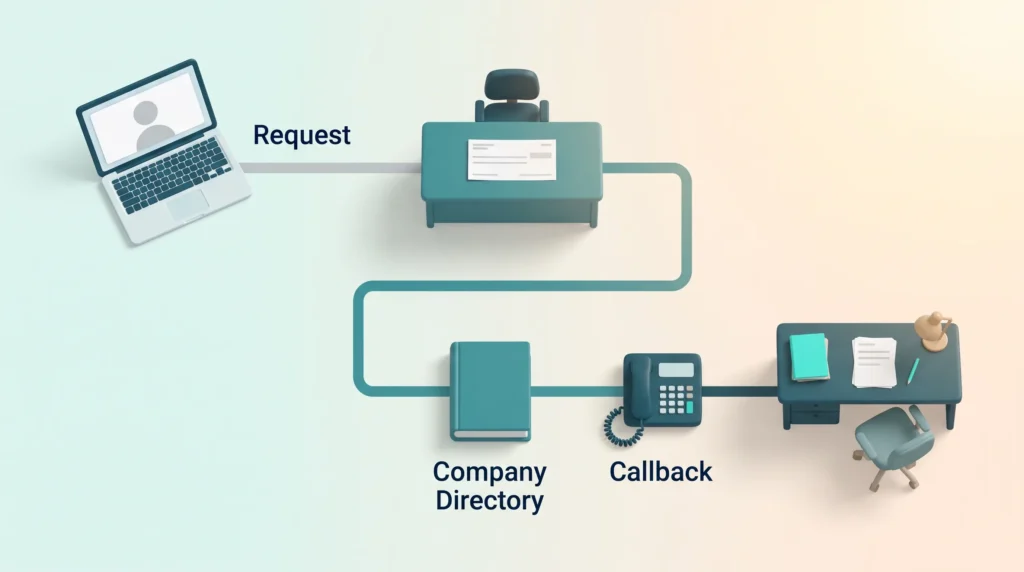
Out-of-band callbacks are the single most effective step. When a sensitive request arrives, the recipient calls back on a number from the company directory, never a number supplied in the request itself. If the request is genuine, the call takes thirty seconds. If it is not, the attack ends there.
Rotating code phrases give executives and finance staff a shared secret for voice and video requests. The phrase changes weekly and never travels through the same channel as the request. An attacker who cloned a voice still does not know this week’s word.
Dual approval means a second named person signs off on wire transfers above a threshold and on any change to stored bank details. Both documented cases above involved a single approver acting alone under pressure. A second signature removes the conditions the attack needs.
Finally, treat any change of bank details as a new counterparty, not an update. Verify it through a known contact, log who did so, and apply the same care during digital procurement. Approaches such as decentralized identity and biometric authentication help over time, though biometrics need liveness checks of their own.
Enhancing Corporate Security Through Employee Training
Generic awareness slides do not prepare anyone for a convincing voice on a Tuesday afternoon. Training works when it matches the scenario each team will actually face.
Finance staff should rehearse an urgent wire request from a senior name and practice saying no until a callback confirms it. IT administrators should rehearse a supposed vendor asking for a password reset. HR and communications teams should know that leadership video can be faked, so an unexpected policy clip needs confirming before it circulates. Build this into your corporate training program.
Two supporting policies help. Clear generative AI usage guidelines tell staff what the technology can and cannot do, which makes the risk concrete. A realistic approach to unapproved tools matters too, because employees who hide the software they use will also hide the odd request they received through it.
Collaboration, Reporting, and What Regulators Now Expect
Attackers reuse what works. Companies that share indicators, such as the pretexts used and the accounts involved, spot repeat patterns before the next organization loses money. Sharing methods does not require sharing customer data.
Reporting matters just as much. In the United States, FinCEN issued alert FIN-2024-Alert004 on 13 November 2024, warning that criminals were using deepfake media, including fraudulent identity documents, to get past identity verification and due diligence checks at financial institutions. Suspected incidents belong in a suspicious activity report; in the US, losses should also go to the FBI’s Internet Crime Complaint Center, which is where the annual loss figures come from in the first place.
European rules changed in 2026. Article 50 of the EU AI Act has applied since 2 August 2026. It requires deployers to disclose deepfake content to people at first exposure, and providers of generative systems to mark their output in a machine-readable way. Penalties reach 15 million euros or 3 percent of worldwide annual turnover. This does not stop criminals, who ignore the rules anyway, but it does affect your own use of synthetic media in marketing and training, so it belongs in your EU AI Act compliance work alongside the broader picture of AI regulation. An internal AI governance model and a documented privacy compliance framework make the obligations easier to evidence.
Testing Your Defenses With Realistic Simulations
Simulations turn policy into a habit. Send a finance team a mock urgent payment request from a cloned senior voice, then measure what happened: did anyone approve it, how long until someone called back on a known number, and did anyone report it.
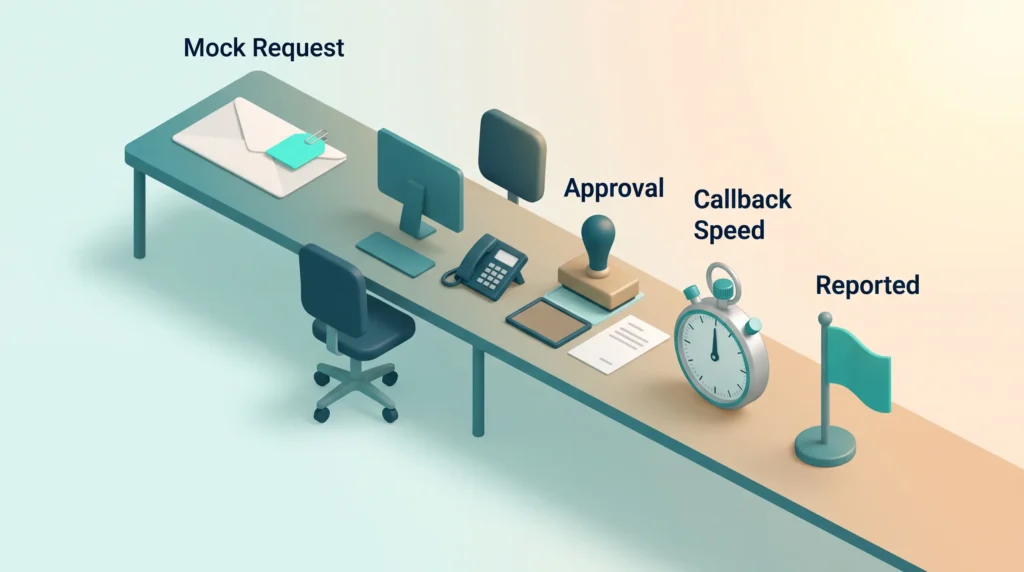
Those measurements are the point. Recognition speed and reporting rate show whether the process holds under pressure; an approval shows where to focus next. Run the exercise quarterly, keep it blameless, and share afterwards what the attack looked like.
Distributed teams need this most, because a video call is often the only face-to-face contact there is. The same logic drives digital trust in remote teams and everyday cybersecurity in remote work.
What Changes Next in AI-Powered Fraud
The direction of travel is clear even where precise forecasts are not. Deloitte’s Center for Financial Services estimated in May 2024 that generative AI could push fraud losses in the United States from $12.3 billion in 2023 to as much as $40 billion by 2027, a compound annual growth rate of about 32 percent. Treat that as a scenario rather than a certainty, but the underlying driver is real: the cost of producing a convincing fake keeps falling.
Three shifts are worth planning for. Cheap real-time video makes live calls a routine attack channel. Biometric checks need liveness detection that separates a live face from a replayed one. And as attackers automate, the useful answer is faster validation before money moves, not more scrutiny afterwards.
None of this replaces the basics. Verification habits, dual approval, and phishing-resistant authentication age well, which is more than can be said for most detection tools. Keep them current alongside your wider data privacy obligations and longer-term projects such as quantum-safe encryption.
Conclusion
Deepfake fraud borrows trust that already exists. It pairs realistic voice and video with ordinary social pressure, and it targets people rather than systems.
The documented losses, $243,000 in the UK in 2019 and about $25 million at Arup in 2024, share one feature: an unverified request was approved by someone acting alone and in a hurry. That is the condition to remove.
A workable defense is layered and unglamorous. Verify sensitive requests through a second channel, require two approvers for money and access, use phishing-resistant authentication, validate payee details before payment, train each team on the scenario it will meet, and report what you see. Trust your colleagues, and still verify every identity, request, and destination before anything of value changes hands.
Found this useful?
Make SmartKeys a preferred source on Google, and our articles will surface more often in your Top Stories, AI Overviews, and AI Mode.
Add as Preferred SourceFAQ
What is deepfake fraud?
Deepfake fraud is a scam that uses AI-generated voice, video, or images to impersonate someone the victim trusts, usually to trigger a payment or hand over access. It is social engineering with better props: the attacker does not break into a system, but convinces an employee to act through the normal, authorized channel. That is why the effective defenses sit in payment and verification processes rather than in network security alone.
How can I tell if a video call or voice message is a deepfake?
Look for lip movement that drifts out of sync, mechanical blinking, lighting that does not match the room, and audio with flat emotion or pauses in odd places. Treat these as hints only, because good fakes no longer show them. The reliable signals are behavioral: urgency that removes time to check, secrecy that bypasses normal approvers, and an unusual payment destination. When those appear together, verify through a separate channel before acting.
What is the single most effective control against deepfake fraud?
An out-of-band callback. When a sensitive request arrives, the recipient calls back on a number taken from the company directory, never one provided in the request itself. It costs under a minute for a genuine request and ends a fraudulent one immediately. Pair it with dual approval on wire transfers and on any change to stored bank details. In both widely documented business cases, a single approver acted alone under time pressure.
How much audio do attackers need to clone someone’s voice?
Very little. McAfee research published in 2023 found that around three seconds of recorded speech was enough to produce an 85 percent match to a person’s voice using freely available tools. Three seconds is a voicemail greeting or a sentence from a webinar, and for most executives that material is already public. The practical response is to assume any voice can be copied, and to make sure no single voice can authorize a payment.
What do the 2026 rules require companies to do about deepfakes?
Article 50 of the EU AI Act has applied since 2 August 2026. Organizations that publish deepfake content must disclose it to viewers at first exposure, and providers of generative AI systems must mark their output so machines can detect it. Penalties reach 15 million euros or 3 percent of worldwide annual turnover. These rules govern legitimate use of synthetic media, so they shape your own marketing and training material rather than protecting you from attackers.