Where your data physically sits has turned into a board-level question. Regulated records, model training sets and administrator sessions routinely cross jurisdictions that apply very different rules to the same bytes, so data residency, the question of where information is stored and processed, now shapes architecture decisions once settled on price and latency alone.
A sovereign cloud is the operating model that answers this. Instead of building an owned data center in every regulated market, you buy cloud capacity whose location, operators, legal ownership and key custody are contractually pinned down and independently evidenced.
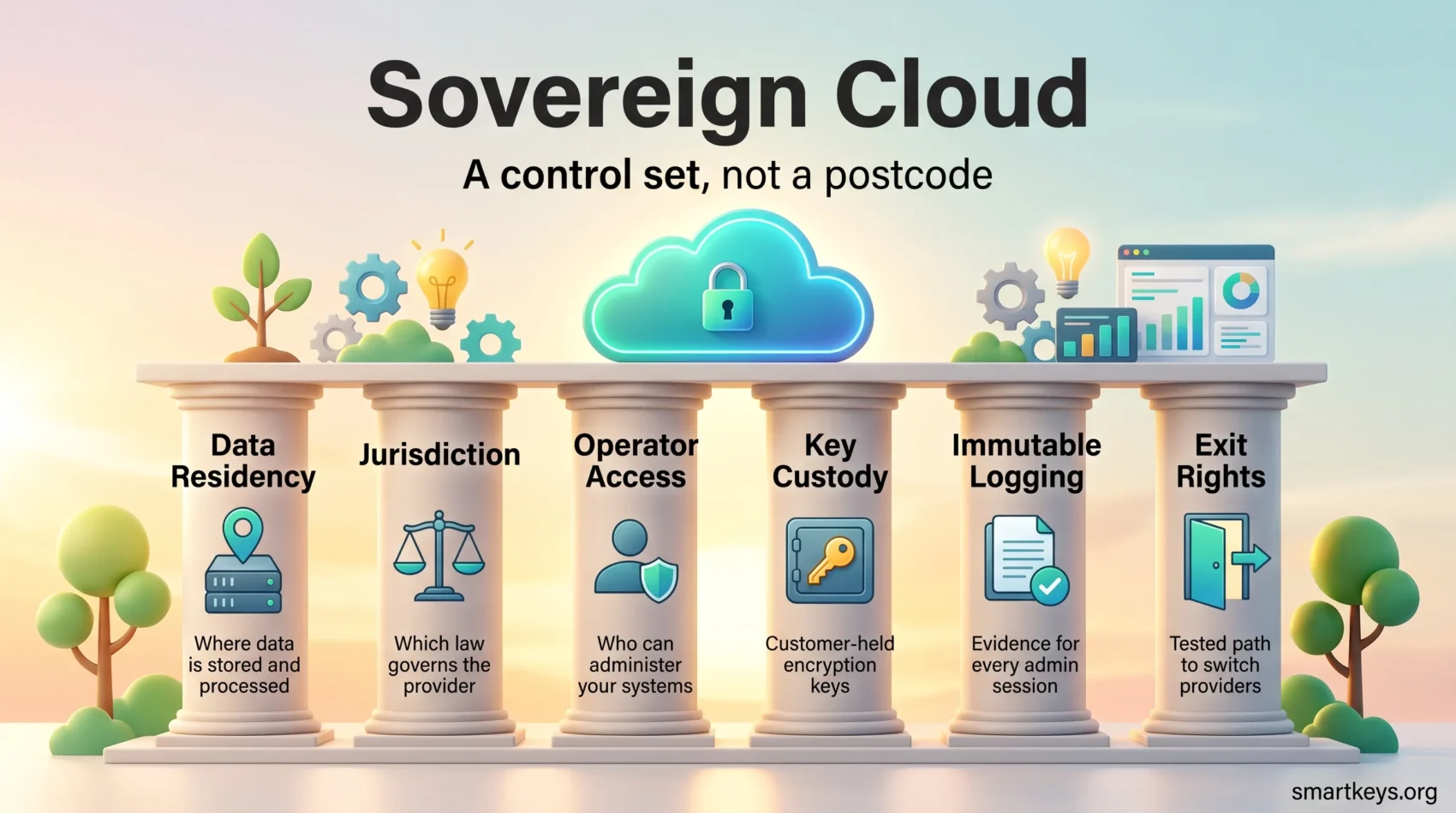
Sovereignty is broader than storage: it covers who can access your systems, under whose law, with which keys, and how quickly you could leave. It covers personal data, intellectual property, financial records and, increasingly, AI training data and model artefacts.
This guide covers the 2026 regulatory picture, the EU Cloud Sovereignty Framework and its SEAL levels, what providers actually shipped, and how to verify a sovereignty claim.
Key Takeaways
- Sovereignty is a control set, not a postcode: residency, jurisdiction, operator access, key custody, logging and exit.
- The EU Cloud Sovereignty Framework scores providers on eight objectives and five SEAL levels.
- Under the EU Data Act, cloud switching charges disappear entirely on 12 January 2027.
- The European Supervisory Authorities designated 19 critical ICT third-party providers under DORA in November 2025.
- Provider jurisdiction beats hosting location: a US-headquartered vendor can face CLOUD Act obligations for EU-stored data.
Understanding Digital Sovereignty and Data Residency
Digital sovereignty rests on four tenets: data residency, data privacy, security and resiliency, and legal control. Each answers a different auditor question, and a strategy covering only one will fail the other three.
Residency describes where information is stored and processed; sovereignty describes which laws govern its collection, use and disclosure. You can satisfy residency perfectly and still be exposed if the entity operating the service answers to a foreign court.
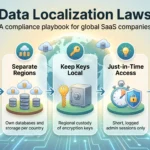
Requirements also move. EU organizations sit under EU regulation plus national rules in markets such as Germany and France, and those layers change faster than the EU baseline, much like data localization laws elsewhere.
The practical response is governance you can evidence: a data classification scheme, a current data map, recurring access reviews, and architecture decisions documented well enough to survive an audit. Treat it as part of your risk management framework, not a one-off project.
Defining What is a Sovereign Cloud?
A sovereign cloud delivers normal cloud economics under enforceable local control. It can be a provider-operated public region, a dedicated environment reached over a private connection, or an isolated deployment inside your own facility.
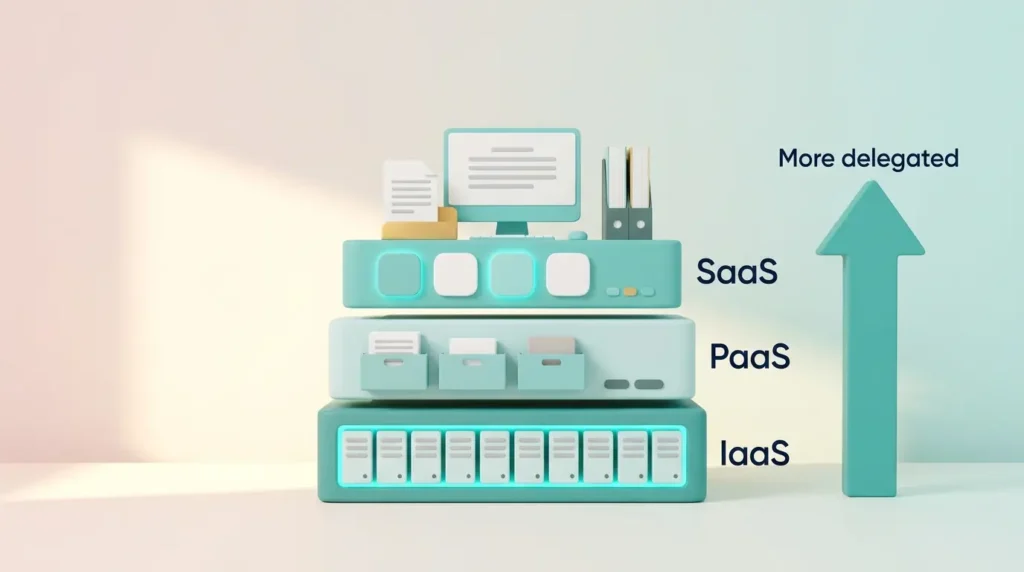
Service model changes what you can control. NIST SP 800-210 describes how access-control patterns differ across IaaS, PaaS and SaaS, the infrastructure, platform and software layers you can rent. A weakness at a lower layer propagates upward. The higher up the stack you buy, the more sovereignty you delegate.
Security and privacy remain shared. The provider secures the substrate; you configure and monitor identity, encryption, network boundaries, logging and retention. No sovereignty label removes that half of the work, which is why sovereign deployments need the same cloud-native architecture discipline as any other platform.
The Regulatory Landscape for Cloud Computing in 2026
Four instruments now do most of the work in Europe, and each pushes on a different control.
The GDPR, the EU’s general data protection law, sets the baseline for personal data. National rules layer on top and create overlapping obligations across member states, which is where wider data privacy trends meet cloud architecture. Beneath it sits the 2018 US CLOUD Act, which lets US authorities compel US-based providers to produce data in their possession, custody or control regardless of where the servers stand. That single asymmetry drives most European sovereign cloud programmes.
The EU Data Act and the right to switch
The EU Data Act has applied since 12 September 2025 and turns portability into an enforceable obligation. Providers must remove contractual, technical and commercial obstacles to switching, publish their switching procedures, and offer reasonable assistance and open interfaces.
The timetable is concrete: a maximum notice period of two months, then a transitional period of up to 30 days to complete the move. Until 12 January 2027 providers may charge only up to the costs they directly incur; from that date switching charges are generally prohibited. Exit terms are no longer a negotiation. They are a compliance baseline you should test.
DORA and direct supervision of cloud providers
The Digital Operational Resilience Act has applied to EU financial entities since 17 January 2025, covering ICT risk management, incident reporting, resilience testing and third-party oversight. On 18 November 2025 the European Supervisory Authorities designated 19 critical ICT third-party providers, including hyperscale cloud, data center and network providers, placing them under direct European oversight.
For regulated buyers that changes the conversation. Supervisors now examine concentration risk on their own initiative, and firms are expected to show credible exit and substitution plans.
EUCS: still unfinished
The European Cybersecurity Certification Scheme for cloud services (EUCS) is often cited as if it were in force. It is not. The scheme has been stalled for years over whether sovereignty requirements, such as immunity from non-EU law, belong in a security certification at all.
Plan around that gap. Until EUCS lands, contractual commitments, national certifications and the Commission’s own procurement framework carry the weight, which makes staying current on cybersecurity trends part of the job.
Inside the EU Cloud Sovereignty Framework and SEAL Levels
The most useful development for buyers is not a new law but a scoring model. The European Commission published its Cloud Sovereignty Framework to structure sovereign cloud procurement, giving the market a shared vocabulary that marketing cannot easily borrow.
It rates services on a Sovereignty Effectiveness Assurance Level, or SEAL, from SEAL-0 to SEAL-4:
- SEAL-0: no sovereignty; exclusive non-EU control.
- SEAL-1, jurisdictional sovereignty: EU law formally applies, but enforceability is limited and control stays with non-EU parties.
- SEAL-2, data sovereignty: EU law applies and is enforceable, though material non-EU dependencies remain.
- SEAL-3, digital resilience: EU actors hold meaningful influence, with only marginal non-EU control.
- SEAL-4, full digital sovereignty: complete EU control, no critical non-EU dependencies.
Scores build on eight objectives: strategic ownership, legal exposure to non-EU law, data and AI access control, EU operational capability, supply-chain and technology transparency, open standards and lock-in avoidance, security aligned to GDPR, NIS2 and DORA, and sustainability.
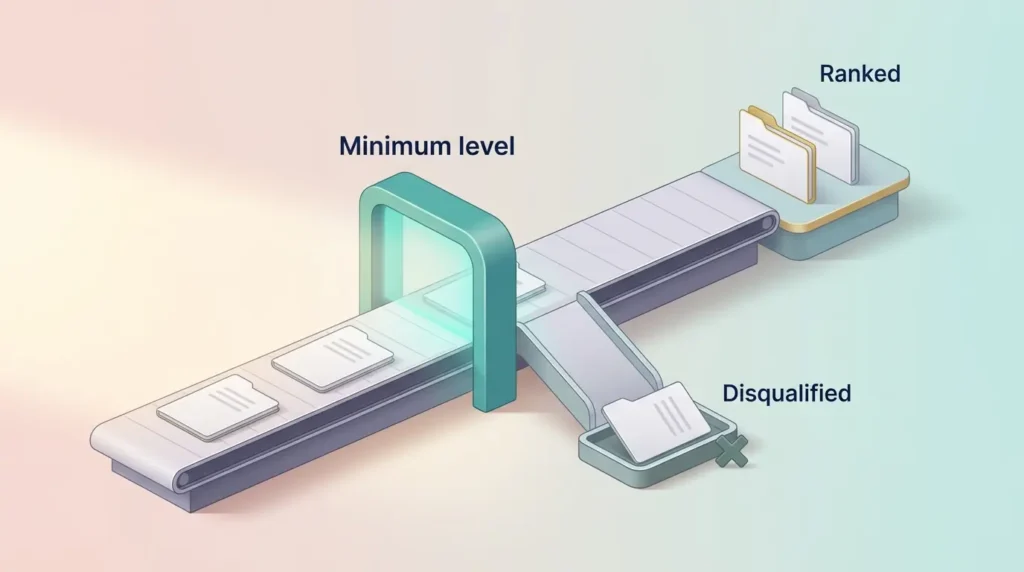
Two mechanisms make the model strict. Every objective carries a minimum required SEAL level, and missing it on a single objective disqualifies the bid outright; only then are the remaining bids ranked by weighted score. A provider cannot offset a legal-jurisdiction weakness with excellent sustainability reporting.
Private buyers can borrow both: the eight objectives make a serviceable vendor questionnaire, and the floor mechanism forces you to decide which requirements are pass or fail before you look at price.
Achieving Data Control and Compliance in Your Cloud Strategy
Sovereignty becomes real when encryption, key custody, access governance and logging turn into repeatable operations with named owners.
Data Encryption and Key Management
Coverage has to be complete, because attackers and subpoenas both target gaps. Encrypt across:
- Databases and object storage
- Applications and containers
- APIs and interfaces
- Backups, snapshots and replicas
Customer-managed master keys, held in vaults the provider cannot reach, are what separates a residency promise from a control. Hardware security modules, dedicated devices that hold keys in tamper-resistant hardware, add enforced key rotation and access logging. They also signal attacks against cryptographic material rather than failing silently. If you are already planning for quantum-safe encryption, treat key custody and algorithm agility as one project.
In transit, TLS 1.2 or later with X.509 certificates is the baseline and TLS 1.3 the sensible default. TLS is the protocol that encrypts traffic between two systems. Where regulators demand link-layer protection on Ethernet, MACsec as defined in IEEE 802.1AE encrypts frames between adjacent devices, which matters for dedicated interconnects between sites.
Effective Access Governance
Least-privilege roles, phishing-resistant multifactor authentication and scheduled entitlement reviews are the difference between an access policy and an access claim. Log administrative sessions immutably, including provider-side support access. A cybersecurity mesh architecture and decentralized identity help when identities span several environments.
Exploring Core Features of Sovereign Cloud
Six capabilities separate a genuine sovereign offering from a regional data center with a new brochure:
- Access restrictions: screening by citizenship, clearance and location for anyone who can touch the platform.
- Location control: declared locations for primary sites, partner facilities and disaster recovery.
- Regulatory alignment: local legal entities and certifications matching the obligations you carry.
- Operational support: support and on-call teams inside the permitted jurisdiction.
- Dedicated network capacity: from encrypted private links to fully air-gapped regions, meaning regions with no connection to the public internet.
- Layered encryption: at rest, in transit and in use, with customer-held keys.
Location planning deserves attention. Backups and recovery sites usually have to stay in the same jurisdiction as production, and a recovery region quietly placed elsewhere is a common way residency commitments break.
Benefits of Implementing a Sovereign Cloud in Your Organization
The obvious benefit is market access: without a defensible residency story, some contracts and public tenders are closed to you. The less obvious ones matter more.
Continuity improves because sovereign designs force explicit answers about redundancy and recovery, and recovery sites get built inside the permitted jurisdiction rather than bolted on afterwards, which is where generic contingency planning usually falls apart. Portability improves too: because the Data Act requires open interfaces and unobstructed exit, the work that satisfies a regulator also reduces lock-in and strengthens your position at renewal, a rare case where compliance spend doubles as cloud cost optimization.
Finally there is geopolitical resilience. Sovereign architecture does not prevent conflict, sanctions or coordinated attack, but it removes the scenario where a single foreign legal instruction takes your platform offline.
What Sovereign Cloud Providers Actually Offer in 2026
The category moved from prospectus to product during 2026, which makes vendor comparison far more concrete than it was two years ago.
AWS launched its European Sovereign Cloud on 15 January 2026, with a first region in Brandenburg, Germany, and expansion planned across Belgium, the Netherlands and Portugal. The structural detail is the interesting part: a new parent company and three German subsidiaries incorporated as GmbHs and led by EU citizens, operations run exclusively by EU residents, and an advisory board including independent European members. Amazon says it plans to invest more than 7.8 billion euros in the German build-out.
On the buyer side, the European Commission awarded a six-year framework worth 180 million euros on 17 April 2026 so EU institutions and agencies can procure sovereign cloud services. Four suppliers were selected: a Post Telecom-led partnership with OVHcloud and Clever Cloud, Germany’s STACKIT, France’s Scaleway, and a Proximus-led partnership including S3NS, Clarence and Mistral. All had to clear at least SEAL-2, and the Commission reported that most of them reached SEAL-3.
Two lessons follow. Corporate structure has become a product feature, so read the ownership chain rather than the region map. And SEAL-2 is emerging as the practical floor for regulated European workloads, useful context when you review broader cloud computing trends.
Leveraging Sovereign Cloud for Enhanced IT Decisions
Turning all of this into decisions means insisting on evidence at each step:
- Verified residency evidence: pick regions and providers from documented obligations, not marketing claims.
- Complete data maps: include derivatives, logs, caches, backups, analytics copies and model telemetry.
- Customer-controlled keys: so you can demonstrate who is technically able to read regulated data.
- Measurable governance: policy written as code so it can be tested, immutable logs and recurring reviews.
- Switching readiness: weigh exit paths alongside price and performance, and rehearse them.
If you cannot show the log, the key custody record or the recovery drill, you do not have the control. You have an assertion. The same evidence discipline pays off in adjacent areas such as explainable AI, where regulators want to see the working, not the conclusion.
Role of Sovereign Cloud in Managed Cloud Services
Public, private, hybrid, multicloud and distributed models each trade control against portability and cost. NIST SP 800-145 defines a private cloud as infrastructure provisioned for exclusive use by a single organization. That definition is about tenancy, not jurisdiction. Exclusive use is not sovereignty.
Distributed cloud is often the better fit, because it places provider-managed services on infrastructure you select, including your own facilities, while keeping one control plane and consistent identity, logging and support. That is the operational advantage a hybrid cloud strategy is supposed to produce.
Topology alone proves nothing. Legal access, operator control, backup locations and documented exit paths are what a supervisor asks about.
Navigating Sovereign Cloud Challenges in Regulated Industries
Regulated buyers need a provider fluent in requirements that change every year, so certification scope and contractual commitments deserve more scrutiny than feature lists.
Threat priorities should be set from current evidence. The ENISA Threat Landscape 2025 reviewed nearly 4,900 verified incidents between July 2024 and June 2025. It found ransomware to be the most impactful threat in the EU. Phishing was the entry point in 60% of intrusions, and exploited software vulnerabilities accounted for a further 21.3%. Hacktivists drove almost 80% of all recorded incidents, mostly low-impact DDoS campaigns that flood a service with traffic, yet only about 2% of those incidents caused real disruption. Volume and impact are different signals, and sovereign architecture protects against neither if patching and identity hygiene lag.
Expect friction too. Sovereign regions often launch with a narrower service catalogue, certifications may still be pending, and ownership rules can require legal entities in approved countries. The workable answer is a standing legal-engineering process that converts each new rule into named controls, tests, evidence and an owner; tooling such as RegTech solutions can automate the evidence collection once that process exists.
Integrating Geopolitical Resilience and Cloud Infrastructure
Hosting data in a country does not shield you from the provider’s corporate jurisdiction. A US-headquartered provider operating a facility in Belgium can still face US legal process, which is exactly the exposure the Commission’s framework scores under legal and jurisdictional risk.
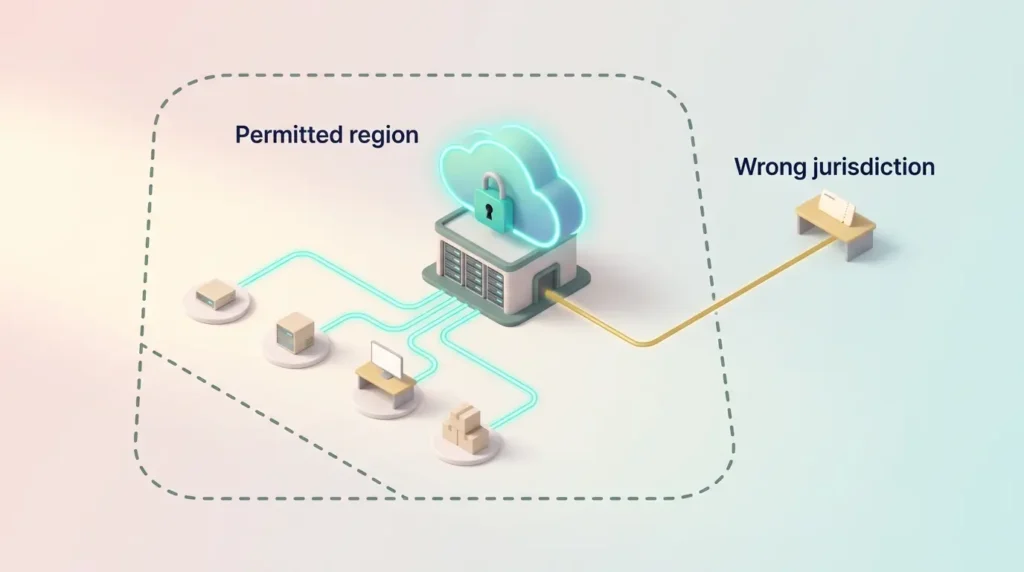
Map the reality before deployment: data flows, replication paths, administrator access routes, support locations and subprocessors. Most sovereignty failures surface in one of those five places, usually after a ticket is escalated to a team in the wrong jurisdiction.
Then connect that map to continuity planning for conflict, economic disruption, climate events and cybercrime. Jurisdiction-aware contracts, customer-held keys, access restrictions and immutable logs materially reduce cross-border risk, and they are cheap compared with an unplanned migration. Sovereignty covers the infrastructure, people, networks and operations that process data. A programme that stops at storage location will be re-opened within a year.
Building a Secure Data Center with Sovereign Cloud Principles
Isolation is the physical expression of sovereignty. Dedicated facilities, segmented networks and separated control and data planes reduce unauthorized access and concentration risk, because compromising the management path should not automatically expose tenant data.
At the strict end, air-gapped regions are built to government specifications. US defence workloads, for example, run in environments accredited to DISA Impact Level 6 for classified information. Most commercial buyers never need that, but the pattern is instructive: the higher the assurance, the fewer external dependencies the environment tolerates.
Document it properly. Architecture diagrams should show tenancy boundaries, administrative routes, key management systems, log destinations, replicas and recovery facilities. That artefact answers most auditor questions.
Implementing Sovereign Cloud in Mixed IT Environments
Few organizations run one environment. A working hybrid estate spans on-premises, private, public and distributed infrastructure while keeping identity and policy consistent, the core of most digital transformation programmes.
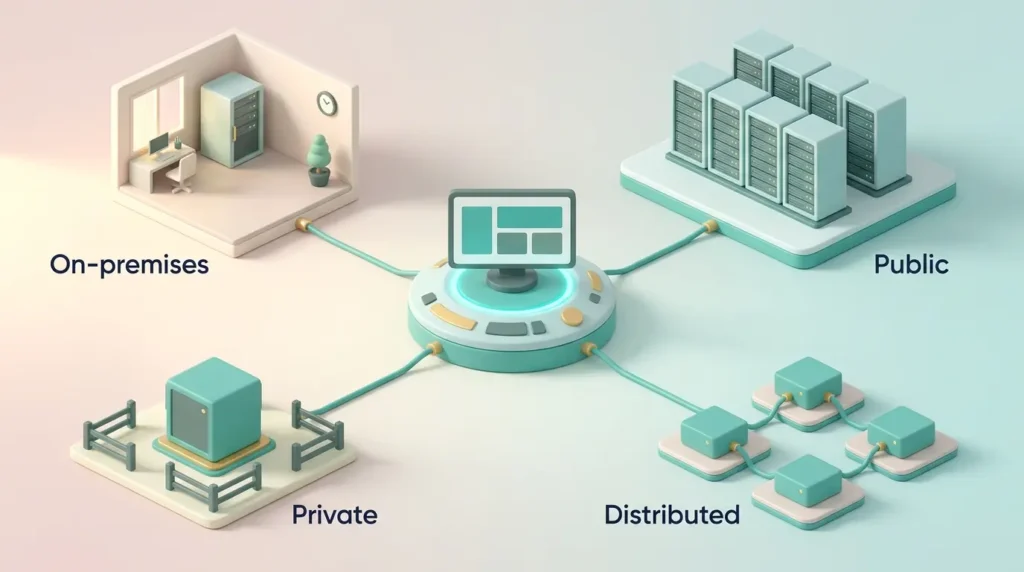
Kubernetes, the standard system for running containers across many machines, gives you portable orchestration. Portability is not compliance. Cluster upgrades are a classic way to create undeclared cross-border routes when a managed control plane or registry sits outside the permitted region.
AI workloads raise the stakes: GPU placement, training data, embeddings, prompts, model artefacts and the frequently forgotten inference logs all need the same treatment as production records. Analytics platforms deserve equal scrutiny, because data lakes, real-time data pipelines and data-as-a-service feeds move regulated copies around quietly.
Three practices keep mixed estates coherent:
- Unified logging and access governance across every environment
- One encryption and data-classification standard, applied everywhere
- Change control that flags residency impact before deployment, not after
Pair data democratization with classification that travels with the data.
Choosing the Right Sovereign Cloud Provider
Selection is where sovereignty is won or lost, because most controls are contractual rather than technical.
Evaluating Vendor Compliance and SLAs
- Vendor scorecard: data locations, backup and replica locations, log destinations, support geography and subprocessors, meaning the vendors your provider itself relies on.
- Service level agreements: availability, incident response, breach notification and, critically, notification duties if a foreign authority requests data.
- Legal structure: which entity signs, where it is incorporated, who controls it, and which certifications that entity actually holds.
Deployment Models and Support Structures
Compare provider-owned against customer-owned infrastructure, public against private and distributed regions, and shared against dedicated capacity. Ask which services are available in the sovereign region on day one, since catalogue gaps drive more architecture compromises than anything else.
Use the Data Act as your contract template. Exit assistance, open interfaces, defined notice and transition windows and the January 2027 end of switching charges are rights, not concessions. A provider reluctant to write them down has told you something useful.
Future Trends in Digital and Data Sovereignty
Expect more sovereignty legislation, not less. Cybercrime, geopolitical friction and public pressure push in the same direction, and each national rule adds a layer to an already dense compliance map.
The immediate milestone is 12 January 2027, when cloud switching charges fall away entirely under the Data Act, pushing the market toward genuine portability. Certification is the open question: until EUCS is resolved, the Cloud Sovereignty Framework and its SEAL levels are the closest thing Europe has to a common standard, and their use in a 180 million euro procurement gives them weight beyond the public sector.
AI will tighten requirements further, and the compute constraint is real, since sovereign regions rarely offer the same accelerator fleet as mainstream ones. Continuous validation, policy automation, immutable logging and a standing legal-engineering partnership keep such a programme current.
Conclusion
Sovereignty is a set of enforceable controls: residency, jurisdiction, operator access, encryption and key custody, logging and portability. In 2026 those controls have names, dates and a scoring model attached: the Data Act timetable, DORA’s oversight of designated providers, the unfinished EUCS, and the Commission’s SEAL levels.
Where your primary data sits is the smallest part of the answer. Provider jurisdiction, administrator access, backup locations and subprocessor chains decide whether a residency commitment survives a legal request.
Hybrid, private, public and distributed clouds can all support sovereignty, but only where the controls are documented, tested and owned. Ask providers for evidence, contracts, architecture diagrams, log samples, key custody records and recovery drill results. Treat regional branding as the least informative signal on the table.
Found this useful?
Make SmartKeys a preferred source on Google, and our articles will surface more often in your Top Stories, AI Overviews, and AI Mode.
Add as Preferred Source