Cloud computing in 2026 is no longer judged on whether it works, but on what it costs and what it returns. Enterprise spending on cloud infrastructure services reached $143.4 billion in the second quarter of 2026 alone, up 43% year over year and the fastest growth Synergy Research Group has recorded in eight years. Generative AI is the engine behind that surge, and it is also the reason cloud bills have become harder to predict than they were two years ago. These are the cloud computing trends that actually change how you plan, budget and secure infrastructure this year.
Key Insights
- Cloud infrastructure spending is growing at its fastest rate in eight years, driven overwhelmingly by AI workloads (Synergy Research Group, Q2 2026).
- Hybrid is the default: 73% of organizations run a mix of public and private cloud (Flexera, 2026).
- Wasted cloud spend rose to an estimated 29% in 2026 – the first increase in five years.
- Sovereign and regional cloud options have moved from niche to procurement requirement, especially in Europe.
- FinOps has shifted from pure cost-cutting to proving business value, with 63% of organizations running dedicated teams.
- Security attention is moving up the stack to the AI layer, where misconfiguration is a leading breach cause.
Understanding Cloud Computing
Cloud computing delivers computing resources – servers, storage, databases and software – over the internet instead of from hardware you own. You reach those resources from anywhere, on any connected device, and you pay for what you consume rather than for peak capacity you rarely use.

Three service models cover most business use:
- Software as a Service (SaaS): finished applications delivered over the internet. The vendor handles updates, patching and uptime.
- Infrastructure as a Service (IaaS): virtualized compute, storage and networking. You control the operating system and everything above it.
- Platform as a Service (PaaS): a managed environment for building and running applications without operating the servers underneath.
Deployment models matter just as much. Public cloud gives you on-demand capacity and the broadest service catalogue. Private cloud keeps workloads on dedicated infrastructure, which suits regulated data. Hybrid cloud combines the two so workloads can sit where their latency, cost and compliance profile fits best – the reason a deliberate hybrid cloud strategy now beats an accidental one.
The design decision underneath all of this is architectural. Lifting a legacy application into a virtual machine captures very little of the upside; rebuilding it around managed services is what makes cloud-native architecture pay off in elasticity and release speed.
Key Benefits of Cloud Computing
The advantages of cloud are well established. What has changed is that they are no longer automatic – each one depends on how disciplined your operating model is.
Maximizing Cost Efficiency
Cloud converts capital expenditure into operating expenditure and removes the cost of running your own data centre. That only becomes a saving if consumption is governed. Flexera’s 2026 survey puts wasted cloud spend at 29%, the first rise in five years, with AI experimentation a major contributor. Pay-as-you-go rewards teams that measure; it quietly penalises teams that do not.
Enhancing Scalability and Flexibility
Elastic capacity lets you meet a demand spike without buying hardware for a peak that lasts a fortnight. Retailers, ticketing platforms and media companies rely on this, and autoscaling makes it routine rather than a project. The same elasticity works in reverse: idle resources can be shut down the moment demand falls, provided someone owns that decision.
Improving Speed and Agility
The strongest argument for cloud is time to market. Managed databases, queues, identity and machine learning services remove months of undifferentiated engineering work. Teams ship features instead of provisioning servers, and they can test an idea cheaply before committing to it. Speed also depends on data being available where decisions are made, which is why real-time data pipelines have become a standard part of cloud platform design.
Top Cloud Computing Trends to Watch
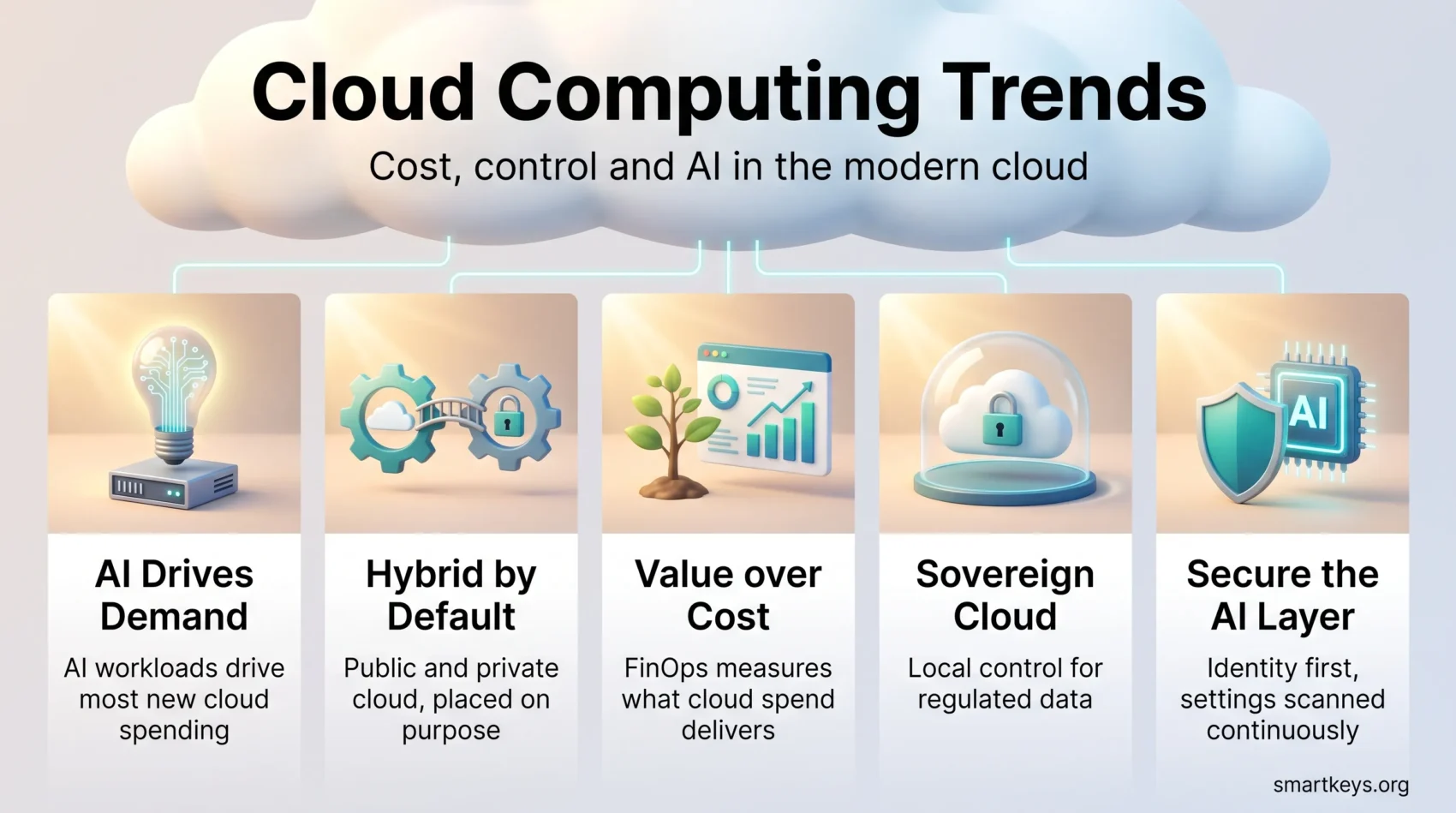
AI is now the centre of gravity. GenAI-specific cloud services grew 165% year over year in the second quarter of 2026 according to Synergy Research Group, and Gartner expects worldwide IaaS spending to reach $287 billion in 2026, up 29.3%. Capacity, not demand, is the constraint in most regions.
Sovereign cloud has become a purchasing criterion. Gartner forecasts $80 billion in sovereign cloud IaaS spending in 2026, up 35.6% on 2025, with European spending growing 83% to roughly $12.6 billion. Tightening data localization laws are pushing this from a compliance footnote to an architecture decision.
Cost discipline has been institutionalised. Cloud centres of excellence are in place at 71% of organizations and 63% run dedicated FinOps teams, according to Flexera. Notably, the top-ranked cloud metric is shifting from cost efficiency toward value delivered to the business.
Edge and distributed processing keep expanding. Manufacturing, logistics and healthcare increasingly process data close to where it is generated, and edge computing reduces both latency and the volume of data shipped to a central region. Growth in IoT deployments reinforces the pattern.
Containers, serverless and platform engineering are the default build path. Kubernetes remains the standard scheduler, serverless functions cover event-driven work, and internal developer platforms package both so teams do not each reinvent deployment. The API economy is what makes those building blocks composable.
Security is being folded into delivery. DevSecOps, policy-as-code and continuous configuration scanning have replaced end-of-project security reviews, and distributed estates are pushing architects toward a cybersecurity mesh model.
Sustainability reporting is uneven but real. Flexera found 47% of European organizations have a defined sustainability programme for cloud, against 34% in North America. AI-driven power demand has made data centre energy a board-level topic rather than a CSR paragraph.
Analytics and Big Data in the Cloud
Data volumes keep outgrowing the systems built to hold them, which is why analytics has migrated to the cloud almost wholesale. Elastic storage and separately scaled compute let you keep raw data cheaply and pay for processing only when a question is actually asked.
Real-Time Data Processing
Streaming architectures analyse events as they arrive rather than in an overnight batch. Fraud scoring, dynamic pricing, inventory allocation and service alerting all depend on it, because a correct answer delivered tomorrow is worth very little in those workflows.
The harder part is rarely the pipeline. It is making results usable: augmented analytics surfaces patterns automatically, while self-service analytics puts answers in the hands of the people who need them without a ticket queue in between.
Utilizing Cloud Storage Solutions
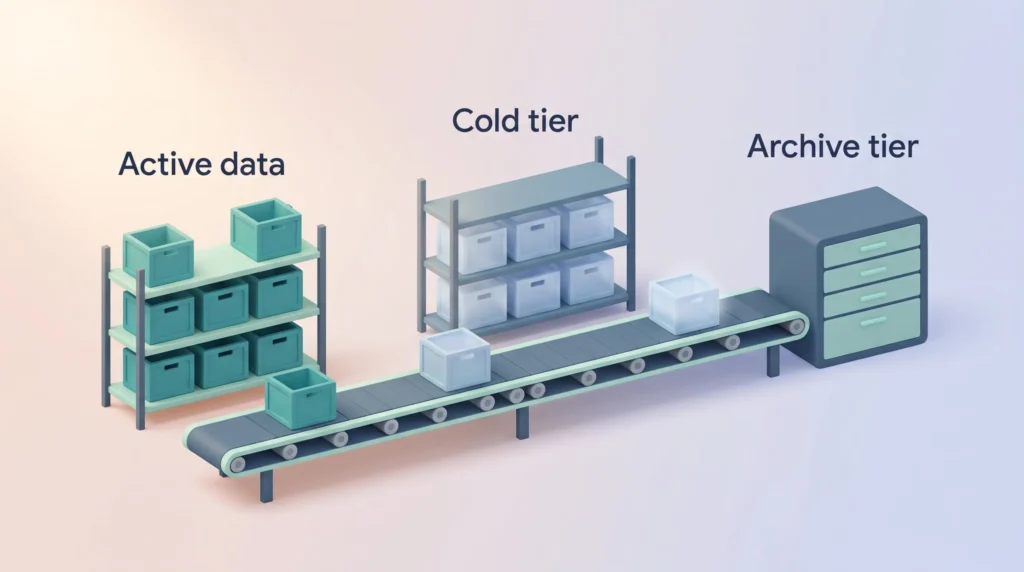
Object storage with tiered pricing has largely replaced the practice of sizing an array for peak demand. Cold and archive tiers cut the cost of data you must retain but rarely read, and lifecycle rules move it there automatically.
Design still matters more than list price. Well-governed data lakes keep raw and curated layers separate; ungoverned ones become expensive swamps. Packaging trusted datasets for internal or external consumption – the Data-as-a-Service model – is how mature organizations avoid rebuilding the same extract five times.
Emerging Cloud Services and Innovations
The service catalogue is expanding fastest where AI meets managed infrastructure. Model hosting, vector databases, retrieval pipelines and GPU capacity are now standard line items, and providers are competing on availability of accelerators as much as on price.
Gartner’s July 2026 forecast puts worldwide IT spending at $6.37 trillion for the year, a 14.2% increase, with data centre systems growing 62.5% to $822 billion. That is the clearest signal available of where the money is going: physical capacity for AI, consumed as cloud services.
Serverless execution continues to suit event-driven and spiky workloads, since you pay for compute time rather than reserved capacity. Containers remain the portable unit for everything else, and the two increasingly coexist inside the same platform rather than competing for it.
Two further shifts are worth watching. Vertical, pre-configured industry cloud platforms bundle compliance controls and sector data models, shortening implementation for regulated industries. And AI features embedded in SaaS products now reach far more employees than any bespoke model, which makes vendor selection a de facto AI strategy.
- Cloud-native development with microservices remains the default for new applications.
- Managed data services reduce the operational burden of running analytics platforms.
- Edge processing supports latency-sensitive use cases in industry and healthcare.
- Hybrid and multi-cloud strategies spread risk and preserve negotiating leverage.
The direction is consistent: more managed, more composable, more opinionated about security defaults. The practical question for your business is which of these services remove real engineering work, and which simply add another bill.
Cloud Computing Trends: The Rise of AI and Machine Learning
AI is no longer a workload that sits beside the cloud – it is the reason much of the cloud is being bought. Synergy Research Group attributes the bulk of 2026’s growth to generative AI services, which expanded 165% year over year while public IaaS and PaaS grew 47%.
Adoption of the underlying platform keeps broadening. Eurostat reports that 52.7% of EU enterprises used paid cloud computing services in 2025, up 7.4 percentage points on 2023, with email (85.2%), office software (71.7%) and file storage (71.5%) the most common services. Cloud is now ordinary infrastructure for a majority of European businesses.
Flexera found that 58% of organizations now consume generative AI as a public cloud service, up from 50% a year earlier, making it the third most widely used category. That creates an operational problem most teams underestimated: models need versioning, evaluation, cost attribution and rollback, which is the discipline covered by LLM operations. The broader shift in how AI is transforming business operations runs on exactly this plumbing.
Prioritizing Cloud Security and Resilience
Concentration raises the stakes. IBM’s 2026 Cost of a Data Breach report, based on 602 breached organizations, puts the global average breach cost at $4.99 million, rising to about $6 million when attackers used AI. A quarter of malicious breaches were AI-enabled, a 56% increase on the previous year.
Advanced Security Measures
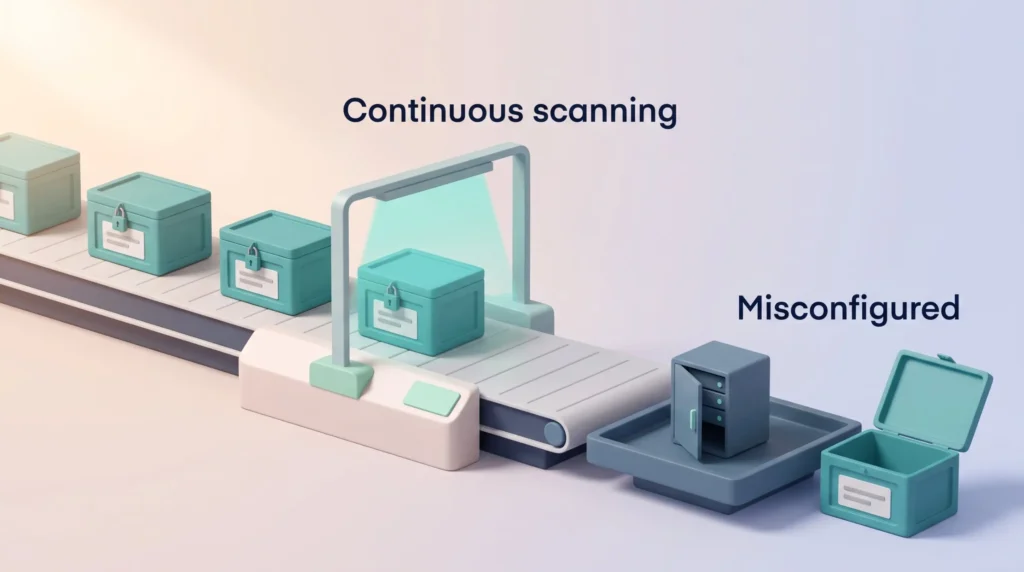
The same study found that more than 20% of organizations reported a breach targeting AI models or applications, and that cloud misconfiguration was among the leading causes at 27% – alongside compromised APIs, applications and plug-ins. Configuration, not exotic exploitation, remains the main way cloud estates are lost. Practical priorities:
- Identity first: least privilege, short-lived credentials and reviewed service accounts do more than any single tool.
- Continuous configuration scanning: catch public buckets, open security groups and permissive IAM policies before an attacker does.
- Visibility into unsanctioned tools: shadow IT and unapproved AI services move data outside your controls without a single alert firing.
The Importance of Compliance
Compliance obligations now shape architecture directly. GDPR remains the baseline in Europe, sector rules add residency and audit requirements, and the EU’s digital operational resilience expectations have made exit planning and concentration risk explicit board topics. Strong data governance – knowing what data you hold, where it sits and who may touch it – is what turns those obligations into something auditable. In regulated sectors, automating the evidence trail is usually cheaper than staffing it.
Multi-Cloud and Hybrid Cloud Solutions
Most organizations did not choose multi-cloud so much as arrive at it, through acquisitions, team preferences and SaaS that runs somewhere else. Flexera’s 2026 data shows 73% of organizations using a hybrid mix of public and private cloud, and 33% combining multiple public with multiple private clouds.
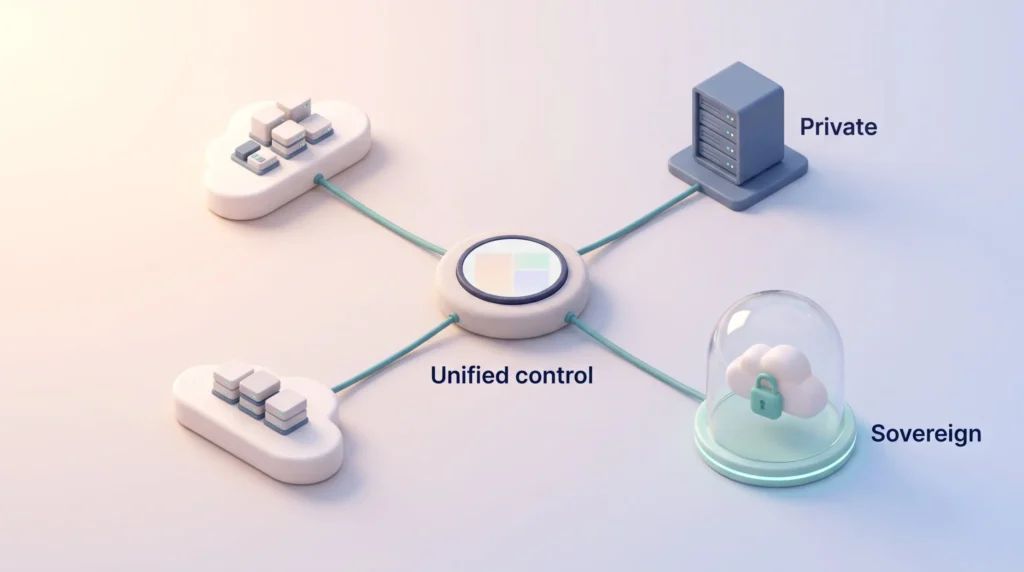
Run deliberately, the model gives you resilience, room to place workloads where they perform best, and leverage at renewal. Run accidentally, it multiplies your control planes, your security models and your egress charges without delivering any of that. The deciding factor is whether identity, networking, cost reporting and policy are unified across providers or duplicated in each.
Hybrid deployments earn their place where data cannot move, latency is unforgiving, or an existing investment has years of life left. Sovereign cloud regions add a third option for organizations that need public cloud economics with local control – the segment Gartner expects to grow 35.6% in 2026.
Skills are the constraint people underestimate. Each additional platform adds a body of operational knowledge someone has to carry, so budget for training and platform engineering before adding a fourth provider to the estate.
Cloud Cost Optimization Strategies
Cost management stopped being a quarterly clean-up exercise some time ago. Flexera’s 2026 survey puts wasted spend at 29% and reports that the share of organizations using unit economics – cost per customer, per transaction, per feature – rose to 49% from 40%. Cost efficiency as the headline metric fell six points, while value delivered to business units rose twelve.
That is the whole shift in one sentence: the question moved from “how do we spend less?” to “what did this spend buy?”
What reliably works:
- Attribute everything. Tagging and account structure decide whether cost data is actionable or merely large.
- Right-size and schedule. Non-production environments rarely need to run at night or at weekends.
- Commit only to your baseline. Reserved and savings-plan commitments pay off on steady workloads; on volatile ones they lock in the wrong number.
- Watch storage tiers and egress. Lifecycle policies and data placement quietly decide a large share of the bill.
- Treat AI spend as its own category. Token and GPU costs behave nothing like steady compute and need separate guardrails.
Established FinOps practices give engineering, finance and product a shared vocabulary for these decisions, and a structured approach to cloud cost optimization keeps the savings from evaporating within two quarters.
Conclusion
The cloud story in 2026 is one of concentration and consequence. Money is flowing into AI infrastructure at a rate the industry has not seen in eight years, hybrid estates are the norm rather than a transitional phase, and both cost and security failures increasingly trace back to governance rather than technology.
The organizations getting the most out of cloud this year are doing unglamorous things well: attributing spend to something a business owner recognises, unifying identity and policy across providers, keeping configuration under continuous review, and treating AI workloads as a distinct thing to be measured rather than an experiment to be indulged.
Pick the two or three trends here that touch your actual constraints – capacity, compliance, cost or speed – and address those. A cloud strategy that is honest about trade-offs will outperform one that tries to adopt everything at once.
Found this useful?
Make SmartKeys a preferred source on Google, and our articles will surface more often in your Top Stories, AI Overviews, and AI Mode.
Add as Preferred Source