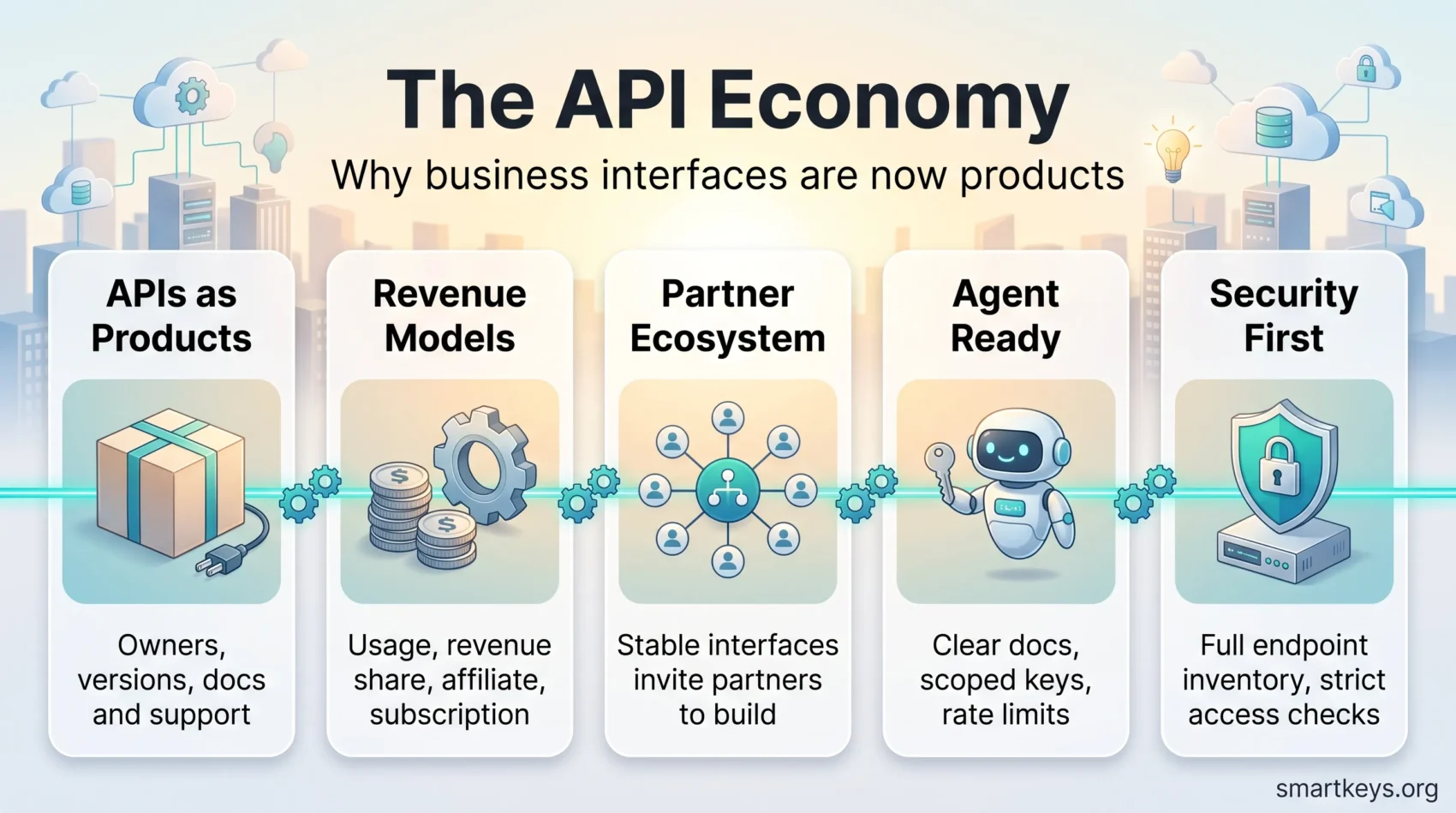
The API economy is the part of business value that moves through interfaces rather than through people. An API lets one system request something from another, get a structured answer and act on it, without either side knowing how the other is built. That sounds like plumbing. In practice it decides how fast you launch a product and how many partners you can serve.
In 2026 the question is no longer whether to publish APIs. Most companies already have dozens, often without a full inventory. The question is whether yours are designed, governed and secured well enough to be worth connecting to.
Key Takeaways
- API-first design is mainstream: 83.2% of developers surveyed by Postman report some level of API-first adoption.
- Roughly two thirds of organizations already earn revenue through APIs, directly or indirectly.
- AI agents are the newest API consumer, and they change how interfaces must be documented and permissioned.
- Security is the weak point: 87% of organizations reported an API incident last year, at an average cost above $700,000.
- Winning teams treat APIs as products with owners, versions and support, not as side effects of a project.
Understanding the API Economy: An Overview
The API economy describes what happens when interfaces become tradeable assets. A payment provider sells access to its rails. A mapping service sells location lookups. A logistics firm exposes tracking so customers stop calling support. In each case the API is the product surface and the buyer is another company’s engineering team.
Two deals explain the stakes better than any forecast. Salesforce paid $6.5 billion for MuleSoft in 2018 to own the integration layer between enterprise systems. Visa agreed to pay $5.3 billion for Plaid, which connects fintech apps to bank accounts, then abandoned the deal in January 2021 under an antitrust suit. Plaid raised again months later at a higher valuation. Buyers were not paying for software features. They were paying for a position in the connective tissue.
The same logic applies internally. A maintained API catalog means teams stop rebuilding the same customer lookup, and governance is enforced in one place rather than negotiated project by project. That discipline is usually what makes external monetization possible later.
Precedence Research estimates the global API management market at $12.16 billion in 2025 and $16.29 billion in 2026, growing toward $169.33 billion by 2034. Treat any decade-long projection with caution, but the direction is consistent across providers: spending on the layer that publishes, secures and meters APIs is rising faster than general software spending.
What an API Economy Business Actually Looks Like
Calling something an API economy business is a claim about where value is captured, not about technology stack. The company treats its interfaces as products: they have owners, roadmaps, documentation, support commitments and, often, a price.

The distinction that matters day to day is who consumes the interface. Internal APIs remove friction between your own teams. Partner APIs let a named set of companies build against you under contract. Public APIs open the door to developers you have never met, which is powerful and permanently harder to govern. Most organizations run all three and manage them identically. That is the mistake.
The familiar examples still hold up. Google Maps turned location into something any app could rent. Stripe made payment acceptance a few lines of code. Slack became a workplace hub largely because third parties could push messages into it. What they share is not clever engineering but predictability: stable contracts, clear errors, versioning that does not break integrators overnight.
Companies have learned the flip side the hard way. When Reddit changed its API terms in 2023, third-party clients that had been part of the product for a decade shut down within weeks. An API is a promise, and repricing it costs trust.
Why APIs Matter in Digital Transformation
Most digital transformation programmes fail at the seams, not at the centre. The new customer portal works. The problem is that it needs pricing from an old ERP, inventory from a warehouse nobody wants to touch, and identity from a directory that predates the cloud. APIs are how you reach those systems without a rewrite.
This is the least glamorous and most valuable use of an API: wrapping a legacy system so new applications can read from it safely while the old system carries on. It lets modernization happen in pieces rather than as one high-risk cutover.
Above that wrapping layer sits the integration tooling. iPaaS platforms and workflow tools such as those in our Workato and Zapier comparison connect applications without custom middleware for every pair. For new services rather than old ones being stitched together, cloud-native architecture and a deliberate hybrid cloud strategy decide how cheaply those APIs scale once traffic arrives.
The failure mode is predictable. Teams expose endpoints quickly, then discover they have no inventory, no consistent authentication, and no way to tell which consumer is causing a spike. A data governance strategy that defines ownership and classification before the endpoints multiply saves more time than it costs.
API Economy Trends and Growth Opportunities
Three shifts define the current market: API-first design has become the default, AI agents have arrived as a new class of consumer, and security is now the binding constraint rather than an afterthought.
Where Adoption Actually Stands
Postman’s 2025 State of the API Report, based on more than 5,700 developers and API professionals, found 83.2% reporting some level of API-first adoption. That covers a wide spectrum, from teams that design the contract before writing code to teams that merely document what they shipped, so read it as evidence that the vocabulary has won rather than that practice is uniformly mature.
The same survey found 93% of API teams reporting collaboration problems, 55% citing documentation gaps and 34% unable to find APIs that already existed inside their own organization. Discovery, not creation, is the bottleneck in most large companies.
Where the Money Is Going
Postman reports that 64.5% of organizations generate revenue from APIs in some form, and 22.1% attribute new revenue streams specifically to API adoption in the previous twelve months. Indirect value still dominates: APIs that cut integration cost for customers or make a product harder to replace rarely appear as a line item, but they change retention.
Budgets are shifting toward gateways, observability and API security tooling, and toward data-as-a-service arrangements where the interface is the whole product. SaaS consolidation matters too: every acquisition raises the question of whether the API you built against survives the merger.
Unlocking New Revenue Streams Through APIs
API monetization is less about inventing a price than about matching the model to how value accrues for the customer.
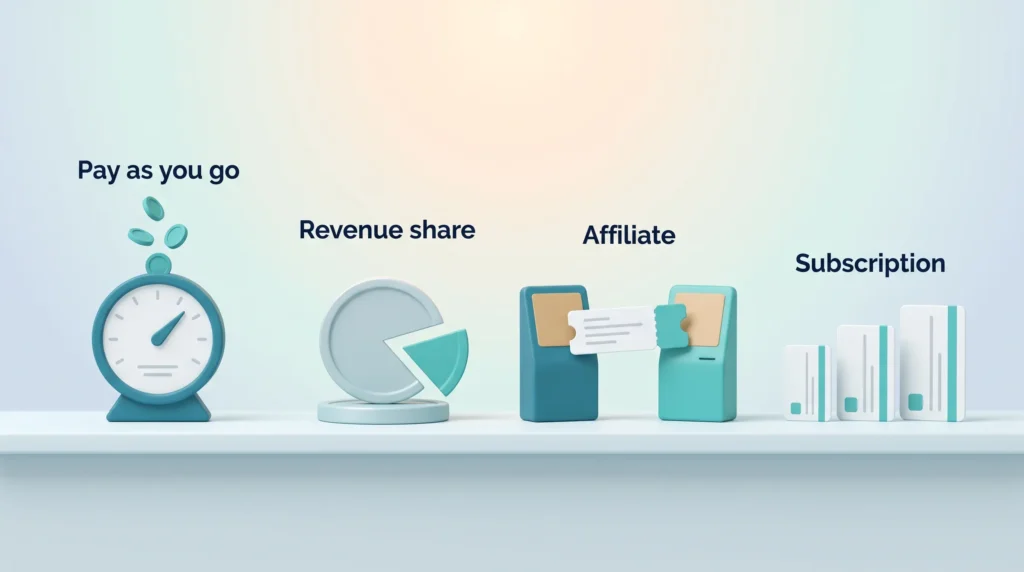
Four Models That Work
- Pay as you go. Twilio charges per message and per minute. Costs track usage exactly, which suits unpredictable volume and gives the provider revenue that scales with adoption.
- Revenue share. Stripe takes a percentage of each transaction it processes, so the provider only earns when the customer earns.
- Affiliate and distribution. Travel platforms expose inventory APIs and share booking revenue with partners who bring demand.
- Subscription and tiering. Enterprise vendors bundle API access into a seat or platform licence, with rate limits separating tiers.
Hybrid arrangements are now the norm, and usage-based pricing has spread well beyond infrastructure vendors. The practical warning is metering: if you cannot measure consumption accurately and show customers what they used, usage pricing generates disputes instead of revenue.
Financial services show the mature version. Open banking turned account access into a regulated interface, and embedded finance lets non-financial brands offer payments or lending entirely through someone else’s API. In both cases the interface is not a feature of the product. It is the distribution channel.
Building API Ecosystems for Collaborative Success
An ecosystem is what you get when third parties build things you did not plan for. That only happens when integrating is low-effort, and effort is decided by documentation quality, sandbox availability and how rarely you break things.
The economics are those of any platform business model: value grows with the number of useful connections. A deliberate partner ecosystem strategy turns that from a hope into a plan, with tiers, incentives and support commitments for the developers you most want building against you.
Three roles decide whether an ecosystem holds together:
- Platform team. Owns the gateway, standards, versioning policy and developer portal. Without a single owner, every team invents its own conventions.
- Governance and security. Sets authentication, rate limiting and data classification rules, enforced at the gateway rather than in each service.
- Developer relations. Owns documentation, examples and the feedback loop from integrators, which is where most usable product insight comes from.
Developing an Effective API Strategy
A useful API strategy answers three questions in writing: what business outcome the APIs serve, who consumes them, and how success is measured. Skip any of the three and you end up with a catalog nobody uses.
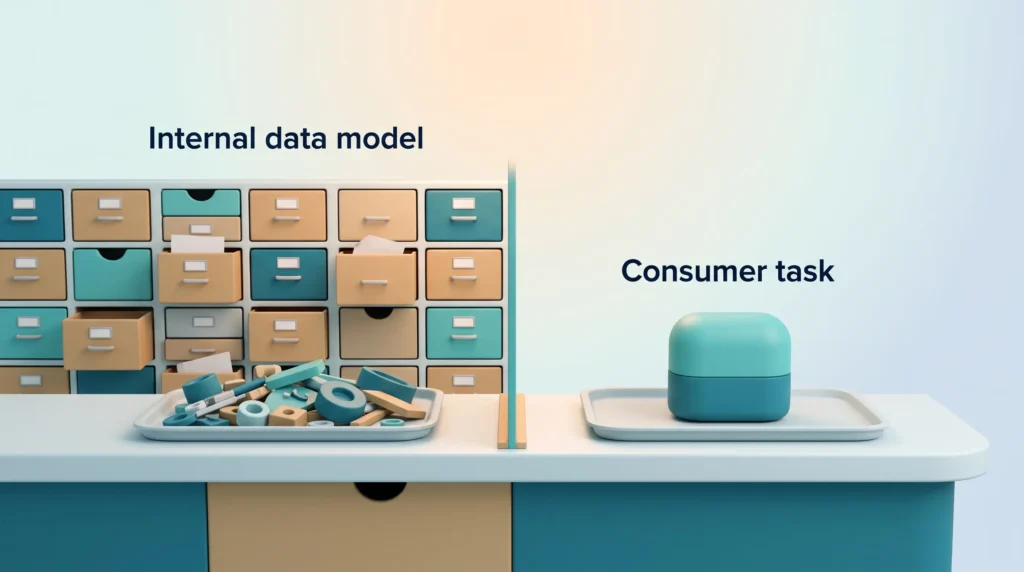
Start from the consumer, not the codebase. An interface that mirrors your internal data model is easy to build and almost always wrong, because it exports your organizational structure to people who do not care about it. Design around the task the consumer wants to complete, then settle the boring things early:
- Versioning. How breaking changes are introduced and how long old versions stay supported.
- Authentication. One scheme, applied consistently, with scoped credentials rather than all-or-nothing keys.
- Rate limits and quotas. Per consumer, visible to that consumer, enforced at the edge.
- Deprecation. A published policy with notice periods, so partners can plan.
Measure adoption rather than endpoint count. Time to first successful call, active consumers and error rate per consumer tell you whether the programme works; endpoint counts only tell you people have been busy. Well-run programmes also show indirect returns in retention, part of why tools that enrich and integrate customer data are now standard in go-to-market stacks.
APIs and AI Agents: What Changed in 2026
The newest consumer of your API is not a developer. It is an agent acting on a user’s behalf, and it behaves differently from human-written integrations: it explores, it retries, and it reads your documentation literally.
Postman found 24.3% of developers already designing APIs with AI agents in mind. The Model Context Protocol, which standardizes how models connect to tools and data sources, has become the common vocabulary for this: two thirds of surveyed developers were aware of it, though only around one in ten used it regularly in daily work. Awareness is running well ahead of production use, which is the normal shape of an emerging standard.
What changes in practice is clarity and control. Agents rely on descriptions rather than tribal knowledge, so vague parameter names and undocumented side effects turn into wrong actions rather than support tickets. Scoped, short-lived credentials matter more, because an agent with a broad key will eventually use it broadly. Rate limits need to assume retry loops rather than polite human pacing.
There is a governance layer too. Under the EU AI Act, transparency obligations for general-purpose AI systems began applying in August 2025 with further duties phasing in, so teams exposing AI capabilities through APIs should check where they sit in the EU AI Act compliance timeline. For the workflows themselves, see our guide to AI agent workflows and our look at AI in SaaS.
Challenges in API Management and Security
This is where the API economy gets expensive. APIs expose business logic directly, are documented by design, and ship faster than security teams can inventory them.
What the 2026 Data Shows
Akamai’s 2026 API security survey of 1,840 security professionals across ten countries found 87% of organizations had at least one API security incident in the past year, averaging 3.5 incidents at above $700,000 each. Financial services reported the highest rate at 96%. Akamai’s State of the Internet research separately puts the average at 258 API attacks per enterprise per day in 2025, up from 121 the year before.
The most telling figure is not an attack number. Only 23% of enterprises said they maintain a complete inventory of which endpoints expose sensitive data, down from 40% in 2022. Attack surface is growing faster than visibility. That is the actual problem.
Where APIs Actually Break
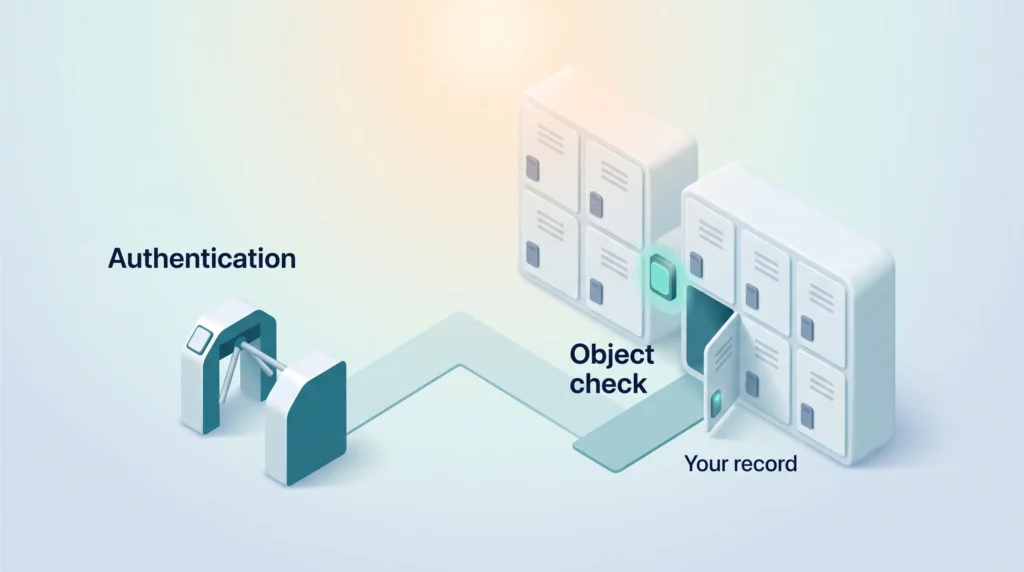
The OWASP API Security Top 10, most recently published in its 2023 edition, still describes the failures accurately. Broken Object Level Authorization sits at number one: the endpoint checks that you are logged in, but not that the record you asked for belongs to you. Changing an ID in a request is not sophisticated, and it remains one of the most common causes of API data exposure.
Close behind are broken authentication, excessive data exposure where responses return more fields than the client needs, and unrestricted resource consumption that turns one endpoint into a denial-of-service surface. Misconfiguration is the most frequently observed category of all, which is another way of saying most API breaches are operational rather than clever.
Practical mitigations are unglamorous and effective: inventory every endpoint including the undocumented ones, enforce authorization at the object level rather than the route level, apply schema validation on requests and responses, and put rate limiting and anomaly detection at the gateway. A zero-trust approach fits APIs well, because it removes the assumption that internal traffic is trustworthy. Broader context sits in our overview of cybersecurity trends.
One more finding is worth flagging: 42% of surveyed security professionals said AI-powered APIs had been targeted, and rogue agents making unauthorized calls was the most cited AI security worry in Postman’s survey. The rise of platform work described in our piece on the gig economy only widens the set of people and systems holding credentials.
Conclusion
The API economy rewards companies that treat interfaces as products and punishes those that treat them as leftovers. The building blocks are unremarkable individually: a real inventory, one authentication scheme, documentation good enough for a stranger, a versioning policy you honour, and authorization checked at the object level. Together they decide whether partners integrate with you or route around you.
For 2026 the two additions are agent readiness and security maturity. Agents read your documentation and act on it, so ambiguity becomes an operational risk. And with most organizations reporting an incident last year while fewer than a quarter can say which endpoints expose sensitive data, visibility is the cheapest investment available. None of this requires a platform rewrite. It requires deciding that your APIs have owners.
Found this useful?
Make SmartKeys a preferred source on Google, and our articles will surface more often in your Top Stories, AI Overviews, and AI Mode.
Add as Preferred Source