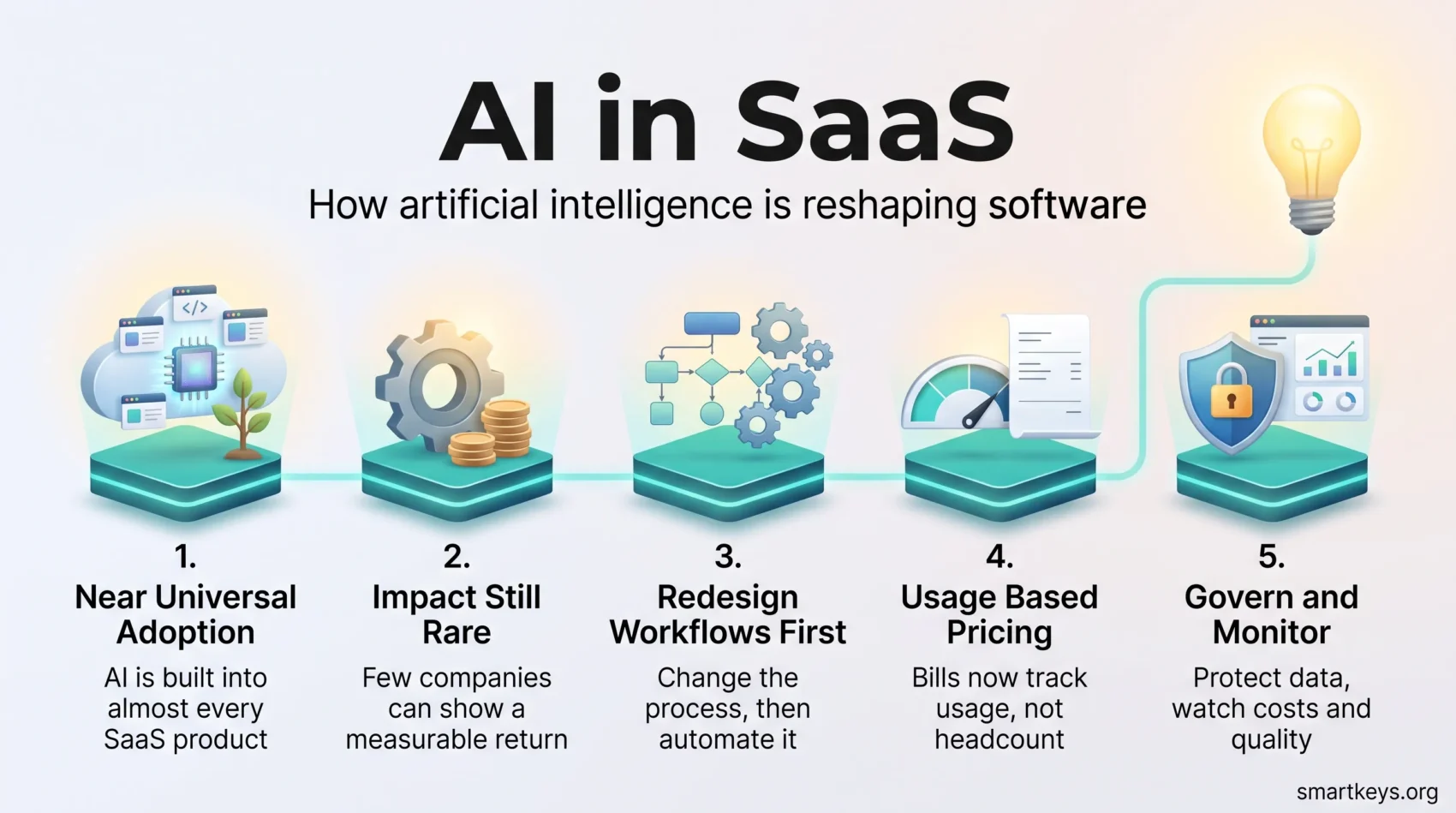
Artificial intelligence stopped being a differentiating feature in SaaS some time ago. In 2026 it is a line on almost every vendor roadmap, a separate charge on most invoices, and — for a minority of buyers — a measurable change in how work actually gets done. This guide covers where AI has genuinely changed software as a service, what the current spending and adoption data supports, and where the gap between deployment and results is widest.
The short version: adoption is close to universal, impact is not. That gap, rather than any question of technical capability, is what defines the market this year. For the wider context around delivery models, our overview of current cloud computing trends covers the infrastructure side of the same shift.
Key Insights
- Gartner forecasts worldwide AI spending of $2.59 trillion in 2026, up 47%, with roughly 55% of that going to infrastructure rather than software (Gartner, May 2026).
- Worldwide software spending is forecast at $1.47 trillion in 2026, growing 15.5% — far ahead of IT services at 5.3% (Gartner, July 2026).
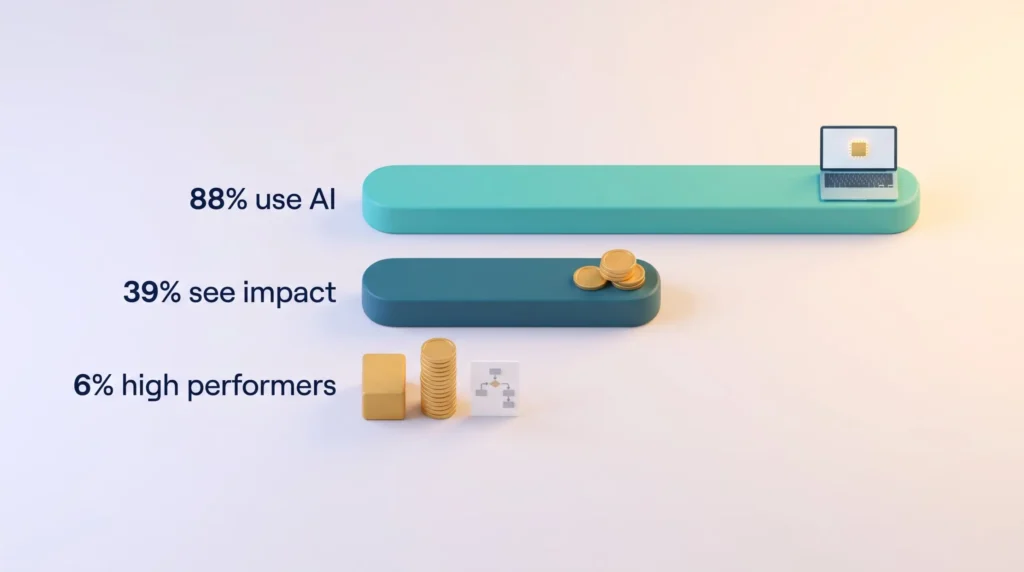
- 88% of organisations use AI in at least one business function, yet only 39% report any EBIT impact from it (McKinsey, November 2025).
- 62% are experimenting with or scaling AI agents, and 23% have scaled one somewhere in the business (McKinsey).
- Gartner expects more than 40% of agentic AI projects to be cancelled by the end of 2027.
- Organisations seeing real returns are nearly three times as likely to have fundamentally redesigned workflows rather than automating existing ones (McKinsey).
The Rise of AI in SaaS
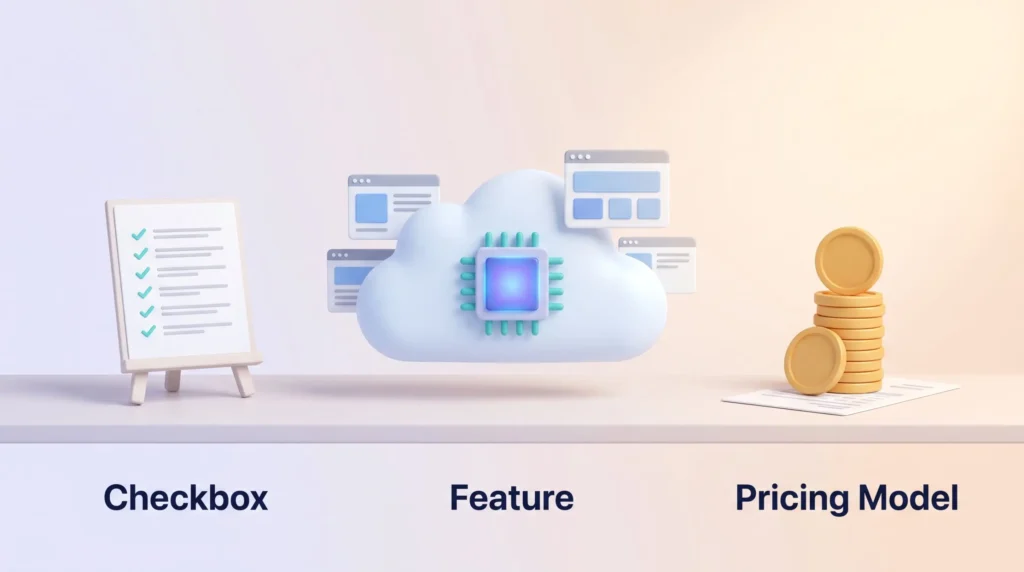
AI arrived in SaaS the way most platform shifts do: first as a checkbox on a comparison page, then as a feature buyers actually used, and now as a pricing model of its own. The question has moved from whether your software has AI to whether anyone is using it.
What Changed in the Tech Landscape
Three things changed in practice. Vendors embedded assistants directly into products people already had open, which removed the adoption barrier of a separate tool. Model quality reached a point where summarisation, classification and drafting are reliable enough for everyday work. And the commercial model shifted, because inference costs money every time it runs, which per-seat licensing was never designed to absorb.
The result is that AI capability is no longer a reason to switch vendors — almost everyone has it. What differs is how deeply it is wired into the product’s data model, and that turns out to be the thing that determines whether it helps.
Where the Money Is Actually Going
The spending picture is instructive because it is so lopsided. Gartner’s May 2026 forecast puts worldwide AI spending at $2.59 trillion for the year, a 47% increase. Of that, roughly $1.43 trillion — about 55% — is infrastructure. AI services account for $585.5 billion and AI software for $453.2 billion.
Software overall is growing healthily: Gartner’s July 2026 IT spending forecast puts the software segment at $1.47 trillion, up 15.5%, against total IT spending of $6.37 trillion. But the headline growth in the market is concentrated in data centre systems, up 62.5% to $822 billion, as capacity gets built for AI workloads. As Gartner’s John-David Lovelock put it, building the compute capacity required for AI is the largest infrastructure project ever attempted.
For a company buying software rather than building infrastructure, these totals are context rather than a benchmark. They are dominated by hyperscaler build-out. The number that matters to a buyer is what the AI features in their own stack cost per month, and whether that cost tracks usage they can predict — which is why disciplined cloud cost management has become a routine part of software procurement rather than a finance exercise.
Adoption Is Near Universal, Impact Is Not
The most useful data on AI in business software comes from McKinsey’s survey of 1,993 respondents across 105 countries, published in November 2025. It found that 88% of organisations now use AI in at least one business function, up from 78% the previous year. Only 39% could attribute any EBIT impact to it, and for most of those the effect was under 5%.
What Separates the Companies Getting Value
The same survey identified roughly 6% of respondents as high performers, meaning they attributed more than 5% of EBIT to AI. What distinguished them was not budget or vendor choice. They were nearly three times as likely to say they had fundamentally redesigned individual workflows, three times more likely to be pursuing transformative change rather than incremental efficiency, and three times more likely to have senior leaders visibly owning the initiative.
That finding is the practical heart of the subject. Buying an AI-enabled SaaS product and running the old process on it produces cost without advantage — the same pattern that shows up across digital transformation programmes more generally. The organisations getting returns changed the process first and used the software to support the new version of it.
Adoption inside the company is the other half. AI features that nobody knows about do nothing, which makes training and structured remote onboarding part of the rollout rather than an afterthought.
The State of AI in SaaS
Current Landscape and Adoption Rates
Almost every established SaaS category now has an AI layer: assistants in productivity suites, agents in customer service, scoring and forecasting in CRM, anomaly detection in security and finance tooling. The differentiator has moved down a level, to whether the feature is grounded in the customer’s own data and whether the vendor can explain what it did.
Consolidation is part of the same story. Buyers with a dozen overlapping subscriptions are finding that an assistant works better when it can see across systems, which strengthens the case for fewer, better-connected platforms — one of the forces behind current SaaS consolidation and merger activity.
Examples of AI Integration in Popular Platforms
The mainstream implementations are worth knowing because they set buyer expectations:
- Salesforce layers Einstein predictions and Agentforce agents on the CRM data model, sold separately from the core licence — see our Salesforce CRM review for how that affects the bill.
- HubSpot embeds AI across marketing, sales and service tools, with content and workflow assistance built into everyday screens.
- Microsoft 365 and Google Workspace put assistants inside documents, mail and meetings, which is where most employees first encounter the technology at work.
- Zendesk and other service platforms run AI agents that resolve routine tickets and hand off the rest with context attached.
- Analytics tools increasingly ship augmented analytics features that surface anomalies and generate explanations rather than waiting for someone to build a report.
Which of these matters depends entirely on where your data already lives. Assistants are only as useful as the records they can reach, which is why platform choice and CRM strategy now overlap so heavily.
Advantages of AI in SaaS Applications
The benefits are real but narrower than vendor marketing suggests. Three hold up consistently.
Personalization and User Experience
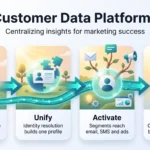
Software that adapts to how an individual works reduces friction in small, cumulative ways: surfacing the right record, drafting the routine reply, skipping steps that never apply to this user. The gain is rarely dramatic in any single instance and noticeable over a quarter. It depends on unified customer data, which is why a customer data platform is often the prerequisite rather than the follow-up purchase.
Automation of Repetitive Tasks
Classification, routing, data entry, summarisation and handover notes are the tasks where automation reliably pays. They are well defined, high volume and low judgement. The risk is accumulation: automations built by different people, undocumented, that nobody can safely switch off two years later. An automation centre of excellence exists to keep what gets built maintainable, not to slow building down. Where the work spans several systems, an integration layer matters more than the automation itself — our comparison of Workato and Zapier covers the trade-offs.
Predictive Analytics and Data Insights
Forecasting, churn scoring and demand planning are the mature end of AI in business software, and they are unglamorous for good reason: they work when the underlying data is clean and fail quietly when it is not. Treat a prediction as an input to a decision someone still owns, not as the decision itself.
AI and SaaS: Where the Combination Works
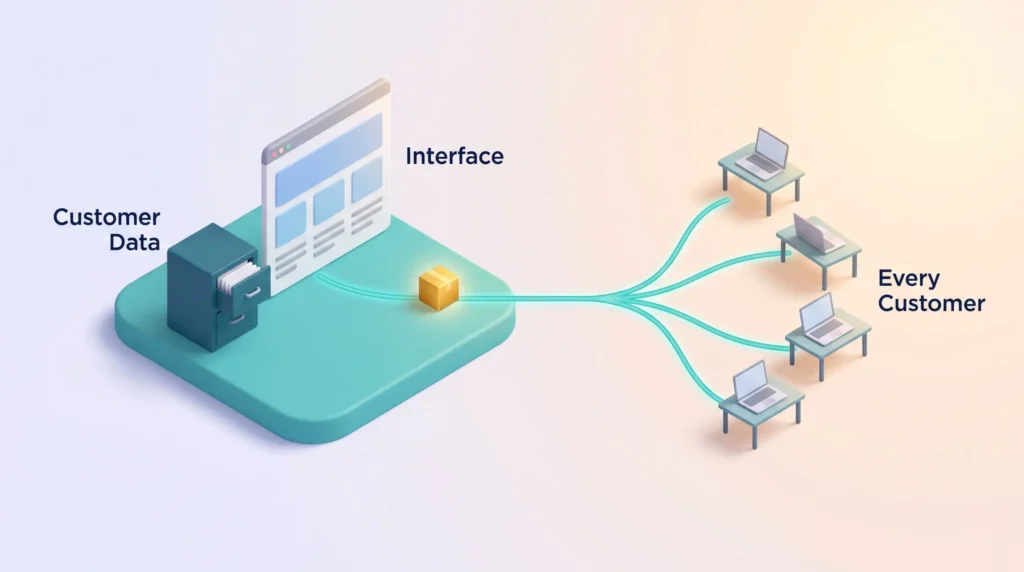
The pairing makes sense for a structural reason. SaaS vendors sit on the data, own the interface and can ship an improvement to every customer at once. No other software model puts capability that close to the work.
Real-World Use Cases of AI in SaaS
- Customer service deflection: agents resolve routine requests end to end and escalate with full context, which is the clearest measurable win in the category.
- Sales and marketing assistance: drafting, segmentation and next-step suggestions grounded in CRM records — the practical basis for most AI-driven marketing work.
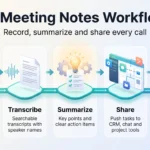
- Document and meeting summarisation: the highest-adoption feature in most organisations, precisely because it requires no process change.
- Workflow agents: multi-step processes handed to software, which works when the process is mapped end to end — including what happens when the agent is wrong. Our guide to designing AI agent workflows covers that design question.
- Security and anomaly detection: pattern recognition at a volume humans cannot review, increasingly built into distributed security architectures.
Key Challenges and Ethical Considerations
The failure rate is the part vendors do not lead with. Gartner expects more than 40% of agentic AI projects to be cancelled by the end of 2027, citing unclear business value, escalating costs and inadequate risk controls. That is not a prediction that agents do not work; it is a prediction about how they are being bought.
Data governance is the first constraint. Feeding customer records into a vendor’s model raises questions about residency, retention and who can see what, and those answers belong in the contract rather than in a later review. Privacy-by-design is cheaper than retrofitting controls onto something already in production.
Bias and explainability are the second: wherever AI influences hiring, credit, pricing or service levels, someone must be able to explain the outcome to a customer or a regulator.
Operational discipline is the third, and the most commonly missing. A deployed model degrades as the world it was trained on moves. Versioning, evaluation and monitoring — the practices grouped under LLMOps — are what separate a system you can put in front of customers from one that stays a prototype. The organisations that do this well also keep the ability to cancel, which is the capability most obviously absent from the 40% Gartner expects to fail.
The Future of AI in SaaS
Emerging Trends to Watch
Three directions are worth tracking rather than acting on immediately. Agents are moving from single-task assistants toward multi-step processes with defined handoffs, which raises the governance bar rather than lowering it. Specialisation is increasing, with vertical AI solutions built for a specific regulated workflow often outperforming general-purpose tools, because the hard part was never the model. And interoperability is becoming a purchasing criterion, as buyers refuse to run assistants that cannot see across the stack.
Pricing Is the Quiet Disruption
The commercial change may matter more than the technical one. Per-seat pricing assumed a roughly fixed cost to serve each user. Inference does not work that way, so vendors are moving toward consumption and outcome-based models — credits, per-conversation charges, usage tiers — layered on top of existing licences.

For buyers this has two consequences. Budgeting becomes forecasting, because the bill now depends on behaviour rather than headcount. And software procurement processes need a usage-monitoring step that most were never designed to include. Model the likely consumption before signing, and instrument it from day one.
Who Is Building the AI Layer
Platform Providers
The hyperscalers — Microsoft, Google Cloud, Amazon Web Services — supply the models and infrastructure most SaaS vendors build on, which means a large share of the AI features in your stack ultimately run on one of three platforms. That concentration is worth understanding for resilience and negotiation reasons.
Established application vendors sit on top, adding the thing the hyperscalers do not have: your data, in a structure their software already understands. That is the durable advantage in this market and the reason incumbents have not been displaced as quickly as early predictions suggested. Broader context on how this is playing out across sectors is in our overview of AI adoption in business.
The Role of Startups and Vertical Players
Smaller vendors compete by going narrow: a specific industry, a specific workflow, a specific compliance regime. Where a general assistant produces a plausible draft, a specialised tool produces one that matches the format an auditor expects. That is a defensible position, and it is where a lot of genuinely useful AI software is being built — often as a layer that connects to the systems of record rather than replacing them.
The buyer’s risk with smaller vendors is continuity rather than capability. Ask where the data lives, how it comes back out, and what happens if the company is acquired.
Conclusion
AI in SaaS in 2026 is not an emerging technology decision. It is a procurement and process decision. The capability is broadly available, the spending is enormous but concentrated in infrastructure most buyers will never touch directly, and the difference between the companies getting returns and the ones that are not comes down to whether they changed how the work is done.
Three things are worth doing now. Audit what AI you are already paying for, because most organisations are paying for more than they use. Pick one process, redesign it properly and measure the result, rather than switching features on across the board. And build the habit of monitoring both cost and output quality, since consumption pricing and model drift are the two ways an initially successful deployment quietly turns into a liability.
The honest expectation is unglamorous: meaningful gains in a few well-chosen processes rather than a transformation of the whole business — which is still enough to justify the work.
Found this useful?
Make SmartKeys a preferred source on Google, and our articles will surface more often in your Top Stories, AI Overviews, and AI Mode.
Add as Preferred Source