Direct-to-consumer retail is no longer the disruption story it was a decade ago. The model is mature, the easy growth is gone, and the brands still winning with it look different from the venture-funded startups that made D2C famous. If you sell online, the useful question in 2026 is not whether to go direct. It is which parts of the direct model still pay for themselves.
The short answer: owning the customer relationship still works. Owning every channel does not.
Key Takeaways
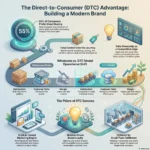
- D2C’s share of US retail ecommerce has flattened at roughly 15%, according to eMarketer, after years of rapid gains.
- Digitally native brands are set to account for less than a fifth of D2C ecommerce sales by 2026. Established brands going direct make up the rest.
- Rising paid social costs and the economics of shipping single orders broke the growth-at-any-price playbook.
- Nike, Warby Parker, Allbirds and Parachute all rebalanced their channel mix between 2024 and 2026, in different directions.
- The durable advantages are first-party data, brand control and retention, not channel purity.
What the D2C Model Actually Is
Direct-to-consumer means a brand sells to the shopper without a wholesaler or retailer in between. The brand owns the storefront, the checkout, the customer record and the aftercare. It also owns every cost that a retail partner used to absorb: acquisition, fulfilment, returns, customer service and payment processing.
That trade is the whole model in one sentence. You give up the retailer’s traffic and logistics, and you get the margin and the data instead.
If you are planning a direct channel of your own, our practical guide to building a direct-to-consumer strategy covers channels, first-party data, operations and a 90-day launch plan. This article looks at the market side: how far D2C brands in retail have grown, where that growth stalled, and what the best-known brands did about it.
How It Differs From Selling on a Marketplace
A brand listing on Amazon or a large marketplace is not doing D2C in the strict sense, because the platform holds the customer relationship and the transaction data. The distinction matters in practice: marketplaces give you demand you did not have to create, while a direct channel gives you information you cannot buy back later. Most brands now run both, and treat them as different jobs rather than competing religions.
The Traits Successful D2C Brands Share
- A reason to buy direct. Better price, better fit service, exclusive products or a subscription. Convenience alone is not a reason any more.
- Data discipline. Behaviour and preference data feed product decisions, not just retargeting. A customer data platform is usually where that discipline becomes operational.
- Brand control. Pricing, presentation, packaging and the unboxing experience stay consistent because nobody else touches them.
- Honest positioning. Claims that survive contact with reviews. Brand storytelling works when it is checkable.
Where D2C Stands in 2026
The headline number is a plateau. eMarketer puts D2C at 14.9% of US retail ecommerce in 2025, a share that has held roughly flat for several years rather than climbing. That is not a collapse; it is a market finding its level.
The composition inside that share tells the more interesting story. eMarketer expects digitally native brands, the Warby Parker and Casper archetype, to make up less than 20% of D2C ecommerce sales by 2026. The majority now comes from established manufacturers and legacy brands running their own channel alongside wholesale. D2C stopped being a startup category and became a capability that large companies added.
Physical retail, meanwhile, never went anywhere. eMarketer’s figures put stores at 83.7% of all US retail sales in 2024, worth $6.234 trillion. Any strategy that treats online-only as the endgame is arguing with that number.
Why the Growth Playbook Stopped Working
Three pressures compounded between 2021 and 2026.
Acquisition on Rented Channels Got Expensive
The original D2C flywheel ran on cheap social advertising. eMarketer’s analysis of the plateau puts rising social ad impression costs first among the causes, and the mechanism is simple: when the cost of a first order approaches the margin on that order, growth stops funding itself. Brands that never built repeat purchase found this out at scale. This is why customer retention moved from a nice-to-have metric to the number the board asks about first.
Weak Brand Building Left Nothing Behind
The second cause eMarketer identifies is strategic: many digitally native brands optimised for promotions and immediate conversion while under-investing in brand marketing. The result was low lifetime value and customers who moved on the moment a discount ended. Performance marketing buys transactions. It does not, on its own, build the preference that makes the next transaction cheaper.
Trade Rules Changed the Arithmetic
Cross-border D2C got materially harder. US Customs and Border Protection suspended the de minimis duty exemption for low-value shipments arriving through every mode except the international postal network, effective 24 June 2026. Packages valued at $800 or less can no longer use the streamlined release-from-manifest process and must go through formal or informal entry instead. CBP’s own justification cites volume: 1.36 billion low-value shipments processed in 2024, against 139 million in 2015.
For a brand shipping single parcels from overseas, that means added duty exposure, more data per shipment and slower clearance. If you sell across borders, the practical implications are worth reading alongside the wider cross-border ecommerce picture and your supply chain resilience plan.
What the Direct Model Still Delivers
A Customer Relationship You Actually Own
When someone buys from your site, you learn what they bought, what they considered, what they returned and what brought them back. A retail partner does not hand that over. This is the one advantage that compounds, and it is the reason zero-party data strategies became central as third-party tracking degraded.
Brand and Quality Control
No intermediary means no unauthorised discounting, no tired shelf display and no version of your product presented in a context you did not choose. For categories where presentation carries real weight, from beauty to premium hardware, that control is a genuine moat rather than a talking point.
Faster Product Feedback
Direct sales shorten the loop between a product decision and evidence about whether it worked. Reviews, returns reasons and support tickets arrive unfiltered. Brands that route this into development, rather than only into marketing copy, iterate faster than competitors reading quarterly sell-through reports from a retailer.
Pricing Flexibility
Owning the checkout means owning the price. Bundles, subscriptions, loyalty pricing and tests all become possible without a partner’s sign-off, which is why dynamic pricing is easier to run in a direct channel than through distribution.
How the Best-Known D2C Brands Adapted
Nike: Rebalancing, Not Retreating
Nike pushed hard into direct sales for years, then corrected. NIKE Direct revenues were $18.8 billion in fiscal 2025, down 13% on a reported basis, against total NIKE Brand revenues of $44.714 billion, down 9%. Direct still accounts for a large share of the business, but the company has been deliberately rebuilding wholesale relationships. eMarketer’s read is blunt: the pull of physical stores proved too strong to ignore.
The lesson is not that direct failed at Nike. It is that a channel mix optimised purely for margin can cost you reach.
Warby Parker: Profit Came From Stores
Warby Parker started as the canonical digitally native brand and reached its first full year of positive GAAP net income in 2025: $871.9 million in net revenue, up 13%, with net income of $1.6 million. It ended the year with 323 stores across 102 markets and planned roughly 50 more in 2026. Average revenue per customer rose 5.7% to $324.
A brand built to bypass retail found profitability by opening retail. That is the most quoted D2C reversal for a reason, and it sits alongside the broader move toward phygital retail formats that blend online convenience with physical trial.
Allbirds and Parachute: Retrenchment
The other direction is equally instructive. Allbirds moved to close its remaining full-price US stores by the end of February 2026, keeping two outlets and two London locations, and redirected effort toward ecommerce, wholesale and international distribution. It had operated 45 US stores two years earlier. Parachute Home closed 19 of its 26 retail locations by June, pivoting toward wholesale relationships including Target alongside direct digital sales. Outdoor Voices closed all 16 of its stores and was acquired by a private equity firm.
The common thread, as PYMNTS put it, is cost: rent, staffing, inventory and buildout strain margins that were already thin. Staffing models shifted with it, as more brands leaned on flexible and contract labour to cover fulfilment peaks and seasonal support, part of the wider gig economy shift in how retail work gets staffed.
Dollar Shave Club: The Subscription Exit
Dollar Shave Club proved that a subscription model could take share from entrenched incumbents. It also proved the ceiling. Unilever announced the sale of a majority stake to Nexus Capital Management in October 2023, seven years after acquiring it. Subscription remains a strong D2C mechanic when the product is genuinely consumable, but it is not immune to subscription fatigue when customers audit their recurring charges.
What the Market Shift Means for D2C Brands Now
The numbers and case studies above point to five practical lessons. For the complete playbook, from channel mix to fulfilment, see our step-by-step approach to selling direct.
Fix Retention Before Buying More Traffic
If a second purchase is unlikely, paid acquisition is a subsidy, not an investment. Start with repeat rate, order frequency and reasons for churn. Loyalty programmes, replenishment prompts and genuinely useful post-purchase communication move these numbers more reliably than another creative test. The current thinking on customer loyalty is a better starting point than another round of prospecting spend.
Treat Channels as a Portfolio
Wholesale supplies reach. Marketplaces supply demand. Your own store supplies margin and data. Retail media supplies visibility where people already shop. Very few brands should pick one. The practical work is deciding which products, price points and moments belong in which channel, which is the core of omnichannel marketing.
Make Personalisation Specific
Generic personalisation is now table stakes and mostly ignored. What still moves numbers is specificity: sizing help that reduces returns, replenishment timing that matches actual consumption, and recommendations built from purchase history rather than session behaviour alone. See how ecommerce personalisation and AI-powered personalisation are being applied, and note where the returns diminish.
Prepare for Agent-Mediated Buying
A newer variable: AI assistants that complete purchases on a shopper’s behalf. OpenAI and Stripe published the Agentic Commerce Protocol, an open standard for how agents and merchants exchange product, pricing and payment information, and Salesforce has announced support for it in collaboration with Stripe. McKinsey’s estimate, cited widely, is that agentic commerce could orchestrate $900 billion to $1 trillion in US B2C retail revenue by 2030. Treat that as a projection rather than a fact, but the structural point stands: if an agent cannot read your catalogue, it cannot buy from you. Clean product data, accurate stock and structured pricing become distribution, not housekeeping. This is the same shift that made conversational commerce matter, now with the assistant holding the payment method.
Reduce Friction Where It Costs You Orders
Mobile is where most direct traffic lands, so a checkout that fights a thumb is an expensive design choice. The current state of mobile commerce is worth auditing against your own funnel. Payment choice matters too: buy now, pay later lifts conversion in some categories and drags on margin in others, so measure it rather than assuming.
Where D2C Goes Next
The direction of travel is toward brands that are channel-agnostic and relationship-obsessed. Discovery keeps moving into places brands do not own: social commerce feeds, AI answers, marketplace search. Fulfilment keeps getting more expensive. Trade rules keep tightening. Secondary markets add another pressure, as the recommerce trend puts a brand’s own products back into circulation at prices it does not set.
What remains defensible is what the direct channel was always best at: knowing your customers, controlling your product experience and earning the second purchase. Brands that use direct sales as a listening post rather than only a sales channel are in a stronger position than those that treated it as a way to avoid paying a retailer.
The evidence from 2024 to 2026 is consistent. The winners in D2C retail are not the purists. They are the brands that kept the customer relationship and stopped being precious about where the transaction happens.
Found this useful?
Make SmartKeys a preferred source on Google, and our articles will surface more often in your Top Stories, AI Overviews, and AI Mode.
Add as Preferred Source