
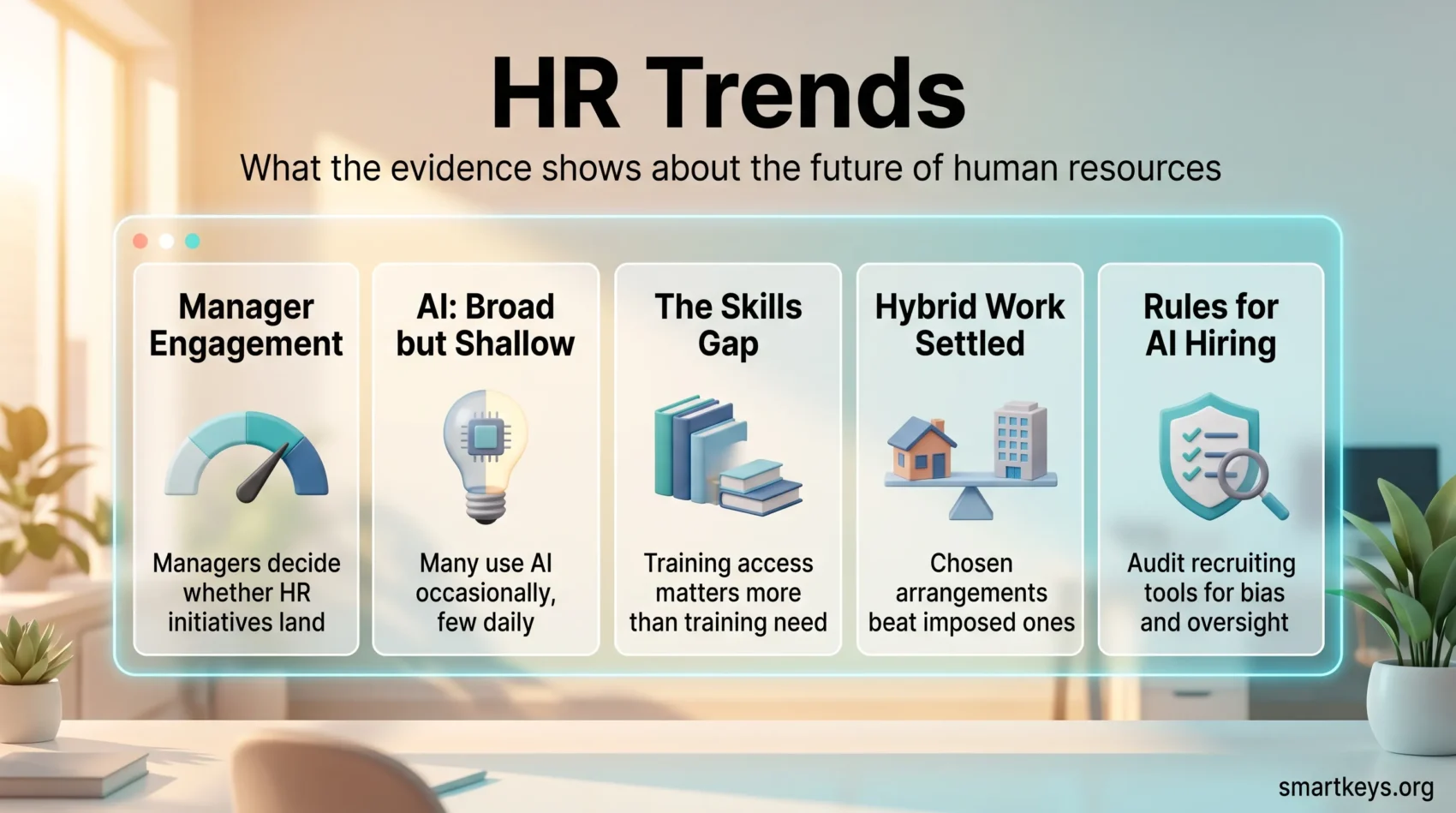
Human resource management in 2026 is being judged on evidence rather than ambition. Half of US employees now touch AI at work, global engagement has fallen to its lowest level in years, and the rules governing algorithmic decisions in hiring have finally been written down. The HR trends that matter this year are the ones backed by data you can check.
This guide covers what the current Gallup, World Economic Forum and peer-reviewed research actually show about AI at work, hybrid arrangements, skills disruption, DEI, the four-day week, the blended workforce and digital HR systems, plus what each finding means for the way you run HR.
Key Takeaways
- Half of US employees used AI in their role at least occasionally in Q1 2026, but only 13% use it daily (Gallup).
- Global employee engagement sits at 20%, and manager engagement has dropped to 22% (Gallup, 2026 report).
- Nearly 40% of the skills required on the job are set to change by 2030 (World Economic Forum).
- Hybrid work has stabilized rather than collapsed: 52% of remote-capable US employees work hybrid.
- The four-day week now has peer-reviewed evidence behind it from a six-country trial.
- EU rules on high-risk AI in recruitment have been pushed back, but transparency and AI literacy duties already apply.
Where HR Actually Stands in 2026
The defining HR problem of 2026 is not technology adoption. It is engagement. Gallup’s State of the Global Workplace puts global employee engagement at 20%, its lowest level since 2020 and down from 23% in 2022-2023. Manager engagement fell further and faster, from 31% in 2022 to 22%, and that nine-point drop accounts for most of the overall decline.
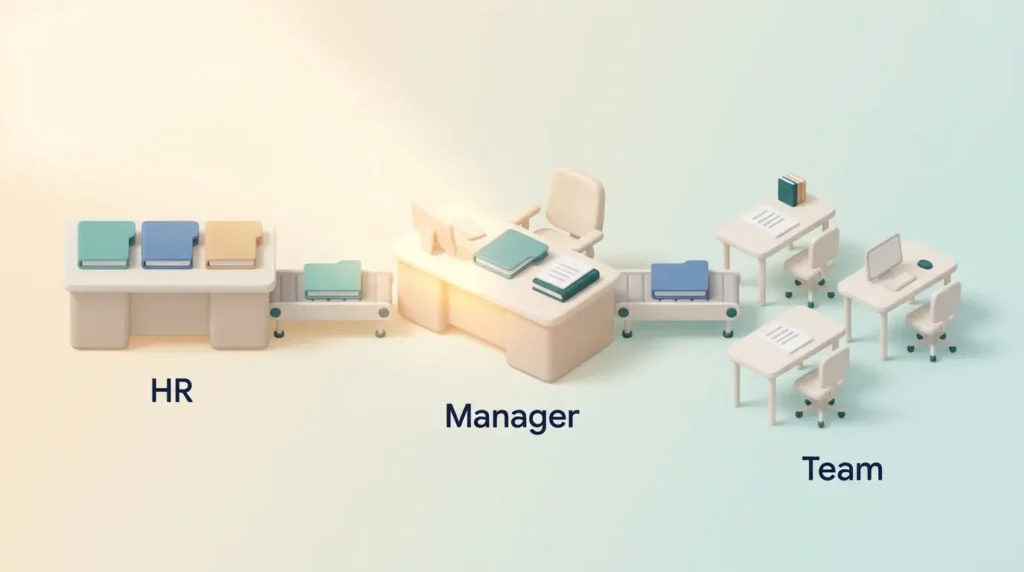
That matters because managers are the transmission mechanism for almost everything HR does. A reskilling program, a hybrid policy or an AI rollout that a disengaged manager does not believe in will not land with their team. Gallup’s own data offers the counterpoint: inside organizations that apply best practices, manager engagement reaches 79%, so the decline is not inevitable.
There is one piece of better news. Employee wellbeing improved for the first time in three years, with 34% of employees reporting they are thriving, up a point from 2024. Read alongside the relationship between technology and job satisfaction, the picture is of a workforce that is more comfortable than it was, but less invested.
Generative AI: From Pilot to Daily Tool, Unevenly
Generative AI has moved from experiment to routine for a large minority of workers, and remains untouched by everyone else. The honest version of the HR technology trends story is that adoption is broad but shallow.
What the Adoption Numbers Really Say
Gallup’s quarterly tracking found that 50% of employed US adults used AI in their role at least a few times in Q1 2026, up from 46% in Q4 2025 and 21% in mid-2023. But frequency tells a different story: 28% use it several times a week or more, and only 13% use it daily. Forty-one percent say their employer has integrated AI tools into organizational practices.
So the useful management question is no longer whether people use AI. It is whether the 13% who use it daily are producing measurably different work from the 37% who use it occasionally, and what closed that gap. Our review of what the 2026 evidence shows about AI and automation at work covers the return-on-investment problem in more detail.
Where AI Is Landing Inside HR
Within HR functions specifically, the highest-value uses remain unglamorous: drafting job descriptions, summarizing interview notes, answering routine policy questions and triaging service requests. For a closer look at sourcing, interview scheduling and HR analytics tools, see our guide to AI recruitment and HR automation tools. HR chatbots handle the first line of employee questions, while AI-powered engagement surveys shorten the loop between a sentiment shift and a manager acting on it.
The caution worth repeating: 18% of US workers think it is likely their job will be eliminated within five years because of AI or automation, rising to 23% among those already in AI-adopting organizations. Announcing an AI program without addressing that fear is how you convert a productivity project into a retention problem. Practical approaches to augmenting rather than replacing human work are usually the easier internal sell.
The Impact of Generative AI on Management Styles
Generative AI changes what managers spend their time on, which means it changes what good management looks like. Drafting, summarizing and first-pass analysis move to the tool; judgment, context and accountability stay with the person.
Training Managers for a Hybrid, AI-Assisted Team
Manager development in 2026 has three practical priorities:
- Knowing which decisions may be informed by AI output and which must not be delegated to it.
- Running teams where some members use AI daily and others barely at all, without letting output quality diverge silently.
- Coaching and feedback, which remain the highest-leverage manager behaviors and the ones most often crowded out.
Given how sharply manager engagement has fallen, treating manager capability as an afterthought is the most expensive mistake available in HR right now. Broader shifts in expectations are covered in our overview of leadership trends in 2026.
Shifts in Leadership Approaches in a Digital Age
In an AI-assisted organization, leadership work concentrates on:
- Continuous learning to keep pace with tools that change quarterly.
- Communicating clearly about what AI is and is not being used to decide.
- Human oversight in AI-assisted decision-making.
This is less a new leadership philosophy than an old one under new pressure: be explicit about how decisions get made, and be present enough that people believe you.
Career Development Against a Backdrop of Job Anxiety
Employees are not waiting for their employers to tell them whether their skills will still be needed. They are hedging: taking on side projects, refreshing their professional profiles, and quietly keeping an eye on the market. The label for this behavior changes every couple of years; the underlying driver does not.
The Skills Problem, Sized
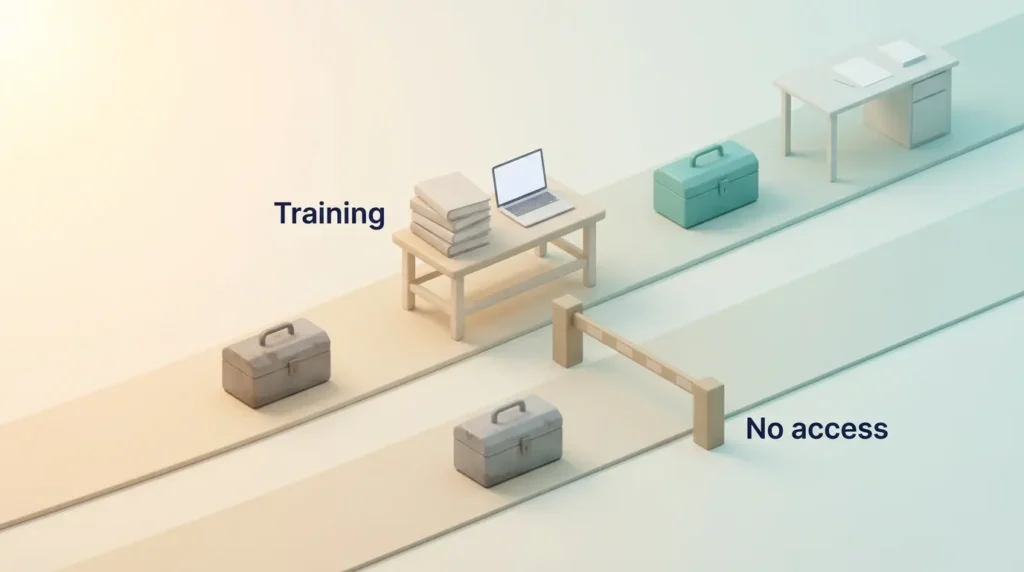
The World Economic Forum’s Future of Jobs Report 2025 gives the clearest available numbers. By 2030, it projects 170 million new jobs created and 92 million displaced, a net gain of 78 million, with job disruption equivalent to 22% of all jobs. Nearly 40% of the skills required on the job are expected to change. Of every 100 workers, 59 will need reskilling or upskilling by 2030, and 11 are unlikely to receive it, which puts more than 120 million people at medium-term risk of redundancy.
That last figure is the one to put in front of your executive team. The gap is not between workers who need training and workers who do not. It is between workers who will get training and workers who will not.
What Actually Helps
Programs that hold up under scrutiny share a few features:
- Honest conversations about which roles are changing, before the reorganization, not after.
- Targeted upskilling and reskilling tied to roles that will still exist.
- Visible internal mobility, which an internal talent marketplace makes far easier to operate at scale.
- Short, repeated learning rather than annual courses. The case for microlearning is largely a case about retention and time.
- Regular review of pay and benefits, since pay transparency has made vague compensation stories much harder to sustain.
Career development is also one of the cheapest available burnout interventions. People cope with change far better when they can see where it leads them.
AI in HR Now Comes With Rules
Until recently, HR teams could treat AI governance as a future problem. That is no longer true, and the compliance calendar changed again in 2026.
Under the EU AI Act, AI systems used for recruitment, candidate selection, targeted job advertising, evaluation, monitoring and termination decisions are classified as high risk. Those obligations were originally due to bite on 2 August 2026. Following the Digital Omnibus, agreed politically on 6 May 2026 and confirmed by member state representatives on 13 May, compliance for stand-alone Annex III high-risk systems, which includes employment tools, moves to 2 December 2027.
Three things follow. First, a deferral is not a cancellation: risk assessments, documentation, bias testing, human oversight and worker-facing transparency are still coming. Second, other parts of the Act, including transparency duties and the AI literacy obligation, are not covered by that postponement. Third, the direction of travel is unchanged, which is why bias in algorithmic recruitment tools is worth auditing now rather than in 2027. Teams outside the EU should not assume this is someone else’s problem, as vendor products are generally built to the strictest applicable standard.
DEI and Inclusive Recruiting Under New Rules
Diversity, equity and inclusion (DEI) programs have not disappeared in 2026, but many have been renamed, narrowed or rebuilt. In the US, Executive Order 14173 of January 2025 targeted what it called “illegal DEI” and pushed many employers, especially federal contractors, to review programs built around demographic targets. In Europe the pressure runs the other way: the EU Pay Transparency Directive had to be written into national law by 7 June 2026, and most member states missed that deadline, but the direction is set.
For HR, the practical result is the same on both sides of the Atlantic. Inclusion work has to rest on fair, documented processes rather than slogans. In recruiting, that usually means:
- Structured interviews with the same questions and scoring rubric for every candidate.
- Skills-based assessments that judge work samples instead of CVs alone.
- Sourcing from a wider range of channels, so the candidate pool is broad before anyone screens it.
- Regular checks of pass-through rates at each hiring stage, which show where good candidates drop out.
A culture of respect still does the heavy lifting after the hire: anonymous feedback channels, managers trained to run inclusive meetings, and pay decisions you can explain. Our overview of diversity and inclusion trends covers how programs are being redesigned.
Hybrid Work Environments: Settled, Not Retreating
Hybrid work trends are frequently reported as either a collapse or a triumph. The data supports neither. Gallup’s Q2 2025 figures for remote-capable US employees put hybrid at 52%, exclusively remote at 28% and fully on-site at 21%. The hybrid share has drifted by a few points across recent quarters rather than reversing.
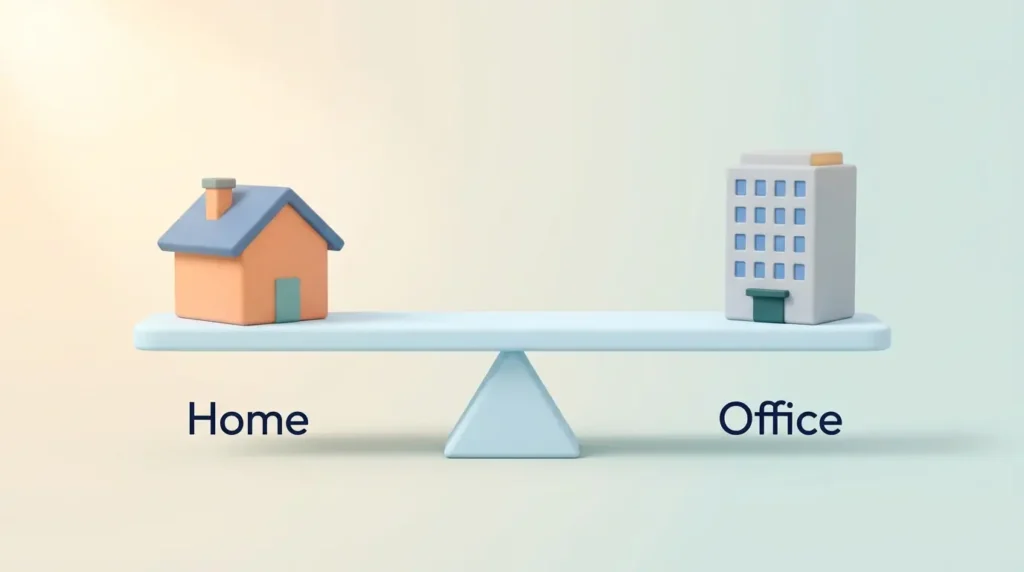
What has shifted is sentiment. Gallup found job market optimism rising only among fully on-site workers, while fully remote workers became less optimistic and remote-capable employees required back on-site full time recorded the sharpest fall of all. Hybrid workers were flat. In other words, the arrangement people are in matters less than whether it was chosen or imposed.
For HR, the practical work is unglamorous: written norms about which days and which meetings are in person, equal access to information regardless of location, and managers who evaluate output rather than visibility. Our guide to flexible work schedules covers implementation, and remote employee engagement covers the isolation problem that flexibility alone does not solve.
The Blended Workforce: Full-Time, Part-Time and Beyond
Most organizations now run a mix of permanent staff, part-timers, contractors and specialist freelancers. The management challenge is that these groups usually sit in different systems, under different rules, with different levels of visibility to leadership.
Managing Contingent Talent Properly
Three practices separate organizations that handle this well from those that discover problems during an audit:
- One view of total talent, so leaders can see who is doing the work regardless of contract type.
- Deliberate classification discipline, because worker status rules differ by jurisdiction and change often.
- Pre-vetted talent pools instead of ad hoc sourcing under deadline pressure.
Freelancers and gig workers also need to feel part of the work, not just paid for it. Regular touchpoints to share updates and gather feedback, access to the same onboarding material and tools as employees, and invitations to relevant training all raise the quality of what contingent talent delivers. Clear terms on payment timing and scope protect both sides and make your company the client people want to work for again.
The strategic version of this is set out in our guide to building an on-demand workforce strategy. The demographic pressure behind it, aging workforces and shrinking entry cohorts in several major economies, is covered in how work adapts to demographic shifts.
The Four-Day Week Now Has Peer-Reviewed Evidence
For years the four-day week was argued from press releases. That changed in July 2025, when Nature Human Behaviour published a study of 2,896 employees across 141 organizations in Australia, Canada, Ireland, New Zealand, the UK and the US. Companies restructured their work first, then ran a six-month trial at reduced hours with no reduction in pay.
The trial found significant reductions in burnout and improvements in job satisfaction, mental health and self-reported physical health, none of which appeared in the 12 control companies. The researchers traced the effect through three mechanisms: better self-assessed work ability, fewer sleep problems and lower exhaustion.
Two caveats matter for anyone building a business case. The gains followed deliberate restructuring, not simply removing a day. And participating companies opted in, so they are not a random sample of employers. Our detailed look at the four-day workweek in 2026 covers where shorter weeks break down, particularly in coverage-dependent roles.
Managing a Genuinely Multigenerational Workforce
Many teams now span four or five generations, and the newest cohort is beginning to move into management. Rather than treating generational labels as personality types, the more useful framing is that people entered the workforce under different conditions and formed different default expectations about feedback, communication and career pace.
What consistently helps is specificity: explicit norms on response times and channels, feedback that is frequent rather than annual, and mentoring arrangements that run in both directions. Our guides to bridging age gaps at work and how Gen Z is shaping the future of work go further into the practical mechanics.
Digital HR Transformation: Cloud Systems and Better Data
Many HR teams still run on a patchwork of spreadsheets, a legacy payroll tool and a separate applicant tracking system. Digital HR transformation means replacing that patchwork with connected, cloud-based HR systems, where employee records, payroll, learning and performance data live in one place and can be reached securely from anywhere.
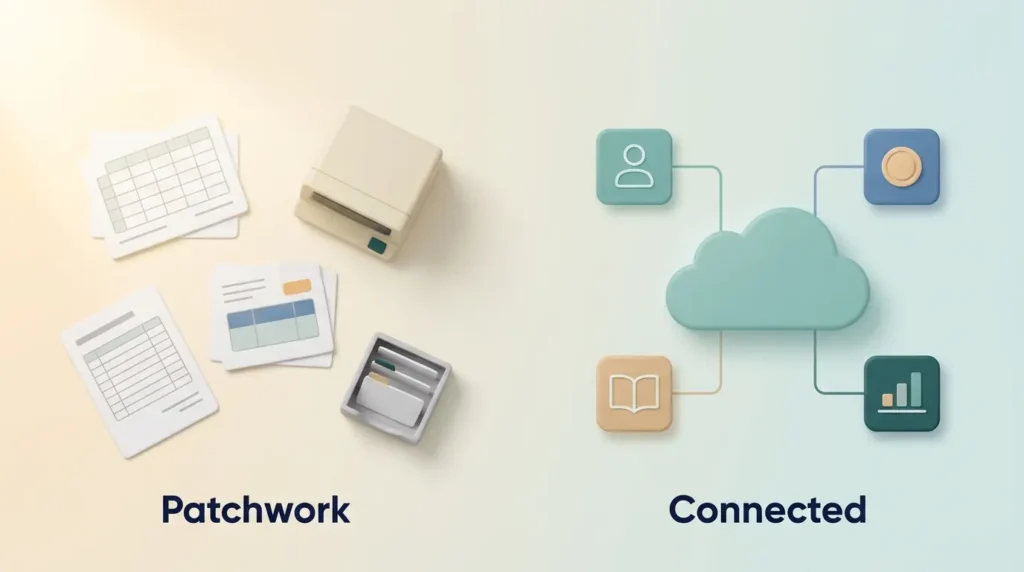
The benefit is less about the software than about what it makes possible. Employees can check payslips, update an address or request time off in a self-service portal instead of emailing HR. Managers see headcount, absence and turnover without waiting for a monthly report. And once data sits in one system, workforce analytics tools can flag patterns, such as a team where resignations are rising, early enough to act.
Two cautions apply. Migrations fail more often from poor planning and weak data quality than from the technology itself, so clean your records before you move them. And every new data flow about employees raises privacy questions, which the EU AI Act and data protection law make harder to ignore.
Sustainability in Talent Management
Sustainability has become part of the HR agenda because it now affects who wants to work for you and what skills you need. Companies with climate targets need people who can measure emissions, redesign processes and report credibly, and those skills are scarce.
HR contributes in three practical ways. It can recruit for sustainability skills where roles genuinely need them, build training so existing staff understand how their work affects the company’s environmental goals, and make sure what the company says about its commitments matches what employees see day to day. That last point matters more than it sounds: employees quickly notice when a sustainability message is not backed by action. Our guide to sustainable work practices covers the operational side.
Driving Productivity and Engagement Without Guesswork
With engagement at 20%, the temptation is to buy something. The more reliable sequence is to measure, act on one thing, and check whether it moved.
Solutions That Hold Up
Across the research, the interventions that survive scrutiny are consistent:
- Clear, written expectations, which matter more in distributed teams than in co-located ones.
- Real flexibility over hours as well as location, which is what most employees actually mean by flexibility.
- Mental health support that managers are trained to point people towards, not just a benefits page.
- Meaningful career conversations at least twice a year.
Consolidating these into one system rather than a stack of disconnected tools makes them far easier to sustain, and periodic review of pay and benefits keeps the offer competitive.
Using AI Without Losing the Plot
AI is genuinely useful for spotting patterns in feedback that a human reading 4,000 free-text comments would miss. It is not a substitute for acting on what those comments say. The failure mode is well documented: organizations that survey frequently and act rarely see engagement fall, not rise, because employees learn that feedback goes nowhere.
Conclusion
The through-line in the 2026 HR trends is a narrowing gap between claims and evidence. AI adoption is real but shallower than the marketing suggests. Hybrid work has settled into a stable mix rather than swinging to either extreme. The four-day week finally has a peer-reviewed trial behind it. DEI is moving from slogans to documented processes, and HR data is moving into connected cloud systems. Skills disruption is measurable, and the training gap is measurable too.
The organizations that will handle the next two years well are not the ones with the longest tool list. They are the ones that rebuild manager capability, tell people the truth about how their roles are changing, and can show which of their people practices actually moved a number. For a wider view of where this is heading, see our analysis of work trends to 2030.
Found this useful?
Make SmartKeys a preferred source on Google, and our articles will surface more often in your Top Stories, AI Overviews, and AI Mode.
Add as Preferred Source