AI in management is no longer a pilot project. It already drafts reports, schedules shifts, flags risks and summarizes meetings, work that used to fill a manager’s week. That raises a fair question for anyone who leads a team: if software can do the coordinating, what is left for the manager? This guide explains what AI actually takes over, what stays human, why some companies are cutting management layers, and how to lead well when AI becomes part of the team.
The short answer: AI is unlikely to make managers obsolete, but it is changing the job faster than most job descriptions admit. The managers who do well treat AI as a capable assistant and put their own time into judgment, coaching and trust.
Key Takeaways
- AI handles much of the reporting, scheduling and monitoring that used to define middle management.
- Gartner predicts that through 2026, 20% of organizations will use AI to flatten their structure and remove more than half of current middle management positions.
- Managers still own judgment, coaching, ethics and trust, the parts of the job AI cannot do well.
- Teams adopt AI faster when their manager actively supports it, according to Gallup’s 2026 workplace research.
- Trust in AI-supported teams has to be built on purpose through transparency and clear rules.
- Hybrid management, where AI does the analysis and people make the calls, is the most realistic model for the next few years.
The Rise of AI in Management
AI in management means using software that learns from data to support or automate management tasks. Typical examples are forecasting demand, drafting status reports, spotting projects that are slipping and preparing performance data before a review. For many companies, AI is becoming a standard part of how the business runs, not a side experiment.
The newest step is the AI agent: a program that takes a goal and works through the steps on its own, such as collecting figures from several tools and writing a weekly summary. AI agents in business move AI from answering questions to finishing tasks, and that is exactly the kind of work many managers used to coordinate by hand.

Microsoft’s 2025 Work Trend Index shows where leaders think this is heading. Leaders expect their teams to be training (41%) and managing (36%) AI agents within five years. And 82% expect to use this kind of digital labor to expand their workforce within 12 to 18 months. In other words, many employees will soon have a small management job of their own: directing agents.
The shift is uneven, though. Some teams use AI every day, others barely touch it, and many companies still lack clear rules on which tools are allowed and what data may go into them. That gap is where managers make the biggest difference.
Understanding the Role of Traditional Managers
To see what AI can replace, it helps to split a manager’s job into two parts. The first is coordination and control: collecting updates, tracking deadlines, approving routine requests and compiling reports. The second is people and judgment: setting direction, deciding between competing priorities, coaching, resolving conflict and holding the team together when things go wrong.
Managers also act as a bridge. They translate strategy from the top into concrete work for the team, and they carry problems from the front line back up. That translation role depends on context, relationships and trust, which is why it is hard to automate.
AI is strong at the first part and weak at the second. It can process more data than any person, but it does not know that a team member is dealing with a family emergency or that two colleagues quietly stopped cooperating. This is the same split that shapes the wider debate on which parts of a job AI takes over and which it augments.
As routine work moves to software, the manager’s role tilts toward the human side. Managers also become responsible for how AI is used on their team: which tools are allowed, how outputs are checked, and how data bias is caught before it harms anyone.
How AI Is Transforming Leadership Practices
Leaders now make many decisions with AI-generated analysis in front of them. A service lead can see which customer issues are rising this week instead of waiting for a monthly report. Tools such as Salesforce’s Agentforce go a step further and let companies deploy AI agents that answer routine customer questions on their own, while people handle the complex cases.
In some companies, software now assigns shifts, routes tasks and rates performance with little human involvement. This practice is called algorithmic management, where software rather than a person directs everyday work. It can be efficient, but it also shows the risk: when no human explains or questions the decisions, trust drops quickly.
Job security is the first concern most employees raise. Goldman Sachs estimated in 2023 that generative AI could expose the equivalent of 300 million full-time jobs worldwide to automation. Talking about this openly works better than silence. Show people where AI will take over tasks, where their role grows, and how automation can open paths to redeployment and new training instead of layoffs.
Leadership style shifts as well. Command-and-control styles lose value when information is available to everyone. Coaching, servant leadership and clear communication matter more, because the manager’s advantage is no longer knowing more but helping people make sense of what they know.
Automation in Leadership Strategies
Automation changes not only individual tasks but the shape of the organization. When reporting, scheduling and performance monitoring run automatically, one manager can oversee more people. That is why some companies are removing entire management layers.
Gartner predicts that through 2026, 20% of organizations will use AI to flatten their structure, eliminating more than half of current middle management positions. McKinsey estimated in 2023 that generative AI and related technologies could automate work activities that take up 60 to 70 percent of employees’ time today.

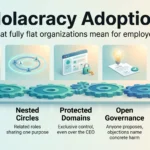
Flatter structures are not automatically better. Fewer layers can mean faster decisions, but also fewer career steps and overloaded managers with too many direct reports. If your company is heading that way, look at what fully flat organizations mean for employees and how AI-driven organizational design can decide who owns which decisions.
A practical AI strategy for leaders starts small. Pick one recurring task, such as the weekly status report, automate it, and measure the time saved. Pilot projects also make it easier to show teams how AI reaches its results, which lowers resistance. Keep cross-functional teams involved so that ethics, data protection and upskilling are handled from the start rather than patched in later.
AI-Driven Decision-Making in Business
AI helps managers decide faster by predicting demand, spotting patterns in customer feedback and flagging risks early. Retailers use it to plan inventory, streaming services to recommend content, and finance teams to detect unusual transactions. The key for managers is knowing when to trust the model and when to overrule it. For a detailed look at methods, bias risks and the rules that now apply, see our guide on how managers use AI for business decisions.

Benefits of AI for Managers
For managers, the biggest benefit of AI is time. Used well, it takes over the administrative load and leaves more room for the work only people can do.
Enhanced Productivity through Automation
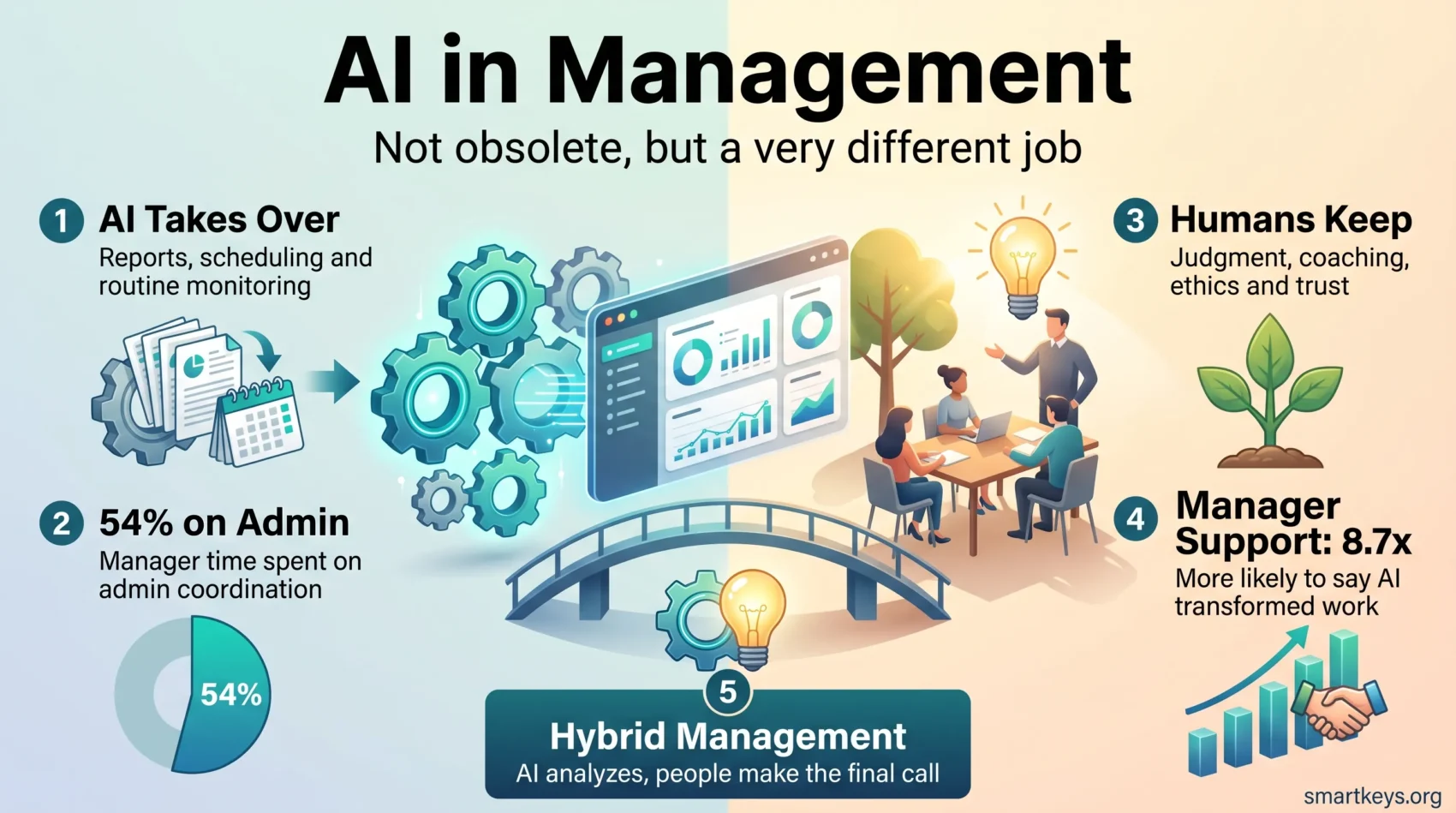
A survey by Accenture, published in Harvard Business Review in 2016, found that managers at all levels spent 54% of their time on administrative coordination and control. That is exactly the kind of work AI handles well: chasing updates, compiling numbers and preparing documents.
The Associated Press offers a well-known example of what automation can do. After it automated its quarterly earnings stories, it went from about 300 reports per quarter to roughly 4,400, and reporters had more time for deeper stories. For a manager, the equivalent might be automated weekly dashboards that free up a full afternoon.
Data-Driven Insights for Better Strategy
AI also gives managers a clearer view of how work is going. Real-time dashboards make it easier to set and track goals such as OKRs (Objectives and Key Results, a method for setting a few measurable goals per quarter). Instead of guessing, you see which goals are on track and which are stuck.
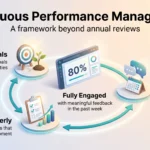
Performance conversations can improve too. HR platforms like Workday now use AI to surface information about employee skills and goals. Combined with continuous performance management with regular check-ins, this replaces the stressful annual review with steady, fact-based feedback. The manager still has to have the conversation. AI only prepares it.
Challenges Faced by Human Managers in the Age of AI
AI makes some parts of management easier and others harder. Two challenges stand out: learning to work with new tools and closing the emotional intelligence gap.
Difficulty in Adaptation to New Technologies
Many managers find it hard to fit AI tools into existing workflows. The tools change quickly, the results are not always reliable, and there is little time to learn. Some managers resist because they worry about losing control or relevance.
What helps is a steady learning routine rather than one big training day. Organizations that treat AI adoption as a structured change management process give managers time to test tools, share what works and drop what does not.
The Emotional Intelligence Gap
Emotional intelligence, the ability to notice and manage your own emotions and those of others, becomes more important as AI takes over routine work. AI can detect that response times are slipping, but it cannot sit down with a stressed team member and find out why.
That makes empathy, listening and conflict resolution core management skills rather than nice extras. Investing in soft skills for the future of work is one of the most reliable ways for managers to stay valuable.
Leading Teams When AI Joins the Work
When AI tools become part of daily work, team dynamics change. Who gets credit for AI-assisted results? How much should people rely on a tool that is sometimes wrong? Managers have to answer these questions before they turn into conflict.
How Communication Changes
AI already shapes how teams communicate. Meeting assistants write summaries and action items, writing tools adjust tone, and chat tools answer routine questions around the clock. That removes friction, but it also means fewer informal conversations where problems usually surface early.
Good managers compensate on purpose. They keep regular one-to-ones, ask directly how the team feels about new tools, and make sure quieter team members are heard. Some find that AI helps here: people who rarely speak up in meetings sometimes contribute more when they can add ideas in writing first. How you combine people and AI in a team decides whether the tools bring people together or push them apart.
Building Trust in AI-Supported Teams
Trust is the foundation of any team, and AI can strengthen or damage it. In a 2019 study by Oracle and Future Workplace, 64% of respondents said they would trust a robot more than their manager. That number is less about robots than about how many employees feel let down by their managers.
To build trust when AI is involved, be transparent. Explain which decisions AI supports, what data it uses and who is accountable when it gets something wrong. Let people question AI outputs without fear. Psychological safety, the feeling that you can speak up without being punished, is what makes that possible. Teams that trust each other also get more out of collaborative intelligence, where people and AI each contribute what they do best.
Future Projections: Is AI Making Traditional Managers Obsolete?
Some management tasks are clearly on the way out. As early as 2019, Gartner predicted that 80% of today’s project management tasks would be eliminated by 2030 as AI takes over data collection, tracking and reporting. Many startups already split coordination work among founders and team leads instead of hiring dedicated coordinators.
What the Data Shows
At the same time, managers matter more than ever for making AI work. Gallup’s State of the Global Workplace 2026 report looked at what drives AI adoption. Employees whose managers actively support AI use are 8.7 times as likely to strongly agree that AI has transformed how work gets done. The same report shows a warning sign: only 22% of managers worldwide were engaged in 2025, down from 31% in 2022. Companies that push AI onto exhausted managers risk losing the people who are supposed to lead the change.
Insights from Industry Experts
Most forecasts point in the same direction. Managers become orchestrators who interpret AI insights, align them with company goals and guide people through change. Coaching, stakeholder management and ethical judgment become the core of the role.
Organizations that want to be ready should act now: clean up their data, train managers in AI basics, and decide which decisions must always have a human in the loop.
The Case for Hybrid Management Approaches
Hybrid management combines what AI does well with what people do well. AI analyzes data, prepares options and handles routine coordination. People set priorities, make the final call on anything that affects others and take responsibility for the outcome.
In practice, a hybrid model might look like this: an AI agent compiles the weekly team report and flags two projects at risk. The manager reviews the flags, talks to the project owners and decides which one gets extra help. The AI saves hours; the manager adds context and accountability.
Ethics is part of hybrid management, not an add-on. AI can repeat bias from past data, for example in hiring or credit decisions, and many companies now create dedicated roles to watch over it. An AI ethics officer who oversees responsible AI use at work and a clear AI governance model with rules, roles and checks give managers a framework instead of leaving every decision to individual judgment.
Trust and open communication hold the model together. When people understand how AI is used and know they can challenge it, they accept it more readily. For a wider view of where leadership is going, see these leadership trends shaping how teams are led.
Conclusion
AI is not making managers obsolete, but it is making the old version of the job obsolete. Reporting, scheduling and monitoring move to software. What remains is harder and more valuable: setting direction, making judgment calls, coaching people and building trust.
If you manage a team, start with one routine task you can hand to AI, use the time you gain for your people, and be open about how AI is used. That combination of AI efficiency and human judgment is what management will look like in the years ahead.
Found this useful?
Make SmartKeys a preferred source on Google, and our articles will surface more often in your Top Stories, AI Overviews, and AI Mode.
Add as Preferred Source