
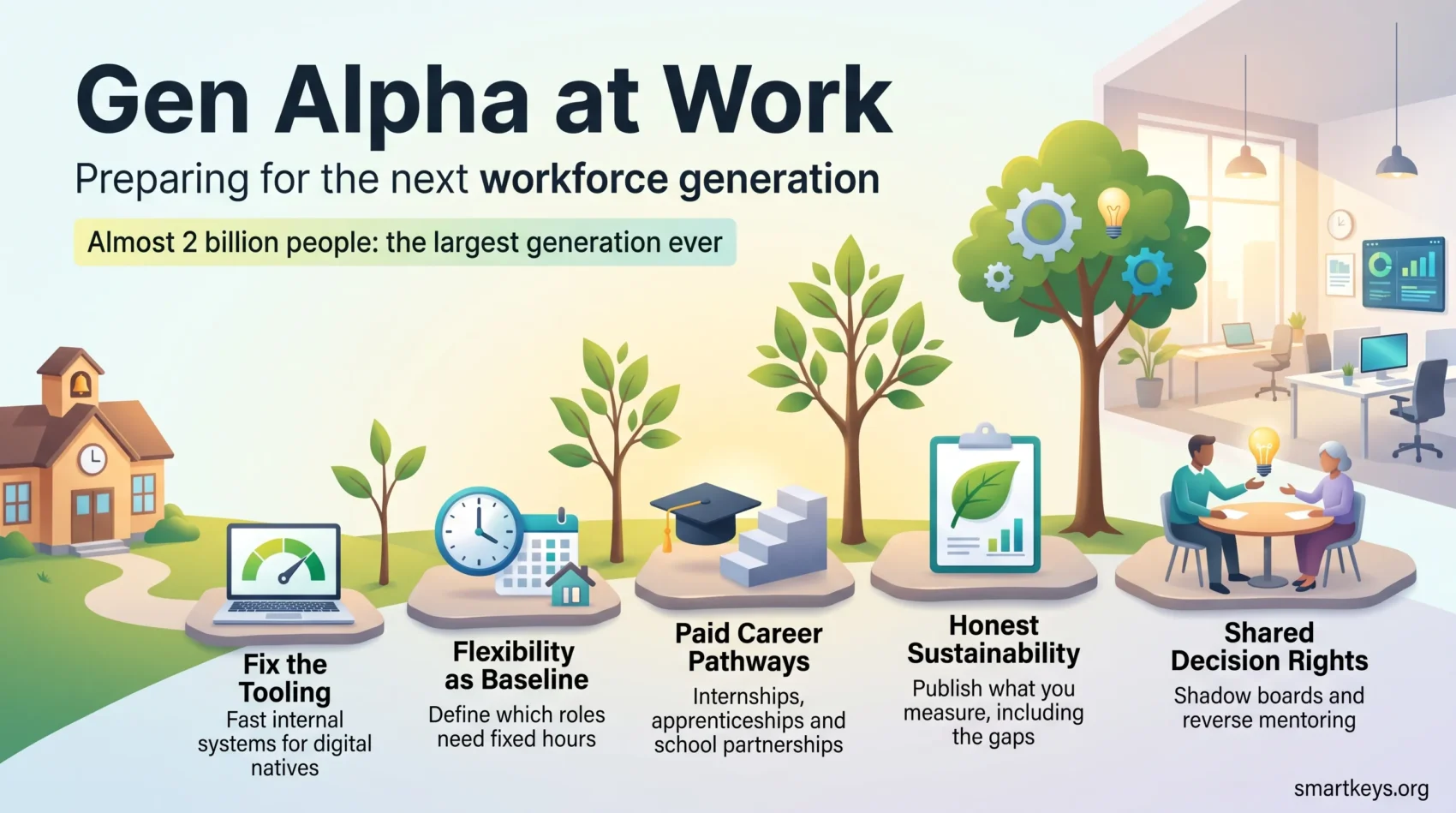
Generation Alpha is the cohort born between 2010 and 2024. The oldest turned 16 in 2026, so many already stack shelves, wait tables or run an online side project. Their first full-time jobs arrive around 2028.
The scale is unusual. Research firm McCrindle, which coined the name, estimates the generation numbered almost two billion people once the birth cohort closed in 2025. That makes it the largest generation in recorded history. The World Economic Forum projects that by 2034, Millennials, Gen Z and the first adult members of Gen Alpha will make up 80% of the workforce in advanced economies.
This article covers what to change in recruiting and training, and how to run a workplace that spans five generations. For the generation arriving now, see our guide to how Gen Z is shaping the future of work.
Key Takeaways
- Generation Alpha covers births from 2010 to 2024, so the oldest already work part-time.
- The first wave of full-time hires lands around 2028, roughly two planning cycles away.
- By 2034 they, plus Millennials and Gen Z, are projected to hold 80% of jobs in advanced economies.
- Almost two billion people belong to this generation, the biggest talent pool ever.
- The practical work now is career pathways, honest sustainability claims and faster internal tools.
Who Generation Alpha Is and Why 2026 Matters
A generational label describes shared conditions, not individuals. What sets this group apart is the environment they grew up in.
They are the first cohort to go through school with generative AI treated as ordinary homework equipment. Generative AI means software that writes text, code or images on request. They also spent formative school years inside the COVID-19 pandemic. Generational researcher Ryan Jenkins calls the “this is always how we’ve done it” mindset “a really slippery slope to irrelevance” for employers facing this group.
Do not assume they all want desk jobs. Talker Research surveyed 2,000 parents and their children aged 5 to 16 for workwear brand Red Wing between May 29 and June 8, 2026. It found 85% of the children wanted a hands-on job, and 90% wanted work that helps people. Among the children who knew what blue-collar careers were, 70% were interested in one.
Gen Alpha will also work longer and change direction more often than their grandparents did. That is the pattern described in our piece on longer, multistage careers. A first job is a starting point, not a track.
How to Prepare for the Gen Alpha Workforce
You do not need a separate Gen Alpha strategy. You need a workplace that works for young hires now. The same fixes apply, and they help your current staff too.
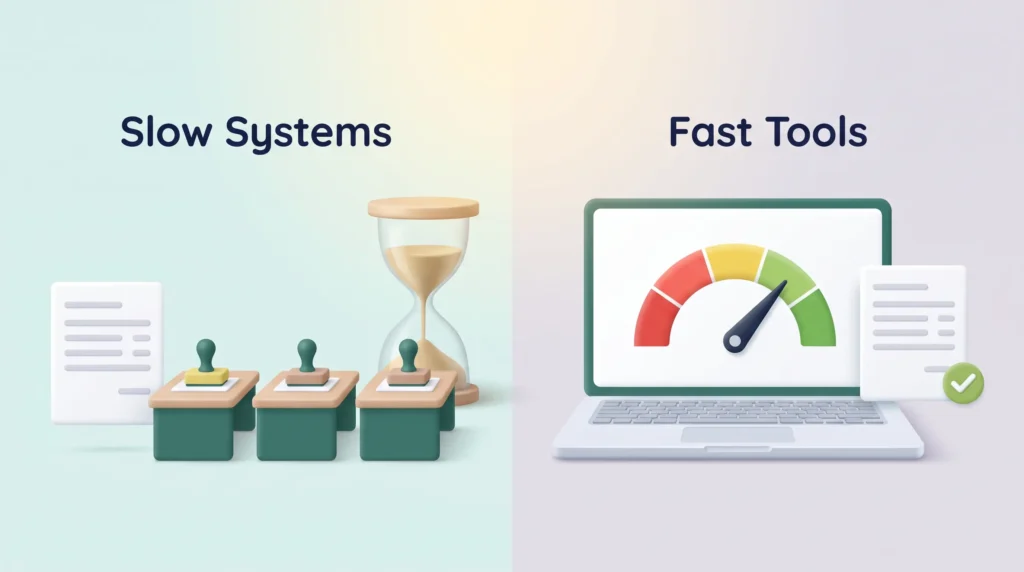
- Fix the tooling first: people raised on instant software lose patience with slow internal systems. If an expense claim takes twenty minutes and three approvals, that is what a new hire remembers. Build digital literacy across the business so the gap between new joiners and long-tenured staff does not widen.
- Treat flexibility as a baseline: Gen Z already expects it, and Gen Alpha will inherit the expectation. Decide which roles really need fixed hours, then write it down. Our guide to flexible work schedules covers what the evidence supports.
- Make inclusion concrete: employee-led groups and clear pay transparency do more than a values page. Broader context sits in our overview of diversity and inclusion in business.
- Be specific about sustainability: young candidates check claims. Publish what you measure and what you have not fixed yet. A vague pledge reads worse than an honest gap.
- Design recognition that travels: lightweight gamification, meaning game elements such as badges or progress bars, and peer recognition help distributed teams see each other’s work. Our review of employee engagement trends shows where they help and where they become noise.
None of this is exotic. It is the same list you would write for keeping the people you already employ, as our guide to talent retention shows.
Training and Career Pathways That Actually Work
The most effective preparation happens before anyone applies. Two programs show what serious early engagement looks like.
Toyota announced Driving Possibilities on March 3, 2022, as a $110 million education and career readiness program run through the Toyota USA Foundation. It focuses on PreK-12 schools in the communities where the company operates, a decade ahead of hiring those students.
Memorial Hermann Health System took a narrower route. With Aldine ISD, a public school district near Houston, it opened HEAL High School in August 2024. The school phases in over four years and is planned for about 760 students at full capacity. Students can earn industry-recognized credentials and take paid health care internships from 11th grade. Bloomberg Philanthropies contributed an initial $31 million.
Most employers cannot fund a school. Talent pipeline partnerships with local schools and colleges are the realistic version, and the transferable ideas are cheaper:
- Offer paid, structured work experience rather than unpaid shadowing. Remote internships make this workable for smaller teams.
- Use simulation for roles that are hard to explain. Our look at virtual reality in job interviews covers what the technology handles well.
- Accept proof of skill, not just degrees. Our guide to micro-credentials in hiring, short certified courses in a single skill, explains how to assess them without lowering the bar.
- Keep learning short and continuous once people join, as set out in our guides to upskilling and reskilling and AI-powered learning platforms.
- Audit your screening tools before application volume rises. Our review of AI hiring tools covers the legal duties.
Making a Five-Generation Workplace Work
By the early 2030s, many organizations will employ people born across five decades. US Department of Labor figures for 2024 put Millennials at about 36% of the labor force and Gen Z at about 18%. Gen Alpha arrives underneath both.
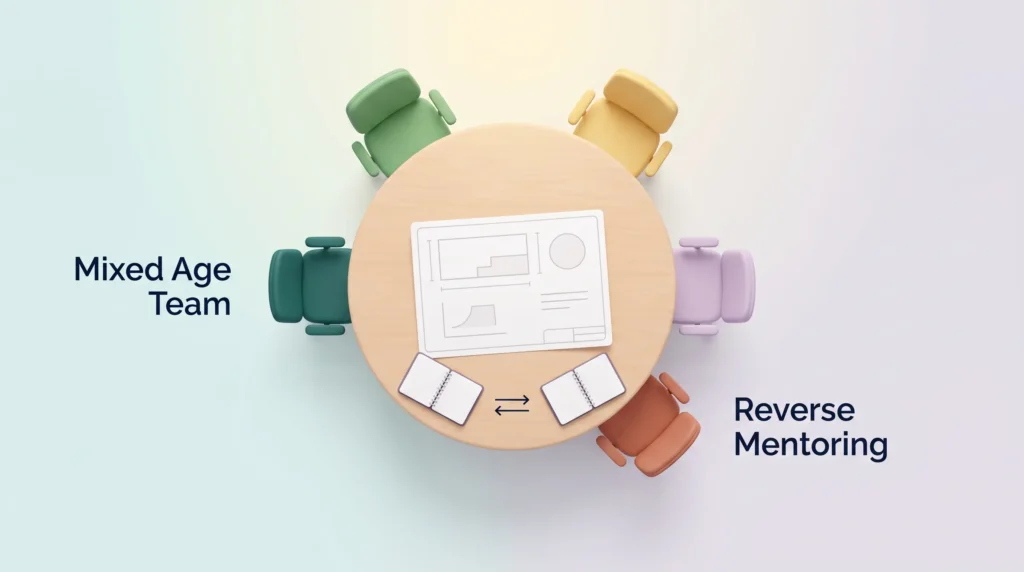
That mix helps only if you design for it. Four practices have a track record:
- Shadow boards: a group of younger, non-executive employees that debates the same strategic questions as the senior team. Harvard Business Review described the approach in June 2019, citing Gucci, which credited its shadow board with reshaping product decisions.
- Reverse mentoring: pair a junior employee with a senior one so knowledge moves both ways. Tools such as mentorship matching platforms handle the pairing and scheduling.
- Mixed-age project teams: put different tenures on the same problem instead of grouping by seniority. Our guide to bridging age gaps in multigenerational teams covers the norms that keep this productive.
- Shared decision rights: young workers leave when their input disappears. Participatory management sets out how to give people a real voice without stalling decisions.
Then measure it. Track promotions, development budget and attrition by tenure and age band. Without that data, generational strategy is guesswork.
Conclusion
Gen Alpha is not a problem to solve in 2028. The oldest already work part-time, and the pipeline that reaches them is being built now. The numbers show the scale: almost two billion people and a stated preference for hands-on work. Together with Millennials and Gen Z, they are projected to hold 80% of advanced economy jobs by 2034.
The response is unglamorous. Fix slow internal tools, write down your flexibility rules, publish sustainability data you can defend, open paid pathways into your industry early, and let younger employees influence real decisions. Every one of those changes pays off with the staff you have today. For the wider picture, see our overview of future of work trends.
Found this useful?
Make SmartKeys a preferred source on Google, and our articles will surface more often in your Top Stories, AI Overviews, and AI Mode.
Add as Preferred Source